Kirjojen hintavertailu. Mukana 11 342 296 kirjaa ja 12 kauppaa.

Kirjahaku

Etsi kirjoja tekijän nimen, kirjan nimen tai ISBN:n perusteella.

1000 tulosta hakusanalla Gabriele Esposito

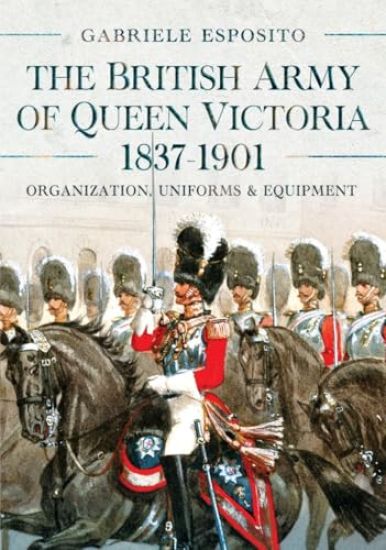
The British Army of Queen Victoria, 1837–1901

The British Army of Queen Victoria, 1837–1901

Gabriele Esposito

PEN SWORD BOOKS LTD
2025
sidottu
In 1837, Queen Victoria inherited an army that had not changed greatly from that which defeated Napoleon in 1815, although reform was already under way. The process of reorganization and modernization, however, continued throughout her reign. As the British army protected and extended the Empire, it strove to adapt to rapidly advancing technology and an incredible array of enemies and environments. This was the period in which many of the of its most famous battle honours were won, such as Balaklava, Rorke’s Drift and Omdurman. Gabriele Esposito gives a comprehensive overview of the history, organization, weapons and uniforms of the various components of the British army. All branches of the service are included: Foot Guards, line infantry, Highland infantry, light infantry, rifle corps (the King’s Royal Rifle Corps and the Rifle Brigade), Life Guards and Horse Guards, Dragoon Guards, Dragoons, Light Dragoons, Hussars, Lancers, Royal Artillery, Royal Engineers and Royal Army Service Corps. The Royal Marines and Royal Marine Artillery, while technically part of the Royal Navy, are also covered as they often fought with the land forces. The ‘legions’ of British volunteers who fought abroad and the foreign military units in British service are also considered. He traces the great changes that happened across the period in both military dress (the famous red coats giving way to khaki) and equipment (notably, muskets being replaced by breech-loading rifles and machine guns). Dozens of beautiful colour artworks illustrate this glorious period of British military history.
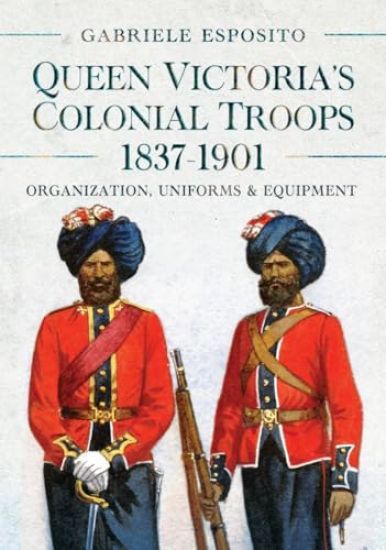
Queen Victoria's Colonial Troops, 1837-1901

Queen Victoria's Colonial Troops, 1837-1901

Gabriele Esposito

PEN SWORD BOOKS LTD
2025
sidottu
Queen Victoria famously presided over an empire upon which the sun never set. Extending, defending and policing Britain’s global territories required the British Army to fight a bewildering array of foes, in equally varied terrain and climates. From the subarctic mountains of Canada to the Sahara Desert and the South African veldt, from the jungles of West Africa and central India to China, the British forces flew the flag. The task was only made possible by the recruitment of troops from throughout the colonies, some of which then served far from home (such as the Australians used in the Boer Wars). Colonial troops not only boosted the numbers available to the Empire’s forces but their local knowledge of climate and terrain, as well as their differing fighting styles, offered vital variety and flexibility. This allowed the ‘British’ armies to adapt to the wide range of enemies and environments encountered. Gabriele Esposito offers an excellent overview of the troops raised from every corner of the British Empire, discussing their organization, weapons, uniform and equipment as well as how and where they were employed. The informative text is lavishly illustrated with colour artworks.
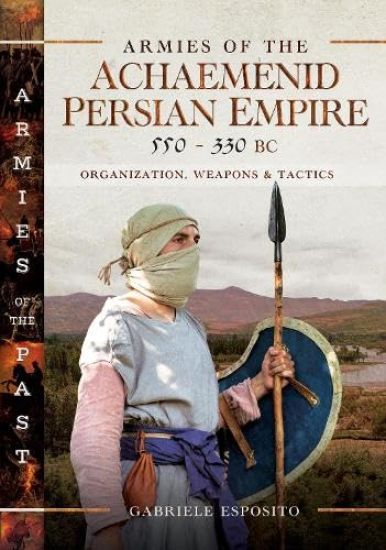
Armies of the Achaemenid Persian Empire, 550-330 BC

Armies of the Achaemenid Persian Empire, 550-330 BC

Gabriele Esposito

PEN SWORD BOOKS LTD
2025
sidottu
Gabriele Esposito presents a detailed overview of the history, organization, equipment and tactics of the military forces deployed by Achaemenid Persia during the period 550-330 BC. The Achaemenid Empire founded by Cyrus the Great was one of the major military powers of Antiquity, conquering vast territories that straddled three continents. Its large and varied population supplied a dazzling array of troop types, producing a versatile war machine that campaigned from India to Egypt. These were the armies that drank rivers dry as they invaded Greece and, at the Empire’s zenith, defeated the Spartans at Thermopylae and torched Athens. They continued to evolve but proved unable to cope with Alexander the Great’s Macedonians. The author outlines the major campaigns fought by the Persians from Cyrus the Great to the conquest by Alexander. He details the organization, equipment and tactics of the many different contingents that made up the Persian military forces, including (but not limited to) the famous royal guard of the Immortals, and such varied troops as Persian archers, scythed chariots, Ionian Greek hoplites, Arab camel riders, Scythian horse archers, Sogdians and Bactrian armoured cavalry, Thracian peltasts, Egyptians and Indian war elephants. The text is complemented by a colourful mix of photos of reenactors and specially-commissioned artworks.
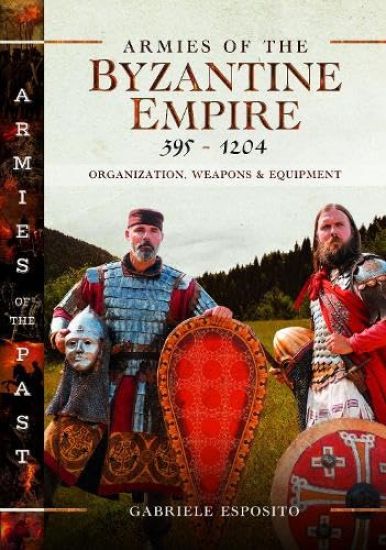
Armies of the Byzantine Empire, 395-1204

Armies of the Byzantine Empire, 395-1204

Gabriele Esposito

PEN SWORD BOOKS LTD
2025
sidottu
The Byzantine Empire originated in AD 395 from the definitive subdivision of the Roman Empire into two distinct political entities: the Western Empire and the Eastern Empire. While the Western Empire disappeared in 476, due to Germanic invasions, the Eastern Empire endured for centuries. During Justinian’s reign (527-565) a good portion of the western territories were reconquered for a time and the Empire retained a distinctive ‘Roman’ nature at least until the reign of Heraclius (610-641). But during his reign, the Eastern Empire came under attack from the expanding Muslim Arabs, losing a much of its original Eastern territories. With Imperial power weakened and restricted largely to the Balkans and Anatolia, the ‘Roman’ nature of the Eastern Empire became progressively more Greek and transformed into what we know as ‘the Byzantine Empire’ (though they called themselves Romans to the end). Despite being surrounded by enemies, the Byzantines defended their remaining domains for a further half a millenium, their territories expanding and contracting with fluctuating fortunes. This tenacious survival was largely due to the ability of their military to adapt (as Roman armies always had) to emerging threats from a wide variety of enemies. The Byzantine Empire collapsed only in 1204, when attacked by forces of the Fourth Crusade, its ostensible allies. In addition to presenting an overview and analysis of the various campaigns of the period, Gabriele Esposito provides a complete review of Byzantine military organization, weapons, tactics and equipment. The clear text is lavishly illustrated with dozen of colour photographs of replica arms, armour and costume in use.
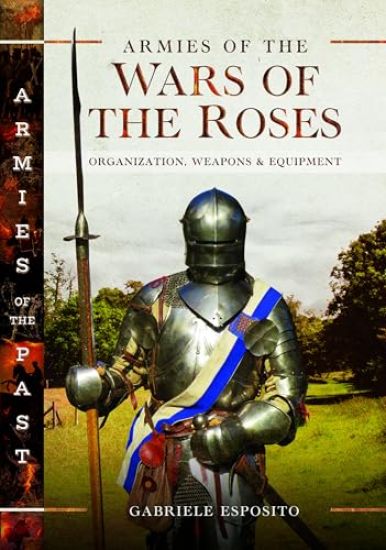
Armies of the Wars of the Roses

Armies of the Wars of the Roses

Gabriele Esposito

PEN SWORD BOOKS LTD
2026
sidottu
Gabriele Esposito offers a clear, concise overview of the Wars of the Roses, the complex series of civil wars that ravaged the Kingdom of England for three decades, from 1455 to 1487. Stemming from a rivalry between two cadet branches of the Plantagenet dynasty, the houses of York and Lancaster, which went back at least to 1377 (when Edward III’s death brought the 10 year old Richard II to the throne), open war began in 1455 with the First Battle of St Albans, a Yorkist victory over the forces of King Henry VI. The following decades were bloody and turbulent with recurrent fighting, culminating in Henry Tudor’s decisive victories at Bosworth in 1485 and (by then as Henry VII) at Stoke Field in 1487. The author traces the convoluted course of this large-scale conflict, which involved not only England and Wales but also several other countries of Europe. Scotland and Ireland were directly affected by them, as well as the Kingdom of France (which played a prominent role in the final victory of Henry Tudor) and the Duchy of Burgundy (which supported the House of York). He describes and analyses in detail the organization and equipment of the various military contingents that took part in these wars, from the heavily-armoured men-at-arms to the celebrated longbowmen and not forgetting the various foreign mercenaries and allied contingents. As usual for the Armies of the Past series, there are dozens of full colour photographs of replica weapons, armour and costumes in use to illustrate the various types of troops.
Armies of the Roman Civil Wars and Slave Revolts, 135 BC–AD 69
The year 135 BC saw the outbreak of the so-called ‘First Servile War’, which proved to be just the first of a series of conflicts that ravaged the Roman Republic during the following century and changed forever the institutions of the Roman state. This bloody and violent period of civil wars and recurrent slave revolts (most famously that of Spartacus) saw the ascendancy of many famous generals who obtained great military victories, including: Marius, Sulla, Crassus, Pompey, Julius Caesar, Mark Antony and Octavian. They fought for complete dominance over Rome but, at the same time, conducted a series of imperialist campaigns that greatly expanded the territorial extension of the Roman Republic. In discussing these campaigns of conquest, the author shows how they were strongly linked with the civil conflicts and how the events that started in 135 BC progressively led to the birth of the Roman Empire under Octavian (Augustus). The author also describes the only civil war taking place during the Early Empire, i.e. that of AD 69 (‘The Year of the Four Emperors’) before providing a detailed description of the organization and equipment of the varied military forces that took part in the Roman civil wars during this crucial period, outlining crucial developments across the period. As usual for the Armies of the Past series, there are dozens of colour photos depicting replica arms, armour and dress in use.
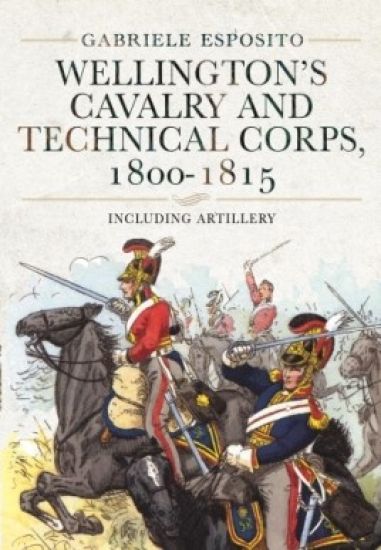
Wellington's Cavalry and Technical Corps, 1800-1815

Wellington's Cavalry and Technical Corps, 1800-1815

Gabriele Esposito

PEN SWORD BOOKS LTD
2021
sidottu
While artillery has been described as the queen of the Napoleonic battlefield, this was an era when cavalry could still play a decisive role in battle, as well as being vital on campaign. This volume covers both British cavalry and artillery of the Napoleonic Wars, as well as supporting units such as engineers. Gabriele Esposito describes the history, organization and uniforms of the various units in full detail, following the evolution and combat history of each. Mounted troops deployed in the various British colonies as well as foreign cavalry units in British service will be all covered in specific chapters. The technical corps, most notably the artillery (both foot and horse) and the engineers, are given similar treatment. Royal Marines naval infantry and some other 'auxiliary' corps (like the Yeomanry/militia cavalry or the Sea Fencibles, all very little known) are also included. The book is lavishly illustrated with dozens of colour paintings.
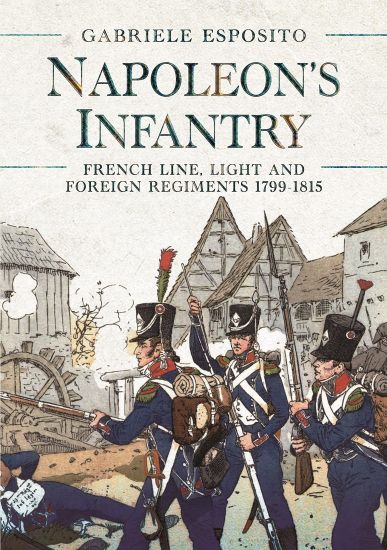
Napoleon's Infantry

Napoleon's Infantry

Gabriele Esposito

PEN SWORD BOOKS LTD
2022
sidottu
This volume covers the infantry units of Napoleon's Imperial Army, during the crucial years 1800-1815. When the future Emperor assumed control of France, the infantry of his army was disorganized and poorly equipped; it lacked discipline and was trained in a quite old-fashioned way. Napoleon acted very rapidly to resolve the major problems of his foot troops, by giving them a new structure and by teaching them new tactics. By 1805, the French infantry was without a doubt the best in the world in terms of combat capabilities. The book will cover all the categories of units that were part of Napoleon's infantry: line regiments, light regiments, foreign corps and special corps. It is not always realized that the French infantry of 1800-1815 included large numbers of foreign soldiers and even an Irish Legion; all these little-known corps are taken into consideration, together with several special corps like Corsican light infantry and mountain infantry. Gabriele Esposito provides a complete guide to the French infantry of Napoleon, illustrated with rare contemporary uniform plates that have never been published before.
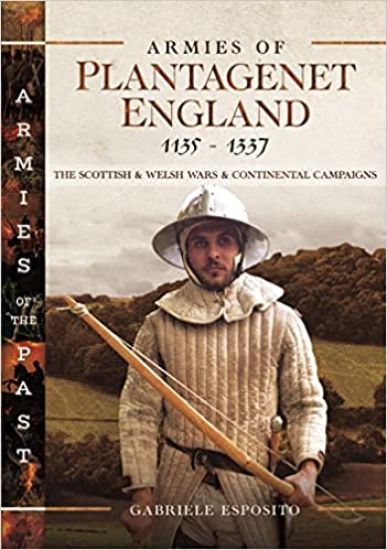
Armies of Plantagenet England, 1135–1337

Armies of Plantagenet England, 1135–1337

Gabriele Esposito

PEN SWORD BOOKS LTD
2022
sidottu
The ascent of the Plantagenets to the English throne in 1154 led to the beginning of a new historical phase in the British Isles, which was marked by numerous wars that were fought between the Kingdom of England and the 'Celtic nations' of Wales, Scotland and Ireland. During the rule of the Norman kings, the English armies had not completed the conquest of Wales and had established only some footholds in Ireland; Scotland was still independent and was ready to contest the Plantagenets' possession of northern England. As a result of this situation, the two centuries between the rise of the new dynasty and the beginning of the Hundred Years' War were characterized by a series of wars that ravaged feudal England. Gabriele Esposito covers all these conflicts, following the campaigns of Richard the Lionheart as well as those of his younger brother who was defeated on the continent at the large Battle of Bouvines; the conquest of Wales is analysed in detail, as well as the First Scottish War of Independence that saw William Wallace playing a prominent role. The organization and equipment of all the troop types taken into account is described in full detail and lavishly illustrated with colour images of reenactors, bringing these forces to life.
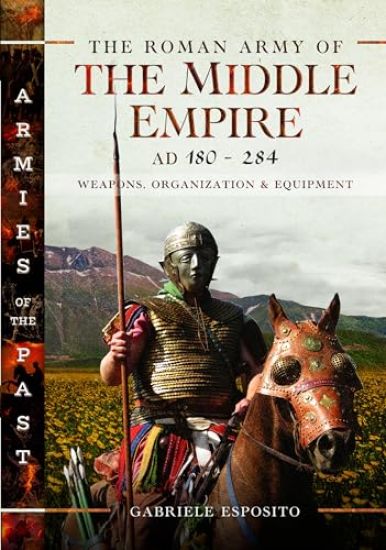
The Roman Army of the Middle Empire, AD 180-284

The Roman Army of the Middle Empire, AD 180-284

Gabriele Esposito

PEN SWORD BOOKS LTD
2024
sidottu
During the Middle Empire period (AD 180-284) the Roman army had to face the terrible ‘Third Century Crisis’, wherein a combination of socio-economic problems and new external threats threatened the Empire with complete collapse. Several provinces became temporarily independent from the central government of Rome, while others were frequently raided by foreign invaders. The Roman army had to fight with all its resources in order to reconquer a good portion of the Empire and preserve its unity. The Romans were forced to modernize and reform their forces to face the new challenges posed by a multitude of warlike enemies, such as the Persians in the Middle East or the Germanic Peoples in Central Europe. The previous military system based on the power of the legions’ heavy infantry was completely revised, with the introduction of new organizational patterns. Cavalry became much more important than before, together with light troops specialized in skirmishing. The personal equipment of the Roman soldiers changed in a very significant way, with the introduction of new weapons that permitted the development of innovative tactics. Gabriele Esposito follows this evolution of Roman forces from the death of Marcus Aurelius to the rise of Diocletian, reconstructing the major military campaigns and explaining how the Roman military forces were transformed. All the major troop types are covered, with details on the organization and equipment of each contingent. The book is lavishly illustrated throughout with excellent colour photos of reconstructed costume and equipment in use.
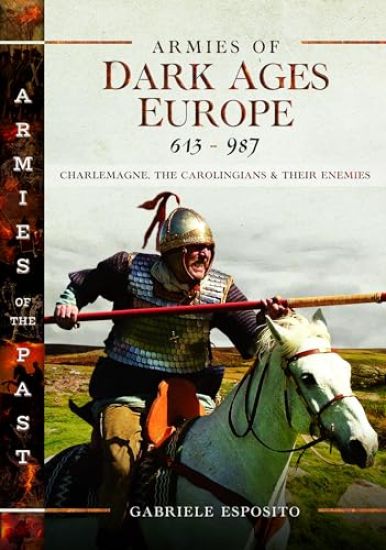
Armies of Dark Ages Europe, 613-987

Armies of Dark Ages Europe, 613-987

Gabriele Esposito

PEN SWORD BOOKS LTD
2024
sidottu
The centuries that followed the fall of the Western Roman Empire in AD 476 saw the formation of numerous Romano-Germanic kingdoms from the fusion between different Germanic communities and the Roman population. In time the Frankish Kingdom came to dominate over all the others and conquered most of continental Europe under the guidance of the famous Carolingian royal family. In the book we will follow the military ascendancy of the warlike Franks from 613 to 987. The greatest protagonist of this bloody period was Charlemagne, probably the greatest military commander of the Early Middle Ages. He transformed the Frankish kingdom into a large state – the Holy Roman Empire – that dominated most of continental Western Europe for almost a century. Charlemagne spent his long reign (768-814) fighting against a multitude of warlike enemies who lived on the frontiers of his dominions: Arabs, Basques, Bretons, Frisians, Vikings, Saxons, Thuringians, Slavs, Avars, Bavarians and Lombards. He obtained some spectacular victories over the latter, but also suffered some humiliating defeats like the famous one of Roncevaux Pass. Gabriele Esposito follows the evolution of the Frankish Army from the rise of the Franks’ under the Merovingian monarchs to the dissolution of the Carolingian royal family, reconstructing the most important military campaigns in detail. All the major troop types are covered, providing information on the organization and equipment of each contingent. The enemies of the Franks are also considered. The clear text is illustrated with dozens of stunning colour photographs depicting replica weapons and equipment of the period in use.
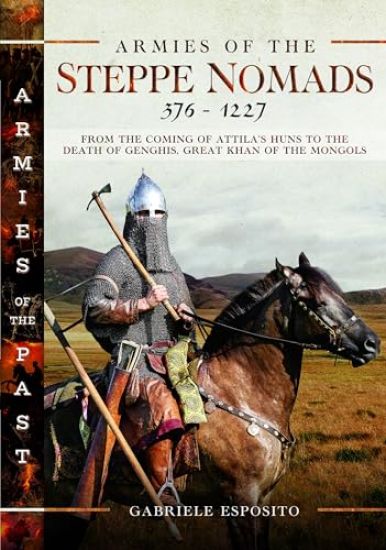
Armies of the Steppe Nomads, 376–1227

Armies of the Steppe Nomads, 376–1227

Gabriele Esposito

PEN SWORD BOOKS LTD
2024
sidottu
Gabriele Esposito presents an overview of the history, organization and equipment of the military forces deployed by the nomadic peoples of the Eurasian steppes during the period from the appearance of the Huns in Eastern Europe to the death of Genghis Khan. Each chapter is devoted to a different group that played a prominent military role during Antiquity and the Middle Ages. Starting with the Huns of Attila, whose migration was one of the key factors behind the fall of the Roman Empire, he moves on to the Avars, who established a large state in Eastern Europe that contested with Charlemagne’s Frankish Empire. Chapter three covers the Magyars, who terrorized most of Europe during the tenth century before creating the Kingdom of Hungary. Next are the Bulgars, who became the worst enemies of the Byzantine Empire in the Balkans but also created a flourishing state in the Volga region of Russia. The Khazars and the Alans share a chapter, as do the Pechenegs and Cumans-Kipchaks, while the Turks merit a dedicated chapter. Last but not least are the Mongols, who are traced from the unification of their tribes to the death of the great Genghis Khan. By describing the military organization, weapons and tactics of these nomadic peoples the author shows how they dominated the battlefields of the world for almost 1,000 years thanks to their superior capabilities. He also discusses how they interacted with other civilizations and how the latter learned a lot from them, especially militarily. Without the existence of the warlike nomadic peoples of the Eurasian steppes, the history of the world would have been very different.
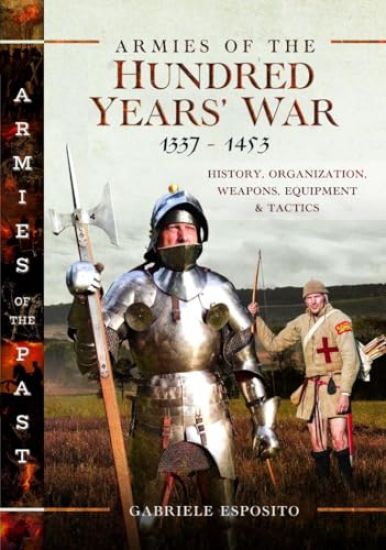
Armies of the Hundred Years' War 1337–1453

Armies of the Hundred Years' War 1337–1453

Gabriele Esposito

PEN SWORD BOOKS LTD
2025
sidottu
The Hundred Years' War is one of the most famous conflicts in British history, featuring such renowned battles as Crecy, Poitiers and Agincourt. It is a period littered with such legendary names as the Black Prince, Henry V and Joan of Arc, and a fascinating one for the development of warfare, weapons and armour. Gabriele Esposito puts the conflict in context with an overview of earlier Anglo-French conflicts and the roots of the dispute between the Plantagenet and Valois dynasties. He then devotes several chapters to giving a concise overview of the dramatic events of the war, before moving on to describe in detail the organization, tactics, weapons, armour and equipment of all the varied forces. Those drawn in by various alliances, such as Scottish, Spanish and Burgundian troops are not forgotten. He shows the evolution of warfare across the period, from the early dominance of the longbowmen over the French knights to the increasing importance of artillery in the Valois recovery. As usual for The Armies of the Past series, Gabriele Esposito’s informative text is lavishly illustrated with colour photographs of replica weapons, armour and clothing in use.
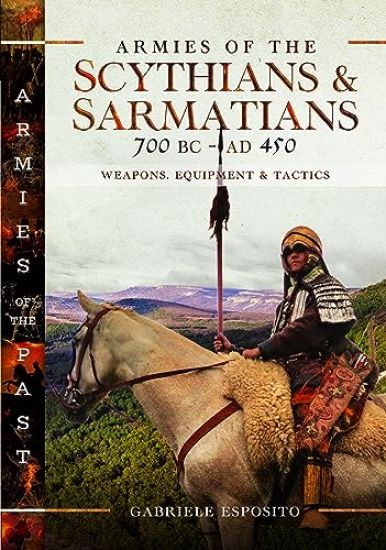
Armies of the Scythians and Sarmatians 700 BC to AD 450

Armies of the Scythians and Sarmatians 700 BC to AD 450

Gabriele Esposito

PEN SWORD BOOKS LTD
2024
sidottu
The Scythians were a horse nomads from the central Eurasian steppes who migrated south and west into the region around the Black Sea from the seventh century BC which they dominated until replaced and absorbed by the very similar Sarmatians from the third century BC. A harsh life spent riding, herding and hunting on the steppes made them into tough warriors, and highly skilled horsemen and archers. Their armies were highly mobile, mostly comprising swift mounted archers capable of elusive hit-and-run attacks but with the wealthier warriors constituting a core of heavier cavalry, armoured and equipped for close combat. Over hundreds of years the Scythians fought, and often defeated, such notable opponents as the Assyrians, Medes, Persians, Greeks and Macedonians. Their Sarmatian successors continued the tradition, being among the Romans’ most dangerous opponents for several centuries. Gabriele Esposito discusses these remarkable warriors of the steppes, analysing what made them such formidable opponents to their neighbours over the centuries. He describes in detail their weapons, armour, equipment and tactics as they evolved over the centuries. The fascinating text is supported by dozens of beautiful colour photographs of replica costume, arms and equipment in use.
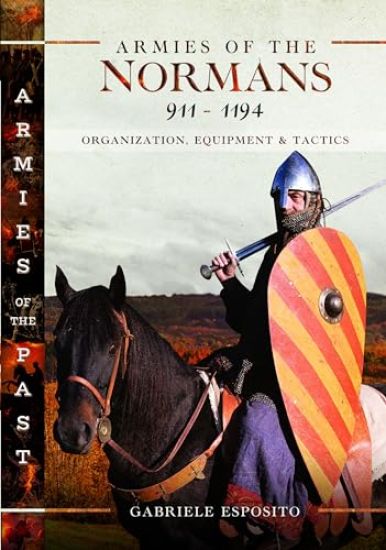
Armies of the Normans 911–1194

Armies of the Normans 911–1194

Gabriele Esposito

PEN SWORD BOOKS LTD
2024
sidottu
The Norman story began in 911, when a frightened French king (Charles III ‘the Simple’) gave land on the Channel coast to the Viking leader Rollo in return for adopting Christianity and helping repel other Viking marauders. Rollo and his fellow Norsemen (hence ‘Normandy’ and ‘Normans’) adopted all the trappings of feudalism, evolving from pagan ship-borne raiders to archetypal Christian knights and builders of castles. However, they seem to have lost none of their ferocity and adventuring spirit. As well as Duke William’s famous cross-Channel conquest, Norman forces (often mercenaries) conquered territories in Spain, Sicily, Malta, Italy and Albania and formed the hard core of the early Crusades. Bohemond captured Antioch from the Turks and set up a principality that endured almost two centuries. Gabriele Esposito discusses the armies of the Normans in all these theatres, incorporating not only the Norman knights but the various feudal levies, local auxiliaries and mercenary contingents that fought with them. Having outlined the major battles and campaigns, he details their equipment, weapons and tactics. The accessible text is supported by numerous colour photographs of replica costume, weapons and equipment in use.
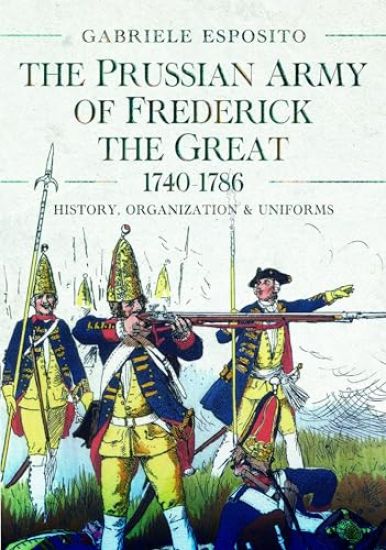
The Prussian Army of Frederick the Great, 1740-1786

The Prussian Army of Frederick the Great, 1740-1786

Gabriele Esposito

PEN SWORD BOOKS LTD
2024
sidottu
Frederick the Great was an acknowledged master of war. Admired and studied by Napoleon, he commanded the Prussian army at sixteen major battles and numerous sieges and other actions, often leading from the front. Under Frederick the Prussian Army became arguably the most feared and efficient in Europe, often defeating numerically superior forces. Gabriele Esposito details the organization, uniforms and equipment of the various branches of service that made up the Prussian Army. Starting with the infantry, whose incredible discipline and excellent training made them the backbone of Frederick's forces he details the famous Guards and the line regiments but also the light infantry jagers and even little-known garrison and auxiliary units. Equal attention is given to the cavalry: Guards, cuirassiers, dragoons, lancers and hussars. There is also a chapter devoted to the 'technical corps' of artillery, pioneers and the like, and there are chapters on the mercenary 'freikorps' and Frederick's German allies. The whole is lavishly illustrated with beautiful colour plates.
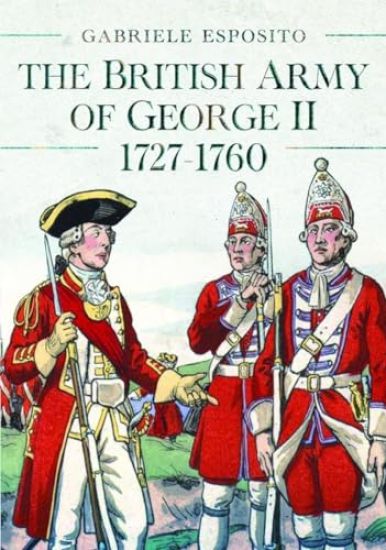
The British Army of George II, 1727-1760

The British Army of George II, 1727-1760

Gabriele Esposito

PEN SWORD BOOKS LTD
2024
sidottu
Gabriele Esposito provides a detailed overview of the history, organization and uniforms of the British military forces during the long reign of George II (1727-1760). Perhaps best known for the Jacobite Rebellion, this period saw the British military forces greatly expanded and involved in two major international conflicts: the War of the Austrian Succession and the Seven Years’ War. The latter was truly a global war, subsuming the French and Indian wars fought in the Americas, as well as conflicts in India and elsewhere. By 1760, despite achieving little in Europe, Great Britain had been able to expel the French from both Canada and India. After a brief overview of the British forces prior to the period, the author examines each component. He covers not only the regular cavalry and infantry (the Guards, line, Highland and light regiments) but also the artillery and Royal Engineers, Corps of Invalids, the Fencibles, naval infantry, the auxiliary corps created to face the Jacobite Rising of 1745 and the ‘allied’ contingents from Germany and the Netherlands that fought for Great Britain during the period 1745-1760\. There are chapters devoted to the colonial forces deployed in the Thirteen Colonies of North America, with full details on the American militia and provincial military units, as well as forces deployed in the Caribbean and the military contingents of the East India Company. The book is illustrated throughout with excellent colour illustrations from _The Cloathing Book_ commissioned in 1742 by the Duke of Cumberland and from the oil paintings of David Morier preserved in the Royal Collections.
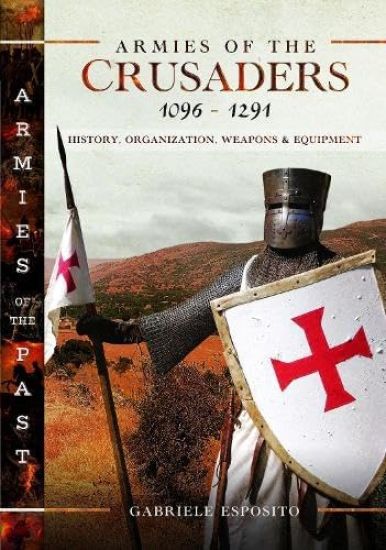
Armies of the Crusaders, 1096–1291

Armies of the Crusaders, 1096–1291

Gabriele Esposito

PEN SWORD BOOKS LTD
2023
sidottu
The Crusades were among the most astonishing historical events that took place during the Middle Ages. After centuries of relative isolation following the fall of the Roman Empire, Western Europe looked again towards the Middle East in search of lands to conquer. Incited by the Church to believe that the Holy Land must be ‘liberated’ from its Muslim rulers (who had by then occupied it for centuries), and that to do so would bring spiritual salvation, many thousands from all over Christian Europe ‘took the cross’ and joined the Crusades. Led by some of the most illustrious personalities of the age, such as Richard the Lionheart and Frederick Barbarossa, they fought numerous campaigns and even founded new ‘Crusader states’, some of which lasted for almost two centuries. Gabriele Esposito gives an overview of the key events of these campaigns, from the First Crusade in 1096 to the fall of Acre, the last Christian stronghold in the Holy Land, in 1291. He analyses the various contingents that made up the Crusader forces, describing their equipment and tactics and showing how they attempted to adapt to unfamiliar terrain and enemies. Included, of course, are the military orders (the Templar, Hospitaller and Teutonic knights) who combined the religious fervour of a monastic brotherhood with martial prowess, forming an elite core to the Christian forces. As usual, the informative text is lavishly illustrated with colour photos depicting replica weapons and equipment in use.
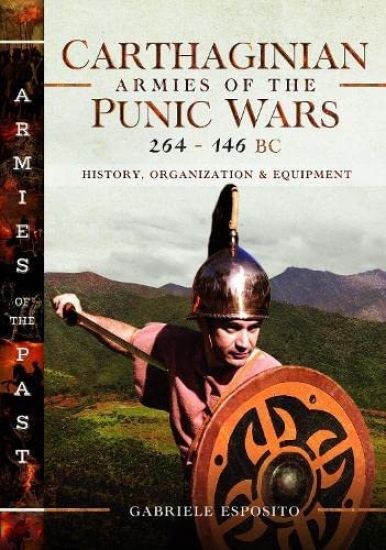
Carthaginian Armies of the Punic Wars, 264–146 BC

Carthaginian Armies of the Punic Wars, 264–146 BC

Gabriele Esposito

PEN SWORD BOOKS LTD
2023
sidottu
The Carthaginians were undoubtedly the most formidable enemies of the ever-expanding Roman Republic, due to their sophisticated and often well-led military forces. Although the citizens of Carthage itself, a seafaring, mercantile state by tradition, may not have had the same military ethos as the Romans, they compensated by fielding varied multinational armies consisting of subject, allied and mercenary contingents, many of them recruited from the most famous warrior peoples of the Mediterranean. These included the incomparable Numidian light cavalry, the famed slingers of the Balearic islands, fierce Celts and skilled Spanish swordsmen, not forgetting the famous war elephants. During the first of the three conflicts that they fought against the Roman Republic - the famous Punic Wars - the Carthaginians completely reformed their land forces along Hellenistic lines and invited an experienced Spartan officer to command it. During the Second Punic War, they obtained a series of stunning victories over the Romans under the brilliant leadership of their own Hannibal Barca, marauding through Italy for some fifteen years. Gabriele Esposito reconstructs the history, organization and weapons of the Carthaginian military forces across the Punic Wars (264-146 BC). The weapons, armour and tactics of each of the various ethnic components is analyzed and the accessible text is supported by dozens of excellent colour photographs, showing replica equipment in use.
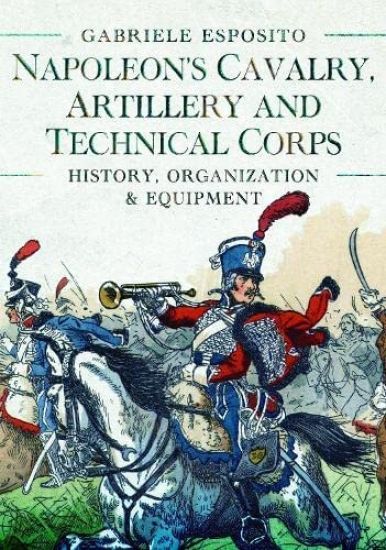
Napoleon's Cavalry, Artillery and Technical Corps 1799-1815
The French Army of Napoleon could count on a brilliant mounted arm, consisting of three main types of cavalry: heavy, medium and light. The first, consisting of carabiniers and cuirassiers, was tasked with conducting frontal charges; the second, consisting of dragoons and lancers, could perform a variety of different duties; the third, consisting of hussars and mounted chasseurs, was tasked with scouting and skirmishing. The various regiments were all dressed in flamboyant uniforms and distinctive equipment. Perhaps more than any other troops they encapsulated the dash and glamour of Napoleonic warfare. Napoleon started his military career as an artillery officer and thus always paid great attention to the quality of his army's artillery, which consisted of both foot and horse units. Several of Bonaparte's greatest victories were achieved thanks to the superiority of his artillery, which was with undoubtedly the best in Europe during the period 1799-1815\. In addition to cavalry and artillery, the author also covers the minor technical corps' of Napoleon's army, such as the engineers and supply train. All are beautifully illustrated by the many colour plates in this book, and their organization, equipment and tactics described.