Kirjahaku
Etsi kirjoja tekijän nimen, kirjan nimen tai ISBN:n perusteella.
20 tulosta hakusanalla Gaie Taylor
This work has been selected by scholars as being culturally important and is part of the knowledge base of civilization as we know it.This work is in the public domain in the United States of America, and possibly other nations. Within the United States, you may freely copy and distribute this work, as no entity (individual or corporate) has a copyright on the body of the work.Scholars believe, and we concur, that this work is important enough to be preserved, reproduced, and made generally available to the public. To ensure a quality reading experience, this work has been proofread and republished using a format that seamlessly blends the original graphical elements with text in an easy-to-read typeface.We appreciate your support of the preservation process, and thank you for being an important part of keeping this knowledge alive and relevant.
`Anybody with the slightest interest in brief therapy should read this book. Now that the initial controversy over brief therapy has begun to subside it is great to see how brief therapy works in practice. Gaie Houston's book is part of a series published by SAGE which sets out to do this - and hers is particularly illuminating and accessible. As she points out Gestalt is better equipped than many mainstream therapies to be applied to situations with extreme time constraints because it is both flexible and it acknowledges the part that can be played by other therapies. But what propels Houston's book out of the hum drum - or indeed the defensive (or offensive) diatribes about short therapy which have appeared over the past few years - is her vivid accounts of real-life sessions, both one to one and group, which punctuate the text' - Amazon Review Brief Gestalt Therapy demonstrates how the Gestalt approach can be used effectively in brief interventions with clients. Gestalt's distinctively integrative nature and emphasis on a highly co-operative working alliance, make it particularly suited to brief work. The book sets out the basic theory and principles of Gestalt and looks at each phase of the therapeutic process from initial assessment through the beginning and middle stages to the ending of the work. It presents clear, practical strategies for therapists to follow and in particular examines: } aspects of Gestalt which are especially relevant to brief work -} the elements of successful therapy -} ways of improving skills. Brief Gestalt Therapy includes vignettes and detailed case studies which bring the theory alive. It will contribute much to both existing literature on Gestalt therapy and also brief therapy, and will be invaluable to trainee and practising Gestalt therapists.
New to the bestselling Counselling in a Nutshell Series, this pocket-sized book is the beginners guide to the essentials of Gestalt Therapy, from its principles to practice. Assuming no previous knowledge of the subject, the book introduces: - the origins of the approach - the key theory and concepts - the skills and techniques important to practice. Written in an accessible, jargon-free style, this book includes vivid case examples, end of chapter exercises and a glossary of terms to help aid understanding. Gaie Houston is a writer, UKCP-registered psychotherapist and senior lecturer at The Gestalt Centre, London.
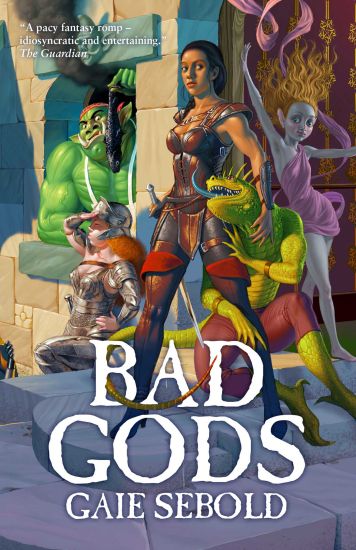
All Tastes! • All Species! • All Currencies!You can find anything in Scalentine, the city of portals, but you won’t find a better brothel than the Red Lantern. And its proprietor, Babylon Steel (ex-mercenary, ex-priestess, ex… lots of things), means to keep it that way.But a prurient cult are protesting in the streets, sex workers are disappearing, and Babylon has bills to pay. When the powerful Diplomatic Section hires her – off the books – to find a missing heiress, she has to take the job.And then her past starts to catch up with her...Originally published as Babylon Steel in 2011 to critical acclaim, this trope-busting, inclusive, sex positive fantasy is back to delight and entertain readers, complete with a gorgeous new cover from Discworld artist Stephen Player.
Madis Defranthea's brother presents her with a challenge. If she wants to join his gang, she and her team have to steal a magical belt that's locked to the waist of a bride, on her wedding night, in a fortified castle, on a rock in the middle of the sea.
Babylon Steel, ex-sword-for-hire, ex...other things, runs The Red Lantern, the best brothel in the city. She’s got elves using sex magic upstairs, S&M in the basement and a large green troll cooking breakfast in the kitchen, and she’d love you to visit, except... She’s not having a good week. The Vessels of Purity are protesting against brothels, girls are disappearing, and if she can’t pay her taxes, Babylon’s going to lose the Lantern. She’d given up the mercenary life, but when the mysterious Darask Fain pays her to find a missing heiress, she has to take the job. And then her past starts to catch up with her in other, more dangerous ways.
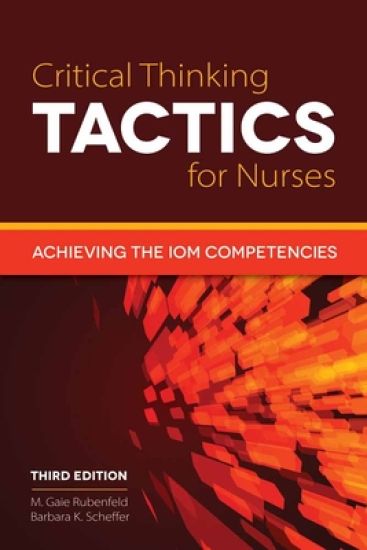
Critical Thinking TACTICS For Nurses
M. Gaie Rubenfeld; Barbara Scheffer
Jones and Bartlett Publishers, Inc
2014
nidottu
Critical Thinking TACTICS for Nurses: Achieving IOM Competencies, Third Edition is a user-friendly and practical manual focusing on the day-to-day realities of doing, learning, and evaluating critical thinking in nursing. With clear examples of both the parts and the whole of this complex process, each chapter includes action learning activities to promote critical thinking: Tracking, Assessing, and Cultivating Thinking to Improve Competency-based Strategies or TACTICS. Issues addressed include critical thinking language and awareness enhancement, the impact of critical thinking on quality care, mentoring the critical thinking of staff and students, and designing performance criteria for critical thinking. Based on the authors’ research in both defining and assessing critical thinking in nursing, this text also draws from their years of refining critical thinking teaching and learning methods. Completely updated and revised, the new edition offers critical thinking components combined with the Institute of Medicine's (IOM) five core competencies: patient-centered care, interdisciplinary team work, evidence-based practice, informatics, and quality improvement. New to this edition are updated case studies, new illustrations, new content on how to facilitate synthesis of high level critical thinking, additional content on critical thinking within the nursing process, increased TACTICS, and new appendices to assist with the assessment of critical thinking.
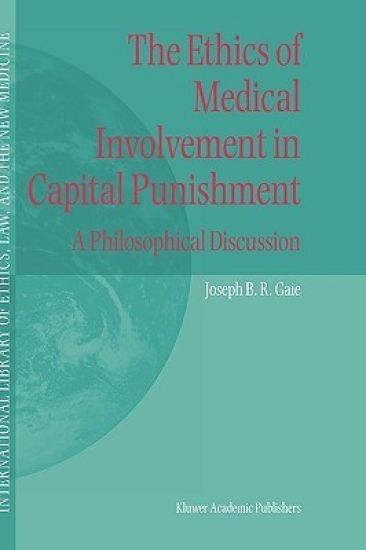
The Ethics of Medical Involvement in Capital Punishment
Joseph B.R. Gaie
Springer-Verlag New York Inc.
2004
sidottu
The morality of capital punishment has been debated for a long time. This however has 1 not resulted in the settlement of the question either way. Philosophers are still divided. In this work I am not addressing the morality of capital punishment per se. My question is different but related. It is this. Whether or not capital punishment is morally right, is it moral or immoral for medical doctors to be involved in the practice? To deal with this question I start off in Chapter One delineating the sort of involvement the medical associations consider to be morally problematic for medical doctors in capital punishment. They make a distinction between what they call 2 “medicalisation” of and “involvement” in capital punishment, and argue that there is a moral distinction between the two. Whilst it is morally acceptable for doctors to be “involved” in capital punishment, according to the medical associations, it is immoral to medicalise the practice. I clarify this position and show what moral issues arise. I then suggest that there should not be a distinction between the two. The medical associations argue that the medicalisation of capital punishment, especially the use by medical doctors of lethal injection to execute condemned prisoners is immoral and therefore should be prohibited, because it involves doctors in doing what is against the aims of medicine.
`The book is comprehensive, and extensively researched and referenced. ….[The] last chapter contains some excellent training resources for trainers of counsellors/psychotherapists. I would therefore endorse it as a useful textbook, especially as there is an excellent in-depth example of an assessment form, and guidance on how this can be used for trainees. These were useful revision points to me as an experienced counsellor' - The Independent Practitioner `The book would be useful to practitioners who want to start thinking 'outside the box' of a particular orientation. It is also aimed at students and trainers - the last 40 pages in particular are full of practical training exercises. Overall, I would recommend it as a well-reasoned argument for therapy to be rooted in an integrative base' - Therapy Today `Throughout the book it is assumed that we can learn from each other and that we need to, whatever orientation we were trained in, in the service of the client. I find this pragmatic approach open and refreshing in a period when some of us have polarised around the 'what works best' debate. Both authors are experienced practitioners and trainers and their commitment to integrative counselling and psychotherapy shines through' - AUCC Journal Integration rather than a single theory has become accepted and widely recommended as a way forward in psychotherapy and counselling. Integrative Therapy, Second Edition, a timely and innovative guide for practitioners, is based on the view that training and practice methods should be evaluated for their usefulness to the client instead of their adherence to a particular model. Drawing from research on therapy process and outcome, and on human development respectively, the authors highlight striking similarities between the change processes involved in these two areas of study. The findings provide a basis for an adaptable framework for integrative practice. The authors pinpoint what is common as well as what is different in various approaches, using case illustrations to make comparisons throughout between the three major models: psychodynamic, humanistic-existential and cognitive-behavioural. What emerges is the central importance of the therapeutic relationship in the process of change - 'how to be with clients' as opposed to 'what to do'. Fully revised and updated, this Second Edition includes new material on neuroscience and practitioner-oriented research methodology showing how the processes of doing research and doing therapy have many things in common. The book aims to cultivate a spirit of willingness amongst therapists trained in one model to learn from colleagues trained in others. It also features exercises to support its use on courses and will thus be invaluable to trainees of counselling, psychotherapy and counselling psychology. Maja O'Brien is a chartered counselling psychologist and psychotherapist, supervisor and trainer based in Oxford and a Principal Lecturer on the Doctorate in Psychotherapy by Professional Studies run jointly by the Metanoia Institute and Middlesex University. Gaie Houston is a writer, UKCP-registered psychotherapist and senior lecturer at The Gestalt Centre, London.
The former shipbuilding centres of Greenock and Gourock sit on the coastal strip, offering breathtaking views north to the Argyll Hills and Scottish Highlands. Many of the historical attractions in these towns - the museums and galleries, stately homes and castles - celebrate the areas influential maritime history and industrial past. There are many fine buildings of architectural interest to be seen in Greenock. These include the Municipal Buildings, Custom House, Sheriff Court, Watt Monument Library, mansions of the West End and a large number of impressive churches. The town has gained a modern image with the building of the present town centre in the 60s and 70s. Links with the past have not been forgotten and the residential West End of the town has been designated an Outstanding Conservation Area. There is also a Conservation Area, which is located in the area of William Street and Cathcart Square. More recently the 'Waterfront' development has provided a sports and leisure complex and attracted new shopping outlets for the shoppers of Greenock.
The morality of capital punishment has been debated for a long time. This however has 1 not resulted in the settlement of the question either way. Philosophers are still divided. In this work I am not addressing the morality of capital punishment per se. My question is different but related. It is this. Whether or not capital punishment is morally right, is it moral or immoral for medical doctors to be involved in the practice? To deal with this question I start off in Chapter One delineating the sort of involvement the medical associations consider to be morally problematic for medical doctors in capital punishment. They make a distinction between what they call 2 “medicalisation” of and “involvement” in capital punishment, and argue that there is a moral distinction between the two. Whilst it is morally acceptable for doctors to be “involved” in capital punishment, according to the medical associations, it is immoral to medicalise the practice. I clarify this position and show what moral issues arise. I then suggest that there should not be a distinction between the two. The medical associations argue that the medicalisation of capital punishment, especially the use by medical doctors of lethal injection to execute condemned prisoners is immoral and therefore should be prohibited, because it involves doctors in doing what is against the aims of medicine.
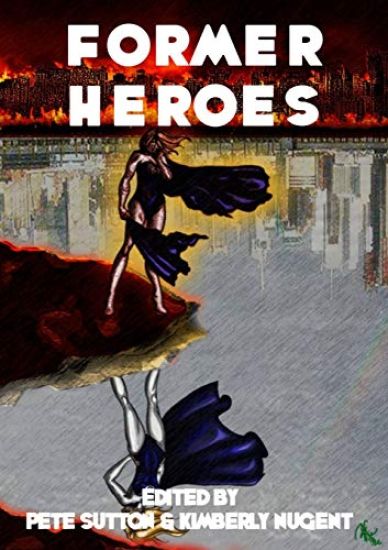
Former Heroes
David Gullen; Kate Charles; Jim King; Andrew Goodman; Gaie Sebold; Sara Jayne Townsend
Far Horizons Press
2016
nidottu
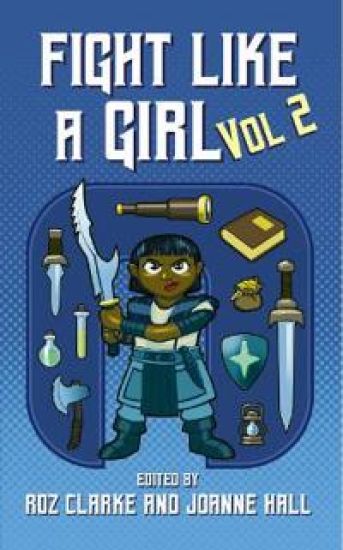
Fight Like A Girl
Juliet E McKenna; Anna Smith Spark; Danie Ware; Gaie Sebold; Lou Morgan; Dolly Garland; K T Davies; Cheryl Morgan
Wizards Tower Press
2024
nidottu