Kirjojen hintavertailu. Mukana 11 213 693 kirjaa ja 12 kauppaa.

Kirjahaku

Etsi kirjoja tekijän nimen, kirjan nimen tai ISBN:n perusteella.

1000 tulosta hakusanalla Galileo

Galileo

Galileo

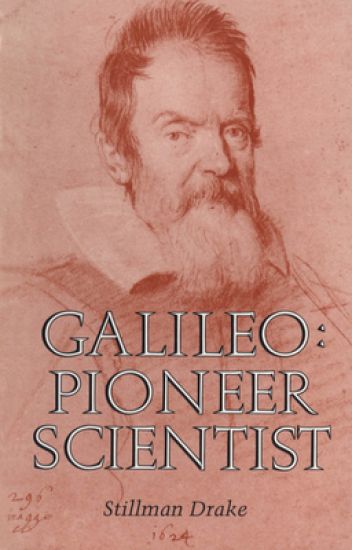
Stillman Drake

Oxford University Press
2001
nidottu
In a startling reinterpretation of the evidence, Stillman Drake advances the hypothesis that Galileo's trial and condemnation by the Inquisition was caused not by his defiance of the Church, but by the hostility of contemporary philosophers. Galileo's own beautifully lucid arguments are used to show how his scientific method was utterly divorced from the Aristotelian approach to physics in that it was based on a search not for causes but for laws. Galileo's method was of overwhelming significance for the development of modern physics, and led to a final parting of the ways between science and philosophy. ABOUT THE SERIES: The Very Short Introductions series from Oxford University Press contains hundreds of titles in almost every subject area. These pocket-sized books are the perfect way to get ahead in a new subject quickly. Our expert authors combine facts, analysis, perspective, new ideas, and enthusiasm to make interesting and challenging topics highly readable.
Galileo

Galileo

John L. Heilbron

Oxford University Press
2012
nidottu
Just over four hundred years ago, in 1610, Galileo published the Siderius nuncius, or Starry Messenger, a 'hurried little masterpiece' in John Heilbron's words. Presenting to the world his remarkable observations using the recently invented telescope - of the craters of the moon, and the satellites of Jupiter, observations that forced changes to perceptions of the perfection of the heavens and the centrality of the Earth - the appearance of the little book is regarded as one of the greatest moments in the history of science. It was also a point of change in the life of Galileo himself, propelling him from professor to prophet. But this is not the biography of a mathematician. Certainly he spent the first half of his career as a professor of mathematics and has been called 'the divine mathematician'. Yet he was no more (or less) a mathematician than he was a musician, artist, writer, philosopher, or gadgeteer. This fresh lively new biography of the 'father of science' paints a rounded picture of Galileo, and places him firmly within the rich texture of late Renaissance Florence, Pisa, and Padua, amid debates on the merits of Ariosto and Tasso, and the geometry of Dante's Inferno - debates in which the young Galileo played an active role. Galileo's character and career followed complex paths, moving from the creative but cautious humanist professor to a 'knight errant, quixotic and fearless', with increasing enemies, and leading ultimately and inevitably to a clash with a pope who was a former friend.
Galileo

Galileo

Wootton David

Yale University Press
2013
nidottu
A provocative and penetrating new life of Galileo, placing the man, his achievements, and his failures in the broader history of the Scientific Revolution Galileo (1564–1642) is one of the most important and controversial figures in the history of science. A hero of modern science and key to its birth, he was also a deeply divided man: a scholar committed to the establishment of scientific truth yet forced to concede the importance of faith, and a brilliant analyst of the elegantly mathematical workings of nature yet bungling and insensitive with his own family.Tackling Galileo as astronomer, engineer, and author, David Wootton places him at the center of Renaissance culture. He traces Galileo through his early rebellious years; the beginnings of his scientific career constructing a “new physics”; his move to Florence seeking money, status, and greater freedom to attack intellectual orthodoxies; his trial for heresy and narrow escape from torture; and his house arrest and physical (though not intellectual) decline. Wootton reveals much that is new—from Galileo’s premature Copernicanism to a previously unrecognized illegitimate daughter—and, controversially, rejects the long-established orthodoxy which holds that Galileo was a good Catholic.Absolutely central to Galileo’s significance—and to science more broadly—is the telescope, the potential of which Galileo was the first to grasp. Wootton makes clear that it totally revolutionized and galvanized scientific endeavor to discover new and previously unimagined facts. Drawing extensively on Galileo’s voluminous letters, many of which were self-censored and sly, this is an original, arresting, and highly readable biography of a difficult, remarkable Renaissance genius.
Discoveries and Opinions of Galileo
Directing his polemics against the pedantry of his time, Galileo, as his own popularizer, addressed his writings to contemporary laymen. His support of Copernican cosmology, against the Church's strong opposition, his development of a telescope, and his unorthodox opinions as a philosopher of science were the central concerns of his career and the subjects of four of his most important writings. Drake's introductory essay place them in their biographical and historical context.
Galileo

Galileo

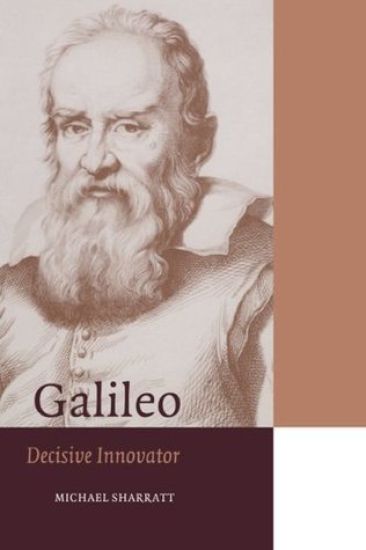
Michael Sharratt

Cambridge University Press
1996
pokkari
In this entertaining and authoritative biography Michael Sharratt examines the flair, imagination, hard-headedness, clarity, combativeness, and penetration of Galileo Galilei. To follow his career as he exploited unforeseen opportunities to unseat established ways of comprehending nature is to understand a crucial stage of the Scientific Revolution. Galileo was a path-breaker for the newly-invented telescope, the decoder of nature’s mathematical language, and a quite brilliant populariser of science. Even his reluctant excursion into theology has at last been officially and handsomely recognised by the Church’s ‘rehabilitation’ of the Inquisition’s most famous victim, fully discussed in the last chapter. This book makes his lasting contributions accessible to non-scientists and his mistakes are not overlooked. This is not a mythical story, but the biography of an innovator - one of the greatest ever known.
Galileo

Galileo

Drake Stillman

UNIVERSITY OF TORONTO PRESS
1990
pokkari
Since publication of Stillman Drake's landmark volume, Galileo at Work: His Scientific Biography, new and exciting information has come to light about this towering figure in the history of Western science. Drawing largely from Galileo's manuscript working papers, Drake now adds a wealth of detail to the story. Among the findings he presents in this volume are the steps that led to discovery of the pendulum law and the law of fall, by which Galileo opened the road to modern physics; Galileo's path to the new astronomy of Copernicus, closely linked to his first essays in physics; his subsequent misgivings and final reassurances provided by the telescope. Drake focuses on Galileo's pioneering work in physics, previously unknown, and shows that time has not diminished its value. He also considers some of the factors that played a part in the development of physics, its classical Greek beginnings, the medieval interlude, the contribution of some of Galileo's contemporaries, and the resistance of others to his new science of motion. We see in a new light the relation of that science to modern dynamics, created by Newton half a century later. Galileo is better known as an astronomer than as a modern physicist. Drake sheds new light here too as he explores Galileo's pioneer invention of satellite astronomy, his sighting of Neptune two and one-half centuries before that planet was identified, and his proposal of a cosmogony based on speeds of freely falling bodies. With this book Drake confirms Galileo as the first recognizably modern scientist, in both his methods and results.
Galileo

Galileo

Mario Livio

Simon Schuster
2020
sidottu
Galileo’s story may be more relevant today than ever before. At present, we face enormous crises—such as the minimization of the dangers of climate change—because the science behind these threats is erroneously questioned or ignored. Galileo encountered this problem 400 years ago. His discoveries, based on careful observations and ingenious experiments, contradicted conventional wisdom and the teachings of the church at the time. Consequently his books were forbidden by church authorities. Astrophysicist and bestselling author Mario Livio draws on his own scientific expertise to provide captivating insights into how Galileo reached his bold new conclusions about the cosmos and the laws of nature. A freethinker who followed the evidence wherever it led him, Galileo was one of the most significant figures behind the scientific revolution. He believed that every educated person should know science as well as literature, and insisted on reaching the widest audience possible, publishing his books in Italian rather than Latin. Galileo was put on trial with his life in the balance for refusing to renounce his scientific convictions. He remains a hero and inspiration to scientists and all of those who respect science—which, as Livio reminds us in this gripping book, remains threatened even today.
Galileo

Galileo

Mario Livio

Simon Schuster
2021
pokkari
An “intriguing and accessible” (Publishers Weekly) interpretation of the life of Galileo Galilei, one of history’s greatest and most fascinating scientists, that sheds new light on his discoveries and how he was challenged by science deniers. “We really need this story now, because we’re living through the next chapter of science denial” (Bill McKibben).Galileo’s story may be more relevant today than ever before. At present, we face enormous crises—such as minimizing the dangers of climate change—because the science behind these threats is erroneously questioned or ignored. Galileo encountered this problem 400 years ago. His discoveries, based on careful observations and ingenious experiments, contradicted conventional wisdom and the teachings of the church at the time. Consequently, in a blatant assault on freedom of thought, his books were forbidden by church authorities. Astrophysicist and bestselling author Mario Livio draws on his own scientific expertise and uses his “gifts as a great storyteller” (The Washington Post) to provide a “refreshing perspective” (Booklist) into how Galileo reached his bold new conclusions about the cosmos and the laws of nature. A freethinker who followed the evidence wherever it led him, Galileo was one of the most significant figures behind the scientific revolution. He believed that every educated person should know science as well as literature, and insisted on reaching the widest audience possible, publishing his books in Italian rather than Latin. Galileo was put on trial with his life in the balance for refusing to renounce his scientific convictions. He remains a hero and inspiration to scientists and all of those who respect science—which, as Livio reminds us in this “admirably clear and concise” (The Times, London) book, remains threatened everyday.
Galileo

Galileo

John P Johnston

Hansebooks
2021
pokkari
Galileo - and other poems is an unchanged, high-quality reprint of the original edition of 1878. Hansebooks is editor of the literature on different topic areas such as research and science, travel and expeditions, cooking and nutrition, medicine, and other genres. As a publisher we focus on the preservation of historical literature. Many works of historical writers and scientists are available today as antiques only. Hansebooks newly publishes these books and contributes to the preservation of literature which has become rare and historical knowledge for the future.