Kirjahaku
Etsi kirjoja tekijän nimen, kirjan nimen tai ISBN:n perusteella.
1000 tulosta hakusanalla Galit Shmueli
Practical Time Series Forecasting: A Hands-On Guide, Third Edition provides an applied approach to time-series forecasting. Forecasting is an essential component of predictive analytics. The book introduces popular forecasting methods and approaches used in a variety of business applications. The book offers clear explanations, practical examples, and end-of-chapter exercises and cases. Readers will learn to use forecasting methods using the Excel(R) add-in XLMiner(R) to develop effective forecasting solutions that extract business value from time-series data. Featuring improved organization and new material, the Third Edition also includes: Popular forecasting methods including smoothing algorithms, regression models, and neural networksA practical approach to evaluating the performance of forecasting solutionsA business-analytics exposition focused on linking time-series forecasting to business goalsGuided cases for integrating the acquired knowledge using real dataEnd-of-chapter problems to facilitate active learningA companion site with data sets, learning resources, and instructor materials (solutions to exercises, case studies, and slides)Globally-available textbook, available in both softcover and Kindle formats Practical Time Series Forecasting: A Hands-On Guide, Third Edition is the perfect textbook for upper-undergraduate, graduate and MBA-level courses as well as professional programs in data science and business analytics. The book is also designed for practitioners in the fields of operations research, supply chain management, marketing, economics, finance and management.For more information, visit forecastingbook.com
New to the second edition: A section on Acceptance-on-Zero plans, additional screenshots from the newly-designed SQCOnline.com with several new calculators, and improved book design for enhanced readability.Practical Acceptance Sampling is a hands-on introduction to the inspection of products and services for quality assurance using statistically-based sampling plans.In today's era of global supply chains, the path from raw materials to final product often takes place over multiple companies and across multiple continents. Acceptance sampling is key in the 21st century environment.Acceptance sampling plans provide criteria and decision rules for determining whether to accept or reject a batch based on a sample. They are therefore widely used by manufacturers, suppliers, contractors and subcontractors, and service providers in a wide range of industries.The book introduces readers to the most popular sampling plans, including Military Standards and civilian ISO and ANSI/ASQC/BS standards. It covers the design, choice and performance evaluation of different types of plans, including single- and double-stage plans, rectifying and non-rectifying plans, plans for pass/fail and continuous measurements, continuous sampling plans, and more.Practical Acceptance Sampling is suitable for courses on quality control and for quality practitioners with basic knowledge of statistics. It offers clear explanations, examples, end-of-chapter problems, and illustrations of state-of-the-art online resources. Methods are illustrated using Microsoft Excel, online calculators, and SQCOnline.com. However, any statistical software can be used with the book.A companion website to the book is available at www.SamplingBook.com
Projects are investments of resources for achieving a particular objective or set of objectives. Resources include time, money, manpower, and sometimes lives. Objectives include financial gain, social and health benefits, national goals, educational and scientific achievements, and reduction of suffering, among many others. Projects are undertaken by large and small organizations, by governments, non-profit organizations, private businesses, and by individuals. Determining whether to execute a project, or which project to execute among a set of possibilities is often a challenge with high stakes. Assessing the potential outcomes of a project can therefore be detrimental, leading to the importance of making informative decisions.Practical Risk Analysis for Project Planning is a hands-on introduction to integrating numerical data and domain knowledge into popular spreadsheet software such as Microsoft Excel or Google Spreadsheets, to arrive at informed project-planning decisions. The focus of the book is on formalizing domain expertise into numerical data, providing tools for assessing potential project performance, and evaluating performance under realistic uncertainty. The book introduces basic principles for assessing potential project performance and risk under different scenarios, by addressing uncertainty that arises at different levels. It describes measures of expected performance and risk, presents approaches such as scenario building and Monte Carlo simulation for addressing uncertainty, and introduces methods for comparing competing projects and reducing risk via project portfolios.A companion website to the book is available at www.RiskAnalysisBook.comNo special software is required except Excel or another spreadsheet software. While the book assumes no knowledge of statistics, operations research, or management science, it does rely on basic familiarity with Excel. Chapter exercises and examples of real projects are aimed at hands-on learning.
Run Related Probability Functions and their Application to Industrial Statistics: Ph.D. Thesis
Galit Shmueli
Createspace Independent Publishing Platform
2000
nidottu
Various procedures that are used in the field of industrial statistics, include switching/stopping rules between different levels of inspection. These rules are usually based on a sequence of previous inspections, and involve the concept of runs. A run is a sequence of identical events, such as a sequence of successes in a slot machine. However, waiting for a run to occur is not merely a superstitious act. In quality control, as in many other fields (e.g. reliability of engineering systems, DNA sequencing, psychology, ecology, and radar astronomy), the concept of runs is widely applied as the underlying basis for many rules. Rules that are based on the concept of runs, or "run-rules", are very intuitive and simple to apply (for example: "use reduced inspection following a run of 5 acceptable batches"). In fact, in many cases they are designed according to empirical rather than probabilistic considerations. Therefore, there is a need to investigate their theoretical properties and to assess their performance in light of practical requirements. In order to investigate the properties of such systems their complete probabilistic structure should be revealed. Various authors addressed the occurrence of runs from a theoretical point of view, with no regard to the field of industrial statistics or quality control. The main problem has been to specify the exact probability functions of variables which are related to runs. This problem was tackled by different methods (especially for the family of "order k distributions"), some of them leading to expressions for the probability function. In this work we present a method for computing the exact probability functions of variables which originate in systems with switching or stopping rules that are based on runs (including k-order variables as a special case). We use Feller's (1968) methods for obtaining the probability generating functions of run related variables, as well as for deriving the closed form of the probability function from its generating function by means of partial fraction expansion. We generalize Feller's method for other types of distributions that are based on runs, and that are encountered in the field of industrial statistics. We overcome the computational complexity encountered by Feller for computing the exact probability function, using efficient numerical methods for finding the roots of polynomials, simple recursive formulas, and popular mathematical software packages (e.g. Matlab and Mathematica). We then assess properties of some systems with switching/stopping run rules, and propose modifications to such rules.
Data Mining for Business Analytics
Galit Shmueli; Peter C. Bruce; Peter Gedeck; Nitin R. Patel
Wiley-Blackwell
2019
sidottu
Data Mining for Business Analytics: Concepts, Techniques, and Applications in Python presents an applied approach to data mining concepts and methods, using Python software for illustration Readers will learn how to implement a variety of popular data mining algorithms in Python (a free and open-source software) to tackle business problems and opportunities. This is the sixth version of this successful text, and the first using Python. It covers both statistical and machine learning algorithms for prediction, classification, visualization, dimension reduction, recommender systems, clustering, text mining and network analysis. It also includes: A new co-author, Peter Gedeck, who brings both experience teaching business analytics courses using Python, and expertise in the application of machine learning methods to the drug-discovery processA new section on ethical issues in data miningUpdates and new material based on feedback from instructors teaching MBA, undergraduate, diploma and executive courses, and from their studentsMore than a dozen case studies demonstrating applications for the data mining techniques describedEnd-of-chapter exercises that help readers gauge and expand their comprehension and competency of the material presentedA companion website with more than two dozen data sets, and instructor materials including exercise solutions, PowerPoint slides, and case solutions Data Mining for Business Analytics: Concepts, Techniques, and Applications in Python is an ideal textbook for graduate and upper-undergraduate level courses in data mining, predictive analytics, and business analytics. This new edition is also an excellent reference for analysts, researchers, and practitioners working with quantitative methods in the fields of business, finance, marketing, computer science, and information technology. “This book has by far the most comprehensive review of business analytics methods that I have ever seen, covering everything from classical approaches such as linear and logistic regression, through to modern methods like neural networks, bagging and boosting, and even much more business specific procedures such as social network analysis and text mining. If not the bible, it is at the least a definitive manual on the subject.” —Gareth M. James, University of Southern California and co-author (with Witten, Hastie and Tibshirani) of the best-selling book An Introduction to Statistical Learning, with Applications in R
Machine Learning for Business Analytics
Galit Shmueli; Peter C. Bruce; Amit V. Deokar; Nitin R. Patel
JOHN WILEY SONS INC
2023
sidottu
Machine Learning for Business Analytics Machine learning—also known as data mining or data analytics—is a fundamental part of data science. It is used by organizations in a wide variety of arenas to turn raw data into actionable information. Machine Learning for Business Analytics: Concepts, Techniques and Applications in RapidMiner provides a comprehensive introduction and an overview of this methodology. This best-selling textbook covers both statistical and machine learning algorithms for prediction, classification, visualization, dimension reduction, rule mining, recommendations, clustering, text mining, experimentation and network analytics. Along with hands-on exercises and real-life case studies, it also discusses managerial and ethical issues for responsible use of machine learning techniques. This is the seventh edition of Machine Learning for Business Analytics, and the first using RapidMiner software. This edition also includes: A new co-author, Amit Deokar, who brings experience teaching business analytics courses using RapidMiner Integrated use of RapidMiner, an open-source machine learning platform that has become commercially popular in recent years An expanded chapter focused on discussion of deep learning techniques A new chapter on experimental feedback techniques including A/B testing, uplift modeling, and reinforcement learning A new chapter on responsible data science Updates and new material based on feedback from instructors teaching MBA, Masters in Business Analytics and related programs, undergraduate, diploma and executive courses, and from their students A full chapter devoted to relevant case studies with more than a dozen cases demonstrating applications for the machine learning techniques End-of-chapter exercises that help readers gauge and expand their comprehension and competency of the material presented A companion website with more than two dozen data sets, and instructor materials including exercise solutions, slides, and case solutions This textbook is an ideal resource for upper-level undergraduate and graduate level courses in data science, predictive analytics, and business analytics. It is also an excellent reference for analysts, researchers, and data science practitioners working with quantitative data in management, finance, marketing, operations management, information systems, computer science, and information technology.
Machine Learning for Business Analytics
Galit Shmueli; Peter C. Bruce; Kuber R. Deokar; Nitin R. Patel
JOHN WILEY SONS INC
2023
sidottu
MACHINE LEARNING FOR BUSINESS ANALYTICS Machine learning—also known as data mining or predictive analytics—is a fundamental part of data science. It is used by organizations in a wide variety of arenas to turn raw data into actionable information. Machine Learning for Business Analytics: Concepts, Techniques, and Applications with Analytic Solver® Data Mining provides a comprehensive introduction and an overview of this methodology. The fourth edition of this best-selling textbook covers both statistical and machine learning algorithms for prediction, classification, visualization, dimension reduction, rule mining, recommendations, clustering, text mining, experimentation, time series forecasting and network analytics. Along with hands-on exercises and real-life case studies, it also discusses managerial and ethical issues for responsible use of machine learning techniques. This fourth edition of Machine Learning for Business Analytics also includes: An expanded chapter on deep learning A new chapter on experimental feedback techniques, including A/B testing, uplift modeling, and reinforcement learning A new chapter on responsible data science Updates and new material based on feedback from instructors teaching MBA, Masters in Business Analytics and related programs, undergraduate, diploma and executive courses, and from their students A full chapter devoted to relevant case studies with more than a dozen cases demonstrating applications for the machine learning techniques End-of-chapter exercises that help readers gauge and expand their comprehension and competency of the material presented A companion website with more than two dozen data sets, and instructor materials including exercise solutions, slides, and case solutions This textbook is an ideal resource for upper-level undergraduate and graduate level courses in data science, predictive analytics, and business analytics. It is also an excellent reference for analysts, researchers, and data science practitioners working with quantitative data in management, finance, marketing, operations management, information systems, computer science, and information technology.
Machine Learning for Business Analytics
Galit Shmueli; Peter C. Bruce; Peter Gedeck; Inbal Yahav; Nitin R. Patel
JOHN WILEY SONS INC
2023
sidottu
MACHINE LEARNING FOR BUSINESS ANALYTICS Machine learning —also known as data mining or data analytics— is a fundamental part of data science. It is used by organizations in a wide variety of arenas to turn raw data into actionable information. Machine Learning for Business Analytics: Concepts, Techniques, and Applications in R provides a comprehensive introduction and an overview of this methodology. This best-selling textbook covers both statistical and machine learning algorithms for prediction, classification, visualization, dimension reduction, rule mining, recommendations, clustering, text mining, experimentation, and network analytics. Along with hands-on exercises and real-life case studies, it also discusses managerial and ethical issues for responsible use of machine learning techniques. This is the second R edition of Machine Learning for Business Analytics. This edition also includes: A new co-author, Peter Gedeck, who brings over 20 years of experience in machine learning using RAn expanded chapter focused on discussion of deep learning techniquesA new chapter on experimental feedback techniques including A/B testing, uplift modeling, and reinforcement learningA new chapter on responsible data scienceUpdates and new material based on feedback from instructors teaching MBA, Masters in Business Analytics and related programs, undergraduate, diploma and executive courses, and from their studentsA full chapter devoted to relevant case studies with more than a dozen cases demonstrating applications for the machine learning techniquesEnd-of-chapter exercises that help readers gauge and expand their comprehension and competency of the material presentedA companion website with more than two dozen data sets, and instructor materials including exercise solutions, slides, and case solutions This textbook is an ideal resource for upper-level undergraduate and graduate level courses in data science, predictive analytics, and business analytics. It is also an excellent reference for analysts, researchers, and data science practitioners working with quantitative data in management, finance, marketing, operations management, information systems, computer science, and information technology.
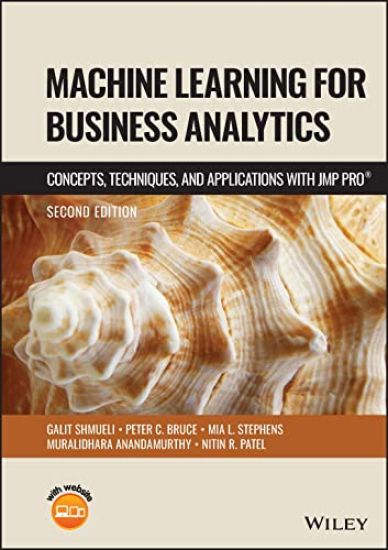
Machine Learning for Business Analytics
Galit Shmueli; Peter C. Bruce; Mia L. Stephens; Muralidhara Anandamurthy; Nitin R. Patel
JOHN WILEY SONS INC
2023
sidottu
MACHINE LEARNING FOR BUSINESS ANALYTICS An up-to-date introduction to a market-leading platform for data analysis and machine learning Machine Learning for Business Analytics: Concepts, Techniques, and Applications with JMP Pro, 2nd ed. offers an accessible and engaging introduction to machine learning. It provides concrete examples and case studies to educate new users and deepen existing users’ understanding of their data and their business. Fully updated to incorporate new topics and instructional material, this remains the only comprehensive introduction to this crucial set of analytical tools specifically tailored to the needs of businesses. Machine Learning for Business Analytics: Concepts, Techniques, and Applications with JMP Pro, 2nd ed. readers will also find: Updated material which improves the book’s usefulness as a reference for professionals beyond the classroomFour new chapters, covering topics including Text Mining and Responsible Data ScienceAn updated companion website with data sets and other instructor resources: www.jmp.com/dataminingbookA guide to JMP Pro's new features and enhanced functionality Machine Learning for Business Analytics: Concepts, Techniques, and Applications with JMP Pro, 2nd ed. is ideal for students and instructors of business analytics and data mining classes, as well as data science practitioners and professionals in data-driven industries.
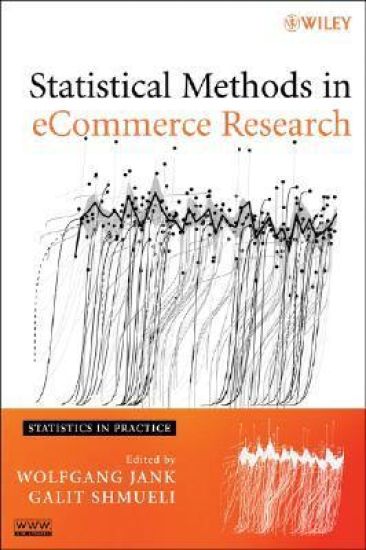
Statistical Methods in e-Commerce Research
Wolfgang Jank; Galit Shmueli
John Wiley Sons Inc
2008
sidottu
This groundbreaking book introduces the application of statistical methodologies to e-Commerce data With the expanding presence of technology in today's economic market, the use of the Internet for buying, selling, and investing is growing more popular and public in nature. Statistical Methods in e-Commerce Research is the first book of its kind to focus on the statistical models and methods that are essential in order to analyze information from electronic-commerce (e-Commerce) transactions, identify the challenges that arise with new e-Commerce data structures, and discover new knowledge about consumer activity. This collection gathers over thirty researchers and practitioners from the fields of statistics, computer science, information systems, and marketing to discuss the growing use of statistical methods in e-Commerce research. From privacy protection to economic impact, the book first identifies the many obstacles that are encountered while collecting, cleaning, exploring, and analyzing e-Commerce data. Solutions to these problems are then suggested using established and newly developed statistical and data mining methods. Finally, a look into the future of this evolving area of study is provided through an in-depth discussion of the emerging methods for conducting e-Commerce research. Statistical Methods in e-Commerce Research successfully bridges the gap between statistics and e-Commerce, introducing a statistical approach to solving challenges that arise in the context of online transactions, while also introducing a wide range of e-Commerce applications and problems where novel statistical methodology is warranted. It is an ideal text for courses on e-Commerce at the upper-undergraduate and graduate levels and also serves as a valuable reference for researchers and analysts across a wide array of subject areas, including economics, marketing, and information systems who would like to gain a deeper understanding of the use of statistics in their work.
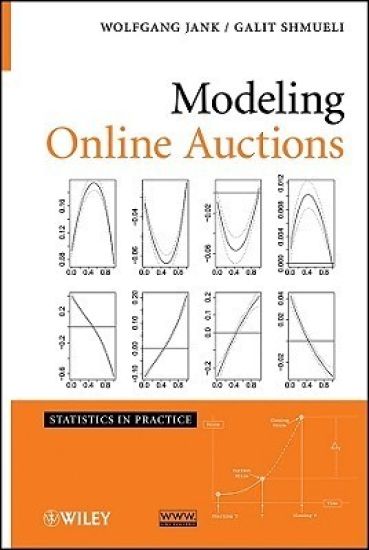
Explore cutting-edge statistical methodologies for collecting, analyzing, and modeling online auction data Online auctions are an increasingly important marketplace, as the new mechanisms and formats underlying these auctions have enabled the capturing and recording of large amounts of bidding data that are used to make important business decisions. As a result, new statistical ideas and innovation are needed to understand bidders, sellers, and prices. Combining methodologies from the fields of statistics, data mining, information systems, and economics, Modeling Online Auctions introduces a new approach to identifying obstacles and asking new questions using online auction data. The authors draw upon their extensive experience to introduce the latest methods for extracting new knowledge from online auction data. Rather than approach the topic from the traditional game-theoretic perspective, the book treats the online auction mechanism as a data generator, outlining methods to collect, explore, model, and forecast data. Topics covered include: Data collection methods for online auctions and related issues that arise in drawing data samples from a Web siteModels for bidder and bid arrivals, treating the different approaches for exploring bidder-seller networksData exploration, such as integration of time series and cross-sectional information; curve clustering; semi-continuous data structures; and data hierarchiesThe use of functional regression as well as functional differential equation models, spatial models, and stochastic models for capturing relationships in auction dataSpecialized methods and models for forecasting auction prices and their applications in automated bidding decision rule systems Throughout the book, R and MATLAB software are used for illustrating the discussed techniques. In addition, a related Web site features many of the book's datasets and R and MATLAB code that allow readers to replicate the analyses and learn new methods to apply to their own research. Modeling Online Auctions is a valuable book for graduate-level courses on data mining and applied regression analysis. It is also a one-of-a-kind reference for researchers in the fields of statistics, information systems, business, and marketing who work with electronic data and are looking for new approaches for understanding online auctions and processes. Visit this book's companion website by clicking here
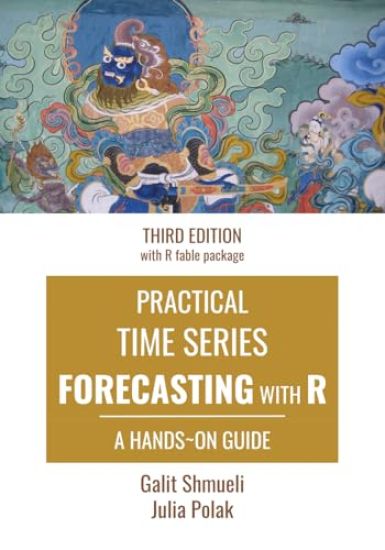
Practical Time Series Forecasting with R
Julia Polak; Galit Shmueli
Axelrod Schnall Publishers
2024
pokkari
Getting Started with Business Analytics
David Roi Hardoon; Galit Shmueli
Taylor Francis Inc
2013
sidottu
Assuming no prior knowledge or technical skills, Getting Started with Business Analytics: Insightful Decision-Making explores the contents, capabilities, and applications of business analytics. It bridges the worlds of business and statistics and describes business analytics from a non-commercial standpoint. The authors demystify the main concepts and terminologies and give many examples of real-world applications.The first part of the book introduces business data and recent technologies that have promoted fact-based decision-making. The authors look at how business intelligence differs from business analytics. They also discuss the main components of a business analytics application and the various requirements for integrating business with analytics.The second part presents the technologies underlying business analytics: data mining and data analytics. The book helps you understand the key concepts and ideas behind data mining and shows how data mining has expanded into data analytics when considering new types of data such as network and text data.The third part explores business analytics in depth, covering customer, social, and operational analytics. Each chapter in this part incorporates hands-on projects based on publicly available data.Helping you make sound decisions based on hard data, this self-contained guide provides an integrated framework for data mining in business analytics. It takes you on a journey through this data-rich world, showing you how to deploy business analytics solutions in your organization. You can check out the book's website here.
Practical Time Series Forecasting with R: A Hands-On Guide [2nd Edition]
Kenneth C. Lichtendahl; Galit Shmueli
Axelrod Schnall Publishers
2016
nidottu
Practical Time Series Forecasting with R: A Hands-On Guide, Second Edition provides an applied approach to time-series forecasting. Forecasting is an essential component of predictive analytics. The book introduces popular forecasting methods and approaches used in a variety of business applications. The book offers clear explanations, practical examples, and end-of-chapter exercises and cases. Readers will learn to use forecasting methods using the free open-source R software to develop effective forecasting solutions that extract business value from time-series data.Featuring improved organization and new material, the Second Edition also includes: Popular forecasting methods including smoothing algorithms, regression models, and neural networksA practical approach to evaluating the performance of forecasting solutionsA business-analytics exposition focused on linking time-series forecasting to business goalsGuided cases for integrating the acquired knowledge using real dataEnd-of-chapter problems to facilitate active learningA companion site with data sets, R code, learning resources, and instructor materials (solutions to exercises, case studies)Globally-available textbook, available in both softcover and Kindle formatsPractical Time Series Forecasting with R: A Hands-On Guide, Second Edition is the perfect textbook for upper-undergraduate, graduate and MBA-level courses as well as professional programs in data science and business analytics. The book is also designed for practitioners in the fields of operations research, supply chain management, marketing, economics, finance and management.For more information, visit forecastingbook.com
Provides an important framework for data analysts in assessing the quality of data and its potential to provide meaningful insights through analysis Analytics and statistical analysis have become pervasive topics, mainly due to the growing availability of data and analytic tools. Technology, however, fails to deliver insights with added value if the quality of the information it generates is not assured. Information Quality (InfoQ) is a tool developed by the authors to assess the potential of a dataset to achieve a goal of interest, using data analysis. Whether the information quality of a dataset is sufficient is of practical importance at many stages of the data analytics journey, from the pre-data collection stage to the post-data collection and post-analysis stages. It is also critical to various stakeholders: data collection agencies, analysts, data scientists, and management. This book: Explains how to integrate the notions of goal, data, analysis and utility that are the main building blocks of data analysis within any domain.Presents a framework for integrating domain knowledge with data analysis.Provides a combination of both methodological and practical aspects of data analysis.Discusses issues surrounding the implementation and integration of InfoQ in both academic programmes and business / industrial projects.Showcases numerous case studies in a variety of application areas such as education, healthcare, official statistics, risk management and marketing surveys.Presents a review of software tools from the InfoQ perspective along with example datasets on an accompanying website. This book will be beneficial for researchers in academia and in industry, analysts, consultants, and agencies that collect and analyse data as well as undergraduate and postgraduate courses involving data analysis.
Si tu veux être mon amie de Galit Fink et Mervet Akram Sha'ban (Fiche de lecture)
Sandrine Cabron
FichesDeLecture.com
2014
pokkari