

Kirjahaku
Etsi kirjoja tekijän nimen, kirjan nimen tai ISBN:n perusteella.
1000 tulosta hakusanalla Garrett Francis



A new short story from the mind of author Garrett Francis.Julio's supposed to be on a field trip with the rest of his sixth grade class. Instead, he's standing at a bus stop with his hood up so that bystanders can't see the damage his mother has done to his cheek with a crowbar.And once he gets on that Richmond city bus, he embarks on a field trip of the self, reflecting upon the journey he, his mother and his brother have on thus far, and weighing what options he as an individual has next."Julio: Conqueror of the Crowbar" is a gritty story that touches upon themes of immigration, poverty and race, but also brings into focus what it is we as a society choose to thrust before our kids and label "greatness."If you enjoy short stories from any of the following authors, "Julio: Conqueror of the Crowbar" might just resonate with you: Caitlin HorrocksAdam JohnsonAlice WalkerRaymond CarverColum MccannF. Scott FitzgeraldJim HarrisonKaren Russell"Julio: Conqueror of the Crowbar" is a story from Strays Like Us, a collection of ten standalone short stories exploring what it means to grow up in America.




Violation of the Cloister: An Historical Synopsis and Commentary
Garrett Francis Barry
Literary Licensing, LLC
2013
nidottu

Particularidades de la REGLA DE OSHA YORUBA doctrina africana animista conocida por SANTERIA
Francisco A.-Garrett
Lulu.com
2020
nidottu
Culto Orisa Yoruba recibe el nombre en Cuba de "Regla de Osha", es herencia del antiguo Egipto civilizacion "Meroita", emigra al territorio de Nigeria a traves del Sudan desde el rio Nilo hasta el rio Niger. Osha-Ifa culto multietnico, influido por factores historicos, demograficos y etnicos, sus inicios en Cuba ano 1517 la habilidad del pueblo para conservar vivas sus tradiciones a enmascarar su Culto tras los Santos para evitar Inquisicion. Conocimientos adquiridos al lado de mayores. Estudio de los diversos temas de la Regla de Osha afrocubana y muchos otros para sus funciones de sacerdote. "profetas Orishas", "Oraculo de Biague (Obi)", "Oraculo del Merindinlogun", "Ceremonias y Rituales", "Cantos", "Oraciones", "Uso de los Palos", "Misa Espiritual" etc. Religion Monoteista un solo Dios, denominado "Olofin" culto Animista que afirma que todo esta vivificado por un espiritu.Los Orishas restablecen el equilibrio electromagnetico del organismo con la sanacion de enfermedades.
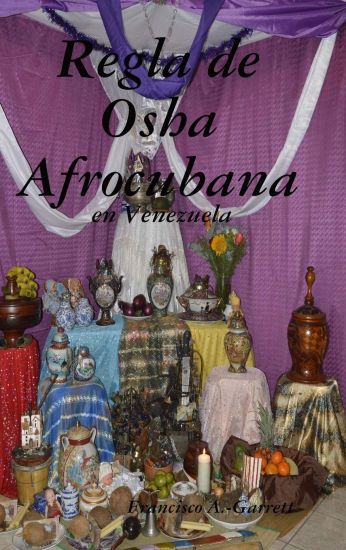
Regla de Osha Afrocubana es una Religion Monoteista con un solo Dios representado en la triologia Olofin, Olodumare, Olorun. Pero tambien es un Culto animista porque afirma que todo ser natural esta vivificado por un espiritu. Los Orishas son profectas intermediarios entre Dios y los hombres que transmiten sus profesias por medio del Oraculo Merindinlogun (caracoles)

História de vida de um Almeida Garrett
Francisco M de Almeida Garrett Ferreira
Lulu Press Inc
2022
pokkari
HIST RIA DE VIDA DE UM ALMEIDA GARRETT autobiografia de um luso descendente de origem aristocr tica e nobre, percursor do ramo Almeida Garrett na Venezuela, com profunda consci ncia do impacto das suas escolhas pol ticas, homem exemplar no seu percurso de vida profissional na fotografia e no jornalismo. Escritor e investigador da religi o ancestral afro-cubana em Venezuela "Regla de Osha" Hist ria, genealogia e her ldica da fam lia Almeida Garrett Publica o de fotografias sem data nem nome como refer ncia da solidifica o da identidade luo-venezuelana de portugueses residentes no estrangeiro.

Memoria Historica Da Excellentissima Duqueza De Palmella D. Eugenia Francisca Xavier Telles Da Gama (1848)
J. B. De Almeida-Garrett
KESSINGER PUBLISHING, LLC
2010
nidottu

This book explores the cultural history of embryology in Tibet, in culture, religion, art and literature, and what this reveals about its medicine and religion. Filling a significant gap in the literature this is the first in-depth exploration of Tibetan medical history in the English language. It reveals the prevalence of descriptions of the development of the human body – from conception to birth – found in all forms of Tibetan religious literature, as well as in medical texts and in art. By analysing stories of embryology, Frances Garrett explores questions of cultural transmission and adaptation: How did Tibetan writers adapt ideas inherited from India and China for their own purposes? What original views did they develop on the body, on gender, on creation, and on life itself? The transformations of embryological narratives over several centuries illuminate key turning points in Tibetan medical history, and its relationship with religious doctrine and practice. Embryology was a site for both religious and medical theorists to contemplate profound questions of being and becoming, where topics such as pharmacology and nosology were left to shape secular medicine. The author argues that, in terms of religion, stories of human development comment on embodiment, gender, socio-political hierarchy, religious ontology, and spiritual progress. Through the lens of embryology, this book examines how these concerns shift as Tibetan history moves through the formative 'renaissance' period of the twelfth through to the seventeenth centuries.

This book explores the cultural history of embryology in Tibet, in culture, religion, art and literature, and what this reveals about its medicine and religion. Filling a significant gap in the literature this is the first in-depth exploration of Tibetan medical history in the English language. It reveals the prevalence of descriptions of the development of the human body – from conception to birth – found in all forms of Tibetan religious literature, as well as in medical texts and in art. By analysing stories of embryology, Frances Garrett explores questions of cultural transmission and adaptation: How did Tibetan writers adapt ideas inherited from India and China for their own purposes? What original views did they develop on the body, on gender, on creation, and on life itself? The transformations of embryological narratives over several centuries illuminate key turning points in Tibetan medical history, and its relationship with religious doctrine and practice. Embryology was a site for both religious and medical theorists to contemplate profound questions of being and becoming, where topics such as pharmacology and nosology were left to shape secular medicine. The author argues that, in terms of religion, stories of human development comment on embodiment, gender, socio-political hierarchy, religious ontology, and spiritual progress. Through the lens of embryology, this book examines how these concerns shift as Tibetan history moves through the formative 'renaissance' period of the twelfth through to the seventeenth centuries.

This eclectic selection of poems straddle decades, generations and continents and constitute the stories collected by the author over a lifetime. The works reflect on the human condition, what the oral historian Studs Terkel called "life and its uncertainties," love's exuberance and sad needs, birth's joy and death's dark wounds, the comedy of communal days and the wearying tears of isolating night. Its language seeks to plummet the power of the communicated word, the fragility of understanding, and the frustrations of muteness.



Spanning images and voices from around the globe, as well as from the tiny, muted corners of a woman's dreams, this new collection spins and stretches and soothes with its vibrant and teasing language and rich stories.
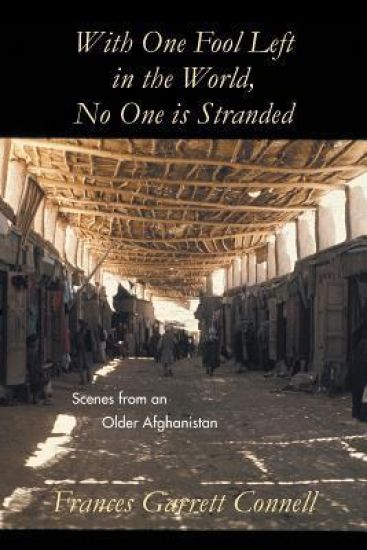
With One Fool Left in the World, No One Is Stranded
Frances Garrett Connell
Authorhouse
2014
pokkari

With One Fool Left in the World, No One Is Stranded
Frances Garrett Connell
Authorhouse
2014
sidottu