

Kirjahaku
Etsi kirjoja tekijän nimen, kirjan nimen tai ISBN:n perusteella.
1000 tulosta hakusanalla Garrett William Thompson
Reminiscences Of Public Men In Alabama For Thirty Years (1872)
William Garrett
KESSINGER PUBLISHING CO
2007
pokkari
Bad Karma: Thinking Twice About the Social Consequences of Reincarnation Theory is a cautionary study set in the context of the history of ideas. The thesis of the book is that rising popularity of reincarnation theory in American culture poses a significant danger- especially in light of the dramatic transitions brought about by the globalization of corporate values in the 21st century. America faces an immediate future in which displacement and social stratification will be a prominent feature of the social life. Viewed through the prism of reincarnation theory, desperate poverty may come to be seen not as an outrage to justice, but as an expression of justice- justice on a "deeper" level. Those born into wretched circumstances will be seen as having made choices as to their birth; brutal and deprived lives will be seen as people "working out their karma." The book opens with a philosophical analysis of the doctrines of both reincarnation and karma. The history of the doctrines in India will be reviewed, and various emergences of reincarnation doctrine in the West will be presented. Special attention brought to why none of these emergences took root in Western culture. Finally, the development of Buddhism in America is assessed, with special attention given to whether an American version of Buddhism necessarily entails a belief in reincarnation.

In the South, one can find any number of bronze monuments to the Confederacy featuring heroic images of Robert E. Lee, Stonewall Jackson, J. E. B. Stuart, and many lesser commanders. But while the tarnish on such statues has done nothing to color the reputation of those great leaders, there remains one Confederate commander whose tarnished image has nothing to do with bronze monuments. Nowhere in the South does a memorial stand to Lee's intimate friend and second-in-command James Longstreet.In Lee's Tarnished Lieutenant, William Garrett Piston examines the life of James Longstreet and explains how a man so revered during the course of the war could fall from grace so swiftly and completely. Unlike other generals in gray whose deeds are familiar to southerners and northerners alike, Longstreet has the image not of a hero but of an incompetent who lost the Battle of Gettysburg and, by extension, the war itself. Piston's reappraisal of the general's military record establishes Longstreet as an energetic corps commander with an unsurpassed ability to direct troops in combat, as a trustworthy subordinate willing to place the war effort above personal ambition. He made mistakes, but Piston shows that he did not commit the grave errors at Gettysburg and elsewhere of which he was so often accused after the war.In discussing Longstreet's postwar fate, Piston analyzes the literature and public events of the time to show how the southern people, in reaction to defeat, evolved an image of themselves which bore little resemblance to reality. As a product of the Georgia backwoods, Longstreet failed to meet the popular cavalier image embodied by Lee, Stuart, and other Confederate heroes. When he joined the Republican party during Reconstruction, Longstreet forfeited his wartime reputation and quickly became a convenient target for those anxious to explain how a "superior people" could have lost the war. His new role as the villain of the Lost Cause was solidified by his own postwar writings. Embittered by years of social ostracism resulting from his Republican affiliation, resentful of the orchestrated deification of Lee and Stonewall Jackson, Longstreet exaggerated his own accomplishments and displayed a vanity that further alienated an already offended southern populace.Beneath the layers of invective and vilification remains a general whose military record has been badly maligned. Lee's Tarnished Lieutenant explains how this reputation developed—how James Longstreet became, in the years after Appomattox, the scapegoat for the South's defeat, a Judas for the new religion of the Lost Cause.
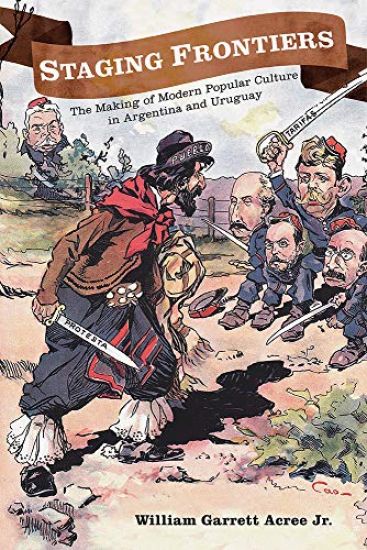
Swashbuckling tales of valiant gauchos roaming Argentina and Uruguay were nineteenth-century Latin American bestsellers. But when the stories jumped from the page to the circus stage and beyond, their cultural, economic, and political influence revolutionized popular culture and daily life.In this expansive and engaging narrative William Acree guides readers through the deep history of popular entertainment before turning to circus culture and rural dramas that celebrated the countryside on stage. More than just riveting social experiences, these dramas were among the region's most dominant attractions on the eve of the twentieth century. Staging Frontiers further explores the profound impacts this phenomenon had on the ways people interacted and on the broader culture that influenced the region. This new, modern popular culture revolved around entertainment and related Products, yet it was also central to making sense of social class, ethnic identity, and race as demographic and economic transformations were reshaping everyday experiences in this rapidly urbanizing region.
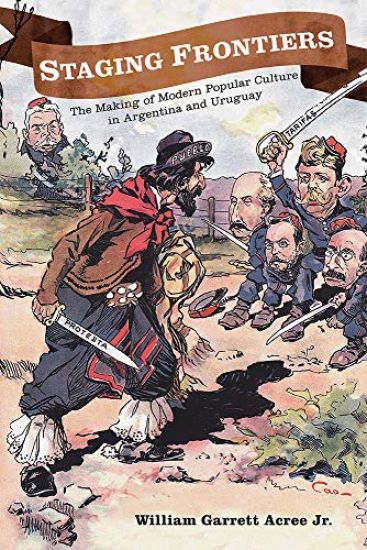
Swashbuckling tales of valiant gauchos roaming Argentina and Uruguay were nineteenth-century Latin American bestsellers. But when the stories jumped from the page to the circus stage and beyond, their cultural, economic, and political influence revolutionized popular culture and daily life.In this expansive and engaging narrative William Acree guides readers through the deep history of popular entertainment before turning to circus culture and rural dramas that celebrated the countryside on stage. More than just riveting social experiences, these dramas were among the region's most dominant attractions on the eve of the twentieth century. Staging Frontiers further explores the profound impacts this phenomenon had on the ways people interacted and on the broader culture that influenced the region. This new, modern popular culture revolved around entertainment and related Products, yet it was also central to making sense of social class, ethnic identity, and race as demographic and economic transformations were reshaping everyday experiences in this rapidly urbanizing region.
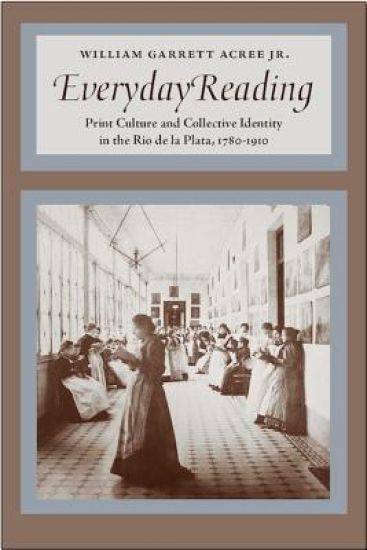
Starting in the late nineteenth century, the region of South America known as the Rio de la Plata (containing modern-day Uruguay and Argentina) boasted the highest literacy rates in Latin America. In Everyday Reading, William Acree explores the history, events, and culture that gave rise to the region's remarkable progress. With a specific focus on its print culture, in the form of newspapers, political advertisements and documents, schoolbooks, and even stamps and currency, Acree creates a portrait of a literary culture that permeated every aspect of life.Everyday Reading argues that the introduction of the printing press into the Rio de la Plata in the 1780s hastened the collapse of Spanish imperial control and played a major role in the transition to independence some thirty years later. After independence, print culture nurtured a new identity and helped sustain the region through the tumult of civil war in the mid-1800s. Acree concludes by examining the role of reading in formal education, which had grown exponentially by the early twentieth century as schoolchildren were taught to fulfill traditional roles in society.Ultimately, Everyday Reading humanizes literary culture, demonstrating its unrecognized and unexpected influence in everyday lives.

Reminiscences Of Public Men In Alabama For Thirty Years (1872)
William Garrett
KESSINGER PUBLISHING, LLC
2010
sidottu

The Poets' Bible. (An attempt to set forth the great scenes and characters of Holy Scripture, in the words of the poets.) Selected and edited by W. G. Horder. New and Revised Edition
William Garrett Horder
British Library, Historical Print Editions
2011
pokkari

The Poets' Bible. Selected and edited by W. G. Horder ... Old Testament Section. Second edition. (New Testament Section. Third edition.).
William Garrett Horder
British Library, Historical Print Editions
2011
pokkari

This book brings together in a single volume Marie Stopes' essential writings. In his Introduction, Professor Garrett sets her ideas into historical context and assesses the extent to which those ideas are, and will continue to become, part of the 21st century.




Lady In The Mist
William Garrett; Sharon Zink
Createspace Independent Publishing Platform
2016
nidottu

Mike Murphy Park Ranger: The Bear
William Garrett
Createspace Independent Publishing Platform
2017
nidottu