Kirjojen hintavertailu. Mukana 11 244 527 kirjaa ja 12 kauppaa.

Kirjahaku

Etsi kirjoja tekijän nimen, kirjan nimen tai ISBN:n perusteella.

1000 tulosta hakusanalla Gary M. Pomerantz

The Last Pass: Cousy, Russell, the Celtics, and What Matters in the End
The New York Times bestseller Out of the greatest dynasty in American professional sports history, a Boston Celtics team led by Bill Russell and Bob Cousy, comes an intimate story of race, mortality, and regret About to turn ninety, Bob Cousy, the Hall of Fame Boston Celtics captain who led the team to its first six championships on an unparalleled run, has much to look back on in contentment. But he has one last piece of unfinished business. The last pass he hopes to throw is to close the circle with his great partner on those Celtic teams, fellow Hall of Famer Bill Russell. These teammates were basketball's Ruth and Gehrig, and Cooz, as everyone calls him, was famously ahead of his time as an NBA player in terms of race and civil rights. But as the decades passed, Cousy blamed himself for not having done enough, for not having understood the depth of prejudice Russell faced as an African-American star in a city with a fraught history regarding race. Cousy wishes he had defended Russell publicly, and that he had told him privately that he had his back. At this late hour, he confided to acclaimed historian Gary Pomerantz over the course of many interviews, he would like to make amends. At the heart of the story The Last Pass tells is the relationship between these two iconic athletes. The book is also in a way Bob Cousy's last testament on his complex and fascinating life. As a sports story alone it has few parallels: An poor kid whose immigrant French parents suffered a dysfunctional marriage, the young Cousy escaped to the New York City playgrounds, where he became an urban legend known as the Houdini of the Hardwood. The legend exploded nationally in 1950, his first year as a Celtic: he would be an all-star all 13 of his NBA seasons. But even as Cousy's on-court imagination and daring brought new attention to the pro game, the Celtics struggled until Coach Red Auerbach landed Russell in 1956. Cooz and Russ fit beautifully together on the court, and the Celtics dynasty was born. To Boston's white sportswriters it was Cousy's team, not Russell's, and as the civil rights movement took flight, and Russell became more publicly involved in it, there were some ugly repercussions in the community, more hurtful to Russell than Cousy feels he understood at the time. The Last Pass situates the Celtics dynasty against the full dramatic canvas of American life in the 50s and 60s. It is an enthralling portrait of the heart of this legendary team that throws open a window onto the wider world at a time of wrenching social change. Ultimately it is a book about the legacy of a life: what matters to us in the end, long after the arena lights have been turned off and we are alone with our memories. On August 22, 2019, Bob Cousy was awarded the Presidential Medal of Freedom
Wilt, 1962: The Night of 100 Points and the Dawn of a New Era

Wilt, 1962: The Night of 100 Points and the Dawn of a New Era

Gary M. Pomerantz

Crown Publishing Group (NY)
2006
nidottu
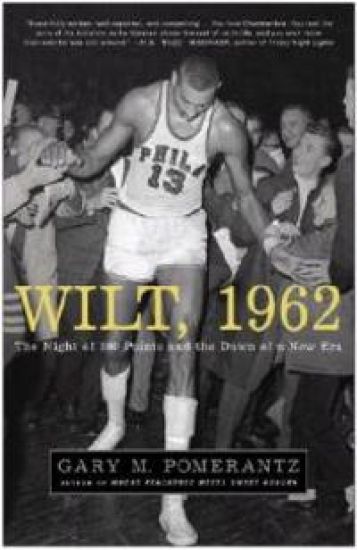
On the night of March 2, 1962, in Hershey, Pennsylvania, right up the street from the chocolate factory, Wilt Chamberlain, a young and striking athlete celebrated as the Big Dipper, scored one hundred points in a game against the New York Knickerbockers. As historic and revolutionary as the achievement was, it remains shrouded in myth. The game was not televised; no New York sportswriters showed up; and a fourteen-year-old local boy ran onto the court when Chamberlain scored his hundredth point, shook his hand, and then ran off with the basketball. In telling the story of this remarkable night, author Gary M. Pomerantz brings to life a lost world of American sports. In 1962, the National Basketball Association, stepchild to the college game, was searching for its identity. Its teams were mostly white, the number of black players limited by an unspoken quota. Games were played in drafty, half-filled arenas, and the players traveled on buses and trains, telling tall tales, playing cards, and sometimes reading Joyce. Into this scene stepped the unprecedented Wilt Chamberlain: strong and quick-witted, voluble and enigmatic, a seven-footer who played with a colossal will and a dancer's grace. That strength, will, grace, and mystery were never more in focus than on March 2, 1962. Pomerantz tracked down Knicks and Philadelphia Warriors, fans, journalists, team officials, other NBA stars of the era, and basketball historians, conducting more than 250 interviews in all, to recreate in painstaking detail the game that announced the Dipper's greatness. He brings us to Hershey, Pennsylvania, a sweet-seeming model of the gentle, homogeneous small-town America that was fast becoming anachronistic. We see the fans and players, alternately fascinated and confused by Wilt, drawn anxiously into the spectacle. Pomerantz portrays the other legendary figures in this story: the Warriors' elegant coach Frank McGuire; the beloved, if rumpled, team owner Eddie Gottlieb; and the irreverent p.a. announcer Dave "the Zink" Zinkoff, who handed out free salamis courtside. At the heart of the book is the self-made Chamberlain, a romantic cosmopolitan who owned a nightclub in Harlem and shrugged off segregation with a bebop cool but harbored every slight deep in his psyche. March 2, 1962, presented the awesome sight of Wilt Chamberlain imposing himself on a world that would diminish him. Wilt, 1962 is not only the dramatic story of a singular basketball game but a meditation on small towns, midcentury America, and one of the most intriguing figures in the pantheon of sports heroes. Also available as a Random House AudioBook
The Devil's Tickets: A Vengeful Wife, a Fatal Hand, and a New American Age
Kansas City, 1929: Myrtle and Jack Bennett sit down with another couple for an evening of bridge. As the game intensifies, Myrtle complains that Jack is a "bum bridge player." For such insubordination, he slaps her hard in front of their stunned guests and announces he is leaving. Moments later, sobbing, with a Colt .32 pistolin hand, Myrtle fires four shots, killing her husband. The Roaring 1920s inspired nationwide fads-flagpole sitting, marathon dancing, swimming-pool endurance floating. But of all the mad games that cheered Americans between the wars, the least likely was contract bridge. As the Barnum of the bridge craze, Ely Culbertson, a tuxedoed boulevardier with a Russian accent, used mystique, brilliance, and a certain madness to transform bridge from a social pastime into a cultural movement that made him rich and famous. In writings, in lectures, and on the radio, he used the Bennett killing to dramatize bridge as the battle of the sexes. Indeed, Myrtle Bennett's murder trial became a sensation because it brought a beautiful housewife-and hints of her husband's infidelity-from the bridge table into the national spotlight. James A. Reed, Myrtle's high-powered lawyer and onetime Democratic presidential candidate, delivered soaring, tear-filled courtroom orations. As Reed waxed on about the sanctity of womanhood, he was secretly conducting an extramarital romance with a feminist trailblazer who lived next door. To the public, bridge symbolized tossing aside the ideals of the Puritans-who referred derisively to playing cards as "the Devil's tickets"-and embracing the modern age. Ina time when such fearless women as Amelia Earhart, Dorothy Parker, and Marlene Dietrich were exalted for their boldness, Culbertson positioned his game as a challenge to all housebound women. At the bridge table, he insisted, a woman could be her husband's equal, and more. In the gathering darkness of the Depression, Culbertson leveraged his own ballyhoo and naughty innuendo for all it was worth, maneuvering himself and his brilliant wife, Jo, his favorite bridge partner, into a media spectacle dubbed the Bridge Battle of the Century. Through these larger-than-life characters and the timeless partnership game they played, The Devil's Tickets captures a uniquely colorful age and a tension in marriage that is eternal.
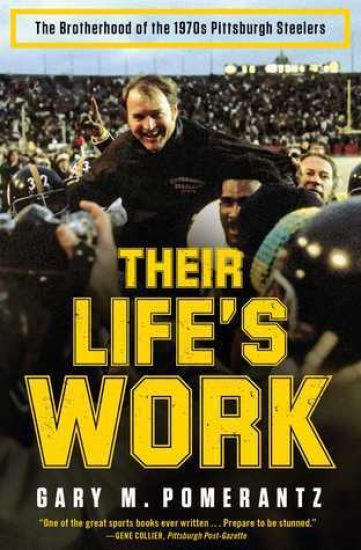
Their Life's Work: The Brotherhood of the 1970s Pittsburgh Steelers
"The definitive book of the 1970s Pittsburgh Steelers" (Scott Brown, ESPN), Their Life's Work is a triumphant yet intimate literary sports book that--through exquisite reportage, love, and honesty--tells the full story of the best team to ever play the game.The Pittsburgh Steelers of the 1970s won an unprecedented and unmatched four Super Bowls in six years. A dozen of those Steelers players, coaches, and executives have been inducted into the Hall of Fame, and three decades later their names echo in popular memory: "Mean" Joe Greene, Terry Bradshaw, Franco Harris, Mike Webster, Jack Lambert, Lynn Swann, and John Stallworth. In ways exhilarating and heartbreaking, they define not only the brotherhood of sports but those elements of the game that engage tens of millions of Americans: its artistry and its brutality. Drawing on hundreds of interviews, Their Life's Work is a richly textured story of a team and a sport, what the game gave these men, and what the game took. It gave fame, wealth, and, above all, a brotherhood of players, twelve of whom died before turning sixty. To a man, they said they'd do it again, all of it. They bared the soul of the game to Gary Pomerantz, and he captured it wondrously. "Here is a book as hard-hitting and powerful as the 'Steel Curtain' dynasty that Pomerantz depicts so deftly. It's the NFL's version of The Boys of Summer, with equal parts triumph and melancholy. Pomerantz's writing is strong, straightforward, funny, sentimental, and blunt. It's as working class and gritty as the men he writes about" (The Tampa Tribune, Top 10 Sports Books of the Year).
Little Gary's Journey: An autobiograph in story form
Little Gary's Journey is an autobiography of real-life events told in story from, spanning seventy-five years. First, we are introduced to Little Gary as a young child, followed by the joys of adolescence and then into adulthood as he copes with the harsh realities of life through hard work, perseverance, and fortitude, guided by strong spiritual practice. Though his journey may not exactly parallel that of others, in some way it could contain similar experiences.
Voids in Materials

Voids in Materials

Gary M. Gladysz; Krishan K. Chawla

Elsevier Science Publishing Co Inc
2020
nidottu
All materials have voids in them, at some scale. Sometimes the voids are ignored, sometimes they are taken into account, and other times they are the focal point of the research. Voids in Materials: From Unavoidable Defects to Designed Cellular Materials takes due notice of all these occurrences, whether designed or unavoidable defects. We define, categorize, and characterize the voids (or empty spaces in materials) and we analyze the effects they have on material properties. This second edition is an updated and expanded central reference for voids in materials and covers all types of voids, intrinsic and intentional, and stochastic and nonstochastic, and the processes and conditions that are needed to create them and is a valuable resource to students in the areas of mechanical engineering, chemical engineering, materials science and engineering, physics, and chemistry, as well as scientists, researchers, and engineers in industry.
A Short History of Taiwan

A Short History of Taiwan

Gary M. Davison

Praeger Publishers Inc
2003
sidottu
This concise account of Taiwan's history makes a cogent, compelling argument for the right of the Taiwanese people to declare their nation independent, if they so choose. Davison's bold stand—unprecedented from a Western author—challenges the one China notion advanced in the Shanghai Communique of 1972 and states unequivocally that, should independence be proclaimed, it could only be taken away by force if the international community sides with contemporary might over historical right. He argues that the possible conflict could be sufficiently incendiary to induce a major military clash between the United States, the People's Republic of China, and other major powers. Davison lets the facts of Taiwanese history make the case for Taiwan's existence as a unique national entity. A historical overview details the circumstances under which the Qing dynasty made its 17th century claim on the island, the events that led to cession to Japan in 1895, the origins of the Guomindang occupation during the Chinese Civil War, and the dramatic election of March 2000 that brought the Democratic Progressive Party's Chen Shuibian to office, ending Guomindang domination. After centuries of outsider domination, and over a hundred years of disconnection from any government exercising power over all of mainland China, the Taiwanese people are in a position to make a decision for national independence based on solid historical evidence.
Before Brown

Before Brown

Gary M. Lavergne

University of Texas Press
2010
nidottu
Winner, Coral Horton Tullis Memorial Prize for Best Book on Texas History, Texas State Historical Association, 2010 Carr P. Collins Award, Texas Institute of Letters, 2011On February 26, 1946, an African American from Houston applied for admission to the University of Texas School of Law. Although he met all of the school's academic qualifications, Heman Marion Sweatt was denied admission because he was black. He challenged the university's decision in court, and the resulting case, Sweatt v. Painter, went to the U.S. Supreme Court, which ruled in Sweatt's favor. The Sweatt case paved the way for the landmark Brown v. Board of Education of Topeka rulings that finally opened the doors to higher education for all African Americans and desegregated public education in the United States.In this engrossing, well-researched book, Gary M. Lavergne tells the fascinating story of Heman Sweatt's struggle for justice and how it became a milestone for the civil rights movement. He reveals that Sweatt was a central player in a master plan conceived by the National Association for the Advancement of Colored People (NAACP) for ending racial segregation in the United States. Lavergne masterfully describes how the NAACP used the Sweatt case to practically invalidate the "separate but equal" doctrine that had undergirded segregated education for decades. He also shows how the Sweatt case advanced the career of Thurgood Marshall, whose advocacy of Sweatt taught him valuable lessons that he used to win the Brown v. Board of Education case in 1954 and ultimately led to his becoming the first black Associate Justice of the Supreme Court.
Russia's Path toward Enlightenment

Russia's Path toward Enlightenment

Gary M. Hamburg

Yale University Press
2016
sidottu
This book, focusing on the history of religious and political thinking in early modern Russia, demonstrates that Russia’s path toward enlightenment began long before Peter the Great’s opening to the West. Examining a broad range of writings, G. M. Hamburg shows why Russia’s enlightenment constituted a precondition for the explosive emergence of nineteenth-century writers such as Fedor Dostoyevsky and Vladimir Soloviev.
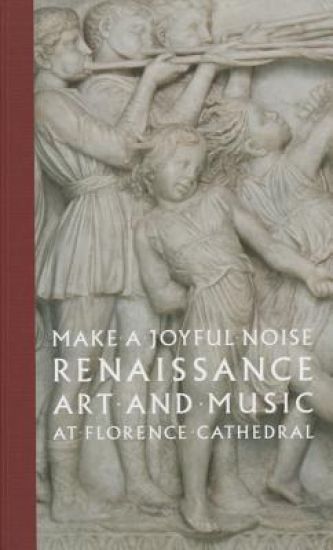
Make a Joyful Noise

Make a Joyful Noise

Gary M. Radke; Timothy Verdon

Yale University Press
2014
sidottu
Florence Cathedral, familiarly called Il Duomo, is an architectural masterpiece and home to celebrated works of art. The interrelationship between the brilliant art and architecture and the Cathedral’s musical program is explored in depth in this beautiful book. Perhaps the most beloved example is Luca della Robbia’s sculptural program for the organ loft, comprising ten sculptural relief panels that depict children singing, dancing, and making music. Luca’s charming sculptures are examined alongside luxurious illuminated manuscripts commissioned for musical performances. Essays by distinguished scholars provide new insights into the original function and meaning of Luca’s sculptures; organs and organists during the 15th century; the roles played by women and girls—as well as men and boys—in making music throughout Renaissance Florence; and the Cathedral’s illuminated choir books. Published in association with the High Museum of Art, AtlantaExhibition Schedule:High Museum of Art, Atlanta(10/25/14–01/11/15)Detroit Institute of Arts(02/06/15–05/17/15)
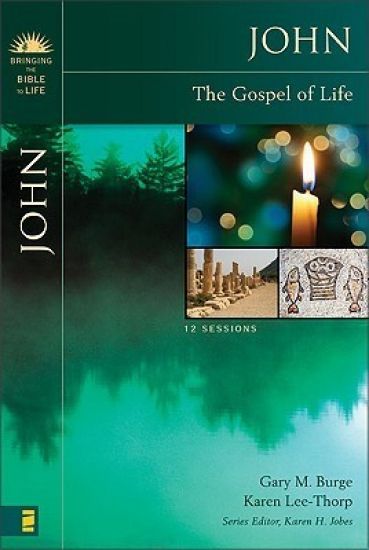
John

John

Gary M. Burge; Karen Lee-Thorp

HarperChristian Resources
2008
nidottu
A series of Bible study guides following the format and content of the NIV Application Commentaries Series. Each study looks at the original meaning, bridging contexts, and contemporary significance of the text, and offers small group participants a better understanding and relevant application of the biblical material to their daily lives.
The Letters of John

The Letters of John

Gary M. Burge

Zondervan
1996
sidottu
The NIV Application Commentary helps you communicate and apply biblical text effectively in today's context.To bring the ancient messages of the Bible into today's world, each passage is treated in three sections:Original Meaning. Concise exegesis to help readers understand the original meaning of the biblical text in its historical, literary, and cultural context.Bridging Contexts. A bridge between the world of the Bible and the world of today, built by discerning what is timeless in the timely pages of the Bible.Contemporary Significance. This section identifies comparable situations to those faced in the Bible and explores relevant application of the biblical messages. The author alerts the readers of problems they may encounter when seeking to apply the passage and helps them think through the issues involved.This unique, award-winning commentary is the ideal resource for today's preachers, teachers, and serious students of the Bible, giving them the tools, ideas, and insights they need to communicate God's Word with the same powerful impact it had when it was first written.The book you receive may have a different cover design than shown on the website.
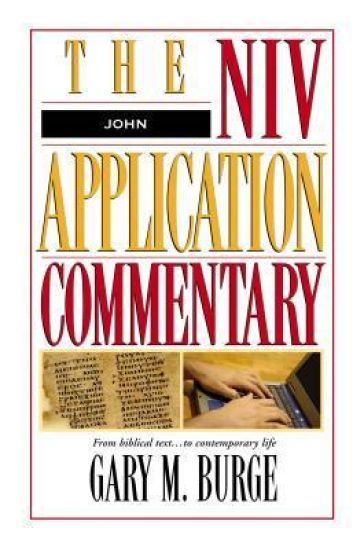
John

John

Gary M. Burge

Zondervan
2000
sidottu
The NIV Application Commentary helps you communicate and apply biblical text effectively in today's context.The Gospel of John tells us the story that is the foundation of the distinctive teaching of Christianity. It provides all the elements necessary to see the full picture of the person and work of Jesus: a human Christ to redeem us, a divine Christ to reveal God's nature, and a powerful, Spirit-filled Christ to help us lead holy lives. This commentary unveils, in today's terminology, the deeply satisfying portrait of Christ painted in the Gospel of John. To bring the ancient messages of the Bible into today's context, each passage is treated in three sections:Original Meaning. Concise exegesis to help readers understand the original meaning of the biblical text in its historical, literary, and cultural context.Bridging Contexts. A bridge between the world of the Bible and the world of today, built by discerning what is timeless in the timely pages of the Bible.Contemporary Significance. This section identifies comparable situations to those faced in the Bible and explores relevant application of the biblical messages. The author alerts the readers of problems they may encounter when seeking to apply the passage and helps them think through the issues involved.This unique, award-winning commentary is the ideal resource for today's preachers, teachers, and serious students of the Bible, giving them the tools, ideas, and insights they need to communicate God's Word with the same powerful impact it had when it was first written.The book you receive may have a different cover design than shown on the website.
The New Testament in Antiquity, 2nd Edition

The New Testament in Antiquity, 2nd Edition

Gary M. Burge; Gene L. Green

Zondervan
2020
sidottu
This completely revised and updated second edition of The New Testament in Antiquity skillfully develops how Jewish, Hellenistic, and Roman cultures formed the essential environment in which the New Testament authors wrote their books and letters. Understanding of the land, history, and culture of the ancient world brings remarkable new insights into how we read the New Testament itself.Throughout the book, numerous features provide windows into the first-century world. Nearly 500 full color photos, charts, maps, and drawings have been carefully selected. Additional features include sidebars that integrate the book's material with issues of interpretation, discussion questions, and bibliographies.