Kirjojen hintavertailu. Mukana 11 244 527 kirjaa ja 12 kauppaa.

Kirjahaku

Etsi kirjoja tekijän nimen, kirjan nimen tai ISBN:n perusteella.

1000 tulosta hakusanalla Gary Snyder

The Gary Snyder Reader

The Gary Snyder Reader

Gary Snyder

Counterpoint
2000
nidottu
Gary Snyder has been a major cultural force in America for five decades-prize-winning poet, environmental activist, Zen Buddhist, and reluctant counterculture guru. Having expanded far beyond the Beat poems that first brought his work into the public eye, Snyder has produced a wide-ranging body of work that encompasses his fluency in Eastern literature and culture, his commitment to the environment, and his concepts of humanity's place in the cosmos. The Gary Snyder Reader showcases the panoramic range of his literary vision in a single-volume survey that will appeal to students and general readers alike.
Gary Snyder: Essential Prose (Loa #391)

Gary Snyder: Essential Prose (Loa #391)

Gary Snyder

Library of America
2025
sidottu
In one volume, the indispensable prose of our "poet laureate of deep ecology" Here is Gary Snyder's own selection of his pathbreaking environmental essays, Buddhist journals, poetic notebooks, and more, including previously uncollected material Gathered for the first time in a single volume and completing the definitive Library of America edition of his works, here is the essential prose of our "poet laureate of deep ecology" philosophical essays, travel journals, poetic notebooks, reflections on Buddhism, environmental polemics, memoirs, speeches, interviews, letters, and other writings spanning the entire arc of Snyder's lauded, seventy-year career. All of Snyder's published prose collections are represented, omitting only items he feels are repetitious or merely occasional, followed by a selection of from his private journals. The volume includes: Earth House Hold describing his life as a fire lookout in Washington State in the early 1950s, and his experiences as an initiate in a Kyoto monastery"Poetry and the Primitive," a kind of "ecological survival technique""Buddhism and the Coming Revolution," which imagines the "nation-shaking implications" of spiritual discoveryHe Who Hunted Birds in His Father's Village, charting Snyder's deep engagements with Native American mythologyPassage Through India about a six-month pilgrimage with his wife and the poet Allen Ginsberg, culminating in a meeting with the Dalai Lama. The Practice of the Wild a classic of American environmental writing in the tradition of Thoreau, Aldo Leopold, and Annie DillardThe essays in A Place in Space and Back on the Fire exploring bioregionalism, forestry practices, sustainability, and the ecosystems of the Sierra Nevada, where Snyder has lived since 1970The Great Clod a mediation on the intersections of nature and culture in Asian history and literature. It's all here, the profound reflections and inspiring meditations of our greatest living guide to the nature of meaning and the meaning of nature.
Gary Snyder and the American Unconscious
This book presents a new theory of American culture based not on the phenomenologically- and existentially-derived vocabularies of consciousness, which have dominated earlier accounts, but rather on a revitalized notion of the unconscious. Drawing on the writings of the French psychoanalyst Jacques Lacan, Dean develops a theory of the constitution of the very notion of America itself as based on a complicated relation to the American landscape.
The Selected Letters Of Allen Ginsberg And Gary Snyder

The Selected Letters Of Allen Ginsberg And Gary Snyder

Gary Snyder; Allen Ginsberg

Counterpoint
2009
nidottu
One of the central relationships in the Beat scene was the long-lasting friendship of Allen Ginsberg and Gary Snyder. Ginsberg introduced Snyder to the East Coast Beat writers, including Jack Kerouac, while Snyder himself became the model for the serious poet that Ginsberg so wanted to become. Snyder encouraged Ginsberg to explore the beauty of the West Coast and, even more lastingly, introduced Ginsberg to Buddhism, the subject of so many long letter exchanges between them.Beginning in 1956 and continuing through 1995, the two men exchanged more than 850 letters. Bill Morgan, Ginsberg's biographer and an important editor of his papers, has selected the most significant correspondence from this long friendship. The letters themselves paint the biographical and poetic portraits of two of America's most important  and most fascinating  poets.
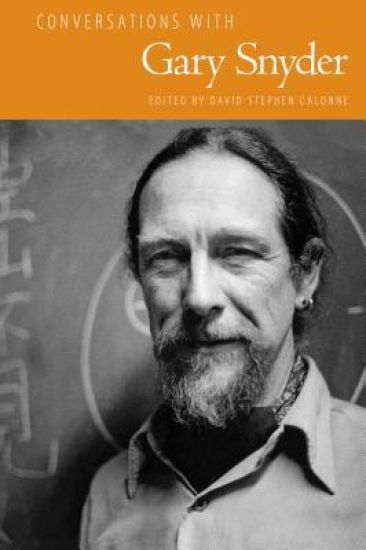
Conversations with Gary Snyder

Conversations with Gary Snyder

University Press of Mississippi
2017
sidottu
Gary Snyder (b. 1930) is one of the most distinguished American poets, remarkable both for his long and productive career and for his equal contributions to literature and environmental thought. His childhood in the Pacific Northwest profoundly shaped his sensibility due to his contact with Native American culture and his early awareness of the destruction of the environment by corporations. Although he emerged from the San Francisco Renaissance with writers such as Kenneth Rexroth, Robert Duncan, and William Everson, he became associated with the Beats due to his friendships with Allen Ginsberg and Jack Kerouac, who included a portrait of Snyder as Japhy Ryder in his novel The Dharma Bums. After graduating from Reed College, Snyder became deeply involved with Zen Buddhism, and he spent twelve years in Japan immersed in study.Conversations with Gary Snyder collects interviews from 1961 to 2015 and charts his developing environmental philosophy and his wide-ranging interests in ecology, Buddhism, Native American studies, history, and mythology. The book also demonstrates the ways Snyder has returned throughout his career to key ideas such as the extended family, shamanism, poetics, visionary experience, and caring for the environment as well as his relationship to the Beat movement. Because the book contains interviews spanning more than fifty years, the reader witnesses how Snyder has evolved and grown both as a poet and philosopher of humanity’s proper relationship to the cosmos while remaining committed to the issues that preoccupied him as a young man.
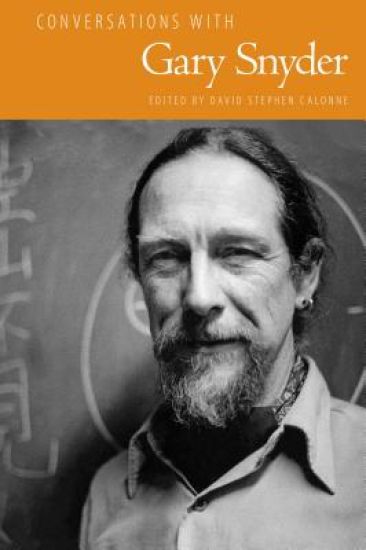
Conversations with Gary Snyder

Conversations with Gary Snyder

University Press of Mississippi
2019
nidottu
Gary Snyder (b. 1930) is one of the most distinguished American poets, remarkable both for his long and productive career and for his equal contributions to literature and environmental thought. His childhood in the Pacific Northwest profoundly shaped his sensibility due to his contact with Native American culture and his early awareness of the destruction of the environment by corporations. Although he emerged from the San Francisco Renaissance with such writers as Kenneth Rexroth, Robert Duncan, and William Everson, he became associated with the Beats due to his friendships with Allen Ginsberg and Jack Kerouac, who included a portrait of Snyder as Japhy Ryder in his novel The Dharma Bums. After graduating from Reed College, Snyder became deeply involved with Zen Buddhism, and he spent twelve years in Japan immersed in study.Conversations with Gary Snyder collects interviews from 1961 to 2015 and charts his developing environmental philosophy and his wide-ranging interests in ecology, Buddhism, Native American studies, history, and mythology. The book also demonstrates the ways Snyder has returned throughout his career to key ideas such as the extended family, shamanism, poetics, visionary experience, and caring for the environment as well as his relationship to the Beat movement. Because the book contains interviews spanning more than fifty years, the reader witnesses how Snyder has evolved and grown both as a poet and philosopher of humanity's proper relationship to the cosmos while remaining committed to the issues that preoccupied him as a young man.
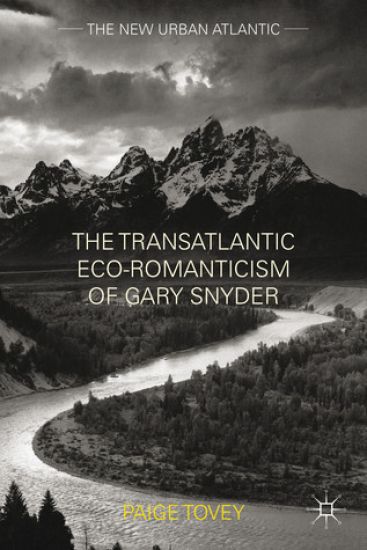
The Transatlantic Eco-Romanticism of Gary Snyder
Tracing connections between Gary Snyder and his Romantic and Transcendentalist predecessors - Wordsworth, Blake, Emerson, Whitman, and Thoreau - this study explores the tension between urbanization and overindustrialization. The dialectical relationship between Snyder and his predecessors reminds readers that nature is never a simple concept.
The Transatlantic Eco-Romanticism of Gary Snyder
Tracing connections between Gary Snyder and his Romantic and Transcendentalist predecessors - Wordsworth, Blake, Emerson, Whitman, and Thoreau - this study explores the tension between urbanization and overindustrialization. The dialectical relationship between Snyder and his predecessors reminds readers that nature is never a simple concept.
Mythenrezeption in Der Lyrik Von Gary Snyder

Mythenrezeption in Der Lyrik Von Gary Snyder

Sabine Bock-Metzner

Peter Lang AG
1993
nidottu
Gary Snyder, gepragt vom Lebensgefuhl der "beat poets," teilt das Interesse seiner fruhen Weggefahrten fur aussereuropaische Traditionen wie die des Buddhismus und der "Native Americans." Die Verarbeitung von Mythen aus diesen Uberlieferungen bildet ein zentrales Gestaltungsmittel in seinen Gedichten. Dessen wichtigste Funktion besteht in der Reaktivierung archaischer, subjektentgrenzender Erfahrungsmodi, aus denen neue, okologisch-spirituell fundierte Lebensformen hervorgehen sollen. Die vorliegende Arbeit untersucht dies in detaillierten Textanalysen im Horizont neuerer literaturwissenschaftlicher und ethnologischer Mythentheorien. Sie nimmt Snyders radikale Zivilisationskritik ernst, unterzieht aber seine Gegenentwurfe einer genauen Prufung."
Die Bedeutung des Indianers als Wärter der Natur in Gary Snyders "This poem is for bear" aus "Myths & Texts"
Studienarbeit aus dem Jahr 2002 im Fachbereich Amerikanistik - Literatur, Note: 2,3, Universit t Hamburg, Veranstaltung: Depicting the Indian: "Noble Savages" and "Red Devils," 8 Quellen im Literaturverzeichnis, Sprache: Deutsch, Abstract: Als Gary Snyder in den 1960er Jahren im Rahmen der gegenkulturellen Protestbewegungen eine alternative Lebensweise zur westlichen Kultur suchte, wandte er sich intensiv den Kulturen der nordamerikanischen Indianer zu, von denen seine poetische Arbeit wesentliche Impulse erhielt. Da dem Native American von Anthropologen generell die Eigenschaft attestiert wird, " the true ecological man " zu sein, wird verst ndlich, dass Snyder, der auch Anthropologie studiert hat, den Indianer als kologen ansieht. Snyder sieht also das indianische Verh ltnis zur Natur als vorbildlich an und wertet den " kologisch denkenden" Indianer zum Erhalter oder genauer zum W rter der Natur auf. Eine Unterscheidung der Begriffe "Erhalter" (saver) und "W rter" (keeper) erscheint in diesem Kontext angemessen, da sich Snyder in dem Essay The Rediscovery of Turtle Island ausdr cklich von einer blo en Erhaltermentalit t ("saver" mentality] distanziert hat. Es erscheint somit nahe liegend, dass er den Indianer als kologen nicht im Sinne eines passiven Naturerhalters versteht, der die Urspr nglichkeit der Natur frei von menschlichem Einfluss erhalten m chte, sondern als einen W rter der Natur, der die nat rliche Umwelt besch tzt, aber auch in sie eingreifen kann. Dieses Eingreifen in die Natur bedeutet demnach jedoch kein Ausbeuten der Natur, sondern einen behutsamen Umgang mit den nat rlichen Ressourcen. F r Snyder zeigt sich die verantwortungsvolle Haltung der Indianer gegen ber der Umwelt prim r an ihrer Einstellung zu Tieren, wobei der vorsichtige Umgang mit der Natur, nach Snyders Ansicht, in den indianischen Jagdmethoden seinen Ausdruck findet. Es erscheint deshalb sinnvoll, die Darstellung der Beziehung des Indianers zu Tieren in Snyders Gedicht This poem
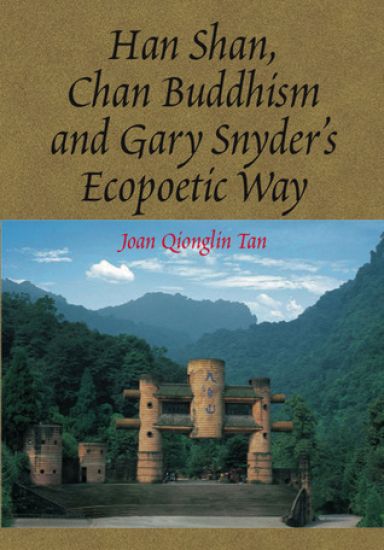
Han Shan, Chan Buddhism and Gary Snyder's Ecopoetic Way

Han Shan, Chan Buddhism and Gary Snyder's Ecopoetic Way

Joan Qionglin Tan

LIVERPOOL UNIVERSITY PRESS
2009
nidottu
This book is a comparative study of the ninth-century Chinese poet and recluse Han Shan (Cold Mountain) and Gary Snyder, an American poet and environmental activist. Joan Tan explains how Chan Buddhism has the potential to be recognised as an important voice in contemporary ecopoetry. Mountain-seeing Chan/Zen theory and the nature -- Chan mirror are employed as aesthetic criteria to explicate the dual discourses -- spiritual and aesthetic -- which exist in Han Shan and Snyder's poetry and life work. Snyder's goal of establishing one ecosystem for all communities encouraged him to adopt Han Shan as an ideal (albeit Chinese mythical) model and Chan Buddhism as a global subculture representing environmental values. This book investigates how Snyder interweaves Chinese cultural sources in an eclectic way to impose a sense of place, a sense of mission and a sense of energy in his ecopoetry. His unique ideogrammatic method -- riprapping -- developed as a result of his literary indebtedness to the Oriental tradition, makes for a forceful statement on contemporary ecology. Through Snyder's successful translation, Han Shan has been revived as an immortal Beat Poet (Jack Kerouac features prominently in the chapters), while Cold Mountain has emerged as synonymous with enlightenment. Snyder himself has become an exemplary representative of an American Han Shan. The poetic line extending from Han Shan through to Chan/Zen to contemporary ecology is considered here as a continuum -- a continuum profoundly enhanced by Snyder's remarkable achievement of eco-wholeness -- the original goal of Han Shan in his ecopoetry. Complemented with full Chinese character text and Glossary.