Kirjojen hintavertailu. Mukana 11 717 486 kirjaa ja 12 kauppaa.

Kirjahaku

Etsi kirjoja tekijän nimen, kirjan nimen tai ISBN:n perusteella.

1000 tulosta hakusanalla Gary Westfahl

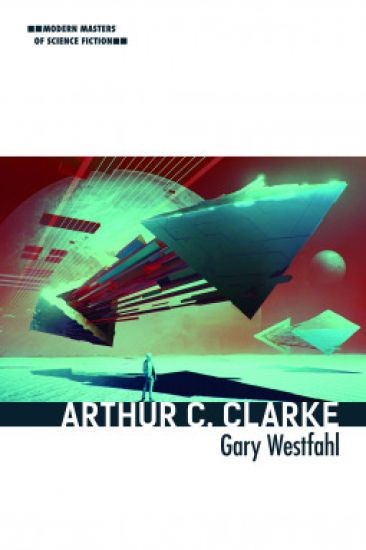
Arthur C. Clarke

Arthur C. Clarke

Gary Westfahl

University of Illinois Press
2018
sidottu
Already renowned for his science fiction and scientific nonfiction, Arthur C. Clarke became the world's most famous science fiction writer after the success of 2001: A Space Odyssey. He then produced novels like Rendezvous with Rama and The Fountains of Paradise that many regard as his finest works. Gary Westfahl closely examines Clarke's remarkable career, ranging from his forgotten juvenilia to the passages he completed for a final novel, The Last Theorem. As Westfahl explains, Clarke's science fiction offered original perspectives on subjects like new inventions, space travel, humanity's destiny, alien encounters, the undersea world, and religion. While not inclined to mysticism, Clarke necessarily employed mystical language to describe the fantastic achievements of advanced aliens and future humans. Westfahl also contradicts the common perception that Clarke's characters were bland and underdeveloped, arguing that these reticent, solitary individuals, who avoid conventional relationships, represent his most significant prediction of the future, as they embody the increasingly common lifestyle of people in the twenty-first century.
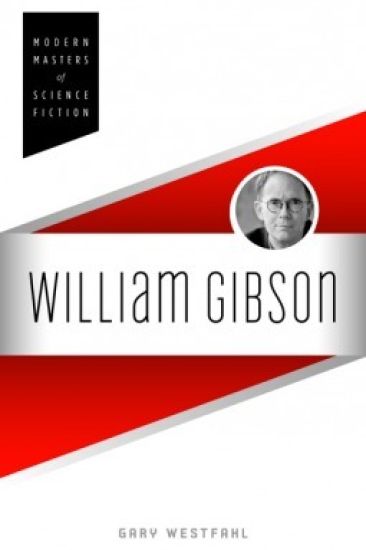
William Gibson

William Gibson

Gary Westfahl

University of Illinois Press
2013
nidottu
The leading figure in the development of cyberpunk, William Gibson (born in 1948) crafted works in which isolated humans explored near-future worlds of ubiquitous and intrusive computer technology and cybernetics. This volume is the first comprehensive examination of the award-winning author of the seminal novel Neuromancer (and the other books in the Sprawl trilogy, Count Zero and Mona Lisa Overdrive), as well as other acclaimed novels including recent bestsellers Pattern Recognition, Spook Country, and Zero History. Renowned scholar Gary Westfahl draws upon extensive research to provide a compelling account of Gibson's writing career and his lasting influence in the science fiction world. Delving into numerous science fiction fanzines that the young Gibson contributed to and edited, Westfahl delivers new information about his childhood and adolescence. He describes for the first time more than eighty virtually unknown Gibson publications from his early years, including articles, reviews, poems, cartoons, letters, and a collaborative story. The book also documents the poems, articles, and introductions that Gibson has written for various books, and its discussions are enriched by illuminating comments from various print and online interviews. The works that made Gibson famous are also featured, as Westfahl performs extended analyses of Gibson's ten novels and nineteen short stories. Lastly, the book presents a new interview with Gibson in which the author discusses his correspondence with author Fritz Leiber, his relationship with the late scholar Susan Wood, his attitudes toward critics, his overall impact on the field of science fiction, and his recently completed screenplay and forthcoming novel.
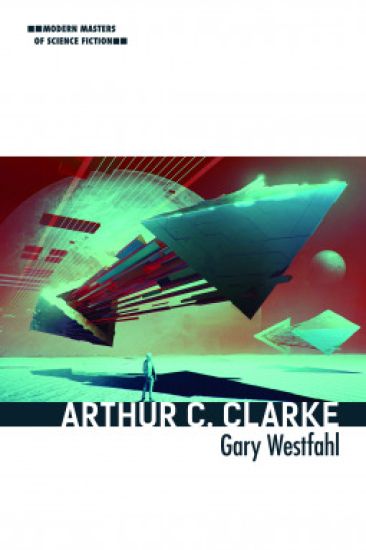
Arthur C. Clarke

Arthur C. Clarke

Gary Westfahl

University of Illinois Press
2018
nidottu
Already renowned for his science fiction and scientific nonfiction, Arthur C. Clarke became the world's most famous science fiction writer after the success of 2001: A Space Odyssey. He then produced novels like Rendezvous with Rama and The Fountains of Paradise that many regard as his finest works. Gary Westfahl closely examines Clarke's remarkable career, ranging from his forgotten juvenilia to the passages he completed for a final novel, The Last Theorem. As Westfahl explains, Clarke's science fiction offered original perspectives on subjects like new inventions, space travel, humanity's destiny, alien encounters, the undersea world, and religion. While not inclined to mysticism, Clarke necessarily employed mystical language to describe the fantastic achievements of advanced aliens and future humans. Westfahl also contradicts the common perception that Clarke's characters were bland and underdeveloped, arguing that these reticent, solitary individuals, who avoid conventional relationships, represent his most significant prediction of the future, as they embody the increasingly common lifestyle of people in the twenty-first century.
Cosmic Engineers

Cosmic Engineers

Gary Westfahl

Praeger Publishers Inc
1996
sidottu
The first comprehensive critical study of hard science fiction, this book reveals how the term hard science fiction originated, and how arguments about its range and nature have unfolded. Westfahl shows that hard science fiction is generally characterized by the author's extreme concern for scientific accuracy and logic. Identifying two characteristic forms of hard science fiction, Westfahl closely examines several representative works: Arthur C. Clarke's A Fall of Moondust, Hal Clement's Mission of Gravity, and Charles Sheffield's Between the Strokes of Midnight. This book offers new insights into hard science fiction and provides a wealth of information about what members of the science fiction community have said about this relatively recent genre.
Space and Beyond

Space and Beyond

Gary Westfahl

Praeger Publishers Inc
2000
sidottu
Although the exploration of space has long preoccupied authors and filmmakers, the development of an actual space program, discoveries about the true nature of space, and critical reconsiderations of America's frontier experiences have challenged and complicated conventional portrayals of humans in space. This volume reexamines the themes of space and the frontier in science fiction in light of recent scientific and literary developments. From this new perspective, we discern previously unnoticed commentaries from older authors, while newer writers either remain within a reassuring but obsolete tradition, venture into unexplored new realities, or abandon space to focus on other frontiers.The intriguing contributions to this volume include a previously unpublished interview with Arthur C. Clarke, the world's greatest living author of science fiction; examinations of space opera by veteran author Jack Williamson and scholar David Pringle; surveys of space in science fiction film, and writer and producer Michael Cassutt's account of his efforts to launch a film based on a Clifford D. Simak novel; and speculations about future developments from noted writers Gregory Benford, Jack Dann, James Gunn, and Howard V. Hendrix.
Science Fiction, Children's Literature, and Popular Culture
In a constantly changing world, individuals are forever growing to meet the challenges and developments that emerge around them. In contemporary society, technology is at the heart of change. Literature, too, reflects the evolution of culture and increasingly represents and considers technology. And as children become young adults, their reading helps shape their understanding of the world. This book examines representative works of science fiction, children's literature, and popular culture to show how these works reflect the process of growing up in a technological world.The volume looks at the simple picture books and comic books that appeal to small children; the formulaic adventures that fascinate older children; the films and television programs that are watched by children and young adolescents; the music videos and programming that appeal to young adults; and the popular novels that interest older readers. Included are discussions of Superman, the Hardy Boys, Star Trek, science fiction films, and music videos. The book points to similarities among popular culture, science fiction, and children's literature and demonstrates the relevance of these works to contemporary society.
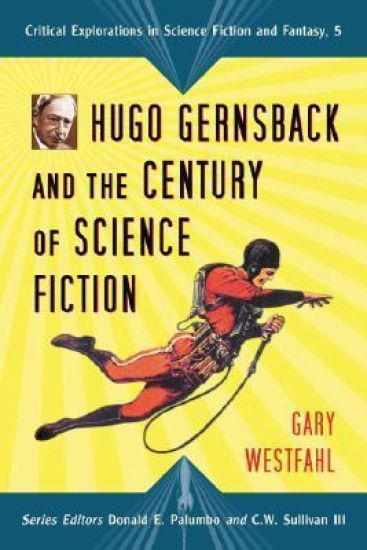
Hugo Gernsback and the Century of Science Fiction
An examination of science fiction editor and author Hugo Gernsback's career, this critical study explores the many ways in which his work influenced the genre. It summarizes the science fiction theories of Gernsback and his successors, considers his efforts to define science fiction both verbally and visually, and for the first time offers detailed studies of his rarest periodicals, including Technocracy Review, Superworld Comics, and Science-Fiction Plus. An analysis of his ground-breaking novel, Ralph 124C 41+: A Romance of the Year 2660, and its influences on a variety of science fiction novels, films and television programs is also offered.
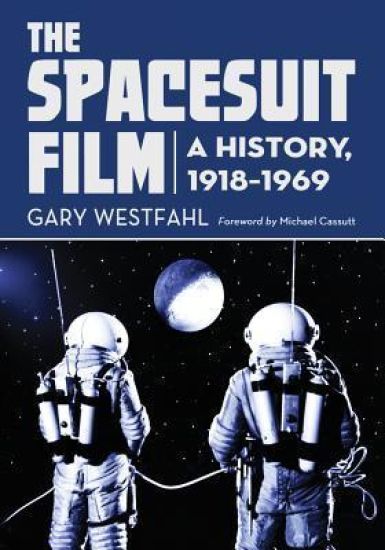
The The Spacesuit Film

The The Spacesuit Film

Gary Westfahl

McFarland Co Inc
2012
nidottu
Filmmakers employ various images to suggest the strangeness of outer space, but protective spacesuits most powerfully communicate the dangers of space and the frailty and weakness of humans beyond the cradle of Earth. Many films set in space, however, forgo spacesuits altogether, reluctant to hide famous faces behind bulky helmets and ill-fitting jumpsuits. This critical history comprehensively examines science fiction films that portray space travel realistically by having characters wear spacesuits. Beginning with the pioneering Himmelskibet (1918) and Woman on the Moon (1929), it discusses other classics in this tradition, including Destination Moon (1950), Riders to the Stars (1954), and 2001: A Space Odyssey (1968); innumerable films which gesture toward realism but betray that goal with melodramatic villains, low comedy, or improbably monsters; the distinctive spacesuit films of Western Europe, Russia and Japan; and America's spectacular real-life spacesuit film, the televised Apollo 11 moon landing (1969).
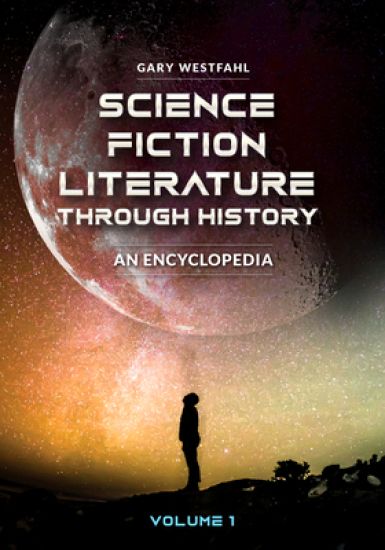
Science Fiction Literature through History

Science Fiction Literature through History

Gary Westfahl

Greenwood Publishing Group Inc
2021
muu
This book provides students and other interested readers with a comprehensive survey of science fiction history and numerous essays addressing major science fiction topics, authors, works, and subgenres written by a distinguished scholar.This encyclopedia deals with written science fiction in all of its forms, not only novels and short stories but also mediums often ignored in other reference books, such as plays, poems, comic books, and graphic novels. Some science fiction films, television programs, and video games are also mentioned, particularly when they are relevant to written texts. Its focus is on science fiction in the English language, though due attention is given to international authors whose works have been frequently translated into English.Since science fiction became a recognized genre and greatly expanded in the 20th century, works published in the 20th and 21st centuries are most frequently discussed, though important earlier works are not neglected. The texts are designed to be helpful to numerous readers, ranging from students first encountering science fiction to experienced scholars in the field.
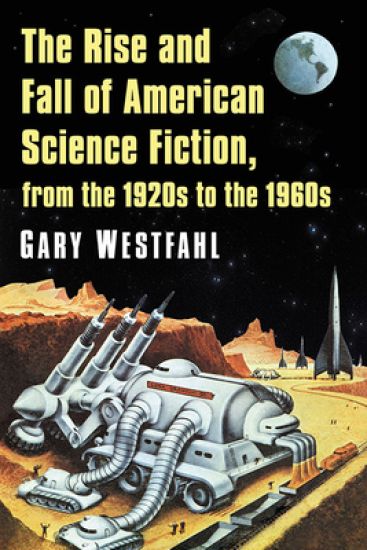
The Rise and Fall of American Science Fiction, from the 1920s to the 1960s
? By examining important aspects of science fiction in the twentieth century, this book explains how the genre evolved to its current state. Close critical attention is given to topics including the art that has accompanied science fiction, the subgenres of space opera and hard science fiction, the rise of SF anthologies, and the burgeoning impact of the marketplace on authors. Included are in-depth studies of key texts that contributed to science fiction's growth, including Philip Francis Nowlan's first Buck Rogers story, the first published stories of A. E. van Vogt, and the early juveniles of Isaac Asimov, Arthur C. Clarke and Robert Heinlein.
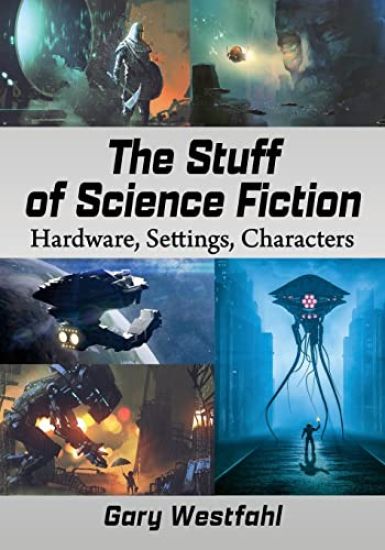
The Stuff of Science Fiction

The Stuff of Science Fiction

Gary Westfahl

MCFARLAND CO INC
2022
pokkari
While students and general readers typically cannot relate to esoteric definitions of science fiction, they readily understand the genre as a literature that characteristically deals with subjects such as new inventions, space, robot and aliens. This book looks at science fiction in precisely this manner, with twenty-one chapters that each deal with a subject that is repeatedly addressed in science fiction of recent centuries. Based on a packet of original essays that the author assembled for his classes, the book could serve as a supplemental textbook in science fiction classes, but also contains material of interest to science fiction scholars and others devoted to the genre. In some cases, chapters offer thorough surveys of numerous works involving certain subjects, such as imagined vehicles, journeys beneath the Earth and undersea adventures, discovering intriguing patterns in the ways that various writers developed their ideas. When comprehensive coverage of ubiquitous topics such as robots, aliens and the planet Mars is impossible, chapters focus on major themes referencing selected texts. A conclusion discusses other science fiction subjects that were omitted for various reasons, and a bibliography lists additional resources for the study of science fiction in general and the topics of each chapter.
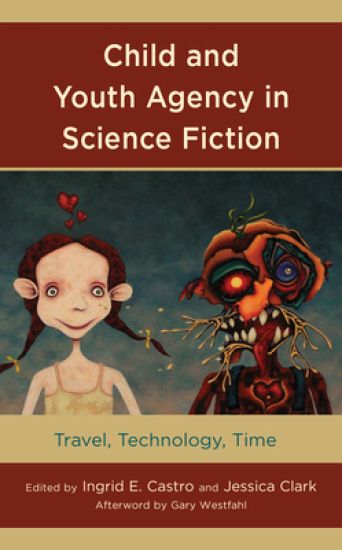
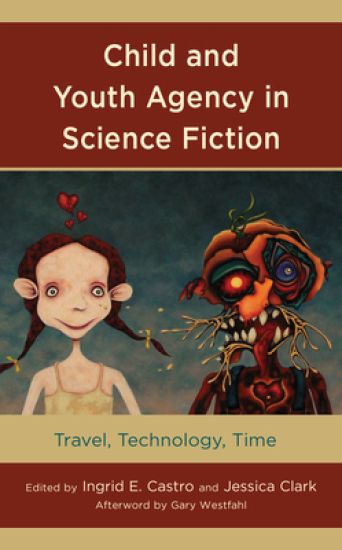
Child and Youth Agency in Science Fiction

Child and Youth Agency in Science Fiction

Gary Westfahl

Lexington Books
2019
sidottu
Child and Youth Agency in Science Fiction: Travel, Technology, Time intersects considerations about children’s and youth’s agency with the popular culture genre of science fiction. As scholars in childhood studies and beyond seek to expand understandings of agency in children’s lives, this collection places science fiction at the heart of this endeavor. Retellings of the past, narratives of the present, and new landscapes of the future, each explored in science fiction, allow for creative reimaginings of the capabilities, movements, and agency of youth. Core themes of generation, embodiment, family, identity, belonging, gender, and friendship traverse across the chapters and inform the contributors’ readings of various film, literature, television, and virtual media sources. Here, children and youth are heterogeneous, and agency as a central analytical concept is interrogated through interdisciplinary, intersectional, intergenerational, and posthuman analyses. The contributors argue that there is vast power in science fiction representations of children’s agency to challenge accepted notions of neoliberal agency, enhance understandings of agency in childhood studies, and further contextualize agency in the lives, voices, and cultures of youth.
Child and Youth Agency in Science Fiction

Child and Youth Agency in Science Fiction

Gary Westfahl

Lexington Books
2021
nidottu
Child and Youth Agency in Science Fiction: Travel, Technology, Time intersects considerations about children’s and youth’s agency with the popular culture genre of science fiction. As scholars in childhood studies and beyond seek to expand understandings of agency in children’s lives, this collection places science fiction at the heart of this endeavor. Retellings of the past, narratives of the present, and new landscapes of the future, each explored in science fiction, allow for creative reimaginings of the capabilities, movements, and agency of youth. Core themes of generation, embodiment, family, identity, belonging, gender, and friendship traverse across the chapters and inform the contributors’ readings of various film, literature, television, and virtual media sources. Here, children and youth are heterogeneous, and agency as a central analytical concept is interrogated through interdisciplinary, intersectional, intergenerational, and posthuman analyses. The contributors argue that there is vast power in science fiction representations of children’s agency to challenge accepted notions of neoliberal agency, enhance understandings of agency in childhood studies, and further contextualize agency in the lives, voices, and cultures of youth.
World Weavers – Globalization, Science Fiction, and the Cybernetic Revolution

World Weavers – Globalization, Science Fiction, and the Cybernetic Revolution

Kin Yuen Wong; Gary Westfahl; Amy Kit–sze Chan

Hong Kong University Press
2005
sidottu
World Weavers is the first ever study on the relationship between globalization and science fiction. Scientific innovations provide citizens of different nations with a unique common ground and the means to establish new connections with distant lands. This study attempts to investigate how our world has grown more and more interconnected not only due to technological advances, but also to a shared interest in those advances and to what they might lead to in the future.
The Mechanics of Wonder

The Mechanics of Wonder

Westfahl Gary

Liverpool University Press
1998
nidottu
The Mechanics of Wonder will arouse debate and force the questioning of presuppositions. No other book so closely examines the origins and development of the idea of science fiction, and it will stand among a small number of crucial texts with which every science fiction scholar or prospective science fiction scholar will have to read.
Dream Operative

Dream Operative

Gary Westfal

G-Life Enterprises Corp
2017
nidottu
Clinical psychologist and Georgetown University PhD research student, JOEY "G" WESTON, has a passion for Oneirology - the study and analysis of dreams. But that passion proves to be a doubled-edged sword when word gets out that G has discovered and demonstrated the ability to consciously manipulate and freely move about in his dreams. Things get exciting when news of his abilities goes viral and entices various governmental agencies to pursue him in an attempt to exploit him...or eliminate him altogether. G quickly discovers the power, tenacity, and unfettered reach of the U.S. Government as he is sequestered by one agency, only to be rescued by yet another, in a quest to validate, test, and exploit his abilities - all in the interest of national security and covert advantage. While on vacation in Belize, G experiences a dream where he witnesses an attempt to sabotage the Key Bridge, near the epicenter of the nation's capital of Washington, D.C. When hereveals the details and analysis of the dream in his blog, for his students and the world to see, he unknowingly captures the interest of several competing governmental agencies, not all of who have his best interest and personal safety in mind, except for one. As G returns to Washington from his vacation, he learns about a reported failed attempt to destroy the Key Bridge from feedback he receives in response to his blog. On his final leg into Washington, he falls asleep and into a dream state. In his dream, he discovers he is on the sameairplane with two suspicious men who seem to have a particular interest in the attempted sabotage. Able to move freely and undetected in the dream, he is able to hear them discuss unreported details of the sabotage attempt that implicates their involvement.While following the men through the airport, G is apprehended by the authorities because of written notes he left behind on the airplane, which contain incriminating details of his dream, to include the Key Bridge sabotage attempt, and a mention of explosives. Those that have him sequestered, however, are not as interested in his notes as they are in his abilities to determine his knowledge of the attempted sabotage to such great detail. They are far from patient and are unafraid to threaten him with his life. Athena discovers G's captive plight and puts key people into motion to rescue him from his captors. A colorful team of operatives are introduced that eventually break G free. The team is led by TODD JORDAN, a government computer hacker and self-made millionaire.