Kirjojen hintavertailu. Mukana 11 213 693 kirjaa ja 12 kauppaa.

Kirjahaku

Etsi kirjoja tekijän nimen, kirjan nimen tai ISBN:n perusteella.

180 tulosta hakusanalla Gass William

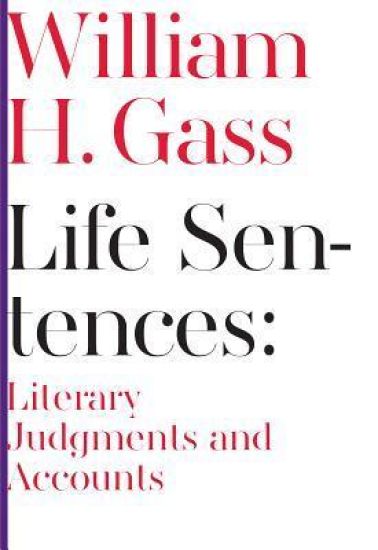
Life Sentences

Life Sentences

Gass William

Dalkey Archive Press
2015
nidottu
A dazzling collection of essays--on reading, writing, form, and thought--from one of America's master writers. Beginning with personal, both past and present, it emphasizes William H. Gass's lifelong attachment to books and then moves on to ponder the work of some of his favorite writers (among them Kafka, Nietzsche, Henry James, Gertrude Stein, and Proust). An essential addition to the Gassian canon, Life Sentences shows William H. Gass at his best.
Reading Rilke

Reading Rilke

Gass William H.

Dalkey Archive Press
2015
nidottu
After nearly a lifetime of reading Rilke in English translation, William H. Gass undertook the task of translating Rilke's writing himself, in order to see if he could, in that way, get closer to the work he so deeply admired. Gass examines the genesis of the ideas that inform the Elegies and discusses previous translations, while writing, in his inimitable style, about Rilke the man: his character, his relationships, his life. Finally, Gass's own extraordinary translation of the Duino Elegies offers us the experience of reading Rilke with a new and fuller understanding.
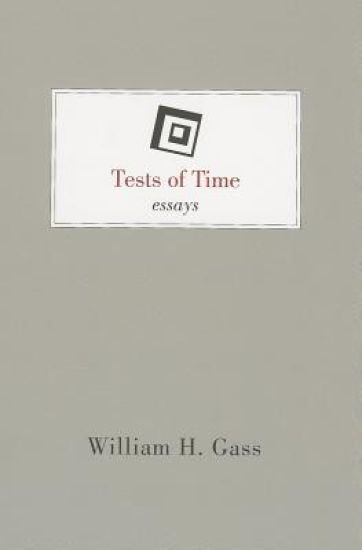
Tests of Time – Essays

Tests of Time – Essays

William Gass

Dalkey Archive Press
2014
nidottu
In Tests of Time (2003), Gass shares his thoughts about writing, reading, culture, history, politics, and public opinion, including essays on classic writers and contemporaries, literary "lists" and their use, the extent and cost of political influences on writers, and the First Amendment. First published by University of Chicago Press.
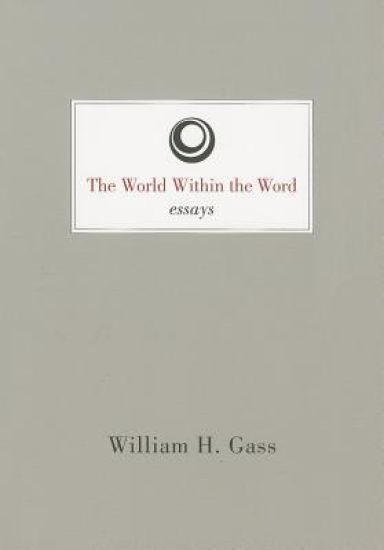
The World within the Word – Essays

The World within the Word – Essays

William Gass

Dalkey Archive Press
2014
nidottu
The World Within the Word, Gass's second published volume of criticism, is a landmark collection discussing Val ry, Henry Miller, Sartre, Freud, Faulkner, suicide, "art and order," and the transformation of language into poetry and fiction. Revelatory and gorgeous, by turns humorous and devastating, it stands among Gass's best and most provocative books. First published by Knopf in 1978.
The Making of Americans

The Making of Americans

Gertrude Stein; William Gass

Dalkey Archive Press
2026
pokkari
Gertrude Stein’s monumental novel, back in print a century after its first publication.In The Making of Americans, Gertrude Stein sets out to tell "a history of a family's progress," radically reworking the traditional family saga novel to encompass her vision of personality and psychological relationships. As the history progresses over three generations, Stein also meditates on her own writing, on the making of The Making of Americans, and on America itself.
Understanding William H.Gass

Understanding William H.Gass

Harvey Hix

University of South Carolina Press
2002
sidottu
An ambitious novelist made clear and accessible; William H. Gass writes in his essays about ""the world within the word"" and ""the soul inside the sentence,"" yet readers often find it difficult to get far enough into Gass's words and sentences to find the world or soul they contain. In this guide to the American writer and philosopher's novels, short stories, novellas, and essays, H. L. Hix clarifies the obscurities that have served to limit access to Gass's corpus and explores how the parallels between his fiction and nonfiction illumine their related themes. Hix offers readings of Gass's works, from the early books, Omensetter's Luck and In the Heart of the Heart of the Country, to his later The Tunnel and Cartesian Sonata. Hix identifies the continuous presence of psychological, metaphysical, and ethical themes, including the lingering effect on adults of childhood hurts, the results of being ""trapped"" in language, and the consequences of hatred. While agreeing with critics who label Gass's novels and stories metafiction, he contends that to stop the exploration there would be to miss a complete appreciation of the novelist. Hix demonstrates instead how Gass's writings both break and follow tradition - as metafiction belonging to the company of works by John Barth but also as moral fiction belonging in the long American tradition that includes The Scarlet Letter and To Kill a Mockingbird.
Willie Masters' Lonesome Wife

Willie Masters' Lonesome Wife

William H Gass

Dalkey Archive Press
1990
nidottu
In this paean to the pleasures of language, Gass equates his text with the body of Babs Masters, the lonesome wife of the title, to advance the conceit that a parallel should exist between a woman and her lover and a book and its reader. Disappointed by her inattentive husband/reader, Babs engages in an exuberant display of the physical charms of language to entice an illicit new lover: a man named Gelvin in one sense, but more importantly, the reader of this “essay-novella” which, in the years since its first appearance in 1968 as a supplement to TriQuarterly, has attained the status of a postmodernist classic. Like Laurence Sterne and Lewis Carroll before him, Gass uses a variety of visual devices: photographs, comic-strip balloons, different typefaces, parallel story lines (sometimes three or four to the page), even coffee stains. As Larry McCaffery has pointed out, “the lonesome lady of the book’s title, who is gradually revealed to be lady language herself, creates an elaborate series of devices which she hopes will draw attention to her slighted charms [and] force the reader to confront what she literally is: a physically exciting literary text.”
The William H. Gass Reader

The William H. Gass Reader

William H. Gass

VINTAGE
2019
nidottu
Throughout his career, William Gass relentlessly pushed at the boundaries of language, celebrating the music of the sentence and the aesthetics of the written word. Now, the best and most important of his work is collected in one volume. There are essays on Plato, Hobbes, James, Joyce, Beckett, Stein, Gaddis, Sterne, Ford Madox Ford, Thomas Mann. There are pieces that examine the inner workings of writing. There is his masterful short fiction, from the perfectly crafted novella "In Camera" to the mythical "In the Heart of the Heart of the Country." And there are excerpts from his novels, including his magnum opus, The Tunnel. Taken together, this collection is a peerless, essential celebration of literature--and an invaluable guide for anyone who wants to understand how great writing works.
Conversations with William H. Gass

Conversations with William H. Gass

University Press of Mississippi
2012
nidottu
Conversations with William H. Gass captures the imagination and philosophical acumen of one of America's most important aestheticians, critical theorists, fiction writers, and essayists.From his first major novel, Omensetter's Luck (1966), to his numerous collections of essays and philosophical inquiries, to his controversial novel The Tunnel (1995), Gass (b. 1924) has proved himself a meticulous craftsman. Throughout these interviews, he reveals an aesthetic that combines ideas from sources as disparate as Ludwig Wittgenstein, Rainer Maria Rilke, Gertrude Stein, and Plato.The interviews make clear the unity behind Gass's views is by his own design. Conversations retrace his undergraduate years at Kenyon College and his subsequent philosophical investigation of metaphor at Cornell University.Gass has never strayed from his belief that metaphor is central and fundamental to thought and to aesthetics. In these interviews he reiterates time and again his belief that the ultimate understanding of the relationship of language to the world pivots on one's understanding of metaphor.n interviews, in profiles, and in his own essays, Gass does not hide from questions about his art and personal motivations, no matter how frequently they are asked, nor does he toy with his interviewers. Revealing how he never shies from an intellectual joust, this collection includes a rousing, contentious debate with John Gardner, fellow literary pundit and fiction writer.The distinction of Gass's prose is matched by the clarity and brilliance of the mind behind it. These talks allow an unobstructed view. Anyone interested in Gass's writing will delight in hearing the brutally honest voice of the mind that produced it.
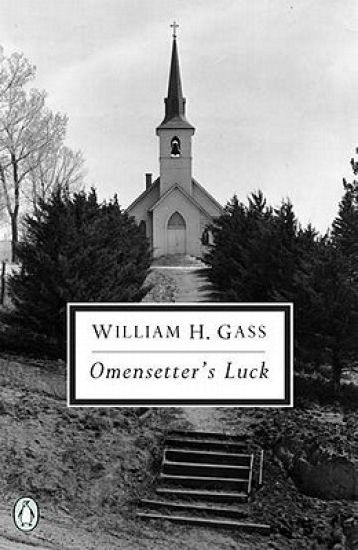
Omensetter's Luck

Omensetter's Luck

William H. Gass

PENGUIN BOOKS LTD
1997
pokkari
"The most important work of fiction by an American in this literary generation." -The New RepublicNow celebrating the 50th anniversary of its publication, Omensetter's Luck is the masterful first novel by the author of The Tunnel, Middle C, On Being Blue, and Eyes: Novellas and Stories.Greeted as a masterpiece when it was first published in 1966, Omensetter's Luck is the quirky, impressionistic, and breathtakingly original story of an ordinary community galvanized by the presence of an extraordinary man. Set in a small Ohio town in the 1890s, it chronicles - through the voices of various participants and observers - the confrontation between Brackett Omensetter, a man of preternatural goodness, and the Reverend Jethro Furber, a preacher crazed with a propensity for violent thoughts. Omensetter's Luck meticulously brings to life a specific time and place as it illuminates timeless questions about life, love, good, and evil. This edition includes an afterword written by William Gass in 1997.For more than seventy years, Penguin has been the leading publisher of classic literature in the English-speaking world. With more than 1,700 titles, Penguin Classics represents a global bookshelf of the best works throughout history and across genres and disciplines. Readers trust the series to provide authoritative texts enhanced by introductions and notes by distinguished scholars and contemporary authors, as well as up-to-date translations by award-winning translators.
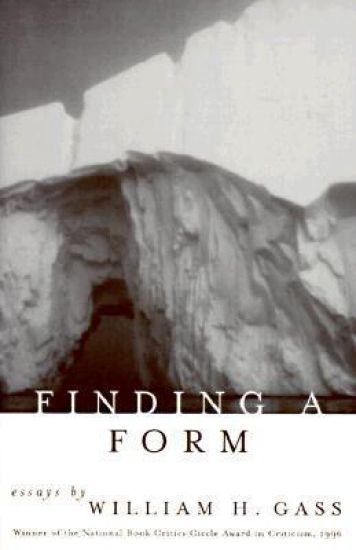
Finding a Form

Finding a Form

William H. Gass

Cornell University Press
1997
pokkari
William Gass writes about literary language, about history, about the avant-garde, about minimalism's brief vogue, about the use of the present tense in fiction (Is it due to the lack of both a sense of history and a belief in the future?), about biography as a form, about exile - spiritual and geographical - and he examines the relationship of the writer's life to the writer's work. With dazzling intelligence and wit, Gass sifts through cultural issues of our time and contemplates how written language, whether a sentence or an entire book, is a container of consciousness, the gateway to another's mind that we enter for a while and make our own.
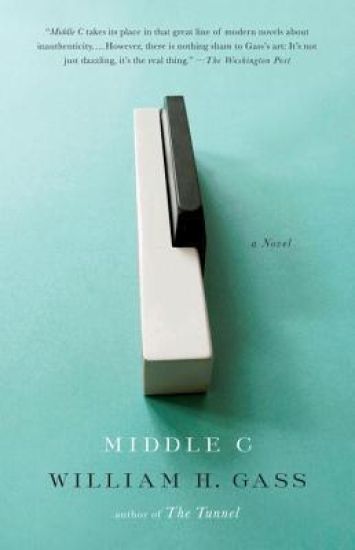
Middle C

Middle C

William H. Gass

VINTAGE
2013
nidottu
In a series of brilliant variations, William Gass presents a man's life--futile, comic, anarchic--arranged in an array of vocabularies, altered rhythms, forms, and tones, with music as both theme and structure. It begins in Graz, Austria, in 1938, when Joseph Skizzen's father pretends to be Jewish and emigrates to avoid the Nazis. In London with his wife and children for the duration of the war, he mysteriously disappears and the rest of the family relocates to a small town in Ohio. Here Joseph Skizzen grows up and leads a resolutely ordinary life, but one that is built on a scaffold of forgery and deceit. Outwardly he is a professor of music at a mediocre college; secretly he is the earnestly obsessive curator of a private Inhumanity Museum, meant to contain the guilt of centuries of atrocities. Middle C tells the story of his journey--a story that is also an investigation into the nature of identity and the ways in which each of us is several selves.
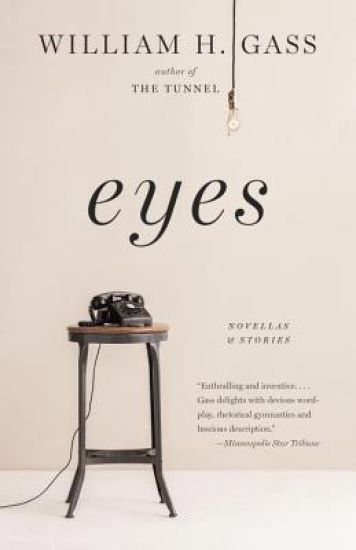
Eyes: Novellas and Stories

Eyes: Novellas and Stories

William H. Gass

VINTAGE
2016
nidottu
The point where an underground spring suddenly bursts to the surface is known as an eye. It is a place of mystery, where dry ground becomes soaked with life-giving water, and nature gives us a glimpse of all that happens out of the realm of human vision. So begins William Gass's latest collection, with these evocative lines from Jan DeBlieu. What follows are six extraordinary works of fiction: stories and novellas that capture these moments of mystery and explore the hidden philosophical depths of everyday life as only Gass can. "Charity" examines the roles of asking, giving, and receiving through the prism of a young lawyer who offers a simple gift. "In Camera" takes us into a photography shop owner's incomparable collection of images. "Don't Even Try, Sam" gives us the voice of the prop piano from Casablanca, and "Soliloquy for a Chair" is narrated by a folding chair in a barbershop that is ultimately fated for destruction. Incisive, darkly funny, formally innovative and linguistically stunning, Eyes is a tour de force of modern fiction.
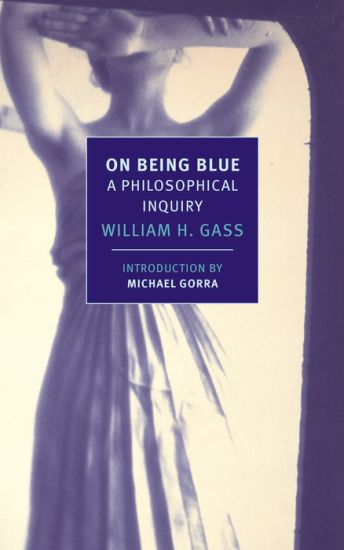
On Being Blue

On Being Blue

William H. Gass

NYRB Classics
2014
nidottu
On Being Blue is a book about everything blue--sex and sleaze and sadness, among other things--and about everything else. It brings us the world in a word as only William H. Gass, among contemporary American writers, can do. Gass writes: Of the colors, blue and green have the greatest emotional range. Sad reds and melancholy yellows are difficult to turn up. Among the ancient elements, blue occurs everywhere: in ice and water, in the flame as purely as in the flower, overhead and inside caves, covering fruit and oozing out of clay. Although green enlivens the earth and mixes in the ocean, and we find it, copperish, in fire; green air, green skies, are rare. Gray and brown are widely distributed, but there are no joyful swatches of either, or any of exuberant black, sullen pink, or acquiescent orange. Blue is therefore most suitable as the color of interior life. Whether slick light sharp high bright thin quick sour new and cool or low deep sweet dark soft slow smooth heavy old and warm: blue moves easily among them all, and all profoundly qualify our states of feeling.
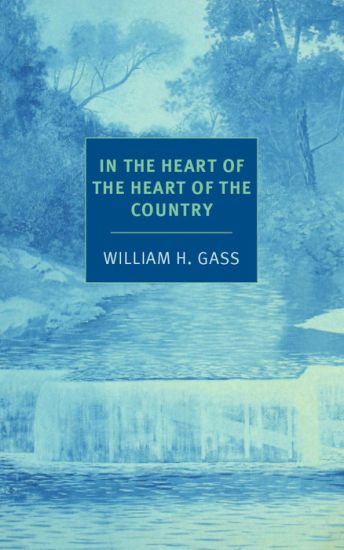
In The Heart Of The Heart Of The...

In The Heart Of The Heart Of The...

William H. Gass

NYRB Classics
2014
nidottu
First published in 1968, In the Heart of the Heart of the Country established William Gass as one of America's finest and boldest writers of fiction, and nearly fifty years later, the book still stands as a landmark of contemporary fiction. The two novellas and three short stories it contains are all set in the Midwest, and together they offer a mythical reimagining of America's heartland, with its punishing extremes of heat and cold, its endless spaces and claustrophobic households, its hidden and baffled desires, its lurking threat of violence. Exploring and expanding the limits of the short story, Gass works magic with words, words that are as squirming, regal, and unexpected as the roaches, boys, icicles, neighbors, and neuroses that fill these pages, words that shock, dazzle, illumine, and delight.