Kirjojen hintavertailu. Mukana 11 244 527 kirjaa ja 12 kauppaa.

Kirjahaku

Etsi kirjoja tekijän nimen, kirjan nimen tai ISBN:n perusteella.

1000 tulosta hakusanalla Gauvin Alexander Bailey

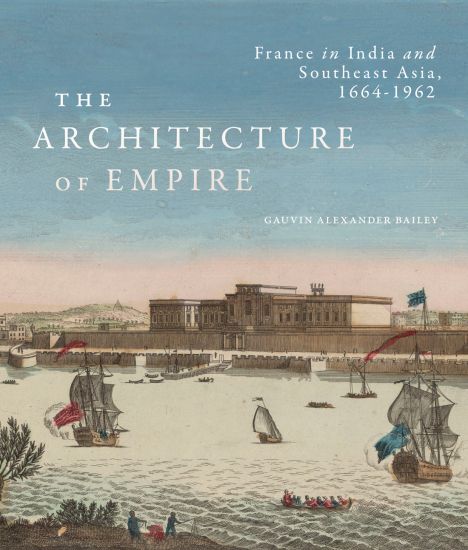
The Architecture of Empire

The Architecture of Empire

Gauvin Alexander Bailey

MCGILL-QUEEN'S UNIVERSITY PRESS
2022
sidottu
Most monumental buildings of France’s global empire – such as the famous Saigon and Hanoi Opera Houses – were built in South and Southeast Asia. Much of this architecture, and the history of who built it and how, has been overlooked.The Architecture of Empire considers the large-scale public architecture associated with French imperialism in seventeenth- and eighteenth-century India, Siam, and Vietnam, and nineteenth- and twentieth-century Indochina, the largest colony France ever administered in Asia. Offering a sweeping panorama of the buildings of France’s colonial project, this is the first study to encompass the architecture of both the ancien régime and modern empires, from the founding of the French trading company in the seventeenth century to the independence and nationalist movements of the mid-twentieth century. Gauvin Bailey places particular emphasis on the human factor: the people who commissioned, built, and lived in these buildings. Almost all of these architects, both Europeans and non-Europeans, have remained unknown beyond – at best – their surnames. Through extensive archival research, this book reconstructs their lives, providing vital background for the buildings themselves. Much more than in the French empire of the Western Hemisphere, the buildings in this book adapt to indigenous styles, regardless of whether they were designed and built by European or non-European architects.The Architecture of Empire provides a unique, comprehensive study of structures that rank among the most fascinating examples of intercultural exchange in the history of global empires.
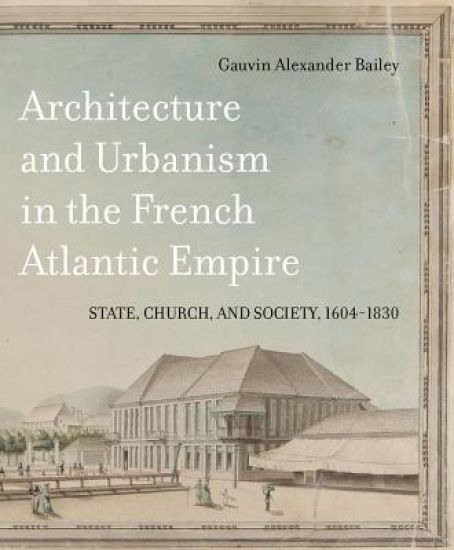
Architecture and Urbanism in the French Atlantic Empire

Architecture and Urbanism in the French Atlantic Empire

Gauvin Alexander Bailey

McGill-Queen's University Press
2018
sidottu
Spanning from the West African coast to the Canadian prairies and south to Louisiana, the Caribbean, and Guiana, France's Atlantic empire was one of the largest political entities in the Western Hemisphere. Yet despite France's status as a nation at the forefront of architecture and the structures and designs from this period that still remain, its colonial building program has never been considered on a hemispheric scale. Drawing from hundreds of plans, drawings, photographic field surveys, and extensive archival sources, Architecture and Urbanism in the French Atlantic Empire focuses on the French state's and the Catholic Church's ideals and motivations for their urban and architectural projects in the Americas. In vibrant detail, Gauvin Alexander Bailey recreates a world that has been largely destroyed by wars, natural disasters, and fires – from Cap-François (now Cap-Haïtien), which once boasted palaces in the styles of Louis XV and formal gardens patterned after Versailles, to failed utopian cities like Kourou in Guiana. Vividly illustrated with examples of grand buildings, churches, and gardens, as well as simple houses and cottages, this volume also brings to life the architects who built these structures, not only French military engineers and white civilian builders, but also the free people of colour and slaves who contributed so much to the tropical colonies. Taking readers on a historical tour through the striking landmarks of the French colonial landscape, Architecture and Urbanism in the French Atlantic Empire presents a sweeping panorama of an entire hemisphere of architecture and its legacy.
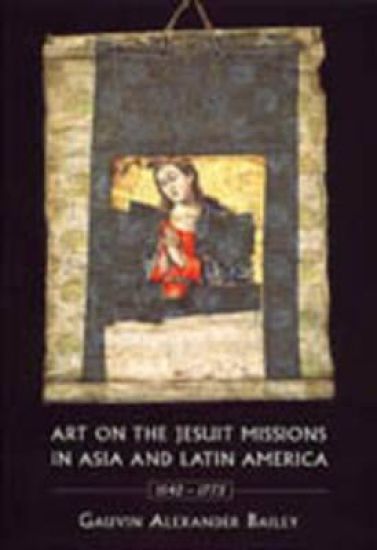
Art on the Jesuit Missions in Asia and Latin America, 1542-1773

Art on the Jesuit Missions in Asia and Latin America, 1542-1773

Gauvin Alexander Bailey

University of Toronto Press
2001
pokkari
When the Jesuit missionaries ventured from Europe to newly discovered territories in Asia and Latin America, they brought with them the rich traditions of Renaissance and Baroque art and architecture. What happened to the artistic and social practices already thriving in the communities that the missionaries encountered is the story told by art historian and Jesuit specialist Gauvin Alexander Bailey. The Jesuits, determined to convert both spiritually and culturally, put great effort into imparting their own artistic techniques and knowledge. At the same time they were unusually tolerant of the non-European cultures, making artistic accommodations in order to communicate with each particular society. The resulting hybridization was complex: German, Italian, and Flemish as well as the dominant Spanish and Portuguese idioms mingled with multiple Asian and Amerindian traditions. Bailey argues that this cross-pollination of early modern art became the first truly global visual currency for cultural exchange. Through a sweeping look at Japan, China, Mughul India, and Paraguay, the author focuses on four of the most flourishing artistic encounters and discovers much unrecognized or misunderstood art. He overturns the simple thesis that art was imposed on subject cultures in favour of the more difficult paradigm of exchange. This meticulously researched book has over 100 beautiful illustrations and a thorough index. Winner of the 2000 Roland H. Bainton Prize Winner for Art and Music History - Sixteenth Century Studies Conference
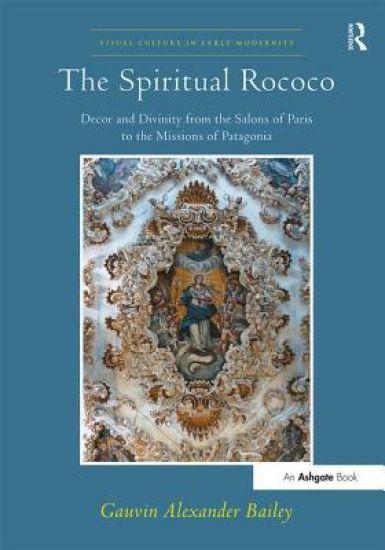
The Spiritual Rococo

The Spiritual Rococo

Gauvin Alexander Bailey

Routledge
2017
nidottu
A groundbreaking approach to Rococo religious décor and spirituality in Europe and South America, The Spiritual Rococo addresses three basic conundrums that impede our understanding of eighteenth-century aesthetics and culture. Why did the Rococo, ostensibly the least spiritual style in the pre-Modern canon, transform into one of the world’s most important modes for adorning sacred spaces? And why is Rococo still treated as a decadent nemesis of the Enlightenment when the two had fundamental characteristics in common? This book seeks to answer these questions by treating Rococo as a global phenomenon for the first time and by exploring its moral and spiritual dimensions through the lens of populist French religious literature of the day-a body of work the author calls the ’Spiritual Rococo’ and which has never been applied directly to the arts. The book traces Rococo’s development from France through Central Europe, Portugal, Brazil, and South America by following a chain of interlocking case studies, whether artistic, literary, or ideological, and it also considers the parallel diffusion of the literature of the Spiritual Rococo in these same regions, placing particular emphasis on unpublished primary sources such as inventories. One of the ultimate goals of this study is to move beyond the cliché of Rococo’s frivolity and acknowledge its essential modernity. Thoroughly interdisciplinary, The Spiritual Rococo not only integrates different art historical fields in novel ways but also interacts with church and social history, literary and post-colonial studies, and anthropology, opening up new horizons in these fields.
The Spiritual Rococo

The Spiritual Rococo

Gauvin Alexander Bailey

Ashgate Publishing Limited
2014
sidottu
A groundbreaking approach to Rococo religious décor and spirituality in Europe and South America, The Spiritual Rococo addresses three basic conundrums that impede our understanding of eighteenth-century aesthetics and culture. Why did the Rococo, ostensibly the least spiritual style in the pre-Modern canon, transform into one of the world’s most important modes for adorning sacred spaces? And why is Rococo still treated as a decadent nemesis of the Enlightenment when the two had fundamental characteristics in common? This book seeks to answer these questions by treating Rococo as a global phenomenon for the first time and by exploring its moral and spiritual dimensions through the lens of populist French religious literature of the day-a body of work the author calls the ’Spiritual Rococo’ and which has never been applied directly to the arts. The book traces Rococo’s development from France through Central Europe, Portugal, Brazil, and South America by following a chain of interlocking case studies, whether artistic, literary, or ideological, and it also considers the parallel diffusion of the literature of the Spiritual Rococo in these same regions, placing particular emphasis on unpublished primary sources such as inventories. One of the ultimate goals of this study is to move beyond the cliché of Rococo’s frivolity and acknowledge its essential modernity. Thoroughly interdisciplinary, The Spiritual Rococo not only integrates different art historical fields in novel ways but also interacts with church and social history, literary and post-colonial studies, and anthropology, opening up new horizons in these fields.
Between Renaissance and Baroque

Between Renaissance and Baroque

Gauvin Alexander Bailey

University of Toronto Press
2009
pokkari
Between Renaissance and Baroque is a stunning achievement - the first book to be written about the original painting commissions of the Jesuits in Rome. Offering a uniquely comprehensive and comparative analysis of the paintings and stuccoes which adorned all of the Jesuit foundations in the city during their first half century of existence, the study treats some of the most crucial monuments of late Renaissance painting including the original decorations of the church of the Gesù and the Collegio Romano, and the martyrdom frescoes at S. Stefano Rotondo. Based on extensive new archival research from Rome, Florence, Parma, and Perugia, Gauvin Alexander Bailey's study presents an original, revisionist treatment of Italian painting in the last four decades of the sixteenth century, a critical transitional period between Renaissance and Baroque. Bailey relates the Jesuit painting cycles to the great religious and intellectual climate of the period, isolates the new stylistic trends which appeared after the Council of Trent, and looks at the different ways in which artists met the challenges for devotional art made by the religious climate of the post-Tridentine period. Bailey also succeeds in providing the first ever written reconstructions of the Jesuit churches of S. Tommaso di Canterbury, S. Saba, and S. Apollinare, and the original novitiate complex of S. Andrea al Quirinale, the site of the most complex and original hospital decoration in late Renaissance Italy. Through these reconstructions, Bailey sheds new light on such works as Louis Richeôme's meditation manual on the paintings at S. Andrea, Le peinture spirituelle, a lively and detailed treatise on late Renaissance art that has never before been the subject of a thorough study. Ultimately, Bailey provides us with a new understanding of the stylistic and iconographic strands which shortly afterward were woven together to form the Baroque.
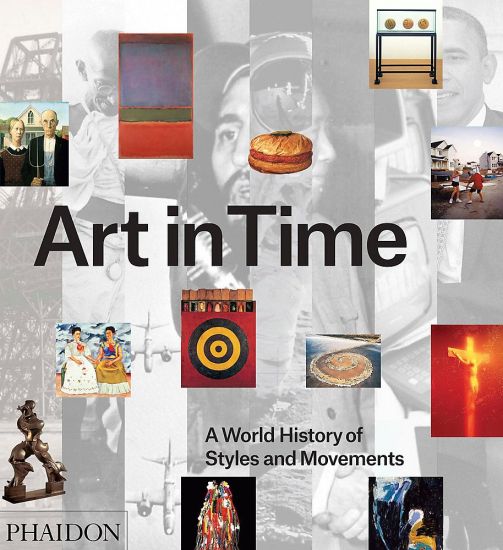
Art in Time

Art in Time

Gauvin Alexander Bailey; Alistair Rider; Matthew McKelway

Phaidon Press Ltd
2014
sidottu
An up-to-date and comprehensive guide to 150 of the most significant styles and movements that have shaped art history through time. All art is of its time, and this book is the first survey that explicitly embeds styles, schools and movements within the politics and culture in which they arose, by means of timelines, textual references and the unique present-to-past arrangement of the book. An essential guide to art styles and movements and a history of world art from the present day to Greek antiquity, this book places the reader in the art historian's seat, offering an opportunity to work backwards from our own time and reconnect the dots, or even find new dots to connect. It revives art history, for both the specialist and the general reader coming to the subject with limited knowledge – it shows graphically that art history is a living thing, not dead.
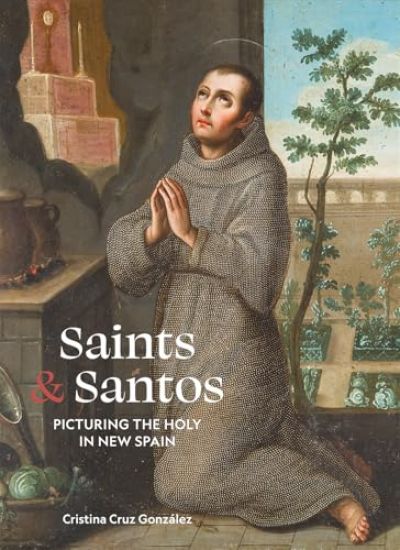
Saints & Santos

Saints & Santos

Montserrat A. Báez Hernández; Gauvin Alexander Bailey; Arturo Balandrano Campos; James M. Córdova; Ray Hernández-Durán; Anna M. Nogar; Gabriela Sánchez Reyes; Mark A. White

SCALA PUBLISHERS LTD
2025
sidottu
Explore how sacred art evolved in early Mexico, adapting to local cultures and artistic traditions.This beautifully illustrated book reveals the importance of saints in New Spain, a viceroyalty that was part of the Spanish Empire from 1521–1821, covering modern-day Mexico, Central America, and the US Southwest. In the late sixteenth century, Rome’s attempts to manage sanctity as an official process had a profound impact throughout Spain and the Spanish viceroyalties. Saintly devotions traveled to Mexico, and circulated within the vast territory as images or print, then to be transformed by New Spain’s own communities. Drawing on collections from Mexico and the United States, this book examines the role of images in the construction of the holy: these paintings, sculptures, and engravings routinely used to propagate, celebrate, and venerate saintly figures, and used in official beatification and canonization proceedings. The relationship between sanctity and the pictorial is a long, revered tradition that continues in the work of New Mexico’s santero artists today.
Baroque & Rococo

Baroque & Rococo

Bailey Gauvin Alexander

Phaidon Press Ltd
2012
nidottu
This new title in the highly regarded Art & Ideas series presents a thorough introduction to the Baroque and Rococo styles. Encompassing architecture, interior design, furniture, ceramics, garden landscaping and theatrical spectaculars, as well as the masterpieces of this prolific period in the Fine Arts, these styles were global and had enormous impact on the history of art. Gauvin Bailey clarifies the essence of the styles and examines their complexities and contradictions, and their applications against the backdrop of seventeenth- and eighteenth-century Europe, Latin America and Asia. With 250 illustrations, well-known sculptures by Bernini, paintings by Caravaggio and Rembrandt, and some of the most famous buildings in the world are set in their creative milieu with succinct analysis and broad clarity. Lesser known examples from across the world demonstrate how the aesthetic trends of the styles were concurrent throughout continents, and enlightens and refreshes the implications of the terms.
Sidney's 'The Defence of Poesy' and Selected Renaissance Literary Criticism
Controversy raged through England during the 1570-80s as Puritans denounced all manner of games & pastimes as a danger to public morals. Writers quickly turrned their attention to their own art and the first & most influential response came with Philip Sidney's Defense. Here he set out to answer contemporary critics &, with reference to Classical models of criticism, formulated a manifesto for English literature. Also includes George Puttenham's Art of English Poesy, Samuel Daniel's Defence of Rhyme, & passages by writers such as Ben Jonson, Francis Bacon & George Gascoigne.
Writing after Sidney

Writing after Sidney

Gavin Alexander

Oxford University Press
2006
sidottu
Writing After Sidney examines the literary response to Sir Philip Sidney (1554-86), author of the Arcadia, Astrophil and Stella, and The Defence of Poesy, and the most immediately influential writer of the Elizabethan period. It does so by looking closely both at Sidney and at four writers who had an important stake in his afterlife: his sister Mary Sidney, his brother Robert Sidney, his best friend Fulke Greville, and his niece Mary Wroth. At the same time as these authors wrote their own works in response to Sidney they presented his life and writings to the world, and were shaped by other writers as his literary and political heirs. Readings of these five central authors are embedded in a more general study of the literary and cultural scene in the years after Sidney's death, examining the work of such writers as Spenser, Jonson, Daniel, Drayton, and Herbert. The study uses a wide range of manuscript and printed sources, and key use is made of perspectives from Renaissance literary theory, especially Renaissance rhetoric. The book aims to come to a better understanding of the nature of Sidney's impact on the literature of the fifty or so years after his death in 1586; it also aims to improve our understanding both of Sidney and of the other writers discussed by developing a more nuanced approach to the questions of imitation and example so central to Renaissance literature. It thereby adds to the general store of our understanding of how writing of the English Renaissance offered examples to later readers and writers, and of how it encountered and responded to such examples itself.
Writing after Sidney

Writing after Sidney

Gavin Alexander

Oxford University Press
2010
nidottu
Writing After Sidney examines the literary response to Sir Philip Sidney (1554-86), author of the Arcadia, Astrophil and Stella, and The Defence of Poesy, and the most immediately influential writer of the Elizabethan period. It does so by looking closely both at Sidney and at four writers who had an important stake in his afterlife: his sister Mary Sidney, his brother Robert Sidney, his best friend Fulke Greville, and his niece Mary Wroth. At the same time as these authors wrote their own works in response to Sidney they presented his life and writings to the world, and were shaped by other writers as his literary and political heirs. Readings of these five central authors are embedded in a more general study of the literary and cultural scene in the years after Sidney's death, examining the work of such writers as Spenser, Jonson, Daniel, Drayton, and Herbert. The study uses a wide range of manuscript and printed sources, and key use is made of perspectives from Renaissance literary theory, especially Renaissance rhetoric. The book aims to come to a better understanding of the nature of Sidney's impact on the literature of the fifty or so years after his death in 1586; it also aims to improve our understanding both of Sidney and of the other writers discussed by developing a more nuanced approach to the questions of imitation and example so central to Renaissance literature. It thereby adds to the general store of our understanding of how writing of the English Renaissance offered examples to later readers and writers, and of how it encountered and responded to such examples itself.
Cliffside

Cliffside

Gavin Alexander

Andrews UK Limited
2021
nidottu
Katie Petherick is young, beautiful and successful, but not content. For three years she has been earning a good living as an upmarket monthly live-in maternity nurse, working closely with wealthy couples and gaining their trust. It is not enough. Now it is decision time. Katie has a devious plan to make some serious cash, but there is considerable risk. She knows she is playing with fire, and she realises people are likely to get hurt - not least her boyfriend, Peter Dunkett. He is crazy about her, and he is too scrupulous ever to be happy about what she has in mind, but his need for money is even more pressing than Katie's.
The Leibniz-Clarke Correspondence

The Leibniz-Clarke Correspondence

Robert Gavin Alexander

Manchester University Press
1977
nidottu
n 1715 Leibniz wrote to his friend the Princess of Wales to warn her of the dangers Newton's philosophy posed for natural religion. Seizing this chance of initiating an exchange between the two greatest minds in Europe, the princess showed his letter to the eminent Newtonian scientist and natural theologian, Samuel Clarke. From his reply developed an exchange of papers which was published in 1717. The correspondence was immediately seen as a crucial discussion of the significance of the new science, and it became one of the most widely read philosophical works of its time.In this edition, an introduction outlines the historical background, and there is a valuable survey of the subsequent discussions of the problem of space and time in the philosophy of science. Significant references to the controversy in Leibniz's other correspondence have also been collected, and the relevant passages from Newton's Principia and Opticks are appended. In 1715 Leibniz wrote to his friend the Princess of Wales to warn her of the dangers Newton's philosophy posed for natural religion. Seizing this chance of initiating an exchange between two of the greatest minds in Europe, the princess showed his letter to the eminent Newtonian scientist and natural theologian, Samuel Clarke. From his reply developed an exchange of papers which was published in 1717. The correspondence was immediately seen as a crucial discussion of the significance of the new science, and it became one of the most widely read philosophical works of its time. Kant developed his theory of space and time from the problems at issue, and the post-Newtonian physics of the twentieth century has brought a revival of interest in Leibniz's objections: some of the problems are still not finally resolved. In this edition an introduction outlines the historical background, and there is a valuable survey of the subsequent discussions of the problem of space and time in the philosophy of science. Significant references to the controversy in Leibniz's other correspondence have also been collected, and the relevant passages from Newton's "Principia" and "Opticks" are appended.
The American City: What Works, What Doesn't

The American City: What Works, What Doesn't

Alexander Garvin

McGraw-Hill Professional
2013
sidottu
Publisher's Note: Products purchased from Third Party sellers are not guaranteed by the publisher for quality, authenticity, or access to any online entitlements included with the product.The definitive guide to urban planning and design--completely updated and now in full colorIn the Third Edition of The American City: What Works, What Doesn't, award-winning city planner and renowned urban scholar Alexander Garvin examines more than 350 programs and projects that have been implemented nationwide in 150 cities and suburbs, evaluates their successes and failures, and offers relevant lessons learnedfrom them.Nearly all of the book's 650 illustrations are now in full color and consist almost entirely of photographs, maps, and diagrams produced especially for the Third Edition. Garvin discusses major urban initiatives that have emerged over the past two decades, such as Chicago's Millennium Park, Houston's Uptown Business District, and Metropolitan Denver's FasTracks multicounty rapid transitnetwork. He reexamines the wide range of places and strategies covered in the previous edition, offering new analyses and insights. A new chapter on retrofitting the city for a modern commercial economy is included.This practical guide presents six key ingredients of project success--market, location, design, financing, time, and entrepreneurship--and explains how to combine these elements in a mutually reinforcing manner. Garvin demonstrates how the synthesis of individual and private-sector efforts, community-level action, and broad-based government policy can--and has--achieved urban and suburban regeneration.COVERAGE INCLUDES:A realistic approach to city and suburban planningIngredients of success--market, location, design, financing, time, and entrepreneurshipParks, playgrounds, and open spaceRetail shoppingPalaces for the people--libraries, stadiums, museums, and other public facilitiesRetrofitting the city for a modern commercial economyThe life and death of the City of Tomorrow--implications of national urban redevelopment programsDowntown managementIncreasing the housing supplyReducing housing costsHousing rehabilitationClearing the slumsRevitalizing neighborhoodsResidential suburbsNew-towns-in-townNew-towns-in-the-countryLand use regulationHistoric preservationComprehensive planning
Public Parks

Public Parks

Alexander Garvin

WW Norton Co
2011
sidottu
Everything that anybody (whether they are citizen activists, or public officials, or professional landscape architects, architects, and planners) needs to know about the critical role public parks play in creating livable communities. Millions of dollars are being spent on restoring parks and creating new ones. Planner Alexander Garvin explains the rationales for their existence, the forms they take, their value, ways to pay for and govern them, and the ingredients that make successful parks, providing the first single definitive source of wisdom about them.
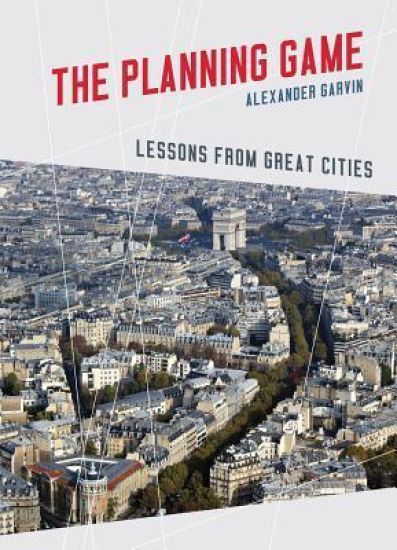
The Planning Game

The Planning Game

Alexander Garvin

WW Norton Co
2013
sidottu
The Planning Game: Lessons from Great Cities provides a focused, thorough, and sophisticated overview of how planning works, generously illustrated with 200 colorful photographs, diagrams, and maps created expressly for the book. It presents the public realm approach to planning—an approach that emphasizes the importance of public investments in what we own: streets, squares, parks, infrastructure, and public buildings. They are the fundamental elements in any community and are the way to determine our future. The book covers planning at every level, explaining the activities that go into successfully transforming a community as exemplified by four cities and their colorful motive forces: Paris (Baron Georges-Eugene Haussmann), New York (Robert Moses), Chicago (Daniel Burnham), and Philadelphia (Edmund Bacon). The Planning Game is an invaluable resource for planners, students, community leaders, and everybody involved with making better places to live.
What Makes a Great City

What Makes a Great City

Alexander Garvin

Island Press
2016
sidottu
What makes a great city? Not a good city or a functional city but a great city. A city that people admire, learn from, and replicate. City planner and architect Alexander Garvin set out to answer this question by observing cities, largely in North America and Europe, with special attention to Paris, London, New York, and Vienna. For Garvin, greatness is not just about the most beautiful, convenient, or well-managed city; it isn't even about any "city." It is about what people who shape cities can do to make a City great. A great city is not an Exquisite, completed artefact. It is a dynamic, constantly changing place that residents and their leaders can reshape, to satisfy their demands. While this book does discuss the history, demographic composition, politics, economy, topography, history playout, architecture, and planning of great cities, it is not about these aspects alone. Most importantly, it is about the interplay between people and public realm and how they have interacted throughout history to create great Cities. To open the book, Garvin explains that a great public realm attracts and retains the people who make a city great.He describes exactly what the term public realm means, its most important characteristics, as well as providing examples of when and how these characteristics work, or don't. An entire chapter is devoted to a discussion of how particular components of the public realm (squares in London, parks in Minneapolis, and streets in Madrid) shape people's daily lives. He concludes with a look at how twenty-first century initiatives in Paris, Houston, Atlanta-Brooklyn, and Toronto are making an already fine public realm even better, initiatives that demonstrate what other cities can do to improve. What Makes o Great City will help readers understand that any city can be changed for the better-and inspire entrepreneurs, public officials, and city residents to do it themselves.
The Heart of the City

The Heart of the City

Alexander Garvin

Island Press
2019
pokkari
Downtowns are more than economic engines: they are repositories of knowledge and culture and generators of new ideas, technology, and ventures. They are the heart of the city that drives its future. If we are to have healthy downtowns, we need to understand what downtown is all about; how and why some American downtowns never stopped thriving (such as San Jose and Houston), some have been in decline for half a century (including Detroit and St. Louis), and still others are resurging after temporary decline (many, including Lower Manhattan and Los Angeles). The downtowns that are prospering are those that more easily adapt to changing needs and lifestyles. In The Heart of the City, distinguished urban planner Alexander Garvin shares lessons on how to plan for a mix of housing, businesses, and attractions; enhance the public realm; improve mobility; and successfully manage downtown services. Garvin opens the book with diagnoses of downtowns across the United States, including the people, businesses, institutions, and public agencies implementing changes. In a review of prescriptions and treatments for any downtown, Garvin shares brief accounts--of both successes and failures--of what individuals with very different objectives have done to change their downtowns. The final chapters look at what is possible for downtowns in the future, closing with suggested national, state, and local legislation to create standard downtown business improvement districts to better manage downtowns. This book will help public officials, civic organizations, downtown business property owners, and people who care about cities learn from successful recent actions in downtowns across the country, and expand opportunities facing their downtown. Garvin provides recommendations for continuing actions to help any downtown thrive, ensuring a prosperous and thrilling future for the 21st-century American city.