Kirjojen hintavertailu. Mukana 11 244 527 kirjaa ja 12 kauppaa.

Kirjahaku

Etsi kirjoja tekijän nimen, kirjan nimen tai ISBN:n perusteella.

1000 tulosta hakusanalla Gay Gassman

Torrey: Private Spaces

Torrey: Private Spaces

Gay Gassman

RIZZOLI INTERNATIONAL PUBLICATIONS
2025
sidottu
Torrey launched his eponymous firm in 2013. In just a few years, he has built a practice recognized for its compelling minimalism and modernism. This first monograph showcases twenty of Torrey s most recent projects: from New York City and Miami to Los Angeles and Cabo San Lucas. The book sheds light on all aspects of Torrey s signature minimalism with a twist: sublimely cool, clean, and modern designs are combined with luxurious, tactile finishes, and rich materials. A keen eye for contemporary art and an approach combining modern flair with effortless charm also define Torrey s signature. Edited and authored by renowned art consultant Gay Gassman, this volume features photographs by Douglas Friedman, Tim Lenz and Manolo Yllera.
Jean-Michel Othoniel

Jean-Michel Othoniel

Gay Gassmann; Catherine Grenier; Robert Storr

Phaidon Press Ltd
2019
nidottu
The groundbreaking sculptor's most comprehensive monograph to date Jean-Michel Othoniel is an artist who creates sculptures that explore themes of fragility, transformation, and ephemerality. Using the repetition of such modular elements as bricks or beads, his work deploys various strategies that hint at loss and despair – cracks in his objects' perfect surfaces, negative spaces and, early in his career, transient materials such as sulfur. The most authoritative study of the artist's work to date, it includes intimate gallery pieces as well as monumental public commissions around the world.
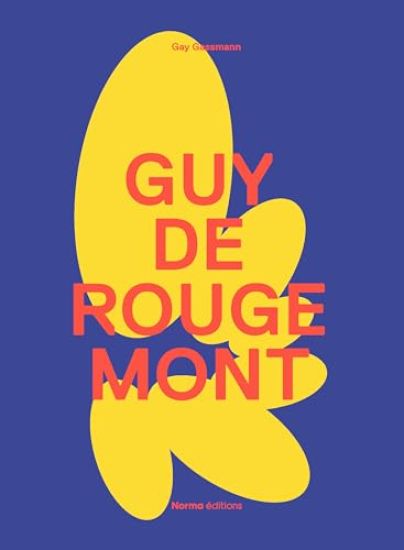
Guy de Rougemont

Guy de Rougemont

Gay Gassmann

Editions Norma
2024
sidottu
A multidisciplinary artist of the 20th century, Guy de Rougemont (1935-2021) flourished throughout his career in painting, sculpture, the decorative arts and ceramics, in a constant play on colour, line and form. The monumental wrapping of the columns at the Musée d’Art Moderne in 1974, the highly acclaimed paving of the entrance to the Musée d’Orsay in 1986, and the paving of the Ministry of Finance in 1987, as well as the 30-kilometre stretch of the A4 motorway in 1977, are all still making their mark, the result of the artist’s desire to make art part of the lives of passers-by. Guy de Rougemont was constantly reinventing himself, between public and private space, urban and domestic, between Pop Art and Minimalism. Among his most famous works: his cloud table, his coloured totems, his serpentine lines, his tapestries for the Mobilier National, his cutlery and other more confidential works earned him a major retrospective at the Musée des Arts Décoratifs in 1990. He became an Academician in the painting section in 1997. Text in English and French.
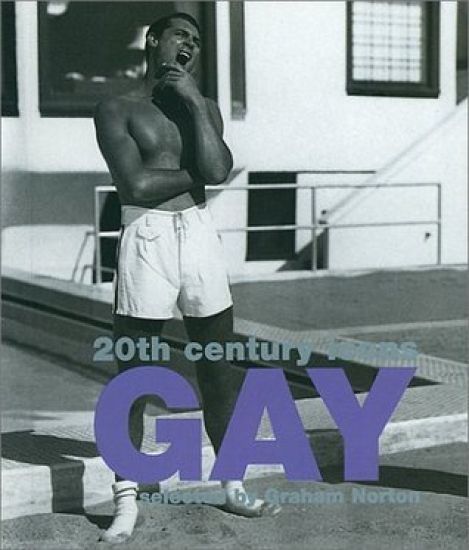
Gay

Gay

Graham Norton

Absolute Press
1999
nidottu
20th Century Icons is a stylish, quirky and instantly collectible series of little books created to celebrate the last hundred years. Famous names in the arenas of film, rock and pop, kitsch and camp have all chosen their own personal icons, recorded in these pocket-sized volumes with interesting, amusing and sometimes controversial results. Readers will enjoy discovering the eclectic, surprising, and humorous selections in every title, with luminaries as diverse as Elvis, Liberace and Mr. Potato Head all rubbing shoulders with one another.
Gay Like Me: A Father Writes to His Son
Chosen by Town & Country as one of the most anticipated books of the year Named "An LGBTQ Book That'll Change the Literary Landscape in 2020" by O: The Oprah MagazineIn this poignant and urgent love letter to his son, award-winning Broadway, TV and film producer Richie Jackson reflects on his experiences as a gay man in America and the progress and setbacks of the LGBTQ community over the last 50 years."My son is kind, responsible, and hardworking. He is ready for college. He is not ready to be a gay man living in America."When Jackson's son born through surrogacy came out to him at age 15, the successful producer, now in his 50s, was compelled to reflect on his experiences and share his wisdom on life for LGBTQ Americans over the past half-century.Gay Like Me is a celebration of gay identity and parenting, and a powerful warning for his son, other gay men and the world. Jackson looks back at his own journey as a gay man coming of age through decades of political and cultural turmoil. Jackson's son lives in a seemingly more liberated America, and Jackson beautifully lays out how far we've come since Stonewall -- the increased visibility of gay people in society, the legal right to marry, and the existence of a drug to prevent HIV. But bigotry is on the rise, ignited by a president who has declared war on the gay community and fanned the flames of homophobia. A newly constituted Supreme Court with a conservative tilt is poised to overturn equality laws and set the clock back decades. Being gay is a gift, Jackson writes, but with their gains in jeopardy, the gay community must not be complacent. As Ta-Nehisi Coates awakened us to the continued pervasiveness of racism in America in Between the World and Me, Jackson's rallying cry in Gay Like Me is an eye-opening indictment to straight-lash in America. This book is an intimate, personal exploration of our uncertain times and most troubling questions and profound concerns about issues as fundamental as dignity, equality, and justice. Gay Like Me is a blueprint for our time that bridges the knowledge gap of what it's like to be gay in America. This is a cultural manifesto that will stand the test of time. Angry, proud, fierce, tender, it is a powerful letter of love from a father to a son that holds lasting insight for us all.
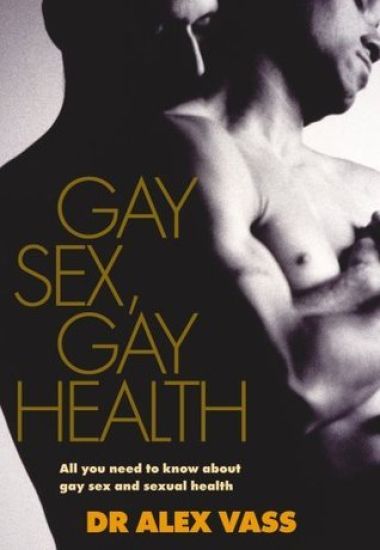
Gay Sex, Gay Health

Gay Sex, Gay Health

Dr Alex Vass

Ebury Press
2006
pokkari
With rates of sexually transmitted infections, including HIV, and sexual problems at an all time high Gay Sex, Gay Health is essential reading for all gay men, with informed advice on sexual, physical and emotional problems, including practising safe sex and taking responsibility for oneself.
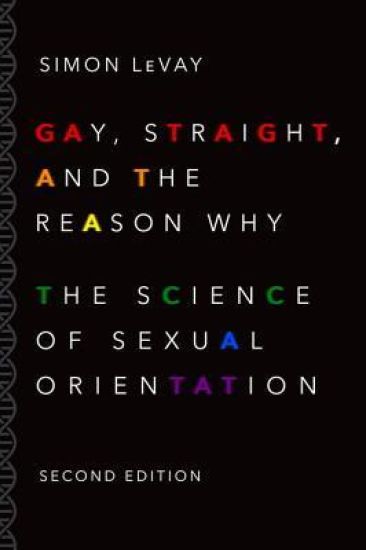
Gay, Straight, and the Reason Why

Gay, Straight, and the Reason Why

Simon LeVay

Oxford University Press Inc
2016
nidottu
What causes a child to grow up gay or straight? In this book, neuroscientist Simon LeVay summarizes a wealth of scientific evidence that points to one inescapable conclusion: Sexual orientation results primarily from an interaction between genes, sex hormones, and the cells of the developing body and brain. LeVay helped create this field in 1991 with a much-publicized study in Science, where he reported on a difference in the brain structure between gay and straight men. Since then, an entire scientific discipline has sprung up around the quest for a biological explanation of sexual orientation. In this book, LeVay provides a clear explanation of where the science stands today, taking the reader on a whirlwind tour of laboratories that specialize in genetics, endocrinology, neuroscience, cognitive psychology, evolutionary psychology, and family demographics. He describes, for instance, how researchers have manipulated the sex hormone levels of animals during development, causing them to mate preferentially with animals of their own gender. LeVay also reports on the prevalence of homosexual behavior among wild animals, ranging from Graylag geese to the Bonobo chimpanzee. In this revised edition LeVay broadens his horizons. He adds a new chapter on bisexuality, reviews some uncommon forms of sexuality such as asexuality and pedophilia, and considers whether there could be a biological basis for subtypes of gay people such as "butch" and "femme" lesbians. Although many details remain unresolved, the general conclusion is quite clear: A person's sexual orientation arises in large part from biological processes that are already underway before birth.
Gay, Straight, and In-Between

Gay, Straight, and In-Between

John Money

Oxford University Press Inc
1988
sidottu
Synthesizing many years' investigation into sexual identity and orientation, this book presents Dr Money's formulation of how sexual preference is determined. It includes a review of long-term follow-up studies on pre-natal influences on sexual identity, and discusses gender differentiation in childhood. The book concludes with an examination of the conflict between gender and sexual identities, and a description of the paraphilias. Researchers, clinicians, and graduate students in psychology, biology, endocrinology, psychiatry, and family studies will find this volume of interest, as will anyone interested in gay and lesbian issues.
Gay, Straight, and In-Between

Gay, Straight, and In-Between

John Money

Oxford University Press Inc
1990
nidottu
Synthesizing many years' investigation into sexual identity and orientation, this book presents Dr Money's formulation of how sexual preference is determined. It includes a review of long-term follow-up studies on pre-natal influences on sexual identity, and discusses gender differentiation in childhood. The book concludes with an examination of the conflict between gender and sexual identities, and a description of the paraphilias.
Gay Marriage

Gay Marriage

William N Eskridge; Darren R Spedale

Oxford University Press Inc
2006
nidottu
Opponents of same-sex marriage in the United States claim that allowing gays and lesbians to marry would undermine the institution of marriage, weaken family structures, and cause harm to children. Drawing from 17 years of data and experience with same-sex marriage in Scandinavia (in the form of registered partnerships), Gay Marriage: For Better or for Worse? is the first book to present empirical evidence about the effects of same-sex marriage on society. Spedale and Eskridge find that the evidence refutes conservative defense-of-marriage arguments and, in fact, demonstrates that the institution of marriage may indeed benefit from the legalization of gay marriage. If we look at the proof from abroad, the authors show, we must conclude that the sanctioning of gay marriage in the United States would neither undermine marriage as an institution, nor harm the wellbeing of our nation's children. "A very interesting book that people should read."--Bill O'Reilly, Host, The O'Reilly Factor "Whatever your views are now on same-sex marriage, this is the book to read to be informed about why same sex couples want legal recognition and what legal union means to them and to the larger community. Spedale and Eskridge give detailed accounts of the effects of registered partnerships in Scandinavia--and along the way, offer fascinating and engaging pictures of many people's lives."--Martha Minow, Jeremiah Smith Jr. Professor, Harvard Law School "Spedale and Eskridge illuminate with remarkable even-handedness a debate that tends to generate more heat than light. They provide a cogent analysis of conservative arguments that same-sex matrimony threatens conventional marriage, and argue persuasively that enabling same-sex partners to marry may actually strengthen that beleaguered institution."--John Podesta, President and CEO, Center for American Progress "An important and timely contribution. It should be required reading for anyone interested in the future of families in America."--Martha Albertson Fineman, Robert W. Woodruff Professor, Emory Law School
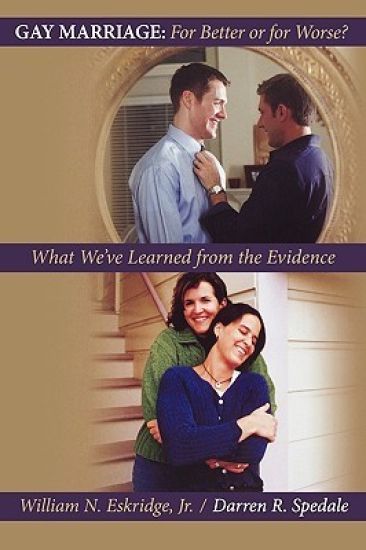
Gay Marriage: for Better or for Worse?

Gay Marriage: for Better or for Worse?

William N. Eskridge; Darren R. Spedale

Oxford University Press Inc
2007
nidottu
Opponents of same-sex marriage in the United States claim that allowing gays and lesbians to marry would undermine the institution of marriage, weaken family structures, and cause harm to children. Drawing from 17 years of data and experience with same-sex marriage in Scandinavia (in the form of registered partnerships), Gay Marriage: For Better or for Worse? is the first book to present empirical evidence about the effects of same-sex marriage on society. Spedale and Eskridge find that the evidence refutes conservative defense-of-marriage arguments and, in fact, demonstrates that the institution of marriage may indeed benefit from the legalization of gay marriage. If we look at the proof from abroad, the authors show, we must conclude that the sanctioning of gay marriage in the United States would neither undermine marriage as an institution, nor harm the wellbeing of our nation's children. "A very interesting book that people should read." --Bill O'Reilly, Host, The O'Reilly Factor "Whatever your views are now on same-sex marriage, this is the book to read to be informed about why same sex couples want legal recognition and what legal union means to them and to the larger community. Spedale and Eskridge give detailed accounts of the effects of registered partnerships in Scandinavia--and along the way, offer fascinating and engaging pictures of many people's lives." --Martha Minow, Jeremiah Smith Jr. Professor, Harvard Law School "Spedale and Eskridge illuminate with remarkable even-handedness a debate that tends to generate more heat than light. They provide a cogent analysis of conservative arguments that same-sex matrimony threatens conventional marriage, and argue persuasively that enabling same-sex partners to marry may actually strengthen that beleaguered institution." --John Podesta, President and CEO, Center for American Progress "An important and timely contribution. It should be required reading for anyone interested in the future of families in America." --Martha Albertson Fineman, Robert W. Woodruff Professor, Emory Law School
Gay Rights vs. Religious Liberty?

Gay Rights vs. Religious Liberty?

Andrew Koppelman

Oxford University Press Inc
2020
sidottu
Should religious people who conscientiously object to facilitating same-sex weddings, and who therefore decline to provide cakes, photography, or other services, be exempted from antidiscrimination laws? This issue has taken on an importance far beyond the tiny number who have made such claims. Gay rights advocates fear that exempting even a few religious dissenters would unleash a devastating wave of discrimination. Conservative Christians fear that the law will treat them like racists and drive them to the margins of American society. Both sides are mistaken. The answer lies, not in abstract principles, but in legislative compromise. This book clearly and empathetically engages with both sides of the debate. Koppelman explains the basis of antidiscrimination law, including the complex idea of dignitary harm. He shows why even those who do not regard religion as important or valid nonetheless have good reasons to support religious liberty, and why even those who regard religion as a value of overriding importance should nonetheless reject the extravagant power over nonbelievers that the Supreme Court has recently embraced. Koppelman also proposes a specific solution to the problem: that religious exemptions be granted only to the few businesses that are willing to announce their compunctions and bear the costs of doing so. His approach makes room for America's enormous variety of deeply held beliefs and ways of life. It can help reduce the toxic polarization of American politics.
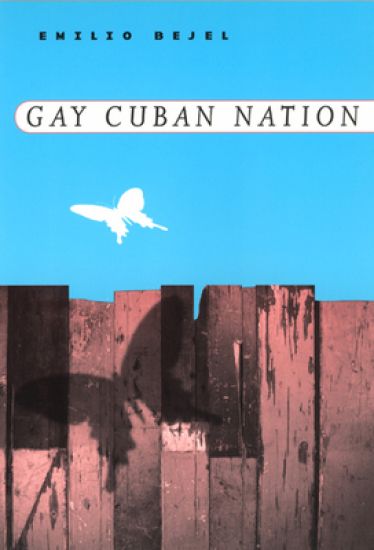
Gay Cuban Nation

Gay Cuban Nation

Emilio Bejel

University of Chicago Press
2001
sidottu
With this text, Emilio Bejel looks at Cuba's markedly homoerotic culture through writings about homosexuality, placing them in the social and political contexts that led up to the Cuban revolution. By reading against the grain of a wide variety of novels, short stories, autobiographies, newspaper articles, and films, Bejel maps out an argument about the way in which different attitudes toward power and nationalism struggle for an authoritative stance on homosexual issues. Through close readings of writers such as Jose Marti, Alfonso Hernandez-Cata, Carlos Montenegro, Jose Lezama Lima, Leonardo Padura Fuentes, and Reinaldo Arenas, the text shows that the category of homosexuality is always lurking, ghost-like, in the shadows of nationalist discourse. The book stakes out Cuba's sexual battlefield, and aims to challenge the homophobia of both Castro's revolutionaries and Cuban exiles in the States.
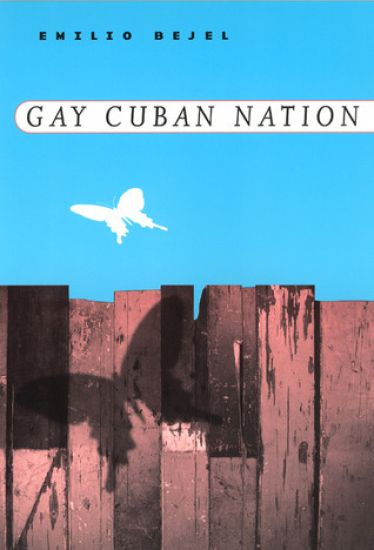
Gay Cuban Nation

Gay Cuban Nation

Emilio Bejel

University of Chicago Press
2001
nidottu
With this text, Emilio Bejel looks at Cuba's markedly homoerotic culture through writings about homosexuality, placing them in the social and political contexts that led up to the Cuban revolution. By reading against the grain of a wide variety of novels, short stories, autobiographies, newspaper articles, and films, Bejel maps out an argument about the way in which different attitudes toward power and nationalism struggle for an authoritative stance on homosexual issues. Through close readings of writers such as Jose Marti, Alfonso Hernandez-Cata, Carlos Montenegro, Jose Lezama Lima, Leonardo Padura Fuentes, and Reinaldo Arenas, the text shows that the category of homosexuality is always lurking, ghost-like, in the shadows of nationalist discourse. The book stakes out Cuba's sexual battlefield, and aims to challenge the homophobia of both Castro's revolutionaries and Cuban exiles in the States.
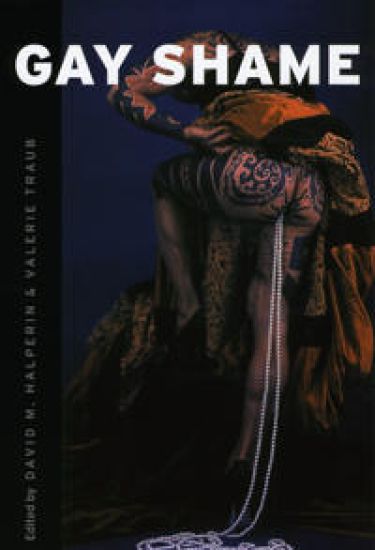
Gay Shame

Gay Shame

University of Chicago Press
2010
nidottu
Ever since the 1969 Stonewall Riots, 'gay pride' has been the rallying cry of the gay rights movement and the political force behind the emergence of the field of gay and lesbian studies. But has something been lost, forgotten, or buried beneath the drive to transform homosexuality from a perversion to a proud social identity? Have the political requirements of gay pride repressed discussion of the more uncomfortable or undignified aspects of homosexuality? "Gay Shame" seeks to lift this unofficial ban on the investigation of homosexuality and shame by presenting critical work from the most vibrant frontier in contemporary queer studies.An esteemed list of contributors tackles a range of issues - questions of emotion, disreputable sexual histories, dissident gender identities, and embarrassing figures and moments in gay history - as they explore the possibility of reclaiming shame as a new, even productive, way to examine lesbian and gay culture. Accompanied by a collection of films, performance, and archival imagery on DVD, "Gay Shame" constitutes nothing less than a major redefinition and revitalization of the field.
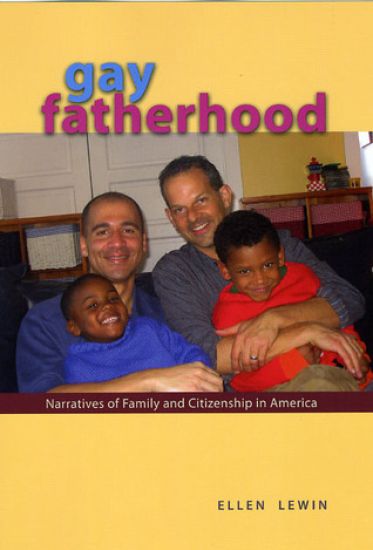
Gay Fatherhood

Gay Fatherhood

Ellen Lewin

University of Chicago Press
2009
sidottu
Men are often thought to have less interest in parenting than women, and gay men are generally assumed to prefer pleasure over responsibility. The toxic combination of these two stereotypical views has led to a lack of serious attention being paid to the experiences of gay fathers. But the truth is that more and more gay men are setting out to become parents and succeeding - and "Gay Fatherhood" aims to tell their stories. Ellen Lewin takes as her focus people who undertake the difficult process of becoming fathers as gay men, rather than having become fathers while married to women. These men face unique challenges in their quest for fatherhood, negotiating specific bureaucratic and financial difficulties as they pursue adoption or surrogacy and juggling questions about their future child's race, age, sex, and health. "Gay Fatherhood" chronicles the lives of these men, exploring how they cope with political attacks from both the 'family values' right and the 'radical queer' left - while also shedding light on the evolving meanings of family in twenty-first-century America.
Gay Fatherhood

Gay Fatherhood

Ellen Lewin

University of Chicago Press
2009
nidottu
Men are often thought to have less interest in parenting than women, and gay men are generally assumed to prefer pleasure over responsibility. The toxic combination of these two stereotypical views has led to a lack of serious attention being paid to the experiences of gay fathers. But the truth is that more and more gay men are setting out to become parents and succeeding - and "Gay Fatherhood" aims to tell their stories. Ellen Lewin takes as her focus people who undertake the difficult process of becoming fathers as gay men, rather than having become fathers while married to women. These men face unique challenges in their quest for fatherhood, negotiating specific bureaucratic and financial difficulties as they pursue adoption or surrogacy and juggling questions about their future child's race, age, sex, and health. "Gay Fatherhood" chronicles the lives of these men, exploring how they cope with political attacks from both the 'family values' right and the 'radical queer' left - while also shedding light on the evolving meanings of family in twenty-first-century America.
Gay Men's Friendships

Gay Men's Friendships

Peter M. Nardi

University of Chicago Press
1999
sidottu
Based on surveys and interviews of two hundred gay men, this study presents an examination of contemporary urban gay men's friendships. Weaving historical and sociological research on friendship with firsthand information, Nardi argues that friendship is the central organizing element of gay men's lives. Through friendship, gay identities and communities are created, transformed, maintained and reproduced. Nardi explores the meaning of friends to some gay men, how friends often become a surrogate family, how sexual behaviour and attraction affects these friendships, and how, for many, friends mean more and last longer than romantic relationships. While looking at the psychological joys and sorrows of friendship, he also considers the cultural constraints limiting gay men in contemporary urban America - especially those that deal with dominant images of masculinity and heterosexuality - and how they relate to friendship. By listening to gay men talk about their interactions, Nardi offers a glimpse into the mechanisms of gay life. We learn how gay men meet their friends, what they typically do and talk about, and how these strong relationships contain the roots of larger cultural forces such as social movements and gay identities and neighbourhoods. Nardi also points out the political and social consequences when friendships fail to provide support against oppression.
Gay Men's Friendships

Gay Men's Friendships

Peter M. Nardi

University of Chicago Press
1999
nidottu
Based on surveys and interviews of two hundred gay men, this study presents an examination of contemporary urban gay men's friendships. Weaving historical and sociological research on friendship with firsthand information, Nardi argues that friendship is the central organizing element of gay men's lives. Through friendship, gay identities and communities are created, transformed, maintained and reproduced. Nardi explores the meaning of friends to some gay men, how friends often become a surrogate family, how sexual behaviour and attraction affects these friendships, and how, for many, friends mean more and last longer than romantic relationships. While looking at the psychological joys and sorrows of friendship, he also considers the cultural constraints limiting gay men in contemporary urban America - especially those that deal with dominant images of masculinity and heterosexuality - and how they relate to friendship. By listening to gay men talk about their interactions, Nardi offers a glimpse into the mechanisms of gay life. We learn how gay men meet their friends, what they typically do and talk about, and how these strong relationships contain the roots of larger cultural forces such as social movements and gay identities and neighbourhoods. Nardi also points out the political and social consequences when friendships fail to provide support against oppression.
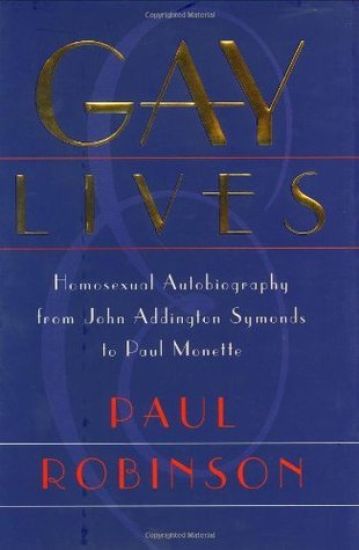
Gay Lives

Gay Lives

Paul Robinson

University of Chicago Press
1999
sidottu
In his autobiography, John Addington Symonds relates a glorious night of passion, in which he and his lover "lay covered from the cold in bed, tasting the honey of softly spoken words and the blossoms of lips pressed on lips". Christopher Isherwood's first autobiography, on the other hand, was far less direct; he wrote a second autobiography in part because the first was "not truly autobiographical" in that "the author conceals important facts about himself". These contradictions, evasions, and explicit sexual details of the life stories of 14 men form "Gay Lives", an account of homosexual autobiography. Paul Robinson reads the memoirs of French, British, and American gay authors - Andre Gide, Quentin Crisp, and Martin Duberman, among others - through the prism of sexual identity, asking questions about homosexuality and its relation to literary form. How did these authors discover their sexual identity? Did they embrace it or reject it? How did they express often conflicted desires in their words, which ranged from defiant and brutally frank to ambiguous and abstract? Robinson considers the choices each made - as a man and an author - to accommodate himself to society's homophobia or live in protest against his oppression. Despite the threads that connect these stories, "Gay Lives" refutes the notion that there is a typical homosexual "career" by showing that gay men have led wildly dissimilar lives - from the exuberant to the miserable - and that they have found no less dissimilar meanings in those lives.