Physicians typically have limited knowledge about the laboratory tests which most effectively work-up a patient presenting with bleeding or clotting manifestations; which tests best evaluate the efficacy of antithrombotic agents; and the clinically significant impact of anticoagulant agents on routine and special coagulation assay results. This practical guide will help physicians to appropriately order and interpret coagulation tests to identify the underlying hemostasis disorder or develop a timely action plan for the benefit of their patient. Interpretation of Results of Routine and Special Coagulation Tests: A Practical Guide is a concise, comprehensive, and accessible reference text for any medical professional who must order, understand, or interpret tests of the hemostasis system. For each test, this book provides the causes of abnormal results, including what can lead to false positive and negative results. When possible, information is provided in table form for quick reference, such as the impact of commonly used anticoagulants on the results of hemostasis tests. This practical guide also includes tests that evaluate global hemostasis and clot lysis by viscoelastometry, as well as a discussion of laboratory monitoring of anticoagulants, antiplatelet agents, antifibrinolytics, and thrombolytics. Written by an expert author team, this easy-to-use guide will be a vital resource for residents, fellows, and practitioners.
In this commentary Gene Green reads Paul's two letters to the Thessalonians in light of the canon of Scripture and of new knowledge about the first-century world of Thessalonica. This fruitful approach helps illuminate the impact of the gospel on its original readers and, in turn, shows how potent a force it can be for the church and society today. The book begins with an in-depth study of the Thessalonians themselves -- their history, land, socioeconomic conditions, and religious environment. This fascinating discussion gives the necessary context for fully appreciating the circumstances surrounding the founding of the city's first church and the subsequent struggles of the Thessalonian believers to live out their Christian faith. The main body of the book provides informed verse-by-verse commentary on 1 & 2 Thessalonians that extracts the fullest possible meaning from these important New Testament texts. As Green's exposition shows, the Thessalonian scriptures are especially valuable as letters of friendship and for showing Paul's pastoral concern for the many areas in which the Thessalonians needed guidance. Some of Paul's purposes are to thank the new believers for their steadfastness amid suffering, to encourage them in their trials, to urge them not to neglect their daily work, and, no less important, to teach them about the future of believers who die before Christ returns. Indeed, the matter of the last things and the second coming of Christ so permeates these texts that they are often called Paul's eschatological letters. Filled with new information about ancient society, this commentary will fast become a standard reference work for Bible study. By carefully bridging the biblical and modern worlds, Green shows with clarity and warmth the continuing relevance of 1 & 2 Thessalonians for contemporary readers.
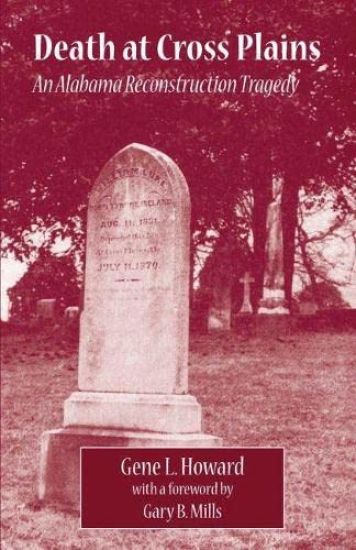
An account of racial violence during the Reconstruction era. It concerns a raid in 1870, by black men retaliating against the clubbing, by white men, of a black man. In the ensuing violence, the Ku Klux Klan captured and hanged the five suspected raiders, including white Canadian, William Luke.
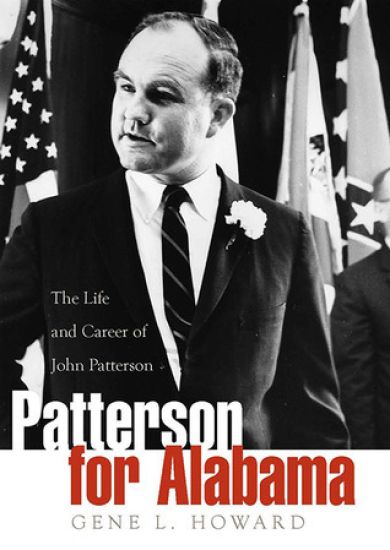
John Patterson, Alabama governor from 1959 to 1963, was thrust into the Alabama political arena after the brutal murder of his father, attorney general Albert Patterson in 1954. Allowed by the Democratic Party to take his father’s place and to complete the elder’s goal of cleaning up corruption in his hometown Phenix City, Patterson made a young, attractive, and sympathetic candidate. Patterson for Alabama details his efforts to clean up his hometown, oppose corruption in the administration of Governor Big Jim Folsom, and to resist school desegregation. Popular on all three counts, Patterson went on to defeat rising populist George Wallace for governor. Patterson’s term as governor was marked by rising violence as segregationists violently resisted integration. His role as a champion of resistance has clouded his reputation to this day. Patterson left office with little to show for f his efforts and opposed for one reason or another by nearly all sectors of Alabama. Stymied in efforts to reclaim the governorship or a seat on the Alabama state Supreme Court, Patterson was appointed by Wallace to the state court of criminal appeals in 1984 and served on that body until retiring in 1997. In 2004, he served as one of the justices who removed the Chief Justice of the Alabama Supreme Court Roy Moore for ignoring a federal court order.