Kirjojen hintavertailu. Mukana 11 244 527 kirjaa ja 12 kauppaa.

Kirjahaku

Etsi kirjoja tekijän nimen, kirjan nimen tai ISBN:n perusteella.

507 tulosta hakusanalla Gennady Estraikh

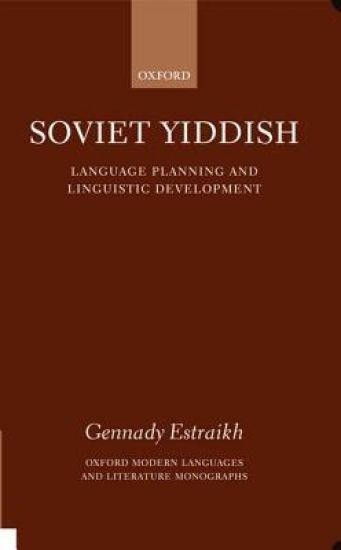
Soviet Yiddish

Soviet Yiddish

Gennady Estraikh

Clarendon Press
1999
sidottu
This is the first comprehensive study of Yiddish in the former Soviet Union. A chronicle of orthographic and other reformsfrom the state of the language in pre-Revolutionary Russia, through active language-planning in the 1920s and 1930s, repression, and subsequent developments up to the 1980sis recreated from contemporary publications and archival materials. Later chapters draw on the author's own experience as a Yiddish writer and lexicographer in Moscow. At a time when the Bolshevik party's Jewish sections held an influential position, Yiddish attained a functional diversity without precedent in its history; but underlying contradictions between ideas expressed in the slogans `Proletarians of all countries, unite!' and `The right of nations to self-determination' led to extremes in language-planning. A golden mean was achieved after the 1934 Yiddish language conference in Kiev. Using contemporary literary works as a source of linguistic and sociolinguistic information, Gennady Estraikh charts the development of the resultant variety of the language, `Soviet Yiddish'; the effects of severe repression in the late 1930s and 1940s; and the subsequent decline in usage. Comparisons are drawn between Soviet Yiddish language-planning and concurrent reforms in Russian, Ukrainian, Belorussian, and German; and the features and types of Soviet Yiddish word-formation are analysed, notably univerbation, or compressing a phrase into one word.
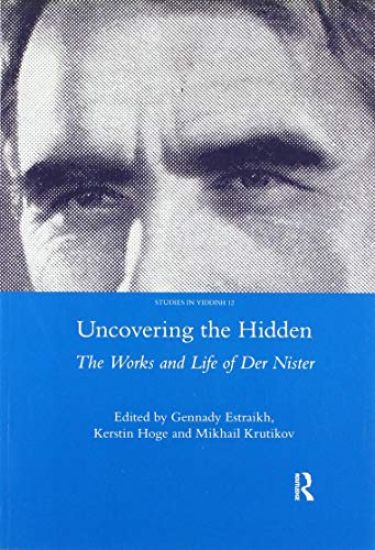
Uncovering the Hidden

Uncovering the Hidden

Gennady Estraikh

Routledge
2020
nidottu
The book is based on the papers presented at the Mendel Friedman Yiddish conference held at St Hilda's College, University of Oxford, in August 2012, revisits the rich and diverse legacy of the Yiddish writer Pinkhas Kahanovitsh, known by his penname Der Mister.
Translating Sholem Aleichem

Translating Sholem Aleichem

Gennady Estraikh

Routledge
2020
nidottu
This book explores the rich treasury of Sholem Aleichem translations, focusing primarily on the European context. It suggests that the many-faceted issue of translating Sholem Aleichem can be considered from the different perspectives of history, politics, and art.
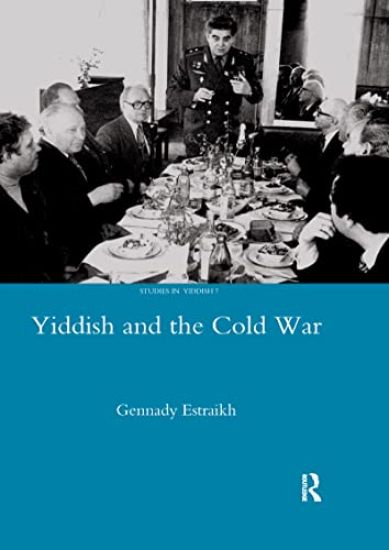
Yiddish in the Cold War

Yiddish in the Cold War

Gennady Estraikh

Routledge
2020
nidottu
This book presents a study of Yiddish in the Cold War through the ideological confrontations between Communist Yiddish literati in the Soviet Union, United States, Canada, Poland, France and Israel. It discusses the intellectual environments of the Moscow literary journal Sovetish Heymland.
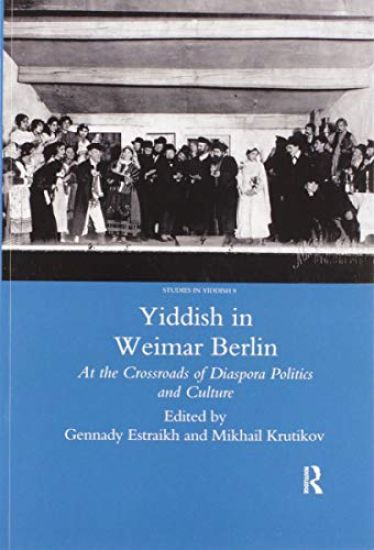
Yiddish in Weimar Berlin

Yiddish in Weimar Berlin

Gennady Estraikh

Routledge
2020
nidottu
This volume includes contributions by an international team of leading scholars dealing with various aspects of history, arts and literature, which tell the dramatic story of Yiddish cultural life in Weimar Berlin as a case study in modern European culture.
In Harness

In Harness

Gennady Estraikh

Syracuse University Press
2005
sidottu
Here is a detailed glimpse into the lives and times of Yiddish writers enthralled with Communism at the turn of the century through the mid-1930s. Centering mainly on the Soviet Jewish literati but with an eye to their American counterparts, the book follows their paths from avant-garde beginnings in Kiev after the 1905 revolution to their peak in the mid-1930s. Notables such as David Bergelson - who helmed the short-lived Yiddish periodical called In Harness - and Der Nister and David Hodshtein come to life as do Leyb Kvitko, Peretz Markish, Itsik Fefer, Moshe Litvakov, Yekhezkel Dobrushin, and Nokhum Oislender. Gennady J. Estraikh charts the course of their artistic and political flowering and decline and considers the effects of geography - provincial vs. urban - and party politics upon literary development and aesthetics. No other book concentrates on this aspect of the Jewish intellectual scene nor has any book unveiled the scale and intensity of Yiddish Communist literary life in the 1920s and 1930s or the contributions its writers made to Jewish culture.
The History of Birobidzhan

The History of Birobidzhan

Gennady Estraikh

BLOOMSBURY PUBLISHING PLC
2023
sidottu
Gennady Estraikh’s book explores the birth, growth, demise and afterlife of the Birobidzhan Jewish Autonomous Region (JAR). The History of Birobidzhan looks at how the shtetl was widely used in Soviet propaganda as a perfect solution to the ‘Jewish question’, arguing that in reality, while being demographically and culturally insignificant, the JAR played a key, and essentially detrimental, role in determining Jewish rights and entitlements in the Soviet world. Estraikh brings together a broad range of Russian and Yiddish sources, including archival materials, newspaper articles, travelogues, memoirs, belles-letters, and scholarly publications, as he describes and analyses the project and its realization not in isolation, but rather in the context of developments in both domestic and international life. As well as offering an assessment of the Birobidzhan project in the contexts of Soviet and Jewish history, the book also focuses on the contemporary ‘Jewish’ role of the region which now has only a few thousand Jewish occupants amongst its residents.
The History of Birobidzhan

The History of Birobidzhan

Gennady Estraikh

BLOOMSBURY PUBLISHING PLC
2023
nidottu
Gennady Estraikh’s book explores the birth, growth, demise and afterlife of the Birobidzhan Jewish Autonomous Region (JAR). The History of Birobidzhan looks at how the shtetl was widely used in Soviet propaganda as a perfect solution to the ‘Jewish question’, arguing that in reality, while being demographically and culturally insignificant, the JAR played a key, and essentially detrimental, role in determining Jewish rights and entitlements in the Soviet world. Estraikh brings together a broad range of Russian and Yiddish sources, including archival materials, newspaper articles, travelogues, memoirs, belles-letters, and scholarly publications, as he describes and analyses the project and its realization not in isolation, but rather in the context of developments in both domestic and international life. As well as offering an assessment of the Birobidzhan project in the contexts of Soviet and Jewish history, the book also focuses on the contemporary ‘Jewish’ role of the region which now has only a few thousand Jewish occupants amongst its residents.
Jews in the Soviet Union: a History

Jews in the Soviet Union: a History

Gennady Estraikh

NEW YORK UNIVERSITY PRESS
2022
sidottu
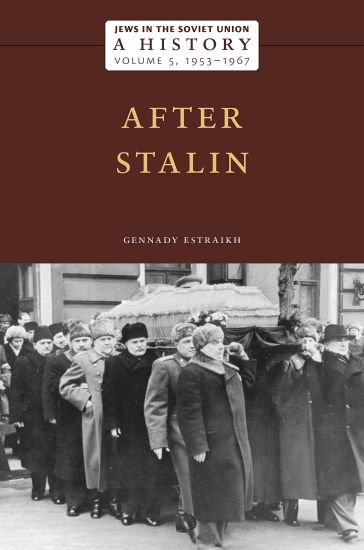
Offers an analysis of Soviet Jewish society after the death of Joseph Stalin At the beginning of the twentieth century, more Jews lived in the Russian Empire than anywhere else in the world. After the Holocaust, the USSR remained one of the world's three key centers of Jewish population, along with the United States and Israel. While a great deal is known about the history and experiences of the Jewish people in the US and in Israel in the twentieth century, much less is known about the experiences of Soviet Jews. Understanding the history of Jewish communities under Soviet rule is essential to comprehending the dynamics of Jewish history in the modern world. Only a small number of scholars and the last generation of Soviet Jews who lived during this period hold a deep knowledge of this history. Jews in the Soviet Union, a new multi-volume history, is an unprecedented undertaking. Publishing over the next few years, this groundbreaking work draws on rare access to documents from the Soviet archives, allowing for the presentation of a sweeping history of Jewish life in the Soviet Union from 1917 through the early 1990s. Volume 5 offers a history of Soviet Jewry from the demise of the brutal dictator Joseph Stalin to the military confrontation between Israel and Arab states in 1967 known as the Six-Day War. Both historic events deeply affected Soviet Jews, who numbered over two million in the wake of the Holocaust and still formed at that point the second-largest Jewish population in the world. Stalin's death led to the release of political prisoners and the reduction of the level of fear in society. The economy was growing and conditions of life were improving. At the same time, the state had doubts about the loyalty of the Jewish population and imposed limitations on their educational and career prospects. The relatively liberal period associated with Nikita Khrushchev's "thaw" after the Stalinist bitter frost became a prelude to the years when contemplation about, or practical steps toward, emigration to Israel or elsewhere began to play an increasing role in the lives of Soviet Jews. In this pioneering analysis of the "thaw" years in Soviet Jewish history, Gennady Estraikh focuses both on the factors driving emigration and dissent, and on those Jews who were able to attain a high standard of living, and to rise to esteemed positions in managerial, academic, bohemian, and other segments of the Soviet elite.
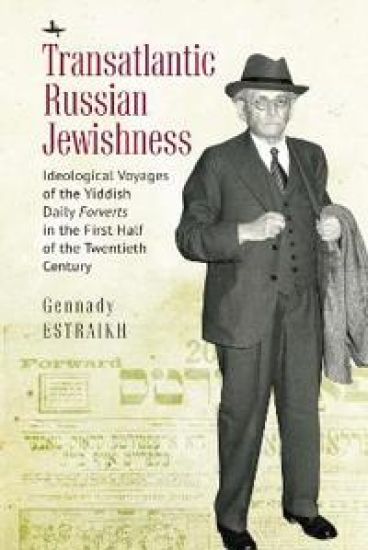
Transatlantic Russian Jewishness

Transatlantic Russian Jewishness

Gennady Estraikh

Academic Studies Press
2020
sidottu
In the early decades of the twentieth century, tens of thousands of Yiddish speaking immigrants actively participated in the American Socialist and labor movement. They formed the milieu of the hugely successful daily Forverts (Forward), established in New York in April 1897. Its editorial columns and bylined articles-many of whose authors, such as Abraham Cahan and Sholem Asch, were household names at the time-both reflected and shaped the attitudes and values of the readership. Most pages of this book are focused on the newspaper's reaction to the political developments in the home country. Profound admiration of Russian literature and culture did not mitigate the writers' criticism of the czarist and Soviet regimes.
Yiddish Literature Under Surveillance

Yiddish Literature Under Surveillance

Gennady Estraikh

BLOOMSBURY PUBLISHING PLC
2024
sidottu
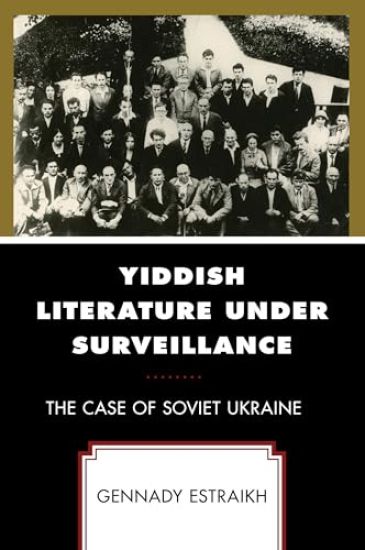
Yiddish Literature Under Surveillance: The Case of Soviet Ukraine gives a broad view on Soviet Jewish literary life, and on the repression suffered by Yiddish writers under Stalinist rule. It moves from the paradigm of writing almost exclusively about the most prominent authors, whose execution in Moscow on August 12, 1952 is tragically known as "The Night of Murdered Poets." Instead, the narrative is built as a group biography of five writers whose literary home was in Kyiv, the capital of Soviet Ukraine from 1934 to 1991. Those authors are as follows: Avrom Abchuk (arrested and executed in 1937), Chaim Gildin (arrested in 1940; died in a camp in 1943), Itsik Kipnis (arrested in 1949; released in 1955), Rive Balyasne (arrested in 1952; released in 1955), and Hirsh Bloshteyn, an enthusiastic agent of the secret police. In addition, this book is populated by other Yiddish, Ukrainian, and Russian literati. Kyiv was the primary fountainhead for Yiddish literary creativity in the early postrevolutionary period for seven decades and remained a leading Soviet Yiddish literary center, second in importance only to Moscow. Attention is paid to the victims’ rehabilitation, posthumous or otherwise, in the mid-1950s and onwards.
The Shtetl

The Shtetl

Gennady Estraikh

Legenda
2000
nidottu
There is no possibility of entering the world of Yiddish, its literature and culture, without understanding what the shtetl was, how it functioned, and what tensions charged its existence. Whether idealized or denigrated, evaluated as the site of memory or mined for historical data, scrutinized as a socio-economic phenomenon or explored as the mythopoetics of a rich literature, the shtetl was the heart of Eastern European Jewry. The papers published in this volume - most of them presented at the second Mendel Friedman International Conference on Yiddish organized by the Oxford European Humanities Research Centre and the Oxford Institute for Yiddish Studies (July 1999) - re-examines the structure, organization and function of numerous small market towns that shaped the world of Yiddish. The different perspectives from which these studies view the shtetl trenchently re-evaluate common preconceptions, misconceptions and assumptions, and offer new insights that are challenging as they are informative.
Yiddish and the Left

Yiddish and the Left

Gennady Estraikh

Legenda
2001
nidottu
For over a century Yiddish served as a major vehicle for expressing left-wing ideas and sensitivities. A language without country, an "ugly jargon" despised by assimilationist Jewish bourgeoisie and nationalist Zionists alike, it was embraced as genuine folk idiom by Jewish adherents of socialism and communism worldwide. Following the Holocaust, Yiddish was the primary language of education, culture and propaganda for millions of people on five continents. This volume examines the diversity of relationships between Yiddish and the Left, from the attitude of Yiddish writers to apartheid in South Africa to the vicissitudes of the Yiddish communist press in the Soviet Union and the USA.
Yiddish in the Cold War

Yiddish in the Cold War

Gennady Estraikh

Legenda
2008
sidottu
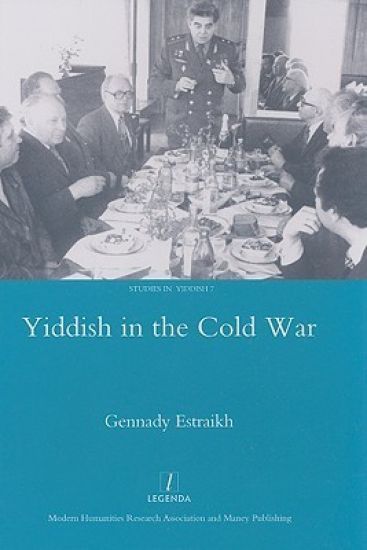
This book presents a study of Yiddish in the Cold War through the ideological confrontations between Communist Yiddish literati in the Soviet Union, United States, Canada, Poland, France and Israel. It discusses the intellectual environments of the Moscow literary journal Sovetish Heymland.
Yiddish in Weimar Berlin

Yiddish in Weimar Berlin

Gennady Estraikh

Legenda
2010
sidottu
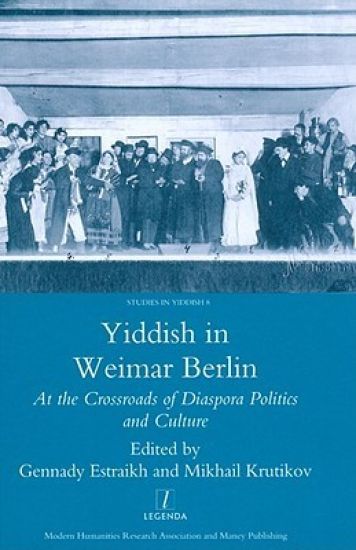
This volume includes contributions by an international team of leading scholars dealing with various aspects of history, arts and literature, which tell the dramatic story of Yiddish cultural life in Weimar Berlin as a case study in modern European culture.
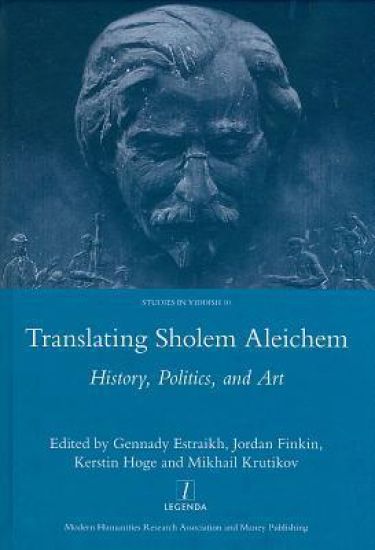
Translating Sholem Aleichem

Translating Sholem Aleichem

Gennady Estraikh

Maney Publishing
2012
sidottu
This book explores the rich treasury of Sholem Aleichem translations, focusing primarily on the European context. It suggests that the many-faceted issue of translating Sholem Aleichem can be considered from the different perspectives of history, politics, and art.
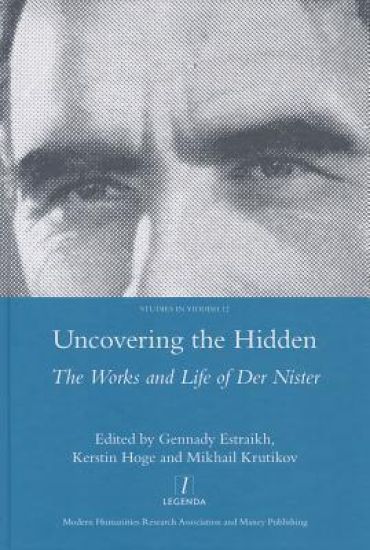
Uncovering the Hidden

Uncovering the Hidden

Gennady Estraikh

Maney Publishing
2014
sidottu
The book is based on the papers presented at the Mendel Friedman Yiddish conference held at St Hilda's College, University of Oxford, in August 2012, revisits the rich and diverse legacy of the Yiddish writer Pinkhas Kahanovitsh, known by his penname Der Mister.
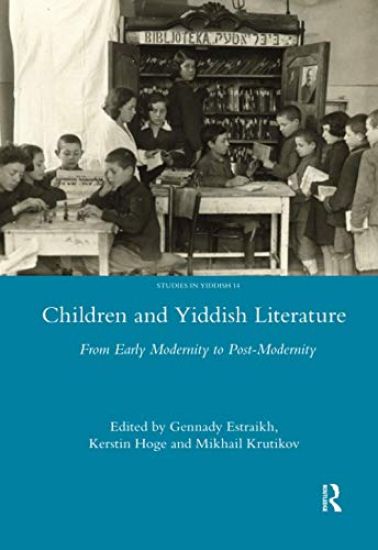
Children and Yiddish Literature From Early Modernity to Post-Modernity

Children and Yiddish Literature From Early Modernity to Post-Modernity

Gennady Estraikh; Kerstin Hoge; Krutikov Mikhail

Routledge
2020
nidottu
Children have occupied a prominent place in Yiddish literature since early modern times, but children’s literature as a genre has its beginnings in the early 20th century. Its emergence reflected the desire of Jewish intellectuals to introduce modern forms of education, and promote ideological agendas, both in Eastern Europe and in immigrant communities elsewhere. Before the Second World War, a number of publishing houses and periodicals in Europe and the Americas specialized in stories, novels and poems for various age groups. Prominent authors such as Yankev Glatshteyn, Der Nister, Joseph Opatoshu, Leyb Kvitko, made original contributions to the genre, while artists, such as Marc Chagall, El Lissitzky and Yisakhar Ber Rybak, also took an active part. In the Soviet Union, meanwhile, children’s literature provided an opportunity to escape strong ideological pressure. Yiddish children’s literature is still being produced today, both for secular and strongly Orthodox communities. This volume is a pioneering collective study not only of children’s literature but of the role played by children in literature.
Children and Yiddish Literature

Children and Yiddish Literature

Gennady Estraikh; Kerstin Hoge; Krutikov Mikhail

Legenda
2016
sidottu
Children have occupied a prominent place in Yiddish literature since early modern times, but children’s literature as a genre has its beginnings in the early 20th century. Its emergence reflected the desire of Jewish intellectuals to introduce modern forms of education, and promote ideological agendas, both in Eastern Europe and in immigrant communities elsewhere. Before the Second World War, a number of publishing houses and periodicals in Europe and the Americas specialized in stories, novels and poems for various age groups. Prominent authors such as Yankev Glatshteyn, Der Nister, Joseph Opatoshu, Leyb Kvitko, made original contributions to the genre, while artists, such as Marc Chagall, El Lissitzky and Yisakhar Ber Rybak, also took an active part. In the Soviet Union, meanwhile, children’s literature provided an opportunity to escape strong ideological pressure. Yiddish children’s literature is still being produced today, both for secular and strongly Orthodox communities. This volume is a pioneering collective study not only of children’s literature but of the role played by children in literature.
Soviet Jews in World War II

Soviet Jews in World War II

Harriet Murav; Gennady Estraikh

Academic Studies Press
2014
sidottu
This volume discusses the participation of Jews as soldiers, journalists, and propagandists in combating the Nazis during the Great Patriotic War, as the period between June 22, 1941, and May 9, 1945 was known in the Soviet Union. The essays included here examine both newly-discovered and previously-neglected oral testimony, poetry, cinema, diaries, memoirs, newspapers, and archives. This is one of the first books to combine the study of Russian and Yiddish materials, reflecting the nature of the Jewish Anti-Fascist Committee, which, for the first time during the Soviet period, included both Yiddish-language and Russian-language writers. This volume will be of use to scholars, teachers, students, and researchers working in Russian and Jewish history.