
Kirjahaku
Etsi kirjoja tekijän nimen, kirjan nimen tai ISBN:n perusteella.
1000 tulosta hakusanalla Geoffrey C Okere
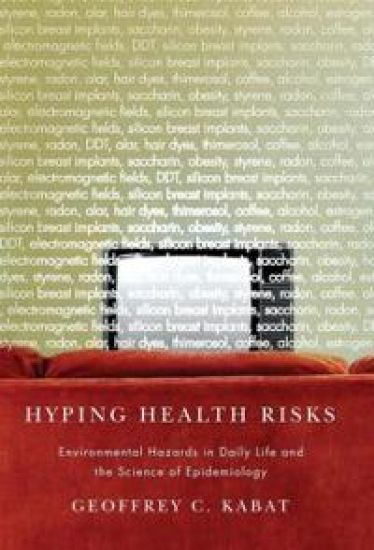
The media constantly bombard us with news of health hazards lurking in our everyday lives, but many of these hazards turn out to have been greatly overblown. According to author and epidemiologist Geoffrey C. Kabat, this hyping of low-level environmental hazards leads to needless anxiety and confusion on the part of the public concerning which exposures have important effects on health and which are likely to have minimal or no effect. Kabat approaches health scares as "social facts" and shows that a variety of factors can contribute to the inflating of a hazard. These include skewed reporting by the media, but also, surprisingly, the actions of researchers who may emphasize certain findings while ignoring others; regulatory and health agencies eager to show their responsiveness to the health concerns of the public; and politicians and advocates with a stake in a particular outcome. By means of four case studies, Kabat demonstrates how a powerful confluence of interests can lead to overstating or distorting the scientific evidence. He considers the health risks of pollutants such as DDT as a cause of breast cancer, electromagnetic fields from power lines, radon within residences, and secondhand tobacco smoke. Tracing the trajectory of each of these hazards from its initial emergence to the present, Kabat shows how publication of more rigorous studies and critical assessments ultimately help put hazards in perspective.
The media constantly bombard us with news of health hazards lurking in our everyday lives, but many of these hazards turn out to have been greatly overblown. According to author and epidemiologist Geoffrey C. Kabat, this hyping of low-level environmental hazards leads to needless anxiety and confusion on the part of the public concerning which exposures have important effects on health and which are likely to have minimal or no effect. Kabat approaches health scares as "social facts" and shows that a variety of factors can contribute to the inflating of a hazard. These include skewed reporting by the media, but also, surprisingly, the actions of researchers who may emphasize certain findings while ignoring others; regulatory and health agencies eager to show their responsiveness to the health concerns of the public; and politicians and advocates with a stake in a particular outcome. By means of four case studies, Kabat demonstrates how a powerful confluence of interests can lead to overstating or distorting the scientific evidence. He considers the health risks of pollutants such as DDT as a cause of breast cancer, electromagnetic fields from power lines, radon within residences, and secondhand tobacco smoke. Tracing the trajectory of each of these hazards from its initial emergence to the present, Kabat shows how publication of more rigorous studies and critical assessments ultimately help put hazards in perspective.
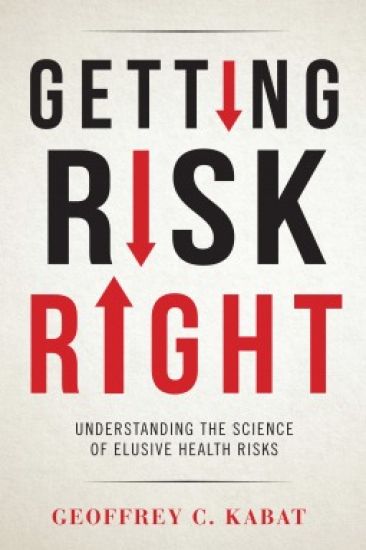
Do cell phones cause brain cancer? Does BPA threaten our health? How safe are certain dietary supplements, especially those containing exotic herbs or small amounts of toxic substances? Is the HPV vaccine safe? We depend on science and medicine as never before, yet there is widespread misinformation and confusion, amplified by the media, regarding what influences our health. In Getting Risk Right, Geoffrey C. Kabat shows how science works-and sometimes doesn't-and what separates these two very different outcomes. Kabat seeks to help us distinguish between claims that are supported by solid science and those that are the result of poorly designed or misinterpreted studies. By exploring different examples, he explains why certain risks are worth worrying about, while others are not. He emphasizes the variable quality of research in contested areas of health risks, as well as the professional, political, and methodological factors that can distort the research process. Drawing on recent systematic critiques of biomedical research and on insights from behavioral psychology, Getting Risk Right examines factors both internal and external to the science that can influence what results get attention and how questionable results can be used to support a particular narrative concerning an alleged public health threat. In this book, Kabat provides a much-needed antidote to what has been called "an epidemic of false claims."
Do cell phones cause brain cancer? Does BPA threaten our health? How safe are certain dietary supplements, especially those containing exotic herbs or small amounts of toxic substances? Is the HPV vaccine safe? We depend on science and medicine as never before, yet there is widespread misinformation and confusion, amplified by the media, regarding what influences our health. In Getting Risk Right, Geoffrey C. Kabat shows how science works—and sometimes doesn't—and what separates these two very different outcomes.Kabat seeks to help us distinguish between claims that are supported by solid science and those that are the result of poorly designed or misinterpreted studies. By exploring different examples, he explains why certain risks are worth worrying about, while others are not. He emphasizes the variable quality of research in contested areas of health risks, as well as the professional, political, and methodological factors that can distort the research process. Drawing on recent systematic critiques of biomedical research and on insights from behavioral psychology, Getting Risk Right examines factors both internal and external to the science that can influence what results get attention and how questionable results can be used to support a particular narrative concerning an alleged public health threat. In this book, Kabat provides a much-needed antidote to what has been called "an epidemic of false claims."
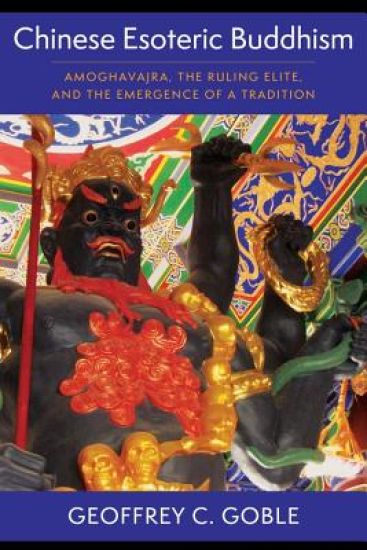
Chinese Esoteric Buddhism is generally held to have been established as a distinct and institutionalized Buddhist school in eighth-century China by “the Three Great Masters of Kaiyuan”: Subhakarasi?ha, Vajrabodhi, and Amoghavajra. Geoffrey C. Goble provides an innovative account of the tradition’s emergence that sheds new light on the structures and traditions that shaped its institutionalization.Goble focuses on Amoghavajra (704–774), contending that he was the central figure in Esoteric Buddhism’s rapid rise in Tang dynasty China, and the other two “patriarchs” are known primarily through Amoghavajra’s teachings and writings. He presents the scriptural, mythological, and practical aspects of Chinese Esoteric Buddhism in the eighth century and places them in the historical contexts within which Amoghavajra operated. By telling the story of Amoghavajra’s rise to prominence and of Esoteric Buddhism’s corresponding institutionalization in China, Goble makes the case that the evolution of this tradition was predicated on Indic scriptures and practical norms rather than being the product of conscious adaptation to a Chinese cultural environment. He demonstrates that Esoteric Buddhism was employed by Chinese rulers to defeat military and political rivals. Based on close readings of a broad range of textual sources previously untapped by English-language scholarship, this book overturns many assumptions about the origins of Chinese Esoteric Buddhism.

A revealing and surprising look at how classification systems can shape both worldviews and social interactions.What do a seventeenth-century mortality table (whose causes of death include "fainted in a bath," "frighted," and "itch"); the identification of South Africans during apartheid as European, Asian, colored, or black; and the separation of machine- from hand-washables have in common? All are examples of classification-the scaffolding of information infrastructures.In Sorting Things Out, Geoffrey C. Bowker and Susan Leigh Star explore the role of categories and standards in shaping the modern world. In a clear and lively style, they investigate a variety of classification systems, including the International Classification of Diseases, the Nursing Interventions Classification, race classification under apartheid in South Africa, and the classification of viruses and of tuberculosis.The authors emphasize the role of invisibility in the process by which classification orders human interaction. They examine how categories are made and kept invisible, and how people can change this invisibility when necessary. They also explore systems of classification as part of the built information environment. Much as an urban historian would review highway permits and zoning decisions to tell a city's story, the authors review archives of classification design to understand how decisions have been made. Sorting Things Out has a moral agenda, for each standard and category valorizes some point of view and silences another. Standards and classifications produce advantage or suffering. Jobs are made and lost; some regions benefit at the expense of others. How these choices are made and how we think about that process are at the moral and political core of this work. The book is an important empirical source for understanding the building of information infrastructures.
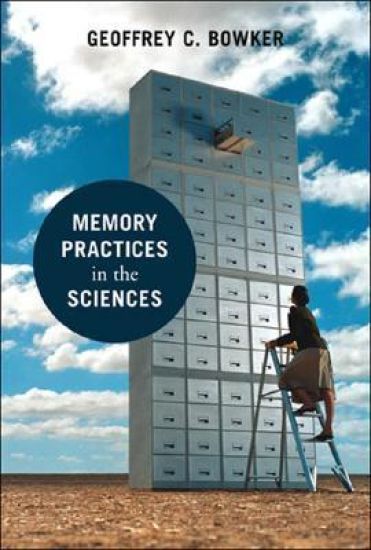
How the way we hold knowledge about the past-in books, in file folders, in databases-affects the kind of stories we tell about the past.The way we record knowledge, and the web of technical, formal, and social practices that surrounds it, inevitably affects the knowledge that we record. The ways we hold knowledge about the past-in handwritten manuscripts, in printed books, in file folders, in databases-shape the kind of stories we tell about that past. In this lively and erudite look at the relation of our information infrastructures to our information, Geoffrey Bowker examines how, over the past two hundred years, information technology has converged with the nature and production of scientific knowledge. His story weaves a path between the social and political work of creating an explicit, indexical memory for science-the making of infrastructures-and the variety of ways we continually reconfigure, lose, and regain the past.At a time when memory is so cheap and its recording is so protean, Bowker reminds us of the centrality of what and how we choose to forget. In Memory Practices in the Sciences he looks at three "memory epochs" of the nineteenth, twentieth, and twenty-first centuries and their particular reconstructions and reconfigurations of scientific knowledge. The nineteenth century's central science, geology, mapped both the social and the natural world into a single time package (despite apparent discontinuities), as, in a different way, did mid-twentieth-century cybernetics. Both, Bowker argues, packaged time in ways indexed by their information technologies to permit traffic between the social and natural worlds. Today's sciences of biodiversity, meanwhile, "database the world" in a way that excludes certain spaces, entities, and times. We use the tools of the present to look at the past, says Bowker; we project onto nature our modes of organizing our own affairs.

From the award-winning historian and filmmakers of The Civil War, Baseball, The War, The Roosevelts, and others: a vivid, uniquely powerful history of the conflict that tore America apart--the companion volume to the major, multipart PBS film to be aired in September 2017. More than forty years after it ended, the Vietnam War continues to haunt our country. We still argue over why we were there, whether we could have won, and who was right and wrong in their response to the conflict. When the war divided the country, it created deep political fault lines that continue to divide us today. Now, continuing in the tradition of their critically acclaimed collaborations, the authors draw on dozens and dozens of interviews in America and Vietnam to give us the perspectives of people involved at all levels of the war: U.S. and Vietnamese soldiers and their families, high-level officials in America and Vietnam, antiwar protestors, POWs, and many more. The book plunges us into the chaos and intensity of combat, even as it explains the rationale that got us into Vietnam and kept us there for so many years. Rather than taking sides, the book seeks to understand why the war happened the way it did, and to clarify its complicated legacy. Beautifully written and richly illustrated, this is a tour de force that is certain to launch a new national conversation.
Shorn of the 400-plus images that illustrated the TV tie-in edition, the text of The West is an outstanding work of scholarly synthesis and a feat of storytelling. It is a book that will enthrall readers of popular history as well as students of the North American West. Essays by seven noted writers and historians, complement Geoffrey Wards compelling narrative.

Plastic Surgery
Geoffrey C. Gurtner; Peter C. Neligan
Elsevier - Health Sciences Division
2023
sidottu
**Selected for Doody’s Core Titles® 2024 in Plastic and Reconstructive Surgery** Comprehensive and fully up to date, the six-volume Plastic Surgery remains the gold standard text in this complex area of surgery. Completely revised to meet the demands of both the trainee and experienced surgeon, Principles, Volume 1 of Plastic Surgery, 5th Edition, features new, full-color clinical photos, procedural videos, lectures, and authoritative coverage of hot topics in the field. Editor-narrated video presentations offer a step-by-step audio-visual walkthrough of techniques and procedures. New chapters cover value-based healthcare, health services research in plastic surgery, education and teaching in plastic surgery, and gender-affirming surgery; coverage throughout includes new, pioneering translational work shaping the future of plastic surgery New digital video preface by Dr. Peter C. Neligan addresses the changes across all six volumes New treatment and decision-making algorithms added to chapters where applicable New video lectures and editor-narrated slide presentations offer a step-by-step audiovisual walkthrough of techniques and procedures Evidence-based advice from an expanded roster of international experts allows you to apply the very latest advances in plastic surgery and ensure optimal outcomes Purchase this volume individually or own the entire set, with the ability to search across all six volumes online! An eBook version is included with purchase. The eBook allows you to access all of the text, figures and references, with the ability to search, customize your content, make notes and highlights, and have content read aloud

The Soviet Union and the Origins of the Second World War
Geoffrey C. Roberts
Red Globe Press
1995
nidottu
Historians have heatedly debated the Soviet role in the origins of the Second World War for more than 50 years. At the centre of these controversies stands the question of Soviet relations with Nazi Germany and the Stalin-Hitler pact of 1939. Drawing on a wealth of new material from the Soviet Archives, this detailed and original study analyses Moscow's response to the rise of Hitler, explains the origins of the Nazi-Soviet pact, and charts the road to Operation Barbarossa and the disaster of the surprise German attack on the USSR in June 1941.
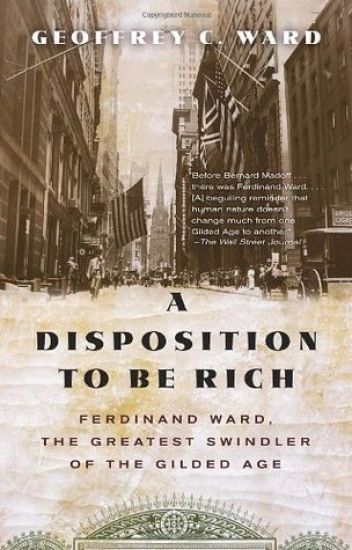
A Disposition to Be Rich: Ferdinand Ward, the Greatest Swindler of the Gilded Age
Geoffrey C. Ward
VINTAGE
2013
nidottu
A New York Times Notable Book The compelling behind-the-scenes story of the greatest swindler of the Gilded Age, whose villainy bankrupted Ulysses S. Grant and stunned the world of finance--told by his great-grandson, award-winning historian Geoffrey C. Ward. Ferdinand Ward, the son of a Protestant missionary and small-town pastor, moved to New York at twenty-one and, in less than a decade, made himself the business partner of a former president and established himself as the "Young Napoleon of Finance." In truth, he was running a massive pyramid scheme. Drawing from thousands of family documents never before examined, Geoffrey C. Ward traces his great-grandfather's rapid rise to riches and fame, and his even more dizzying fall from grace, in a narrative populated with mistresses, crooked bankers, corrupt New York officials, and a desperate kidnapping scheme. Here is a great story about a classic American con artist.
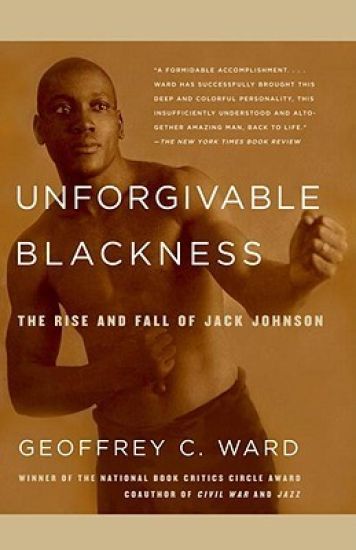
In this vivid biography Geoffrey C. Ward brings back to life the most celebrated -- and the most reviled -- African American of his age. Jack Johnson battled his way out of obscurity and poverty in the Jim Crow South to win the title of heavyweight champion of the world. At a time when whites ran everything in America, he took orders from no one and resolved to live as if color did not exist. While most blacks struggled simply to exist, he reveled in his riches and his fame, sleeping with whomever he pleased, to the consternation and anger of much of white America. Because he did so the federal government set out to destroy him, and he was forced to endure prison and seven years of exile. This definitive biography portrays Jack Johnson as he really was--a battler against the bigotry of his era and the embodiment of American individualism.
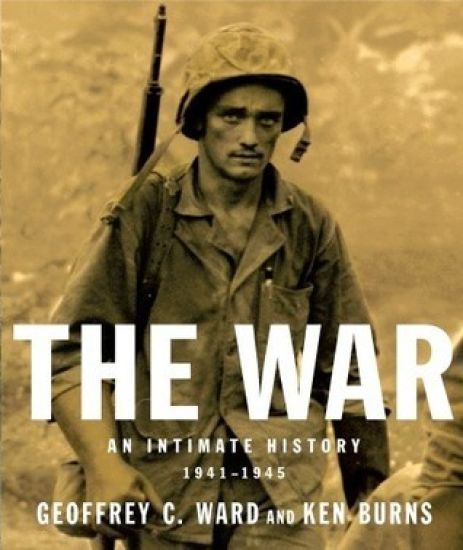
The vivid voices that speak from these pages are not those of historians or scholars. They are the voices of ordinary men and women who experienced--and helped to win--the most devastating war in history, in which between 50 and 60 million lives were lost. Focusing on the citizens of four towns--Luverne, Minnesota; Sacramento, California; Waterbury, Connecticut; Mobile, Alabama--The War follows more than forty people from 1941 to 1945. Woven largely from their memories, the compelling, unflinching narrative unfolds month by bloody month, with the outcome always in doubt. All the iconic events are here, from Pearl Harbor to the liberation of the concentration camps--but we also move among prisoners of war and Japanese American internees, defense workers and schoolchildren, and families who struggled simply to stay together while their men were shipped off to Europe, the Pacific, and North Africa. Enriched by maps and hundreds of photographs, including many never published before, this is an intimate, profoundly affecting chronicle of the war that shaped our world.

Metal-Catalysed Reactions of Hydrocarbons
Geoffrey C. Bond
Springer-Verlag New York Inc.
2005
sidottu
This unique book, drawing on the author’s lifetime experience, critically evaluates the extensive literature on the field of Metal-Catalysed Reactions of Hydrocarbons. Emphasis is placed on reaction mechanisms involving hydrogenation, hydrogenolysis, skeletal and positional isomerisation, and exchange reactions. The motivation for fundamental research in heterogeneous catalysis is to identify the physicochemical characteristics of active centres for the reaction being studied, to learn how these may be modified or manipulated to improve the desired behavior of the catalyst, and to recognize and control those aspects of the catalyst's structure that limit its overall performance. By restricting the subject of the book to hydrocarbons, Bond has progressively developed the subject matter to include areas of importance both to researchers and to those working in the industry.
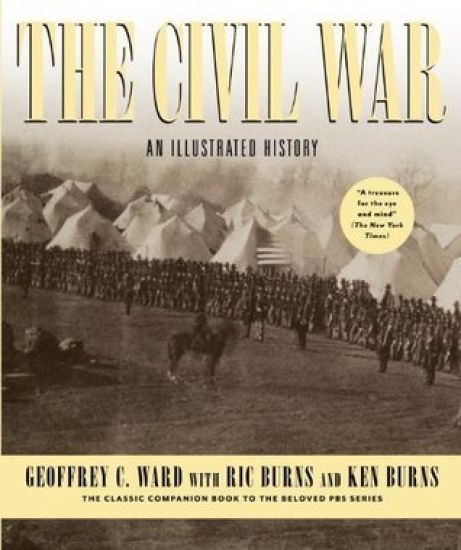
The Civil War: An Illustrated History
Geoffrey C. Ward; Ric Burns; Kenneth Burns
Knopf Publishing Group
1990
sidottu
"A treasure for the eye and mind" (The New York Times) about the greatest war in American history--and a magnificent companion volume to the celebrated PBS television series by one of our most treasured filmmakers. - With more than 500 illustrations: rare Civil War photographs--many never before published--as well as paintings, lithographs, and maps reproduced in full color. It was the greatest war in American history. It was waged in 10,000 places--from Valverde, New Mexico, and Tullahoma, Tennessee, to St. Albans, Vermont, and Fernandina on the Florida coast. More than 3 million Americans fought in it and more than 600,000 men died in it. Not only the immensity of the cataclysm but the new weapons, the new standards of generalship, and the new strategies of destruction--together with the birth of photography--were to make the Civil War an event present ever since in the American consciousness. Thousands of books have been written about it. Yet there has never been a history of the Civil War quite like this one. A wealth of documentary illustrations and a narrative alive with original and energetic scholarship combine to present both the grand sweep of events and the minutest of human details. Here are the crucial events of the war: the firing of the first shots at Fort Sumter; the battles of Shiloh, Chancellorsville, and Gettysburg; the siege of Vicksburg; Sherman's dramatic march to the sea; the surrender at Appomattox. Here are the superb portraits of the key figures: Abraham Lincoln, claiming for the presidency almost autocratic power in order to preserve the Union; the austere Jefferson Davis, whose government disappeared almost before it could be formed; Robert E. Lee and Ulysses S. Grant, seasoned generals of fierce brilliance and reckless determination. Here is the America in which the war was fought: The Civil War is not simply the story of great battles and great generals; it is also an elaborate portrait of the American people caught up in the turbulence of the times. An additional resonance is provided by four essays by prominent Civil War historians, and Shelby Foote talks to filmmaker Ken Burns about wartime life on the battlefield and at home.
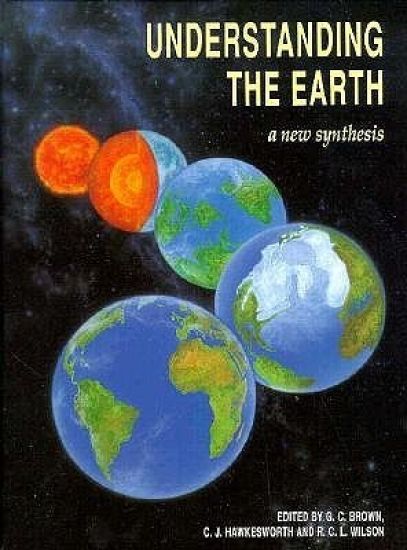
Understanding the Earth
Geoffrey C. Brown; Chris Wilson; Chris Hawkesworth
Cambridge University Press
1992
sidottu
Some of the foremost authorities in earth sciences contributed to this volume, first published in 1992, to provide a highly accessible and stimulating account of the rapid evolution of knowledge about the processes that drive and shape the Earth. Well-illustrated and extremely readable accounts cover many aspects of the earth sciences that are often confined to the more esoteric literature - from magma generation in the Earth to the formation of sedimentary basins. From contributions on the Earth's interior and its dynamic evolution to investigations of the natural and human-driven disturbances to the environment, Understanding the Earth reflects the increasingly integrated and multi-disciplinary research that has fed our understanding of the Earth's origin and its internal and surface processes, and provides an indispensable guide to students of modern earth sciences.
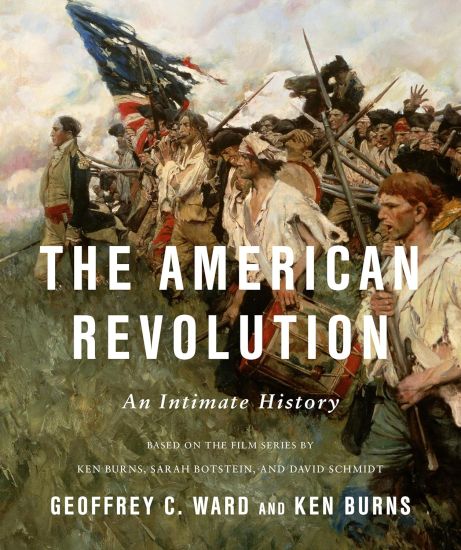
The American Revolution: An Intimate History
Geoffrey C. Ward; Kenneth Burns
Knopf Publishing Group
2025
sidottu
From the award-winning historian and filmmakers of The Civil War, Baseball, Jazz, The Roosevelts, and others: a richly illustrated, human-centered history of America's founding struggle--expanding on the landmark, six-part PBS series to be aired in November 2025 "From a small spark kindled in America, a flame has arisen not to be extinguished." --Thomas Paine In defeating the British Empire and giving birth to a new nation, the American Revolution turned the world upside down. Thirteen colonies on the Atlantic coast rose in rebellion, won their independence, and established a new form of government that radically reshaped the continent and inspired independence movements and democratic reforms around the globe. The American Revolution was at once a war for independence, a civil war, and a world war, fought by neighbors on American farms and between global powers an ocean or more away. In this sumptuous volume, historian Geoffrey C. Ward ably steers us through the international forces at play, telling the story not from the top down but from the bottom up--and through the eyes of not only our "Founding Fathers" but also those of ordinary soldiers, as well as underrepresented populations such as women, African Americans, Native Americans, and American Loyalists, asking who exactly was entitled to life, liberty, and the pursuit of happiness. Enriched by guest essays from lauded historians such as Vincent Brown, Maya Jasanoff, Jane Kamensky, and Alan Taylor, and by an astonishing array of prints, drawings, paintings, texts, and pamphlets from the time period, as well as newly commissioned art and maps--and woven together with the words of Thomas Paine-- The American Revolution reveals a nation still grappling with the questions that fueled its remarkable founding.
Student Solutions Manual for Berresford/Rockett S Applied Calculus, 4th
Geoffrey C Berresford
Wadsworth Publishing Co Inc
2006
pokkari