Kirjojen hintavertailu. Mukana 11 244 527 kirjaa ja 12 kauppaa.

Kirjahaku

Etsi kirjoja tekijän nimen, kirjan nimen tai ISBN:n perusteella.

1000 tulosta hakusanalla Geoffrey Galt Harpham

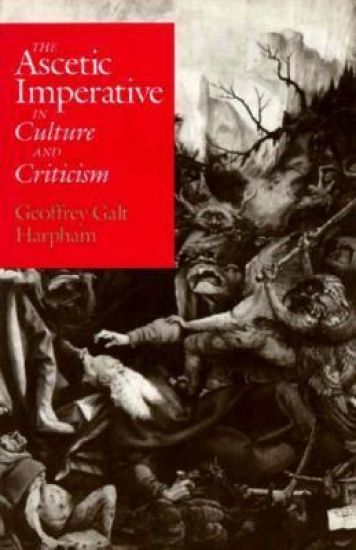
The Ascetic Imperative in Culture and Criticism

The Ascetic Imperative in Culture and Criticism

Geoffrey Galt Harpham

University of Chicago Press
1992
nidottu
In this bold interdisciplinary work, Geoffrey Galt Harpham argues that asceticism has played a major role in shaping Western ideas of the body, writing, ethics, and aesthetics. He suggests that we consider the ascetic as "the 'cultural' element in culture," and presents a close analysis of works by Athanasius, Augustine, Matthias, Grünewald, Nietzsche, Foucault, and other thinkers as proof of the extent of asceticism's resources. Harpham demonstrates the usefulness of his findings by deriving from asceticism a "discourse of resistance," a code of interpretation ultimately more generous and humane than those currently available to us.
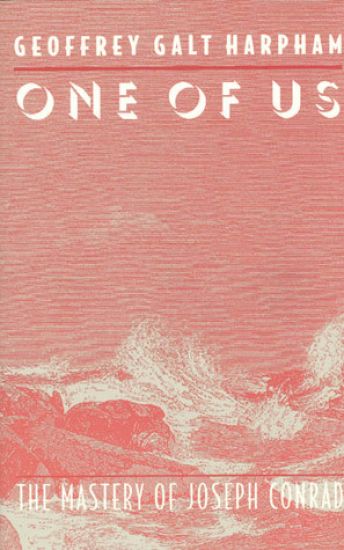
One of Us

One of Us

Geoffrey Galt Harpham

University of Chicago Press
1997
nidottu
The concept of mastery straddles a largely unexamined seam in contemporary thought dividing admirable self-control from a reprehensible will to power. Although Joseph Conrad has traditionally been viewed as an admirable master; master mariner, storyteller, and writer; his reputation has been linked in recent years to the negative masteries of racism, imperialism, and patriarchy. In this book, Geoffrey Galt Harpham delves not only into Conrad's literary work and reputation but also into the concept of mastery. The text outlines a psychology of composition that embraces Conrad's personal as well as historical circumstances. This volume represents both a methodological innovation in the practice of literary criticism and a contribution to the understanding of how masters, and canons based on them, are made.
The Humanities and the Dream of America

The Humanities and the Dream of America

Geoffrey Galt Harpham

University of Chicago Press
2011
sidottu
In this bracing and original book, Geoffrey Galt Harpham argues that the humanities - the academic disciplines that study the potential of the human - represent a 'dream of America.' They were, Harpham contends, invented after World War II as an expression of American culture and character, and were advanced by their supporters as an instrument of American national interests. Although the humanities are struggling to retain their status in America today, the concept has spread to many other parts of the world and remains one of America's most distinctive and attractive contributions to higher education. "The Humanities and the Dream of America" explores a number of linked problems: the role, at once inspiring and disturbing, played by modern philology in the discipline's formation; the reasons behind the humanities' perpetual state of crisis; and the new possibilities for literary study afforded by the subject of pleasure. Framed by essays that draw on Harpham's pedagogical experiences abroad and as a lecturer at the US Air Force Academy, as well as his vantage as director of the National Humanities Center, this book provides an essential perspective on the history, ideology, and future of the humanities.
The Humanities and the Dream of America

The Humanities and the Dream of America

Geoffrey Galt Harpham

University of Chicago Press
2011
nidottu
In this bracing and original book, Geoffrey Galt Harpham argues that the humanities - the academic disciplines that study the potential of the human - represent a 'dream of America.' They were, Harpham contends, invented after World War II as an expression of American culture and character, and were advanced by their supporters as an instrument of American national interests. Although the humanities are struggling to retain their status in America today, the concept has spread to many other parts of the world and remains one of America's most distinctive and attractive contributions to higher education. "The Humanities and the Dream of America" explores a number of linked problems: the role, at once inspiring and disturbing, played by modern philology in the discipline's formation; the reasons behind the humanities' perpetual state of crisis; and, the new possibilities for literary study afforded by the subject of pleasure. Framed by essays that draw on Harpham's pedagogical experiences abroad and as a lecturer at the US Air Force Academy, as well as his vantage as director of the National Humanities Center, this book provides an essential perspective on the history, ideology, and future of the humanities.
What Do You Think, Mr. Ramirez?

What Do You Think, Mr. Ramirez?

Geoffrey Galt Harpham

University of Chicago Press
2017
sidottu
Geoffrey Galt Harpham's book takes its title from a telling anecdote. A few years ago Harpham met a Cuban immigrant on a college campus, who told of arriving, penniless and undocumented, in the 1960s and eventually earning a GED and making his way to a community college. In a literature course one day, the professor asked him, "Mr. Ramirez, what do you think?" The question, said Ramirez, changed his life because "it was the first time anyone had asked me that." Realizing that his opinion had value set him on a course that led to his becoming a distinguished professor. That, says Harpham, was the midcentury promise of American education, the deep current of commitment and aspiration that undergirded the educational system that was built in the postwar years, and is under extended assault today. The United States was founded, he argues, on the idea that interpreting its foundational documents was the highest calling of opinion, and for a brief moment at midcentury, the country turned to English teachers as the people best positioned to train students to thrive as interpreters--which is to say as citizens of a democracy. Tracing the roots of that belief in the humanities through American history, Harpham builds a strong case that, even in very different contemporary circumstances, the emphasis on social and cultural knowledge that animated the midcentury university is a resource that we can, and should, draw on today.
What Do You Think, Mr. Ramirez?

What Do You Think, Mr. Ramirez?

Geoffrey Galt Harpham

University of Chicago Press
2017
nidottu
Geoffrey Galt Harpham's book takes its title from a telling anecdote. A few years ago Harpham met a Cuban immigrant on a college campus, who told of arriving, penniless and undocumented, in the 1960s and eventually earning a GED and making his way to a community college. In a literature course one day, the professor asked him, "Mr. Ramirez, what do you think?" The question, said Ramirez, changed his life because "it was the first time anyone had asked me that." Realizing that his opinion had value set him on a course that led to his becoming a distinguished professor. That, says Harpham, was the midcentury promise of American education, the deep current of commitment and aspiration that undergirded the educational system that was built in the postwar years, and is under extended assault today. The United States was founded, he argues, on the idea that interpreting its foundational documents was the highest calling of opinion, and for a brief moment at midcentury, the country turned to English teachers as the people best positioned to train students to thrive as interpreters--which is to say as citizens of a democracy. Tracing the roots of that belief in the humanities through American history, Harpham builds a strong case that, even in very different contemporary circumstances, the emphasis on social and cultural knowledge that animated the midcentury university is a resource that we can, and should, draw on today.
Language Alone

Language Alone

Geoffrey Galt Harpham

Routledge
2002
nidottu
How did the concept of language come to dominate modern intellectual history? In Language Alone, Geoffrey Galt Harpham provides at once the most comprehensive survey and most telling critique of the pervasive role of language in modern thought. He shows how thinkers in such diverse fields as philosophy, psychoanalysis, anthropology, and literary theory have made progress by referring their most difficult theoretical problems to what they presumed were the facts of language.Through a provocative reassessment of major thinkers on the idea of language-Saussure, Wittgenstein, Derrida, Rorty, and Chomsky, among them-and detailed accounts of the discourses of ethics and ideology in particular, Harpham demonstrates a remarkable consensus among intellectuals of the past century and beyond that philosophical and other problems can best be understood as linguistic problems. And furthermore, that a science of language can therefore illuminate them. Conspicuously absent from this consensus, he shows, is any consideration of contemporary linguistics, or any awareness of the growing agreement among linguists that the nature of language as such cannot be known.Ultimately, Harpham argues, the thought of language has dominated modern intellectual history because of its singular capacity to serve as a proxy for a host of concerns, questions, and anxieties-our place in the order of things, our rights and obligations, our nature or essence-that resist a strictly rational formulation. Language Alone will interest literary critics, philosophers, and anyone with an interest in the uses of language in contemporary thought.
The Character of Criticism

The Character of Criticism

Geoffrey Galt Harpham

Routledge
2006
sidottu
Why are some critical texts more compelling, memorable, or engaging than others? Can criticism be judged as a discourse of description, explanation, and analysis alone, or do our evaluations reflect other kinds of investments in it? In this book, Geoffrey Galt Harpham argues that the most powerful and effective criticism demands to be read as an expression of a distinctive sensibility, a way of being in the world; it demands, in other words, to be read as a discourse of character. Through a series of detailed and intimate intellectual portraits of leading critics--Elaine Scarry, Martha Nussbaum, Slavoj Zizek, and Edward Said--Harpham unfolds the complex and indirect ways in which human character is expressed in criticism. A final chapter on Criticism in a State of Terror assesses the contemporary situation. The Character of Criticism represents not just a snapshot of contemporary criticism but a fresh approach to criticism itself that clarifies the stakes involved for writers and readers of criticism alike. It does so not by making difficult thinking easy but by making it stranger--more idiosyncratic, exotic, and singular.
The Character of Criticism

The Character of Criticism

Geoffrey Galt Harpham

Routledge
2006
nidottu
Why are some critical texts more compelling, memorable, or engaging than others? Can criticism be judged as a discourse of description, explanation, and analysis alone, or do our evaluations reflect other kinds of investments in it? In this book, Geoffrey Galt Harpham argues that the most powerful and effective criticism demands to be read as an expression of a distinctive sensibility, a way of being in the world; it demands, in other words, to be read as a discourse of character. Through a series of detailed and intimate intellectual portraits of leading critics--Elaine Scarry, Martha Nussbaum, Slavoj Zizek, and Edward Said--Harpham unfolds the complex and indirect ways in which human character is expressed in criticism. A final chapter on Criticism in a State of Terror assesses the contemporary situation. The Character of Criticism represents not just a snapshot of contemporary criticism but a fresh approach to criticism itself that clarifies the stakes involved for writers and readers of criticism alike. It does so not by making difficult thinking easy but by making it stranger--more idiosyncratic, exotic, and singular.
Scholarship and Freedom

Scholarship and Freedom

Geoffrey Galt Harpham

Harvard University Press
2020
sidottu
A powerful and original argument that the practice of scholarship is grounded in the concept of radical freedom, beginning with the freedoms of inquiry, thought, and expression.Why are scholars and scholarship invariably distrusted and attacked by authoritarian regimes? Geoffrey Galt Harpham argues that at its core, scholarship is informed by an emancipatory agenda based on a permanent openness to the new, an unlimited responsiveness to evidence, and a commitment to conversion. At the same time, however, scholarship involves its own forms of authority. As a worldly practice, it is a struggle for dominance without end as scholars try to disprove the claims of others, establish new versions of the truth, and seek disciples.Scholarship and Freedom threads its general arguments through examinations of the careers of three scholars: W. E. B. Du Bois, who serves as an example of scholarly character formation; South African Bernard Lategan, whose New Testament studies became entangled on both sides of his country’s battles over apartheid; and Linda Nochlin, whose essay “Why Have There Been No Great Women Artists?” virtually created the field of feminist art history.
Shadows of Ethics

Shadows of Ethics

Geoffrey Galt Harpham

Duke University Press
1999
sidottu
In this volume Geoffrey Galt Harpham argues for a deeply original view of the relations among ethics, literary study, and critical theory. In thirteen lucid, provocative and often witty essays, Harpham rejects both the optimism of those who see ethics as a way of solving problems about values or principles and the pessimism of those who regard ethics as primarily a cover story for politics. Ethics, he claims, has been seen by its most powerful theorists as a discourse of “shadows,” a characteristic disturbance of thought in the presence of the other, a source of doubts rather than certainty. At the same time, however, ethics includes an element of violence, even blindness and “fundamentalism,” a crushing drive to clarity and resolution. Contemporary thinkers, Harpham argues, have been unwilling to accept this account of ethics and the obligations it would impose, and have, as a consequence, cultivated social and intellectual marginality as the only site of virtue, the only position in which critical intelligence is at home. They have, he contends, failed to “imagine the center,” to take up the true intellectual and worldly challenge of ethics.Tracking these issues and energies in debates about enlightenment, the politics of the aesthetic, the nature of rationality, and the worldly contexts of theory, Harpham demonstrates in compelling detail the ubiquity and true difficulty of ethics. Shadows of Ethics also revives a neglected genre, the intellectual portrait, with extended meditations on Jacques Derrida, Martha Nussbaum, Fredric Jameson, Geoffrey Hartman, and Noam Chomsky. The book will interest literary critics, philosophers, cultural critics, and all those interested in the ethical character of intellectual work.
Shadows of Ethics

Shadows of Ethics

Geoffrey Galt Harpham

Duke University Press
1999
pokkari
In this volume Geoffrey Galt Harpham argues for a deeply original view of the relations among ethics, literary study, and critical theory. In thirteen lucid, provocative and often witty essays, Harpham rejects both the optimism of those who see ethics as a way of solving problems about values or principles and the pessimism of those who regard ethics as primarily a cover story for politics. Ethics, he claims, has been seen by its most powerful theorists as a discourse of “shadows,” a characteristic disturbance of thought in the presence of the other, a source of doubts rather than certainty. At the same time, however, ethics includes an element of violence, even blindness and “fundamentalism,” a crushing drive to clarity and resolution. Contemporary thinkers, Harpham argues, have been unwilling to accept this account of ethics and the obligations it would impose, and have, as a consequence, cultivated social and intellectual marginality as the only site of virtue, the only position in which critical intelligence is at home. They have, he contends, failed to “imagine the center,” to take up the true intellectual and worldly challenge of ethics.Tracking these issues and energies in debates about enlightenment, the politics of the aesthetic, the nature of rationality, and the worldly contexts of theory, Harpham demonstrates in compelling detail the ubiquity and true difficulty of ethics. Shadows of Ethics also revives a neglected genre, the intellectual portrait, with extended meditations on Jacques Derrida, Martha Nussbaum, Fredric Jameson, Geoffrey Hartman, and Noam Chomsky. The book will interest literary critics, philosophers, cultural critics, and all those interested in the ethical character of intellectual work.
Citizenship on Catfish Row

Citizenship on Catfish Row

Geoffrey Galt Harpham

UNIVERSITY OF SOUTH CAROLINA PRESS
2022
sidottu
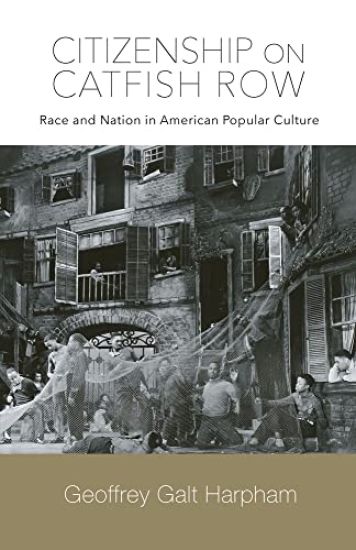
Citizenship on Catfish Row focuses on three seminal works in the history of American culture: the first full-length narrative film, D. W. Griffith's The Birth of a Nation; the first integrated musical, Oscar Hammerstein and Jerome Kern's Showboat; and the first great American opera, George Gershwin's Porgy and Bess. Each of these works sought to make a statement about American identity in the form of a narrative, and each included in that narrative a prominent role for Black people.Each work included jarring or discordant elements that pointed to a deeper tension between the kind of stories Americans wish to tell about themselves and the historical and social reality of race. Although all three have been widely criticized, their efforts to connect the concepts of nation and race are not only instructive about the history of the American imagination but also provide unexpected resources for contemporary reflection.
Citizenship on Catfish Row

Citizenship on Catfish Row

Geoffrey Galt Harpham

UNIVERSITY OF SOUTH CAROLINA PRESS
2022
pokkari
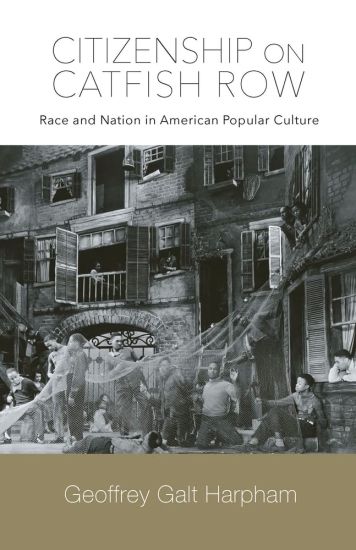
Citizenship on Catfish Row focuses on three seminal works in the history of American culture: the first full-length narrative film, D. W. Griffith's The Birth of a Nation; the first integrated musical, Oscar Hammerstein and Jerome Kern's Showboat; and the first great American opera, George Gershwin's Porgy and Bess. Each of these works sought to make a statement about American identity in the form of a narrative, and each included in that narrative a prominent role for Black people.Each work included jarring or discordant elements that pointed to a deeper tension between the kind of stories Americans wish to tell about themselves and the historical and social reality of race. Although all three have been widely criticized, their efforts to connect the concepts of nation and race are not only instructive about the history of the American imagination but also provide unexpected resources for contemporary reflection.
Geoffrey Chaucer's The Canterbury Tales

Geoffrey Chaucer's The Canterbury Tales

Oxford University Press Inc
2007
nidottu
The ten essays selected for this book illuminate the central themes of the most frequently taught Canterbury Tales. These texts are appropriate for undergraduates and general readers and were edited carefully to ensure that references and allusions are explained in footnotes. Theoretical excursus and critical jousting have been either simplified or omitted entirely. At the end of each essay is an annotated list of further readings. The volumes editor is one of the most distinguished active Chaucerian scholars in the world.
Geoffrey Chaucer

Geoffrey Chaucer

Oxford University Press
1869
sidottu
By their choice of poems and by the personal and critical reactions they express in their prefaces, the editors offer insights into their own work as well as provide a passionate introduction to some of the greatest poets of our literature.
Geoffrey of Aspall, Part 1

Geoffrey of Aspall, Part 1

Oxford University Press
2017
sidottu
Geoffrey of Aspall, who died in 1287 and was master of Arts by 1262, was active at Oxford in the years 1255 to1265. He wrote commentaries on several Aristotelian works, and was certainly a major protagonist of the introduction of Aristotelian learning to Oxford. In particular, he produced a very extensive question-style commentary on Aristotle's Physics, which contains important discussions of the fundamental topics of Aristotle's natural philosophy, like matter, form, natural agency, causes, change, the infinite and the continuum, time, the eternity of the world, self-movers. Aspall's Physics commentary shows the influence of Grosseteste's metaphysics of light and of Roger Bacon's view on the physical role of intentional species, as well as a strong inclination to ontological realism. Aspall's commentary on Aristotle's Physics is edited here in two volumes, which together form the first critical edition of this work. The Latin text is accompanied by a facing English translation, and the text is extensively cross-referenced and provided with scholarly apparatus. The detailed introduction guides the reader through the intricacies of the textual transmission of Aspall's commentary, and also presents the main topics discussed in this commentary. The appendix to the edition makes available alternative versions of some sections of Aspall's commentary.
Geoffrey of Aspall, Part 2

Geoffrey of Aspall, Part 2

Oxford University Press
2017
sidottu
Geoffrey of Aspall, who died in 1287 and was master of Arts by 1262, was active at Oxford in the years 1255 to1265. He wrote commentaries on several Aristotelian works, and was certainly a major protagonist of the introduction of Aristotelian learning to Oxford. In particular, he produced a very extensive question-style commentary on Aristotle's Physics, which contains important discussions of the fundamental topics of Aristotle's natural philosophy, like matter, form, natural agency, causes, change, the infinite and the continuum, time, the eternity of the world, self-movers. Aspall's Physics commentary shows the influence of Grosseteste's metaphysics of light and of Roger Bacon's view on the physical role of intentional species, as well as a strong inclination to ontological realism. Aspall's commentary on Aristotle's Physics is edited here in two volumes, which together form the first critical edition of this work. The Latin text is accompanied by a facing English translation, and the text is extensively cross-referenced and provided with scholarly apparatus. The detailed introduction guides the reader through the intricacies of the textual transmission of Aspall's commentary, and also presents the main topics discussed in this commentary. The appendix to the edition makes available alternative versions of some sections of Aspall's commentary.
Geoffrey of Burton: Life and Miracles of St Modwenna
Geoffrey of Burton's Life and Miracles of St Modwenna (BHL 2097) is among the most substantial pieces of twelfth-century English hagiographic writing not previously to have appeared in print. It was produced by the abbot of Burton, where Modwenna's bones supposedly lay, in the period 1118-50, and consists of two parts of unequal length: the vita or Life proper, and the collection of miracle stories. The first part, forming about four-fifths of the total text, was based on an earlier Life by the Irish author Conchubranus, which Geoffrey revised and modified in style and substance. His creative rewriting of the Life throws much light on the Latinity, religious attitudes, and historical consciousness of an early twelfth-century Benedictine author. The second and shorter part of the text is made up of accounts of the miraculous cures and punishments connected with Modwenna's shrine at Burton. Geoffrey composed these stories on the basis of oral traditions and his own experience and they constitute a valuable source for the social and religious history of this part of England in the Norman period.