Kirjojen hintavertailu. Mukana 11 241 044 kirjaa ja 12 kauppaa.

Kirjahaku

Etsi kirjoja tekijän nimen, kirjan nimen tai ISBN:n perusteella.

1000 tulosta hakusanalla Geoffrey H. Baker

Design Strategies in Architecture

Design Strategies in Architecture

Geoffrey H. Baker

Spon Press
1996
nidottu
Modern architecture has become extremely complex and its study has been made more difficult by changes in fashion and a proliferation of design modes. In this book, Geoffrey Baker develops a methodology for design analysis that reveals the underlying organisation of buildings. Part One explains the nature and role of architecture in a wide-ranging discussion extending from geometry to symbolism. Part Two demonstrates the analytical methodology by reference to cities and works by modern masters such as Aalto, Meier and Stirling. In this second revised edition, Dr Baker has added a chapter outlining the relationship between some current perceptions of science, art and philosophy, and how these impinge on architecture. The discussion compares Futurism, Constructivism, Suprematism, High Tech, Deconstruction and the attitude of the avant-garde, with the phenomenology of Bachelard and Heiddeger.
The Architecture of James Stirling and His Partners James Gowan and Michael Wilford
Sir James Stirling was arguably the greatest British architect of the twentieth century. This book provides the most comprehensive critical survey of Stirling's work to date, charting the development of his ideas from his formative years, through his partnership with James Gowan, on to his period in practice as sole partner; and finally, his partnership with Michael Wilford. Using archival material, extensive interviews with his partners and others who worked for him, together with analytical examination of key buildings, this detailed critical examination explains his philosophy, working method and design strategy. In doing so, it sheds new light on the atelier structure of his office and who did what on his major buildings. Geoffrey Baker is the first to analyse in depth the articulation systems used in major projects undertaken by Stirling. He confirms that the Staatsgalerie complex at Stuttgart does not demonstrate Stirling's interest in post modernism but rather an enhanced sensitivity towards context informed by his growing allegiance to the classical canon. Baker explains how this important development in his work, powerfully influenced by Karl Friedrich Schinkel, is consummated in perhaps the finest of Stirling's uncompleted works, the extension to London's National Gallery. In a discussion of his mature works, Baker explains how Stirling's work can be understood in terms of several interconnected ideas. These include surrealism, historicism, myth and metaphor, inconsistency and ambiguity, bi-lateral symmetry, the garden, rusticity and arcadia, and the archetype, seen as the repository of the collective architectural memory. As well as discussing his interests and those who influenced Stirling, the book compares his oeuvre with that of the pioneers of modern architecture, Mies van der Rohe, Frank Lloyd Wright, Alvar Aalto and Le Corbusier. This book charts a remarkable career, and offers invaluable insights not only into the masterly, timeless architecture, but also into the man himself: charismatic, irreverent, courageous, serious; sometimes rude, often stubborn, belligerent, yet gentle. He was endlessly inventive and deeply dedicated to his art, producing buildings that reflect all of the above, buildings that are magnificent and ultimately humane.
The Architecture of James Stirling and His Partners James Gowan and Michael Wilford
Sir James Stirling was arguably the greatest British architect of the twentieth century. This book provides the most comprehensive critical survey of Stirling's work to date, charting the development of his ideas from his formative years, through his partnership with James Gowan, on to his period in practice as sole partner; and finally, his partnership with Michael Wilford. Using archival material, extensive interviews with his partners and others who worked for him, together with analytical examination of key buildings, this detailed critical examination explains his philosophy, working method and design strategy. In doing so, it sheds new light on the atelier structure of his office and who did what on his major buildings. Geoffrey Baker is the first to analyse in depth the articulation systems used in major projects undertaken by Stirling. He confirms that the Staatsgalerie complex at Stuttgart does not demonstrate Stirling's interest in post modernism but rather an enhanced sensitivity towards context informed by his growing allegiance to the classical canon. Baker explains how this important development in his work, powerfully influenced by Karl Friedrich Schinkel, is consummated in perhaps the finest of Stirling's uncompleted works, the extension to London's National Gallery. In a discussion of his mature works, Baker explains how Stirling's work can be understood in terms of several interconnected ideas. These include surrealism, historicism, myth and metaphor, inconsistency and ambiguity, bi-lateral symmetry, the garden, rusticity and arcadia, and the archetype, seen as the repository of the collective architectural memory. As well as discussing his interests and those who influenced Stirling, the book compares his oeuvre with that of the pioneers of modern architecture, Mies van der Rohe, Frank Lloyd Wright, Alvar Aalto and Le Corbusier. This book charts a remarkable career, and offers invaluable insights not only into the masterly, timeless architecture, but also into the man himself: charismatic, irreverent, courageous, serious; sometimes rude, often stubborn, belligerent, yet gentle. He was endlessly inventive and deeply dedicated to his art, producing buildings that reflect all of the above, buildings that are magnificent and ultimately humane.
New Orleans

New Orleans

Geoffrey H. Baker

Images Publishing Group Pty Ltd
2019
sidottu
New Orleans, like Venice, is built in a location that at first sight seems curious in the extreme. How could it be that these cities, built so precariously in the face of a watery threat, were to become among the great cities of the world? How could a site below sea level, at a swampy curve in the River Mississippi become one of the most visited cities in the United States, and possess a unique kind of magic that separates it from other cities? Geoffrey H. Baker's gem of an architectural guide answers these burning questions. Inside these richly illustrated pages he explains how the urban design works for this city's plight, which is frequently handicapped by nature's capacity to destroy in the form of hurricanes. Timothy's beautiful photography showcases the unique topography and architectural fabric of New Orleans, and Geoffrey's insight illuminates the city's inimitable spirit that's born of its constant battle for survival.
The Chronicle of Geoffrey le Baker of Swinbrook
Geoffrey le Baker's chronicle covers the reigns of Edward II and Edward III up to the English victory at Poitiers. David Preest's new translation includes extensive notes and an introduction by Richard Barber. Geoffrey le Baker's chronicle covers the reigns of Edward II and Edward III up to the English victory at Poitiers. It starts in a low key, copying an earlier chronicle, but by the end of Edward II's reign he offers a much more vivid account. Baker's description of Edward II's last days is partly based on the eyewitness account of his patron, Sir Thomas de la More, who was present at one critical interview. This story of Edward's death, like many other details from his chronicle, was picked up by Tudor historians, particularly by Holinshed, who was the source for Shakespeare's history plays. The reign of Edward III is dominated, not by Edward III himself, but by Baker's real hero, Edward prince of Wales. His bravery aged sixteen at Crécy is presented as a prelude to his victory at Poitiers, a battle which Baker is able to describe in great detail, apparently from what he was told by the prince's commanders. It is a rarity among medieval battles, because - in sharp contrast to the total anarchy at Crécy - the prince and his staff were able to see the enemy's manoeuvres. Throughout the chronicle there are sharply defined vignettes which stay in the mind - the killing of the Scottish champion on Halidon Hill, the drowning of Sir Edward Bohun, the earls of Salisbury and Suffolk as prisoners carried in a cart, the death of Sir Walter Selby and his two sons, the bravery of Sir Thomas Dagworth against a cobbler's son, the duel between Otho and the duke of Lancaster, John Dancaster and the lewd washerwoman. Baker writes in a complex Latin which even scholars find problematic,and David Preest's new translation will be widely welcomed by anyone interested in the fourteenth century. There are extensive notes and an introduction by Richard Barber. DAVID PREEST has also translated The Chronica Maiora of Thomas Walsingham, a Choice Outstanding Academic Title; RICHARD BARBER's recent book Edward III and the Triumph of England draws heavily on Geoffrey le Baker's work for the first twenty years of Edward'sreign.
The Chronicle of Geoffrey le Baker of Swinbrook
Geoffrey le Baker's chronicle covers the reigns of Edward II and Edward III up to the English victory at Poitiers. David Preest's new translation includes extensive notes and an introduction by Richard Barber. Geoffrey le Baker's chronicle covers the reigns of Edward II and Edward III up to the English victory at Poitiers. It starts in a low key, copying an earlier chronicle, but by the end of Edward II's reign he offers a much more vivid account. His description of Edward II's last days is partly based on the eyewitness account of his patron, Sir Thomas de la More, who was present at one critical interview. Baker's story of Edward's death, like many other details from his chronicle, was picked up by Tudor historians, particularly by Holinshed, who was the source for Shakespeare's history plays. The reign of Edward III is dominated, not by Edward III himself, but by Baker's real hero, Edward prince of Wales. His bravery aged 16 at Crécy is presented as a prelude to his victory at Poitiers, a battle which Baker is able to describe in great detail, apparently from what he was told by the prince's commanders. It is a rarity among medieval battles, because - in sharp contrast to the total anarchy at Crécy - the prince and his staff were able to see the enemy's manoeuvres. Throughout the chronicle there are sharply defined vignetteswhich stay in the mind - the killing of the Scottish champion on Halidon Hill, the drowning of Sir Edward Bohun, the earls of Salisbury and Suffolk as prisoners carried in a cart, the death of Sir Walter Selby and his two sons, the bravery of Sir Thomas Dagworth against a cobbler's son, the duel between Otho and the duke of Lancaster, John Dancaster and the lewd washerwoman. Baker writes in a complex Latin which even scholars find problematic, and David Preest's new translation will be widely welcomed by anyone interested in the fourteenth century. There are extensive notes and an introduction by Richard Barber.
Geoffrey Tristram

Geoffrey Tristram

David Baker

AuthorHouse UK
2022
pokkari
For nearly thirty years, Geoffrey Oliver Tristram (GOT) was the celebrated Organist and Master of the Choristers at Christchurch Priory. He set a high standard for both organ performance and choral direction still widely revered and celebrated. This book charts GOT's life from his birth in Stourbridge, Worcestershire, in 1917 to his sudden death at the age of just 61. It looks at his career as student, teacher, choirmaster, accompanist and, especially, celebrated recitalist, at home and abroad. Drawing heavily on primary source material, including family archives and photographs, the book is complemented and underpinned by the memories and reminiscences of relations, friends, colleagues, peers, and others. It includes many contemporary reviews of his performances, right from his early days as a teenage Fellow of the Royal College of Organists until his last masterly recitals. Appendices give details about Tristram's recitals, broadcasts, and recordings, alongside specifications of the instruments at Christchurch Priory. The book also provides access to a selection of previously unreleased recordings made in the 1960s and early 1970s. Geoffrey Tristram: A Very British Organist, paints a rich picture of the man (husband, father, friend) and the musician, a player who had a significant influence on generations of organists and singers.
Geoffrey Tristram

Geoffrey Tristram

David Baker

AuthorHouse UK
2022
sidottu
For nearly thirty years, Geoffrey Oliver Tristram (GOT) was the celebrated Organist and Master of the Choristers at Christchurch Priory. He set a high standard for both organ performance and choral direction still widely revered and celebrated. This book charts GOT's life from his birth in Stourbridge, Worcestershire, in 1917 to his sudden death at the age of just 61. It looks at his career as student, teacher, choirmaster, accompanist and, especially, celebrated recitalist, at home and abroad. Drawing heavily on primary source material, including family archives and photographs, the book is complemented and underpinned by the memories and reminiscences of relations, friends, colleagues, peers, and others. It includes many contemporary reviews of his performances, right from his early days as a teenage Fellow of the Royal College of Organists until his last masterly recitals. Appendices give details about Tristram's recitals, broadcasts, and recordings, alongside specifications of the instruments at Christchurch Priory. The book also provides access to a selection of previously unreleased recordings made in the 1960s and early 1970s. Geoffrey Tristram: A Very British Organist, paints a rich picture of the man (husband, father, friend) and the musician, a player who had a significant influence on generations of organists and singers.
Belief in Evidence in the Nineteenth-Century Novel

Belief in Evidence in the Nineteenth-Century Novel

Geoffrey A. Baker

Oxford University Press
2025
sidottu
What makes us believe anything told to us by another person? How does this work in scenes of judgment where we operate almost exclusively with report from others, like a trial by jury? Thomas Reid declared in 1785 that 'we give the name of evidence to whatever is a ground of belief', and such defining formulations both echo and were echoed by seminal writings on the law of evidence. The ideas of belief and evidence have depended upon each other for a very long time. Belief in Evidence traces the relationship between these terms as they expressed themselves in British evidence-thinking and in nineteenth-century novels that explicitly engaged the problem of when and whom to believe, and on what evidentiary grounds. In his foundational Essay concerning Human Nature (1690), John Locke foregrounded the problem of forming judgments about things we have not experienced ourselves but only heard from others. His ideas provided a foundation for the first systematic treatise of English evidence law, Geoffrey Gilbert's The Law of Evidence (1754). Locke's anecdote of the 'King of Siam'--which illustrated how we weigh probabilities in determining what to believe--found itself repeated with astonishing frequency over the next two centuries wherever legal scholars aimed to illustrate the problem of belief in evidence. This period should be understood as a sort of Age of Evidence, during which evidence-thinking and evidence law became solidified in disciplinary terms, and dispersed well beyond the legal profession. Both following and complicating legal notions of evidence and belief, the novel in England in the era of literary realism addressed many of the same mediating factors delineated by Locke and the law of evidence: the age and experience of the persons called upon to believe; the perceived character of witnesses and defendants; the number of witnesses; and how the experience that shapes us is conditioned by place and identity. Staging complex scenes of judgment, authors like Mary Shelley, Jane Austen, Elizabeth Gaskell, George Eliot, Wilkie Collins, and Anthony Trollope all confronted the problem of belief in evidence, which became central to their models of realistic representation.
The Aesthetics of Clarity and Confusion

The Aesthetics of Clarity and Confusion

Geoffrey A. Baker

Springer International Publishing AG
2016
sidottu
What should literature with political aims look like? This book traces two rival responses to this question, one prizing clarity and the other confusion, which have dominated political aesthetics since the late nineteenth century. Revisiting recurrences of the avant-garde experimentalism versus critical realism debates from the twentieth century, Geoffrey A. Baker highlights the often violent reductions at work in earlier debates. Instead of prizing one approach over the other, as many participants in those debates have done, Baker focuses on the manner in which the debate itself between these approaches continues to prove productive and enabling for politically engaged writers. This book thus offers a way beyond the simplistic polarity of realism vs. anti-realism in a study that is focused on influential strands of thought in England, France, and Germany and that covers well-known authors such as Zola, Nietzsche, Arnold, Mann, Brecht, Sartre, Adorno, Lukács, Beauvoir, Morrison, and Coetzee.
The Aesthetics of Clarity and Confusion

The Aesthetics of Clarity and Confusion

Geoffrey A. Baker

Springer International Publishing AG
2018
nidottu
What should literature with political aims look like? This book traces two rival responses to this question, one prizing clarity and the other confusion, which have dominated political aesthetics since the late nineteenth century. Revisiting recurrences of the avant-garde experimentalism versus critical realism debates from the twentieth century, Geoffrey A. Baker highlights the often violent reductions at work in earlier debates. Instead of prizing one approach over the other, as many participants in those debates have done, Baker focuses on the manner in which the debate itself between these approaches continues to prove productive and enabling for politically engaged writers. This book thus offers a way beyond the simplistic polarity of realism vs. anti-realism in a study that is focused on influential strands of thought in England, France, and Germany and that covers well-known authors such as Zola, Nietzsche, Arnold, Mann, Brecht, Sartre, Adorno, Lukács, Beauvoir, Morrison, and Coetzee.
Le Corbusier - An Analysis of Form

Le Corbusier - An Analysis of Form

Geoffrey Baker

Spon Press
1996
nidottu
This unique appraisal of the famous Swiss architect's major works have now been expanded to include two more buildings. The Villa Shodhan and the Pavilion Suisse round out the coverage of Le Corbusier's significant works. The author critically examines Le Corbusier's achievements helping student and professional alike to appreciate the elements of successful design. The narrative and fine illustration cover the key buildings from each of the four developmental stages of his work, making it an excellent guide for practicing architects and students.
Realism's Empire

Realism's Empire

Geoffrey Baker

Ohio State University Press
2020
pokkari
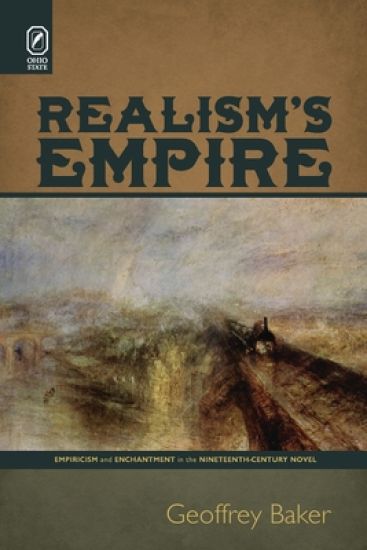
If realist novels are the literary avatars of secular science and rational progress, then why are so many canonical realist works organized around a fear of that progress? Realism is openly indebted, at the level of form and content, to imperialist and scientific advances. However, critical emphasis on this has obscured the extent to which major novelists of the period openly worried about the fate of mystery and the dissolution of tradition that accompanied science's shrinking of the world. Realism's modernization is inseparable from nostalgia. In Realism's Empire: Empiricism and Enchantment in the Nineteenth-Century Novel, Geoffrey Baker demonstrates that realist fiction's stance toward both progress and the foreign or supernatural is much more complex than established scholarship has assumed. The work of Honor de Balzac, Anthony Trollope, and Theodor Fontane explicitly laments the loss of mystery in the world due to increased knowledge and exploration. To counter this loss and to generate the complications required for narrative, these three authors import peripheral, usually colonial figures into the metropolitan centers they otherwise depict as disenchanted and rationalized: Paris, London, and Berlin. Baker's book examines the consequences of this duel for realist narrative and readers' understandings of its historical moment. In so doing, Baker shows Balzac, Trollope, and Fontane grappling with new realities that frustrate their inherited means of representation and oversee a significant shift in the development of the novel.
Imposing Harmony

Imposing Harmony

Geoffrey Baker

Duke University Press
2008
sidottu
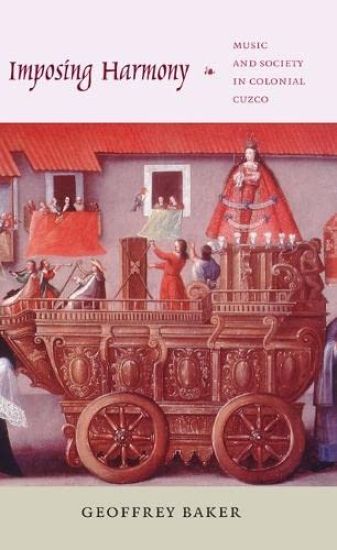
Imposing Harmony is a groundbreaking analysis of the role of music and musicians in the social and political life of colonial Cuzco. Challenging musicology’s cathedral-centered approach to the history of music in colonial Latin America, Geoffrey Baker demonstrates that rather than being dominated by the cathedral, Cuzco’s musical culture was remarkably decentralized. He shows that institutions such as parish churches and monasteries employed indigenous professional musicians, rivaling Cuzco Cathedral in the scale and frequency of the musical performances they staged.Building on recent scholarship by social historians and urban musicologists and drawing on extensive archival research, Baker highlights European music as a significant vehicle for reproducing and contesting power relations in Cuzco. He examines how Andean communities embraced European music, creating an extraordinary cultural florescence, at the same time that Spanish missionaries used the music as a mechanism of colonialization and control. Uncovering a musical life of considerable and unexpected richness throughout the diocese of Cuzco, Baker describes a musical culture sustained by both Hispanic institutional patrons and the upper strata of indigenous society. Mastery of European music enabled elite Andeans to consolidate their position within the colonial social hierarchy. Indigenous professional musicians distinguished themselves by fulfilling important functions in colonial society, acting as educators, religious leaders, and mediators between the Catholic Church and indigenous communities.
Imposing Harmony

Imposing Harmony

Geoffrey Baker

Duke University Press
2008
pokkari
Imposing Harmony is a groundbreaking analysis of the role of music and musicians in the social and political life of colonial Cuzco. Challenging musicology’s cathedral-centered approach to the history of music in colonial Latin America, Geoffrey Baker demonstrates that rather than being dominated by the cathedral, Cuzco’s musical culture was remarkably decentralized. He shows that institutions such as parish churches and monasteries employed indigenous professional musicians, rivaling Cuzco Cathedral in the scale and frequency of the musical performances they staged.Building on recent scholarship by social historians and urban musicologists and drawing on extensive archival research, Baker highlights European music as a significant vehicle for reproducing and contesting power relations in Cuzco. He examines how Andean communities embraced European music, creating an extraordinary cultural florescence, at the same time that Spanish missionaries used the music as a mechanism of colonialization and control. Uncovering a musical life of considerable and unexpected richness throughout the diocese of Cuzco, Baker describes a musical culture sustained by both Hispanic institutional patrons and the upper strata of indigenous society. Mastery of European music enabled elite Andeans to consolidate their position within the colonial social hierarchy. Indigenous professional musicians distinguished themselves by fulfilling important functions in colonial society, acting as educators, religious leaders, and mediators between the Catholic Church and indigenous communities.
Buena Vista in the Club

Buena Vista in the Club

Geoffrey Baker

Duke University Press
2011
sidottu
In Buena Vista in the Club, Geoffrey Baker traces the trajectory of the Havana hip hop scene from the late 1980s to the present and analyzes its partial eclipse by reggaetón. While Cuban officials initially rejected rap as “the music of the enemy,” leading figures in the hip hop scene soon convinced certain cultural institutions to accept and then promote rap as part of Cuba’s national culture. Culminating in the creation of the state-run Cuban Rap Agency, this process of “nationalization” drew on the shared ideological roots of hip hop and the Cuban nation and the historical connections between Cubans and African Americans. At the same time, young Havana rappers used hip hop, the music of urban inequality par excellence, to critique the rapid changes occurring in Havana since the early 1990s, when the Soviet Union fell, its subsidy of Cuba ceased, and a tourism-based economy emerged. Baker considers the explosion of reggaetón in the early 2000s as a reflection of the “new materialism” that accompanied the influx of foreign consumer goods and cultural priorities into “sociocapitalist” Havana. Exploring the transnational dimensions of Cuba’s urban music, he examines how foreigners supported and documented Havana’s growing hip hop scene starting in the late 1990s and represented it in print and on film and CD. He argues that the discursive framing of Cuban rap played a crucial part in its success.
Buena Vista in the Club

Buena Vista in the Club

Geoffrey Baker

Duke University Press
2011
pokkari
In Buena Vista in the Club, Geoffrey Baker traces the trajectory of the Havana hip hop scene from the late 1980s to the present and analyzes its partial eclipse by reggaetón. While Cuban officials initially rejected rap as “the music of the enemy,” leading figures in the hip hop scene soon convinced certain cultural institutions to accept and then promote rap as part of Cuba’s national culture. Culminating in the creation of the state-run Cuban Rap Agency, this process of “nationalization” drew on the shared ideological roots of hip hop and the Cuban nation and the historical connections between Cubans and African Americans. At the same time, young Havana rappers used hip hop, the music of urban inequality par excellence, to critique the rapid changes occurring in Havana since the early 1990s, when the Soviet Union fell, its subsidy of Cuba ceased, and a tourism-based economy emerged. Baker considers the explosion of reggaetón in the early 2000s as a reflection of the “new materialism” that accompanied the influx of foreign consumer goods and cultural priorities into “sociocapitalist” Havana. Exploring the transnational dimensions of Cuba’s urban music, he examines how foreigners supported and documented Havana’s growing hip hop scene starting in the late 1990s and represented it in print and on film and CD. He argues that the discursive framing of Cuban rap played a crucial part in its success.