Kirjahaku
Etsi kirjoja tekijän nimen, kirjan nimen tai ISBN:n perusteella.
1000 tulosta hakusanalla Geoffrey R Jonas
A young woman dies alone in a hotel room, her fentanyl-poisoned cocaine still on the desk. She had been missing for nearly 2 weeks. Social Services had been trying to find a place for her to live with her 3-year-old son, whom she had left with her parents. Six months later her father fights for his life in intensive care, but succumbs to his illness because of a lifelong use of alcohol and tobacco. A month after his death her mother is assessed by doctors to be unable to care for herself because of her Alzheimer's and mental health issues brought on by benzodiazepine and alcohol addiction.The son, brother, stepson is the only one left to pick up the pieces. He begins a journey of the self and finds out the truth of his family. After going over letters, notes, emails, videos, and text messages, he uncovers a disturbing picture of the abuse his sister suffered at the hands of their parents. He also begins to better understand his own struggles with mental health and substance addiction because of the trauma and abuse he also suffered from their parents.Follow the son as he looks through his family history to discover the generational abuse that trickled down through the years. Learn about how parents who suffer from narcissistic personality disorder emotionally abuse and manipulate their children. See how the abuse and trauma becomes mental illness in the abused, and how they fall into vicious traps of addiction, eating disorders, self-harm, and complex post-traumatic stress disorder. Witness the transformational change of the son as he works on the recovery of his inner child and tries to become the man he was meant to be.


Science in the Nineteenth-Century Periodical
Geoffrey Cantor; Gowan Dawson; Graeme Gooday; Richard Noakes; Sally Shuttleworth; Jonathan R. Topham
Cambridge University Press
2007
pokkari
For the Victorian reading public, periodicals played a far greater role than books in shaping their understanding of new discoveries and theories in science, technology and medicine. Such understandings were formed not merely by serious scientific articles, but also by glancing asides in political reports, fictional representations, or humorous attacks in comic magazines. Ranging across diverse forms of periodicals, from top-selling religious and juvenile magazines through to popular fiction-based periodicals, and from the campaigning 'new journalism' of the late century to the comic satire of Punch, this book explores the ways in which scientific ideas and developments were presented to a variety of Victorian audiences. In addition, it offers three case studies of the representation of particular areas of science: 'baby science', scientific biography, and electricity. This intriguing collaborative volume sheds light on issues relating to history and history of science, literature, book history, and cultural and media studies.
Science in the Nineteenth-Century Periodical
Geoffrey Cantor; Gowan Dawson; Graeme Gooday; Richard Noakes; Sally Shuttleworth; Jonathan R. Topham
Cambridge University Press
2004
sidottu
For the Victorian reading public, periodicals played a far greater role than books in shaping their understanding of new discoveries and theories in science, technology and medicine. Such understandings were formed not merely by serious scientific articles, but also by glancing asides in political reports, fictional representations, or humorous attacks in comic magazines. Ranging across diverse forms of periodicals, from top-selling religious and juvenile magazines through to popular fiction-based periodicals, and from the campaigning 'new journalism' of the late century to the comic satire of Punch, this book explores the ways in which scientific ideas and developments were presented to a variety of Victorian audiences. In addition, it offers three case studies of the representation of particular areas of science: 'baby science', scientific biography, and electricity. This intriguing collaborative volume sheds light on issues relating to history and history of science, literature, book history, and cultural and media studies.
Culture and Science in the Nineteenth-Century Media
Louise Henson; Geoffrey Cantor; Gowan Dawson; Richard Noakes; Sally Shuttleworth; Jonathan R. Topham
Ashgate Publishing Limited
2004
sidottu
Written by literary scholars, historians of science, and cultural historians, the twenty-two original essays in this collection explore the intriguing and multifaceted interrelationships between science and culture through the periodical press in nineteenth-century Britain. Ranging across the spectrum of periodical titles, the six sections comprise: 'Women, Children, and Gender', 'Religious Audiences', 'Naturalizing the Supernatural', 'Contesting New Technologies', 'Professionalization and Journalism', and 'Evolution, Psychology, and Culture'. The essays offer some of the first 'samplings and soundings' from the emergent and richly interdisciplinary field of scholarship on the relations between science and the nineteenth-century media.
Culture and Science in the Nineteenth-Century Media
Louise Henson; Geoffrey Cantor; Gowan Dawson; Richard Noakes; Sally Shuttleworth; Jonathan R. Topham
Routledge
2016
nidottu
Written by literary scholars, historians of science, and cultural historians, the twenty-two original essays in this collection explore the intriguing and multifaceted interrelationships between science and culture through the periodical press in nineteenth-century Britain. Ranging across the spectrum of periodical titles, the six sections comprise: 'Women, Children, and Gender', 'Religious Audiences', 'Naturalizing the Supernatural', 'Contesting New Technologies', 'Professionalization and Journalism', and 'Evolution, Psychology, and Culture'. The essays offer some of the first 'samplings and soundings' from the emergent and richly interdisciplinary field of scholarship on the relations between science and the nineteenth-century media.
The Business of Electric Vehicles
Jonas Boehm; Hemant K. Bhargava; Geoffrey G. Parker
now publishers Inc
2020
nidottu
Platform business tactics are highly visible and dominant in business today. Prominent firms in industries such as information services, retail, and travel, have embraced platform thinking. Still, many others are engaged in a platform game without realizing it, often to negative consequences. The Business of Electric Vehicles: A Platform Perspective develops this theme with an illustrative focus on the battery electric vehicle segment of the automobile industry. It traces the development of the industry, identifies key decisions by various participants, and analyzes these decisions from a platform strategy lens. The authors emphasize that platform characteristics and network effects are at the core of the electric vehicle industry. For electric vehicles, the two-sided platform nature of the industry underlines the need for a well-coordinated strategy on both sides of the market. This analysis reveals that industry participants – vehicle producers, providers of charging locations, government and policy makers (with the notable exception of an industry newcomer, Tesla, which has astutely employed platform thinking in its core decisions) – have executed a flawed strategy that fails to recognize and leverage the platform aspect of the industry.
This is a study of the emergence, growth and performance of British multinational banks from their origins in the 1830s until the present day. British owned banks played leading roles in the financial systems of much of Asia and the Southern hemishere during the nineteenth century and after. In the 1970s and 1980s, they made large investments in California and elsewhere in the United States. They played major roles in the finance of international trade, in international diplomacy, in the birth of the Eurodollar market, and in the world debt crisis. This is the first modern general history of these banks. It is based on a wide range of confidential banking archives in Britain, Australia and Hong Kong, most of which were previously unavailable. Geoffrey Jones places this new empirical evidence in the context of modern theories of multinational enterprise and of competitive advantage. This is a lucidly written and fascinating study, of importance not only to historians but also to anyone concerned with contemporary multinational banking.
This book examines the evolution of multinational trading companies from the eighteenth century to the present day. During the Industrial Revolution, British merchants established overseas branches which became major trade intermediaries and subsequently engaged in foreign direct investment. Complex multinational business groups emerged controlling large investments in natural resources, processing, and services in Asia, Latin America, and Africa.
Are profits and sustainability compatible? This book brings unique perspectives to this key debate by exploring the history of green entrepreneurship since the nineteenth century, and its spread globally in industries including renewable energy, organic food, natural beauty, ecotourism, recycling, architecture, and finance. The book uses the lens of the extraordinary and often eccentric men and women who defied convention and imagined that business could help save the planet, rather than consume it. The social and religious beliefs that drove many of these individuals are explored as the book looks at how they overcame huge obstacles to execute their strategies. The green entrepreneurs seen here are shown to have created new markets and industries, and driven innovations in sustainable practices, even at times when most consumers and governments marginalized the entire subject. The struggles of early pioneers appear to have been rewarded by the growth of environmental awareness among consumers, business leaders, and others in recent years, but the Earth's environmental health continues to deteriorate. If profits and sustainability have proved challenging to reconcile, the book argues that one reason was how they were both defined.
Are profits and sustainability compatible? This book brings unique perspectives to this key debate by exploring the history of green entrepreneurship since the nineteenth century, and its spread globally in industries including renewable energy, organic food, natural beauty, ecotourism, recycling, architecture, and finance. The book uses the lens of the extraordinary and often eccentric men and women who defied convention and imagined that business could help save the planet, rather than consume it. The social and religious beliefs that drove many of these individuals are explored as the book looks at how they overcame huge obstacles to execute their strategies. The green entrepreneurs seen here are shown to have created new markets and industries, and driven innovations in sustainable practices, even at times when most consumers and governments marginalized the entire subject. The struggles of early pioneers appear to have been rewarded by the growth of environmental awareness among consumers, business leaders, and others in recent years, but the Earth's environmental health continues to deteriorate. If profits and sustainability have proved challenging to reconcile, this book argues that one reason was how they were both defined.
This volume examines the evolution of multinational trading companies from the 18th century to the present day. While theories of the firm have often predicted the demise over time of merchant firms, this book identifies the continued resilience of British trading companies.
Unilever is one of the world's largest suppliers of fast moving consumer goods in foods, home and personal care. It operates in over 100 countries. Its scope and scale make it a unique global corporation. Yet the story of Unilever is not simply a tale of corporate evolution: Unilever is a corporation that has a big impact on the lives of people round the world. Indeed, a Unilever brand can be found in one in every two households worldwide. Geoffrey Jones, a leading business historian from the Harvard Business School, takes us inside this corporation, which, from its origins in Britain and the Netherlands, has become a worldwide manufacturer of fast moving consumer products. Unilever's operations cover food and home and personal care, and its brands include Lipton, Hellmann's, Birds Eye, Wall's, Surf, Domestos, Comfort, Dove, Sunsilk, Pond's, Signal, Axe, and Ben & Jerry's. In particular the book focuses on the evolution of the company over the last half century. Managing such a firm in the era of globalization posed enormous challenges. The book covers the company's strategies and provides compelling evidence of its decision-making, marketing, brand management, innovation, acquisition strategies, corporate culture, and human resource management. The author has had full access to corporate archives and executives and provides us with a unique insight into the workings and strategies of one of the world's oldest and largest multinationals.
This book provides a unique contribution to contemporary globalization debates by providing an accessible survey of the growth and role of multinational enterprises in the world economy over the last two hundred years. The author shows how entrepreneurs built a global economy in the nineteenth century by creating firms that pursued resources and markets across borders. It demonstrates how multinationals shifted strategies as the first global economy disintegrated in the political and economic chaos between the two world wars, and how they have driven the creation of the contemporary global economy. Many of the issues of the global economy have been encountered in the past. This book shows how entrepreneurs and managers met the political, ethical, cultural and organizational challenges of operating across national borders at different times and in different environments. The role of multinationals is placed within their wider political and economic context. There are chapters on the impact of multinationals, and on relations with governments. The focus on the shifting roles of firms and industries over time rather than abstract trade and capital flows provides compelling evidence on the diversity and discontinuities of the globalization process. The book explains the history of multinationals across a wide spectrum of manufacturing, service and natural resource industries from an international perspective, which ranges widely across different countries. It provides an essential historical framework for understanding global business. An accessible survey of the history of international business worldwide, this book will be key reading for students taking courses in International Business, Business History, Multinationals, and Entrepreneurship; and of interest to academics and researchers working in these areas.
"This book contributes to contemporary globalization debates by providing a survey of the growth and role of multinational enterprises in the world economy over the last two hundred years"--Provided by publisher.
The Oxford Handbook of Business History
Geoffrey Jones; Jonathan Zeitlin
Oxford University Press
2009
nidottu
This Handbook provides a state-of-the-art survey of research in business history. Business historians study the historical evolution of business systems, entrepreneurs and firms, as well as their interaction with their political, economic, and social environment. They address issues of central concern to researchers in management studies and business administration, as well as economics, sociology and political science, and to historians. They employ a range of qualitative and quantitative methodologies, but all share a belief in the importance of understanding change over time. The Oxford Handbook of Business History has brought together leading scholars to provide a comprehensive, critical, and interdisciplinary examination of business history, organized into four parts: Approaches and Debates; Forms of Business Organization; Functions of Enterprise; and Enterprise and Society. The Handbook shows that business history is a wide-ranging and dynamic area of study, generating compelling empirical data, which has sometimes confirmed and sometimes contested widely-held views in management and the social sciences. The Oxford Handbook of Business History is a key reference work for scholars and advanced students of Business History, and a fascinating resource for social scientists in general.
The global beauty business permeates our lives, influencing how we perceive ourselves and what it is to be beautiful. The brands and firms which have shaped this industry, such as Avon, Coty, Estée Lauder, L'Oréal, and Shiseido, have imagined beauty for us. This book provides the first authoritative history of the global beauty industry from its emergence in the nineteenth century to the present day, exploring how today's global giants grew. It shows how successive generations of entrepreneurs built brands which shaped perceptions of beauty, and the business organizations needed to market them. They democratized access to beauty products, once the privilege of elites, but they also defined the gender and ethnic borders of beauty, and its association with a handful of cities, notably Paris and later New York. The result was a homogenization of beauty ideals throughout the world. Today globalization is changing the beauty industry again; its impact can be seen in a range of competing strategies. Global brands have swept into China, Russia, and India, but at the same time, these brands are having to respond to a far greater diversity of cultures and lifestyles as new markets are opened up worldwide. In the twenty first century, beauty is again being re-imagined anew.
"Of Fathers & Sons" reveals the hidden story of a middle-aged man and the relationship he shared with his father over the course of their lifetime together. It is at once touching and heart-breaking to consider the depth of the feelings that each man held for the other. It is in the expression of these emotions that the friction, and the challenges, and the joys of fathers and sons are clearly exposed to view. Men have feelings. More often than not, men are discouraged from expressing them. "Of Fathers & Sons" is an important commentary on the state of maleness in the modern world as seen uniquely through the eyes of fathers and sons.
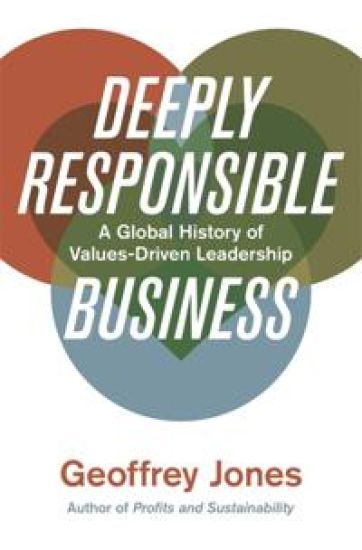
Corporate social responsibility has entered the mainstream, but what does it take to run a successful purpose-driven business? A Harvard Business School professor examines leaders who put values alongside profits to showcase the challenges and upside of deeply responsible business.For decades, CEOs have been told that their only responsibility is to the bottom line. But consensus is that companies—and their leaders—must engage with their social and environmental contexts. The man behind one of Harvard Business School's most popular courses, Geoffrey Jones distinguishes deep responsibility, which can deliver radical social and ecological responses, from corporate social responsibility, which is often little more than window dressing.Deeply Responsible Business offers an invaluable historical perspective, going back to the Quaker capitalism of George Cadbury and the worker solidarity of Edward Filene. Through a series of in-depth profiles of business leaders and their companies, it carries us from India to Japan and from the turmoil of the nineteenth century to the latest developments in impact investing and the B-corps. Jones profiles business leaders from around the world who combined profits with social purpose to confront inequality, inner-city blight, and ecological degradation, while navigating restrictive laws and authoritarian regimes.He found that these leaders were motivated by bedrock values and sometimes—but not always—driven by faith. They chose to operate in socially productive fields, interacted with humility with stakeholders, and felt a duty to support their communities. While far from perfect—some combined visionary practices with vital flaws—each one showed that profit and purpose could be reconciled. Many of their businesses were highly successful—though financial success was not their only metric of achievement.As companies seek to coopt ethically sensitized consumers, Jones gives us a new perspective to tackle tough questions. Inspired by these passionate and pragmatic business leaders, he envisions a future in which companies and entrepreneurs can play a key role in healing our communities and protecting the natural world.