Kirjojen hintavertailu. Mukana 11 244 527 kirjaa ja 12 kauppaa.

Kirjahaku

Etsi kirjoja tekijän nimen, kirjan nimen tai ISBN:n perusteella.

1000 tulosta hakusanalla Georg Simmel

Georg Simmel

Georg Simmel

Georg Simmel

University of Chicago Press
2020
sidottu
Georg Simmel is one of the most original German thinkers of the twentieth century and is considered a founding architect of the modern discipline of sociology. Ranging over fundamental questions of the relationship of self and society, his influential writings on money, modernity, and the metropolis continue to provoke debate today. Fascinated by the relationship between culture, society, and economic life, Simmel took an interest in myriad phenomena of aesthetics and the arts. A friend of writers and artists such as Auguste Rodin, Rainer Maria Rilke, and Stefan George, he wrote dozens of pieces engaging with topics such as the work of Michelangelo, Rembrandt, and Rodin, Japanese art, naturalism and symbolism, Goethe, "art for art's sake", art exhibitions, and the aesthetics of the picture frame. This is the first collection to bring together Simmel's finest writing on art and aesthetics, and many of the items appear in English in this volume for the first time. The more than forty essays show the protean breadth of Simmel's reflections, covering landscape painting, portraiture, sculpture, poetry, theater, form, style, and representation. An extensive introduction by Austin Harrington gives an overview of Simmel's themes and elucidates the significance of his work for the many theorists who would be inspired by his ideas. Something of an outsider to the formal academic world of his day, Simmel wrote creatively with the flair of an essayist. This expansive collection of translations, many of them prepared by the editor, preserves the narrative ease of Simmel's prose and will be a vital source for readers with an interest in Simmel's trailblazing ideas in modern European philosophy, sociology, and cultural theory.
Georg Simmel

Georg Simmel

Georg Simmel

University of Chicago Press
2020
pokkari
Georg Simmel is one of the most original German thinkers of the twentieth century and is considered a founding architect of the modern discipline of sociology. Ranging over fundamental questions of the relationship of self and society, his influential writings on money, modernity, and the metropolis continue to provoke debate today. Fascinated by the relationship between culture, society, and economic life, Simmel took an interest in myriad phenomena of aesthetics and the arts. A friend of writers and artists such as Auguste Rodin, Rainer Maria Rilke, and Stefan George, he wrote dozens of pieces engaging with topics such as the work of Michelangelo, Rembrandt, and Rodin, Japanese art, naturalism and symbolism, Goethe, "art for art's sake", art exhibitions, and the aesthetics of the picture frame. This is the first collection to bring together Simmel's finest writing on art and aesthetics, and many of the items appear in English in this volume for the first time. The more than forty essays show the protean breadth of Simmel's reflections, covering landscape painting, portraiture, sculpture, poetry, theater, form, style, and representation. An extensive introduction by Austin Harrington gives an overview of Simmel's themes and elucidates the significance of his work for the many theorists who would be inspired by his ideas. Something of an outsider to the formal academic world of his day, Simmel wrote creatively with the flair of an essayist. This expansive collection of translations, many of them prepared by the editor, preserves the narrative ease of Simmel's prose and will be a vital source for readers with an interest in Simmel's trailblazing ideas in modern European philosophy, sociology, and cultural theory.
Georg Simmel on Individuality and Social Forms

Georg Simmel on Individuality and Social Forms

Georg Simmel

University of Chicago Press
1972
nidottu
"Of those who created the intellectual capital used to launch the enterprise of professional sociology, Georg Simmel was perhaps the most original and fecund. In search of a subject matter for sociology that would distinguish it from all other social sciences and humanistic disciplines, he charted a new field for discovery and proceeded to explore a world of novel topics in works that have guided and anticipated the thinking of generations of sociologists. Such distinctive concepts of contemporary sociology as social distance, marginality, urbanism as a way of life, role-playing, social behavior as exchange, conflict as an integrating process, dyadic encounter, circular interaction, reference groups as perspectives, and sociological ambivalence embody ideas which Simmel adumbrated more than six decades ago."—Donald N. Levine Half of the material included in this edition of Simmel's writings represents new translations. This includes Simmel's important, lengthy, and previously untranslated "Group Expansion and Development of Individuality," as well as three selections from his most neglected work, Philosophy of Money; in addition, the introduction to Probleme der Geschichtsphilosophie, chapter one of the Lebensanschauung, and three essays are translated for the first time.
Georg Simmel

Georg Simmel

David Frisby

Routledge
1994
muu
Georg Simmel predicted that he would have no followers after his death. However he is now widely recognized as the father of the sociology of Modernity. His ideas on the metropolis, consumer culture, social space and aesthetics are at the crux of contemporary debate in sociology. This collection brings together the essential secondary literature on Simmel. It is selected and edited by David Frisby - a scholar who has perhaps done more than anyone else to rehabilitate Simmel's reputation in the English speaking world. What emerges is the most concise yet comprehensive view of this astonishingly prescient and penetrating sociologist. The volumes will be of interest to graduate students and anyone with a serious interest in Simmel.
Georg Simmel

Georg Simmel

David Frisby

Routledge
2002
sidottu
Until recently little of Simmel's work was available in translation and certain key texts were unknown outside Germany. David Frisby, the eminent Simmel scholar, provides not only an introduction to the major sociological writings of this important figure, but also an argument for a reconsideration of his work. The author outlines the cultural and historical context in which Simmel worked; reviews Simmel's most important writings; and examines his legacy to sociology by illuminating his links with Weber's theories and his influential relationship with Marxism. Simmel, a central figure in the development of modern sociology, and a contemporary of Weber and Durkheim, was one of the first to identify sociology as a separate discipline. His ideas influenced Weber, the Chicago School, and many later sociologists. His introduction of a number of basic concepts to sociology, such as exchange, interaction and differentiation, attest to his intellectual stature and the far-reaching significance of his work.
Georg Simmel

Georg Simmel

David Frisby

Routledge
2002
nidottu
Until recently little of Simmel's work was available in translation and certain key texts were unknown outside Germany. David Frisby, the eminent Simmel scholar, provides not only an introduction to the major sociological writings of this important figure, but also an argument for a reconsideration of his work. The author outlines the cultural and historical context in which Simmel worked; reviews Simmel's most important writings; and examines his legacy to sociology by illuminating his links with Weber's theories and his influential relationship with Marxism. Simmel, a central figure in the development of modern sociology, and a contemporary of Weber and Durkheim, was one of the first to identify sociology as a separate discipline. His ideas influenced Weber, the Chicago School, and many later sociologists. His introduction of a number of basic concepts to sociology, such as exchange, interaction and differentiation, attest to his intellectual stature and the far-reaching significance of his work.
Georg Simmel

Georg Simmel

Horst Jürgen Helle

De Gruyter Oldenbourg
2001
sidottu
Georg Simmel is and will continue to be one of the most important authors for all the humanities. This is true because hardly anyone else has forseen the enormous changes in culture, politics, and in the social conditions in general, that would occur in the course of the 20th century like he did. It is also true because he discovered a new way of thinking, one which made this premonition of dramatic change possible. Georg Simmel ist und bleibt ein wichtiger Autor für den ganzen Bereich der Geisteswissenschaften. Nicht nur weil Simmel die gewaltigen kulturellen, politischen und allgemeinen sozialen Umwälzungen des zwanzigsten Jahrhunderts wie kaum ein anderer vorausgesehen hat, sondern auch, weil er die Art zu denken entwickelt hat, ohne die eine Voraussicht nicht möglich war.
Georg Simmel: Rembrandt
First published in 1916 in German, this important work has never been translated into English--until now. Simmel attacks such questions as "What do we see in a work of Art?" and "What do Rembrandt's portraits tell us about human nature?" This is a major work by a major thinker concerning one of the world's most important painters.
Georg Simmel: Rembrandt
First published in 1916 in German, this important work has never been translated into English--until now. Simmel attacks such questions as "What do we see in a work of Art?" and "What do Rembrandt's portraits tell us about human nature?" This is a major work by a major thinker concerning one of the world's most important painters.
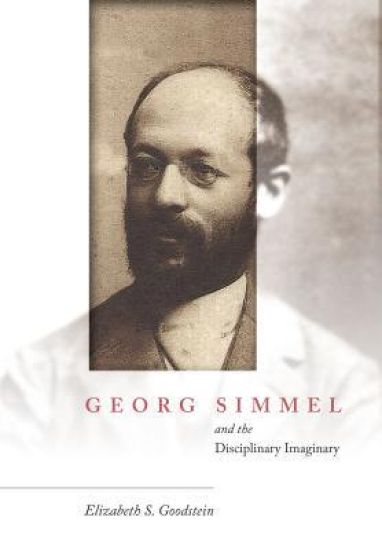
Georg Simmel and the Disciplinary Imaginary

Georg Simmel and the Disciplinary Imaginary

Elizabeth S. Goodstein

Stanford University Press
2017
sidottu
An internationally famous philosopher and best-selling author during his lifetime, Georg Simmel has been marginalized in contemporary intellectual and cultural history. This neglect belies his pathbreaking role in revealing the theoretical significance of phenomena—including money, gender, urban life, and technology—that subsequently became established arenas of inquiry in cultural theory. It further ignores his philosophical impact on thinkers as diverse as Benjamin, Musil, and Heidegger. Integrating intellectual biography, philosophical interpretation, and a critical examination of the history of academic disciplines, this book restores Simmel to his rightful place as a major figure and challenges the frameworks through which his contributions to modern thought have been at once remembered and forgotten.
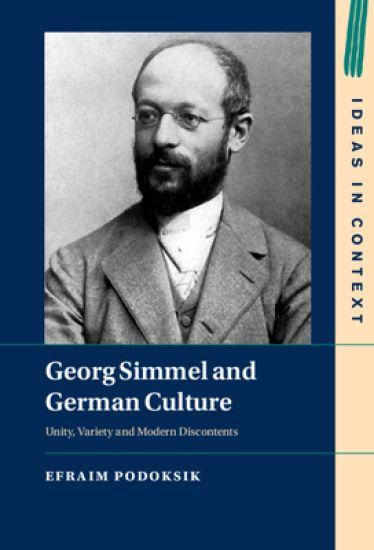
Georg Simmel and German Culture

Georg Simmel and German Culture

Efraim Podoksik

Cambridge University Press
2021
sidottu
The significance of the German philosopher and social thinker, Georg Simmel (1858–1918), is only now being recognised by intellectual historians. Through penetrating readings of Simmel's thought, taken as a series of reflections on the essence of modernity and modern civilisation, Efraim Podoksik places his ideas within the context of intellectual life in Germany, and especially Berlin, under the Kaiserreich. Modernity, characterised by the growing differentiation and fragmentation of culture and society, was a fundamental issue during Simmel's life, underpinning central intellectual debates in Imperial Germany. Simmel's thought is depicted here as an attempt at transforming the complexity of these debates into a coherent worldview that can serve as an effective guide to understanding their main parameters. Paying particular attention to the genealogy and usage of the concepts of Bildung, culture and civilisation in Germany, this study offers contextual analyses of Simmel's philosophies of culture, society, art, religion and the feminine, as well as his interpretations of Dante, Kant, Nietzsche, Schopenhauer, Goethe and Rembrandt.
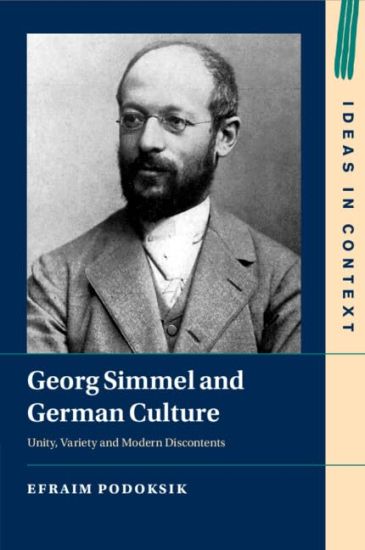
Georg Simmel and German Culture

Georg Simmel and German Culture

Efraim Podoksik

Cambridge University Press
2023
pokkari
The significance of the German philosopher and social thinker, Georg Simmel (1858–1918), is only now being recognised by intellectual historians. Through penetrating readings of Simmel's thought, taken as a series of reflections on the essence of modernity and modern civilisation, Efraim Podoksik places his ideas within the context of intellectual life in Germany, and especially Berlin, under the Kaiserreich. Modernity, characterised by the growing differentiation and fragmentation of culture and society, was a fundamental issue during Simmel's life, underpinning central intellectual debates in Imperial Germany. Simmel's thought is depicted here as an attempt at transforming the complexity of these debates into a coherent worldview that can serve as an effective guide to understanding their main parameters. Paying particular attention to the genealogy and usage of the concepts of Bildung, culture and civilisation in Germany, this study offers contextual analyses of Simmel's philosophies of culture, society, art, religion and the feminine, as well as his interpretations of Dante, Kant, Nietzsche, Schopenhauer, Goethe and Rembrandt.
Georg Simmel and the Disciplinary Imaginary

Georg Simmel and the Disciplinary Imaginary

Elizabeth S. Goodstein

Stanford University Press
2017
pokkari
An internationally famous philosopher and best-selling author during his lifetime, Georg Simmel has been marginalized in contemporary intellectual and cultural history. This neglect belies his pathbreaking role in revealing the theoretical significance of phenomena—including money, gender, urban life, and technology—that subsequently became established arenas of inquiry in cultural theory. It further ignores his philosophical impact on thinkers as diverse as Benjamin, Musil, and Heidegger. Integrating intellectual biography, philosophical interpretation, and a critical examination of the history of academic disciplines, this book restores Simmel to his rightful place as a major figure and challenges the frameworks through which his contributions to modern thought have been at once remembered and forgotten.
Georg Simmel’s Concluding Thoughts

Georg Simmel’s Concluding Thoughts

David Beer

Springer Nature Switzerland AG
2019
sidottu
This book draws upon the work of Georg Simmel to explore the limits, tensions and dynamism of social life through a close analysis of the works produced in the final years of his life and reveals what they might still offer some 100 years later. Focusing on the relationships between worlds, lives and fragments in these works, David Beer opens up a conceptual toolkit for understanding life as both an individual experience and as a deeply social phenomenon. Taking the reader through artistic and musical forms of inspiration, to the problems of culture and on to the conceptual understanding of lived experience, the book illuminates the richness of Simmel’s ideas and thinking. This sophisticated dialogue with Simmel’s lesser known later works will provide fresh insights for students and scholars of cultural and social theory and pave the way for a reinvigorated engagement with his ideas.
Georg Simmel’s Concluding Thoughts

Georg Simmel’s Concluding Thoughts

David Beer

Springer Nature Switzerland AG
2020
nidottu
This book draws upon the work of Georg Simmel to explore the limits, tensions and dynamism of social life through a close analysis of the works produced in the final years of his life and reveals what they might still offer some 100 years later. Focusing on the relationships between worlds, lives and fragments in these works, David Beer opens up a conceptual toolkit for understanding life as both an individual experience and as a deeply social phenomenon. Taking the reader through artistic and musical forms of inspiration, to the problems of culture and on to the conceptual understanding of lived experience, the book illuminates the richness of Simmel’s ideas and thinking. This sophisticated dialogue with Simmel’s lesser known later works will provide fresh insights for students and scholars of cultural and social theory and pave the way for a reinvigorated engagement with his ideas.
Georg Simmel: Philosophie des Geldes
Georg Simmels philosophisches Werk steht quer zu etablierten Fachgrenzen. Das gilt auch für die "Philosophie des Geldes" (1900), in dem sein Interesse an unterschiedlichen Phänomenen des Sozial- und Kulturlebens – Freiheit, Weltanschauung, Gesellschaft, Politik, Religion, Kunst u.v.m – sich bereits abzeichnet, bevor es in den folgenden Jahren in Schriften zur Soziologie, Psychologie, Ästhetik, Kulturtheorie entfaltet wird. Schon der Titel einer "Philosophie des Geldes" ist ein Novum. Hier wird nämlich ein Bereich des sozialen Lebens, das wirtschaftliche Leben, zum Gegenstand der Analyse gemacht, um nicht die Einheit des kulturellen Lebens, sondern um dessen geistige Grundlagen zu untersuchen. In der Selbstanzeige des Buches für den Verlag Duncker & Humblot (Leipzig) schreibt Simmel, dass er mehrere Zielsetzungen verfolgt. Zum einen will er die Einseitigkeiten von Idealismus und Materialismus korrigieren und Geschichte respektive Kultur als ein Wechselspiel zwischen materiellen und ideellen Faktoren begreifen. Zum anderen will er den Beweis führen, dass sich von jedem Punkte der gleichgültigsten, unidealsten Oberfläche des Lebens ein Senkbeil in seine letzten Tiefen des menschlichen lebens werfen lässt. Damit ist gemeint, dass jedes Lebensphänomen als ein Aspekt und ein Träger einer Einheit von Sinn angesehen werden kann. Die These ist, dass sich menschliches Leben als Sinngeschehen vollzieht, was sich in allen Lebensvollzügen – vom ästhetischen über das wirtschaftliche bis zum religiösen Handeln – überprüfbar sein muss. Die "Philosophie des Geldes" besteht aus zwei Teilen, einem analytischen und einem synthetischen Teil. Im analytischen Teil wird die systematische und historische Explikation einer allgemeinen Kulturtendenz dargestellt. Es geht um den Befund eines Nebeneinanders zweier Welten, dort die Natur und hier die Welt der Werte, die sich aufeinander beziehen und doch voneinander getrennt entwickeln. Auf die Welt der Werte bezogen, also unsere menschliche Welt, die wir im Denken und Handeln erzeugen und die wir sinnverstehend erschließen können spricht Simmel von einer Entwicklungstendenz, einem Übergang von Substanz- zu Funktionsvorstellungen – vom einem sich verändernden Gebrauch der Kategorien, beispielsweise Mittel/Zweck. Im synthetischen Teil geht Simmel auf die Probleme der menschlichen Lebensführung ein, wozu das Problem von Freiheit und Verpflichtung und auch die Frage gehört, wie wir unserem Leben eine Form geben können, Im instruktiven, das Werk abschließenden Kapitel über den Stil des Lebens mündet die Diagnose der modernen Kultur in die Überlegung, was es für uns heißen könnte, unter den bedingungen eines relativistischen Weltbildes dem eigenen Leben eine Form und Richtung zu geben. Die "Philosophie des Geldes" ist ein großes Werk der Philosophie, in dem es, diesseits der üblichen Trennung in theoretische und praktische Fragen der Philosophie, noch einmal um die letzten Probleme der Philosophie geht.
Georg Simmel und die aktuelle Stadtforschung

Georg Simmel und die aktuelle Stadtforschung

Vs Verlag Fur Sozialwissenschaften
2011
nidottu
Georg Simmel hat mit seinem Aufsatz "Die Großstädte und das Geistesleben" (1903) den Anstoß für die sozialwissenschaftliche Stadtforschung gegeben. Für Simmel verkörpern Großstädte den Sitz der Moderne - Orte, an denen sich durch Arbeitsteilung und Spezialisierung eine besondere Produktivkraft herausbildet. Orte, an denen das Individuum einen bis dahin unbekannten Grad an persönlicher Freiheit erlangt. Mit diesem Buch, einem Herausgeberwerk des Georg-Simmel-Zentrums für Metropolenforschung, gehen die AutorInnen der Frage nach, welche Relevanz Simmel für die heutige Stadtforschung besitzt. Insbesondere wird das interdisziplinäre Potenzial des Simmelschen Ansatzes aufgezeigt.
Georg Simmel - Psychologie der Diskretion
Studienarbeit aus dem Jahr 2006 im Fachbereich Soziologie - Sonstiges, Note: 1,0, Friedrich-Alexander-Universit t Erlangen-N rnberg (Institut f r Soziologie), Veranstaltung: Lekt rekurs "Georg Simmel," 1 Quellen im Literaturverzeichnis, Sprache: Deutsch, Abstract: Die Arbeit behandelt die 1906 verfasste "Psychologie der Diskretion" von Georg Simmel - und dies, ohne dabei in einer Unmenge von Sekund rliteratur zu versinken. Geliefert wird eine Einf hrung sowie ein Kommentar zu dieser mikrosoziologisch-psychologisch orientierten Abhandlung des f r die Gesellschaftswissenschaften so bedeutend gewordenen Denkers, der entscheidende Eindr cke nicht nur aus dem Berlin des beginnenden 20. Jahrhunderts gewann, sondern auch die Lehren gesellschaftskritischer Philosophen wie etwa Friedrich Nietzsches in sich aufnahm und lebensnah in seinen eigenen Werken verarbeitete. - So wird zun chst die "Psychologie der Diskretion" einer Besprechung unterzogen und schlie lich im Verlaufe der Arbeit zunehmend auch auf die kontextuelle Einbettung Bezug genommen. Bedeutend erscheint hierbei sowohl das unmittelbare Umfeld anderer Simmelscher Schriften, wie auch das geistig-philosophische Umfeld des soziologischen Klassikers. - Als ein besonders zentrales Element in der behandelten Schrift sowie in Simmels Denken berhaupt erweist sich der auf den Menschen bezogene Begriff der Sph re ...