Unver nderter Nachdruck der Originalausgabe von 1855. Der Verlag Anatiposi gibt historische B cher als Nachdruck heraus. Aufgrund ihres Alters k nnen diese B cher fehlende Seiten oder mindere Qualit t aufweisen. Unser Ziel ist es, diese B cher zu erhalten und der ffentlichkeit zug nglich zu machen, damit sie nicht verloren gehen.
Unver nderter Nachdruck der Originalausgabe von 1855. Der Verlag Anatiposi gibt historische B cher als Nachdruck heraus. Aufgrund ihres Alters k nnen diese B cher fehlende Seiten oder mindere Qualit t aufweisen. Unser Ziel ist es, diese B cher zu erhalten und der ffentlichkeit zug nglich zu machen, damit sie nicht verloren gehen.
Richard Alewyn; Herbert Von Einem; Joseph Höffner; Günther Jachmann; Gerhard Kegel; Josef Kroll; Thomas Ohm; Hans Peters; Josef Pieper; Karl Heinrich Rengstorf; Fritz Schalk; Georg Schreiber; Friedrich Karl Schumann; Franz Steinbach; Hans Erich Stier; Jost Trier; Leo Weisgerber; Harry Westermann; Hans J. Wolff; Leo Brandt; Kurt Alder; Volker Aschoff; Friedrich Becker; Heinrich Behnke; Theodor Beste; Hans Braun; Wilhelm Fucks; Wilhelm Groth; Fritz Gummert; Burckhardt Helferich; Walther G. Hoffmann; Walter Kikuth; Bruno Kuske
Funf Jahre Arbeitsgemeinschaft fur wissenschaftliche Forschung in den vielfaltigen Bezirken der Naturwissenschaften und Technik, seit einigen Jahren notwendig und wirksam erganzt durch die Forschung auf geistes wissenschaftlichem Gebiet, ist zu einem Begriff fur deutsche Forschung und hervorragende Forschungsergebnisse nicht nur in Nordrhein-Westfalen, ihrem Wurzel- und Nahrboden, sondern weit daruber hinaus im Bereich unseres gesamten Vaterlandes geworden, sogar mit Ausstrahlungen in die ganze Welt und Resonanz aus der ganzen Welt. Ein Beweis dafur, dass die Insti tution, die gar keine Institution im engeren und regelnden Sinne ist und auch nicht sein sollte, sondern ein freiwilliger Zusammenschluss namhafter Wissen schaftler und Forscher aus allen Gebieten der wissenschaftlichen Disziplinen, in Plan und Anlage richtig war und sich sinnvoll und zweckdienlich ent faltet hat. Was heisst in diesem Falle "zweckdienlich"? Dem Zweck des Austausches, der gegenseitigen Befruchtung von Forschern der verschiedensten Species in Rede und Aussprache dienen, um der Gefahr der Einseitigkeit, der jeder Spezialwissenschaftler ausgesetzt ist, zu begegnen und zu entgehen, um teilzuhaben an den Aufgaben, Erkenntnissen und Ergebnissen des Kollegen der benachbarten, aber und besonders auch der entfernteren wissenschaft lichen Bereiche. Die Arbeitsgemeinschaft fur Forschung hat in ihren regelmassigen Sitzun gen und durch ihre zahlreichen Veroffentlichungen einen Reichtum aus " ... Wort und Widerwort und wieder Wort ... " wie es auf der Beschriftung des Vogel Phonix von Ewald Mathare in der Vorhalle des Landtags heisst, gewonnen, eine Fulle von Erkenntnissen geschaffen, wie sie in dieser Reich weite und Tiefe kaum auf andere Weise zu erzielen sind als in einer solchen wissenschaftlichen "Societat.""
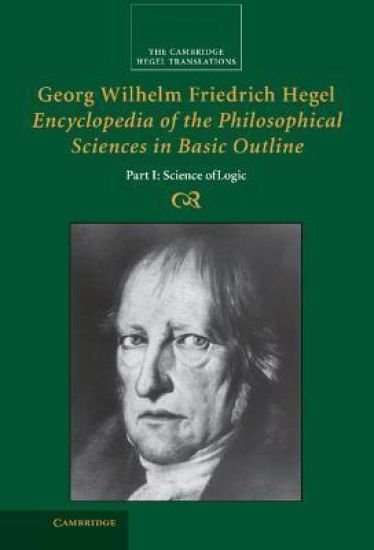
Hegel's Encyclopaedia Logic constitutes the foundation of the system of philosophy presented in his Encyclopaedia of the Philosophical Sciences. Together with his Science of Logic, it contains the most explicit formulation of his enduringly influential dialectical method and of the categorical system underlying his thought. It offers a more compact presentation of his dialectical method than is found elsewhere, and also incorporates changes that he would have made to the second edition of the Science of Logic if he had lived to do so. This volume presents it in a new translation with a helpful introduction and notes. It will be a valuable reference work for scholars and students of Hegel and German idealism, as well as for those who are interested in the post-Hegelian character of contemporary philosophy.
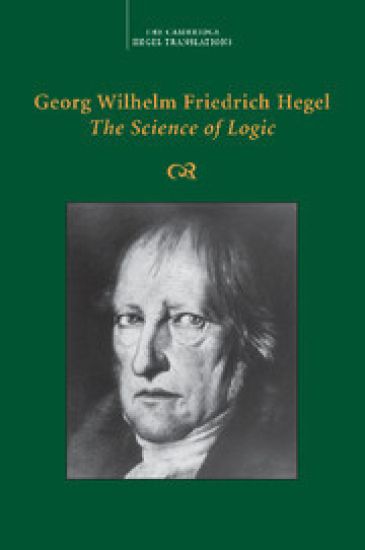
This translation of The Science of Logic (also known as 'Greater Logic') includes the revised Book I (1832), Book II (1813) and Book III (1816). Recent research has given us a detailed picture of the process that led Hegel to his final conception of the System and of the place of the Logic within it. We now understand how and why Hegel distanced himself from Schelling, how radical this break with his early mentor was, and to what extent it entailed a return (but with a difference) to Fichte and Kant. In the introduction to the volume, George Di Giovanni presents in synoptic form the results of recent scholarship on the subject, and, while recognizing the fault lines in Hegel's System that allow opposite interpretations, argues that the Logic marks the end of classical metaphysics. The translation is accompanied by a full apparatus of historical and explanatory notes.
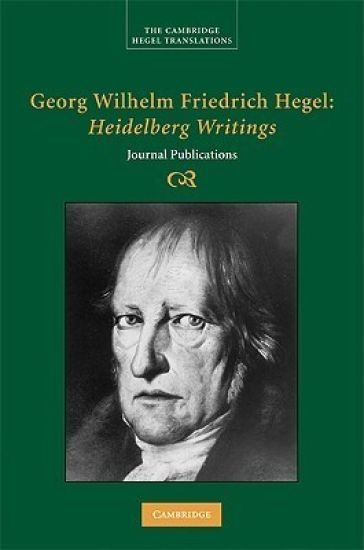
This work brings together, for the first time in English translation, Hegel's journal publications from his years in Heidelberg (1816–18), writings which have been previously either untranslated or only partially translated into English. The Heidelberg years marked Hegel's return to university teaching and represented an important transition in his life and thought. The translated texts include his important reassessment of the works of the philosopher F. H. Jacobi, whose engagement with Spinozism, especially, was of decisive significance for the philosophical development of German Idealism. They also include his most influential writing about contemporary political events, his essay on the constitutional assembly in his native Württemberg, which was written against the background of the dramatic political and social changes occurring in post-Napoleonic Germany. The translators have provided an introduction and notes that offer a scholarly commentary on the philosophical and political background of Hegel's Heidelberg writings.
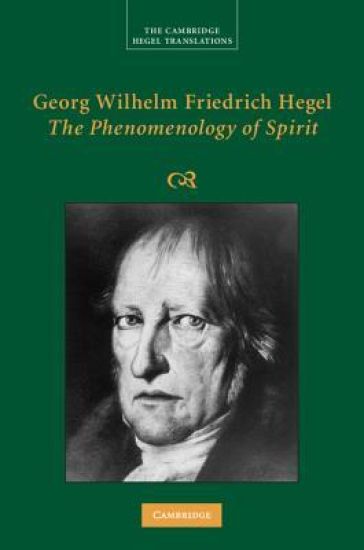
Hegel's The Phenomenology of Spirit (1807) is one of the most influential texts in the history of modern philosophy. In it, Hegel proposed an arresting and novel picture of the relation of mind to world and of people to each other. Like Kant before him, Hegel offered up a systematic account of the nature of knowledge, the influence of society and history on claims to knowledge, and the social character of human agency itself. A bold new understanding of what, after Hegel, came to be called 'subjectivity' arose from this work, and it was instrumental in the formation of later philosophies, such as existentialism, Marxism, and American pragmatism, each of which reacted to Hegel's radical claims in different ways. This edition offers a new translation, an introduction, and glossaries to assist readers' understanding of this central text, and will be essential for scholars and students of Hegel.
This translation of The Science of Logic (also known as 'Greater Logic') includes the revised Book I (1832), Book II (1813) and Book III (1816). Recent research has given us a detailed picture of the process that led Hegel to his final conception of the System and of the place of the Logic within it. We now understand how and why Hegel distanced himself from Schelling, how radical this break with his early mentor was, and to what extent it entailed a return (but with a difference) to Fichte and Kant. In the introduction to the volume, George Di Giovanni presents in synoptic form the results of recent scholarship on the subject, and, while recognizing the fault lines in Hegel's System that allow opposite interpretations, argues that the Logic marks the end of classical metaphysics. The translation is accompanied by a full apparatus of historical and explanatory notes.
Hegel's Encyclopaedia Logic constitutes the foundation of the system of philosophy presented in his Encyclopaedia of the Philosophical Sciences. Together with his Science of Logic, it contains the most explicit formulation of his enduringly influential dialectical method and of the categorical system underlying his thought. It offers a more compact presentation of his dialectical method than is found elsewhere, and also incorporates changes that he would have made to the second edition of the Science of Logic if he had lived to do so. This volume presents it in a new translation with a helpful introduction and notes. It will be a valuable reference work for scholars and students of Hegel and German idealism, as well as for those who are interested in the post-Hegelian character of contemporary philosophy.
This work brings together, for the first time in English translation, Hegel's journal publications from his years in Heidelberg (1816–18), writings which have been previously either untranslated or only partially translated into English. The Heidelberg years marked Hegel's return to university teaching and represented an important transition in his life and thought. The translated texts include his important reassessment of the works of the philosopher F. H. Jacobi, whose engagement with Spinozism, especially, was of decisive significance for the philosophical development of German Idealism. They also include his most influential writing about contemporary political events, his essay on the constitutional assembly in his native Württemberg, which was written against the background of the dramatic political and social changes occurring in post-Napoleonic Germany. The translators have provided an introduction and notes that offer a scholarly commentary on the philosophical and political background of Hegel's Heidelberg writings.