This set features: Linear Regression Analysis, Second Edition by George A. F. Seber and Alan J. Lee (978-0-471-41540-4) Nonlinear Regression by George A. F. Seber and C. J. Wild (978-0-471-47135-6) Adaptive Sampling by Steven K. Thompson and George A. F. Seber (978-0-471-55871-2) Multivariate Observations by George A. F. Seber (978-0-471-69121-1) A Matrix Handbook for Statisticians by George A. F. Seber (978-0-471-74869-4)
A comprehensive, must-have handbook of matrix methods with a unique emphasis on statistical applications This timely book, A Matrix Handbook for Statisticians, provides a comprehensive, encyclopedic treatment of matrices as they relate to both statistical concepts and methodologies. Written by an experienced authority on matrices and statistical theory, this handbook is organized by topic rather than mathematical developments and includes numerous references to both the theory behind the methods and the applications of the methods. A uniform approach is applied to each chapter, which contains four parts: a definition followed by a list of results; a short list of references to related topics in the book; one or more references to proofs; and references to applications. The use of extensive cross-referencing to topics within the book and external referencing to proofs allows for definitions to be located easily as well as interrelationships among subject areas to be recognized. A Matrix Handbook for Statisticians addresses the need for matrix theory topics to be presented together in one book and features a collection of topics not found elsewhere under one cover. These topics include: Complex matrices A wide range of special matrices and their properties Special products and operators, such as the Kronecker product Partitioned and patterned matrices Matrix analysis and approximation Matrix optimization Majorization Random vectors and matrices Inequalities, such as probabilistic inequalities Additional topics, such as rank, eigenvalues, determinants, norms, generalized inverses, linear and quadratic equations, differentiation, and Jacobians, are also included. The book assumes a fundamental knowledge of vectors and matrices, maintains a reasonable level of abstraction when appropriate, and provides a comprehensive compendium of linear algebra results with use or potential use in statistics. A Matrix Handbook for Statisticians is an essential, one-of-a-kind book for graduate-level courses in advanced statistical studies including linear and nonlinear models, multivariate analysis, and statistical computing. It also serves as an excellent self-study guide for statistical researchers.
WILEY-INTERSCIENCE PAPERBACK SERIES The Wiley-Interscience Paperback Series consists of selected books that have been made more accessible to consumers in an effort to increase global appeal and general circulation. With these new unabridged softcover volumes, Wiley hopes to extend the lives of these works by making them available to future generations of statisticians, mathematicians, and scientists. "In recent years many monographs have been published on specialized aspects of multivariate data-analysison cluster analysis, multidimensional scaling, correspondence analysis, developments of discriminant analysis, graphical methods, classification, and so on. This book is an attempt to review these newer methods together with the classical theory. . . . This one merits two cheers." J. C. Gower, Department of Statistics Rothamsted Experimental Station, Harpenden, U.K. Review in Biometrics, June 1987 Multivariate Observations is a comprehensive sourcebook that treats data-oriented techniques as well as classical methods. Emphasis is on principles rather than mathematical detail, and coverage ranges from the practical problems of graphically representing high-dimensional data to the theoretical problems relating to matrices of random variables. Each chapter serves as a self-contained survey of a specific topic. The book includes many numerical examples and over 1,100 references.
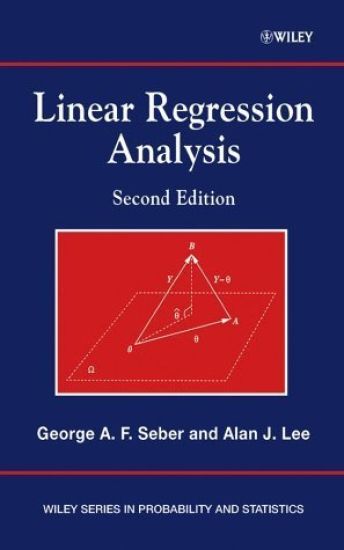
An extensive treatment of a key method in the statisticians toolbox For more than two decades, the First Edition of Linear Regression Analysis has been an authoritative resource for one of the most common methods of handling statistical data. There have been many advances in the field over the last twenty years, including the development of more efficient and accurate regression computer programs, new ways of fitting regressions, and new methods of model selection and prediction. Linear Regression Analysis, Second Edition, revises and expands this standard text, providing extensive coverage of state-of-the-art theory and applications of linear regression analysis. Requiring no specialized knowledge beyond a good grasp of matrix algebra and some acquaintance with straight-line regression and simple analysis of variance models, this new edition features: *Up-to-date accounts of computational methods and algorithms currently in use without getting entrenched in minor computing details *A careful and detailed survey of the research literature, making this a highly useful reference *Expanded coverage of diagnostics, and more discussion of methods of model fitting, model selection and prediction *More than 200 problems throughout the book plus outline solutions Concise, mathematically clear, and comprehensive, Linear Regression Analysis, Second Edition, serves as both a reliable reference for the practitioner and a valuable textbook for the student.
WILEY-INTERSCIENCE PAPERBACK SERIES The Wiley-Interscience Paperback Series consists of selected books that have been made more accessible to consumers in an effort to increase global appeal and general circulation. With these new unabridged softcover volumes, Wiley hopes to extend the lives of these works by making them available to future generations of statisticians, mathematicians, and scientists. From the Reviews of Nonlinear Regression "A very good book and an important one in that it is likely to become a standard reference for all interested in nonlinear regression; and I would imagine that any statistician concerned with nonlinear regression would want a copy on his shelves." The Statistician "Nonlinear Regression also includes a reference list of over 700 entries. The compilation of this material and cross-referencing of it is one of the most valuable aspects of the book. Nonlinear Regression can provide the researcher unfamiliar with a particular specialty area of nonlinear regression an introduction to that area of nonlinear regression and access to the appropriate references . . . Nonlinear Regression provides by far the broadest discussion of nonlinear regression models currently available and will be a valuable addition to the library of anyone interested in understanding and using such models including the statistical researcher." Mathematical Reviews
This comprehensive book, rich with applications, offers a quantitative framework for the analysis of the various capture-recapture models for open animal populations, while also addressing associated computational methods. The state of our wildlife populations provides a litmus test for the state of our environment, especially in light of global warming and the increasing pollution of our land, seas, and air. In addition to monitoring our food resources such as fisheries, we need to protect endangered species from the effects of human activities (e.g. rhinos, whales, or encroachments on the habitat of orangutans). Pests must be be controlled, whether insects or viruses, and we need to cope with growing feral populations such as opossums, rabbits, and pigs. Accordingly, we need to obtain information about a given population’s dynamics, concerning e.g. mortality, birth, growth, breeding, sex, and migration, and determine whether the respective population is increasing , static, or declining. There are many methods for obtaining population information, but the most useful (and most work-intensive) is generically known as “capture-recapture,” where we mark or tag a representative sample of individuals from the population and follow that sample over time using recaptures, resightings, or dead recoveries. Marks can be natural, such as stripes, fin profiles, and even DNA; or artificial, such as spots on insects. Attached tags can, for example, be simple bands or streamers, or more sophisticated variants such as radio and sonic transmitters. To estimate population parameters, sophisticated and complex mathematical models have been devised on the basis of recapture information and computer packages. This book addresses the analysis of such models. It is primarily intended for ecologists and wildlife managers who wish to apply the methods to the types of problems discussed above, though it will also benefit researchers and graduate students in ecology. Familiarity with basic statistical concepts is essential.
This comprehensive book, rich with applications, offers a quantitative framework for the analysis of the various capture-recapture models for open animal populations, while also addressing associated computational methods. The state of our wildlife populations provides a litmus test for the state of our environment, especially in light of global warming and the increasing pollution of our land, seas, and air. In addition to monitoring our food resources such as fisheries, we need to protect endangered species from the effects of human activities (e.g. rhinos, whales, or encroachments on the habitat of orangutans). Pests must be be controlled, whether insects or viruses, and we need to cope with growing feral populations such as opossums, rabbits, and pigs. Accordingly, we need to obtain information about a given population’s dynamics, concerning e.g. mortality, birth, growth, breeding, sex, and migration, and determine whether the respective population is increasing , static, or declining. There are many methods for obtaining population information, but the most useful (and most work-intensive) is generically known as “capture-recapture,” where we mark or tag a representative sample of individuals from the population and follow that sample over time using recaptures, resightings, or dead recoveries. Marks can be natural, such as stripes, fin profiles, and even DNA; or artificial, such as spots on insects. Attached tags can, for example, be simple bands or streamers, or more sophisticated variants such as radio and sonic transmitters. To estimate population parameters, sophisticated and complex mathematical models have been devised on the basis of recapture information and computer packages. This book addresses the analysis of such models. It is primarily intended for ecologists and wildlife managers who wish to apply the methods to the types of problems discussed above, though it will also benefit researchers and graduate students in ecology. Familiarity with basic statistical concepts is essential.
This comprehensive book covers a wide variety of methods for estimating the sizes and related parameters of closed populations. With the effect of climate change, and human territory invasion, we have seen huge species losses and a major biodiversity decline. Populations include plants, trees, various land and sea animals, and some human populations. With such a diversity of populations, an extensive variety of different methods are described with the collection of different types of data. For example, we have count data from plot sampling, which can also allow for incomplete detection. There is a large chapter on occupancy methods where a major interest is determining whether a particular species is present or not. Citizen and opportunistic survey data can also be incorporated. A related topic is species methods, where species richness and species' interactions are of interest. A variety of distance methods are discussed. One can use distances from points and lines, as wellas nearest neighbor distances. The applications are extensive, and include marine, acoustic, and aerial surveys, using multiple observers or detection devices. Line intercept measurements have a role to play such as, for example, estimating parameters relating to plant coverage. An increasingly important class of removal methods considers successive “removals" from a population, with physical removal or "removal" by capture-recapture of marked individuals. With the change-in-ratio method, removals are taken from two or more classes, e.g., males and females. Effort data used for removals can also be used. A very important method for estimating abundance is the use of capture-recapture data collected discretely or continuously and can be analysed using both frequency and Bayesian methods. Computational aspects of fitting Bayesian models are described. A related topic of growing interest is the use of spatial and camera methods. With the plethora of models there has been a corresponding development of various computational methods and packages, which are often mentioned throughout. Covariate data is being used more frequently, which can reduce the number of unknown parameters by using logistic and loglinear models. An important computational aspect is that of model selection methods. The book provides a useful list of over 1400 references.
Effort data used for removals can also be used. A very important method for estimating abundance is the use of capture-recapture data collected discretely or continuously and can be analysed using both frequency and Bayesian methods.
This book aims to provide an overview of some adaptive techniques used in estimating parameters for finite populations where the sampling at any stage depends on the sampling information obtained to date. The sample adapts to new information as it comes in. These methods are especially used for sparse and clustered populations.Written by two acknowledged experts in the field of adaptive sampling.
?Methods for making inferences from data about one or more probabilities and proportions are a fundamental part of a statistician’s toolbox and statistics courses. Unfortunately many of the quick, approximate methods currently taught have recently been found to be inappropriate. This monograph gives an up-to-date review of recent research on the topic and presents both exact methods and helpful approximations. Detailed theory is also presented for the different distributions involved, and can be used in a classroom setting. It will be useful for those teaching statistics at university level and for those involved in statistical consulting.
An in-depth study of the effects of alcohol on users, the community, the nation of New Zealand, and globally - everything you need to know about alcohol. This compendium of verified data on alcohol examines nearly every aspect of its involvement in our lives, our community, our country, and globally.Alcohol: a dangerous love affair is written for anyone interested in alcohol, as even moderate drinkers are at a health risk. The data available is enormous, but we are left with the impression that our political peers have conveniently ignored this elephant in the room. This compendium of verified data on alcohol examines nearly every aspect of its involvement in our lives, our community, our country, and globally.We can learn from how other countries endeavour to legislate for alcohol control. Suggested legislation is put forward by the New Zealand Medical Association.Alcohol is highly addictive and can destroy a person's life. The nature of the addiction is described, and how it affects the brain. Some tips for low risk drinking are given as well as strategies for controlling alcohol consumption.
A comprehensive handbook covering the major issues a counselor, chaplain or psychotherapist might meet in the counseling room.Counseling Issues is a practical handbook based on sound psychological principles. It provides a wealth of ideas for counseling and for structuring a series of counseling sessions. It is particularly accessible to the inexperienced counselor or psychotherapist who is looking for guidance on a particular topic without having to read a whole book on the subject, or read something more technical.Basic emotional issues such as anger, shame, anxiety, stress, grief, depression, anxiety disorders, suicide risk--and behavioural issues like addiction, phobias and compulsive behaviours such as self-harm and obsessive compulsive disorder are addressed. There are chapters on relationship issues such as divorce, abuse of various kinds, dysfunctional relationships, personality disorders, adoption, blended families, and strategies for couple counseling.A biblical viewpoint is added at the end of each chapter for the Christian counselor and pastor. There is an extensive list of about 500 references along with Internet references, providing a rich resource for further reading.
Essential keys if you have sleep problems, or know someone struggling with sleep issues. Also a practical resource for medical professionals and counsellors.Sleep: Are You Getting Enough? covers all aspects of sleep, including what we know scientifically about sleep. It looks at the things to avoid when preparing for or trying to sleep-and what can be done to promote a healthful sleep. - The effects of sleep deprivation - Why is sleep important - The nature of insomnia- Depression and sleep - Strategies for sleep - Snoring - Sleep apnea and other disorders
Many people today believe that Christianity will not stand up to a scientific or intellectual investigation, and that science has all the answers. Such an attitude shows an ignorance of the wealth of available philosophical arguments and scientific information that Dr Seber taps into in this book. Initially he shows that mathematics and science are limited in what they can prove in spite of modern advances. He then summarises his material using basic questions as eleven chapter headings: What Do Science and Mathematics Prove? Is There a God? Is There a Spiritual Dimension? Do We Have Free Will? Is the Bible Reliable? Who is Jesus? Do Miracles Occur? Why Does God Allow Suffering and Evil? Is Christianity a Blessing or a Curse to Society? What About Evolution? How Do We Get to Know God? The reader may have other questions and a number are considered within each chapter, such as problems with philosophical materialism and atheism. He draws his material from many sources, including statistics, physics, cosmology, genetics, philosophy, history, biochemistry, theology, psychology, archaeology and biology. Comparatively new subjects like epigenetics, chaos theory and quantum mechanics, that many people are not aware of, are brought into the picture. These topics change our thinking about reality.
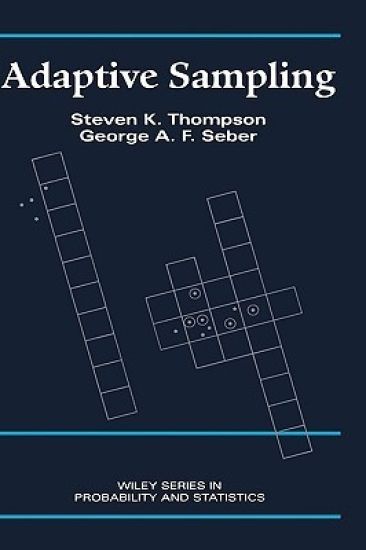
Offering a viable solution to the long-standing problem of estimating the abundance of rare, clustered populations, adaptive sampling designs are rapidly gaining prominence in the natural and social sciences as well as in other fields with inherently difficult sampling situations. In marked contrast to conventional sampling designs, in which the entire sample of units to be observed is fixed prior to the survey, adaptive sampling strategies allow for increased sampling intensity depending upon observations made during the survey. For example, in a survey to assess the abundance of a rare animal species, neighboring sites may be added to the sample whenever the species is encountered during the survey. In an epidemiological survey of a contagious or genetically linked disease, sampling intensity may be increased whenever prevalence of the disease is encountered. Written by two acknowledged experts in this emerging field, this book offers researchers their first comprehensive introduction to adaptive sampling. An ideal reference for statisticians conducting research in survey designs and spatial statistics as well as researchers working in the environmental, ecological, public health, and biomedical sciences. Adaptive Sampling: *Provides a comprehensive, fully integrated introduction to adaptive sampling theory and practice *Describes recent research findings *Introduces readers to a wide range of adaptive sampling strategies and techniques *Includes numerous real-world examples from environmental pollution studies, surveys of rare animal and plant species, studies of contagious diseases, marketing surveys, mineral and fossil-fuel assessments, and more
This unique book combines lucid and engaging exposition, graphic and poignantly applied examples, and realistic exercises to take readers beyond the mechanics of statistical techniques. The result is a journey into the realm of practical data analysis and inference-based problem solving.
Art historian George A. Kubler (1912-1996) was a foundational scholar of ancient American art and archaeology as well as Spanish and Portuguese architecture. During over five decades at Yale University, he published seventeen books that included innovative monographs, major works of synthesis, and an influential theoretical treatise. In this biography, Thomas F. Reese analyzes the early formation, broad career, and writings of Kubler, casting nuanced light on the origins and development of his thinking. Notable in Reese's discussion and contextualization of Kubler's writings is a revealing history and analysis of his Shape of Time-a book so influential to students, scholars, artists, and curious readers in multiple disciplines that it has been continuously in print since 1962. Reese reveals how pivotal its ideas were in Kubler's own thinking: rather than focusing on problems of form as an ordering principle, he increasingly came to sequence works by how they communicate meaning. The author demonstrates how Kubler, who professed to have little interest in theory, devoted himself to the craft of art history, discovering and charting the rules that guided the propagation of structure and significance through time.