The 18th century was a wealth of knowledge, exploration and rapidly growing technology and expanding record-keeping made possible by advances in the printing press. In its determination to preserve the century of revolution, Gale initiated a revolution of its own: digitization of epic proportions to preserve these invaluable works in the largest archive of its kind. Now for the first time these high-quality digital copies of original 18th century manuscripts are available in print, making them highly accessible to libraries, undergraduate students, and independent scholars.The Age of Enlightenment profoundly enriched religious and philosophical understanding and continues to influence present-day thinking. Works collected here include masterpieces by David Hume, Immanuel Kant, and Jean-Jacques Rousseau, as well as religious sermons and moral debates on the issues of the day, such as the slave trade. The Age of Reason saw conflict between Protestantism and Catholicism transformed into one between faith and logic -- a debate that continues in the twenty-first century.++++The below data was compiled from various identification fields in the bibliographic record of this title. This data is provided as an additional tool in helping to insure edition identification: ++++British LibraryT077148With a half-title and a leaf of errata before the text.Dublin: printed by P. Byrne, 1787. vi, 2],56p.; 8
The Works of His Grace George Villiers, duke of Buckingham - Vol. I is an unchanged, high-quality reprint of the original edition of 1775. Hansebooks is editor of the literature on different topic areas such as research and science, travel and expeditions, cooking and nutrition, medicine, and other genres. As a publisher we focus on the preservation of historical literature. Many works of historical writers and scientists are available today as antiques only. Hansebooks newly publishes these books and contributes to the preservation of literature which has become rare and historical knowledge for the future.
This work has been selected by scholars as being culturally important and is part of the knowledge base of civilization as we know it.This work is in the public domain in the United States of America, and possibly other nations. Within the United States, you may freely copy and distribute this work, as no entity (individual or corporate) has a copyright on the body of the work.Scholars believe, and we concur, that this work is important enough to be preserved, reproduced, and made generally available to the public. To ensure a quality reading experience, this work has been proofread and republished using a format that seamlessly blends the original graphical elements with text in an easy-to-read typeface.We appreciate your support of the preservation process, and thank you for being an important part of keeping this knowledge alive and relevant.
This work has been selected by scholars as being culturally important and is part of the knowledge base of civilization as we know it.This work is in the public domain in the United States of America, and possibly other nations. Within the United States, you may freely copy and distribute this work, as no entity (individual or corporate) has a copyright on the body of the work.Scholars believe, and we concur, that this work is important enough to be preserved, reproduced, and made generally available to the public. To ensure a quality reading experience, this work has been proofread and republished using a format that seamlessly blends the original graphical elements with text in an easy-to-read typeface.We appreciate your support of the preservation process, and thank you for being an important part of keeping this knowledge alive and relevant.
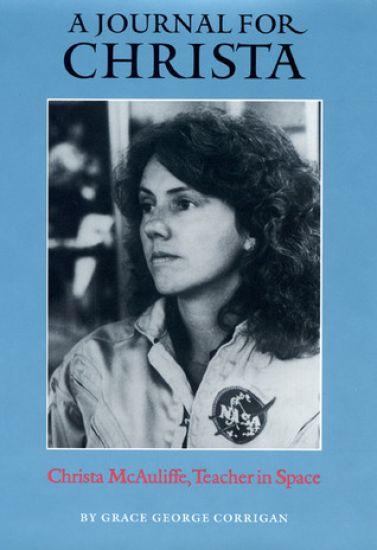
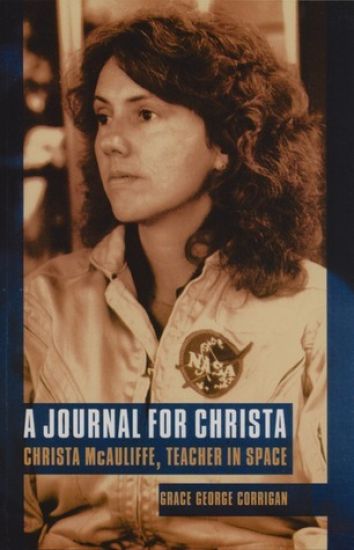
Most people remember where they were when John F. Kennedy was assassinated, just as they remember how they felt when humans first set foot on the moon. Elements of both reactions are present in the story of Christa McAuliffe, the energetic young schoolteacher chosen to be the first civilian to go into space—and who died with her astronaut companions in the Challenger explosion of January 28, 1986. In this straightforward memoir, McAuliffe's mother, Grace George Corrigan, makes it very clear just who and what the nation lost in the Challenger tragedy. The product of family history, notes and letters, and the commemorative efforts to honor her daughter, A Journal for Christa provides a very personal biography of a remarkable young woman.Christa McAuliffe's story is solidly American—the eldest child of a close Catholic Massachusetts family, and a dedicated Girl Scout, she came of age in the turbulent sixties and early seventies and became a schoolteacher and mother. Generous, outgoing, funny, and beloved by her many friends and students, she was little known beyond her personal circle until selected by NASA to be the first civilian sent on a space mission as the "Teacher in Space." Whether or not the selection was a publicity stunt, Christa McAuliffe may have proved more than NASA bargained for. Honest, direct, and outspoken, she was impatient with the stultifying ceremonies of the government bureaucracy and did not hesitate to speak out on behalf of the constituency she felt she had been selected to represent: American public schoolteachers and the children in their classrooms.
Most people remember where they were when John F. Kennedy was assassinated, just as they remember how they felt when humans first set foot on the moon. Elements of both reactions are present in the story of Christa McAuliffe, the energetic young schoolteacher chosen to be the first civilian to go into space—and who died with her astronaut companions in the Challenger explosion of January 28, 1986. In this straightforward memoir, McAuliffe's mother, Grace George Corrigan, makes it very clear just who and what the nation lost in the Challenger tragedy. The product of family history, notes and letters, and the commemorative efforts to honor her daughter, A Journal for Christa provides a very personal biography of a remarkable young woman.Christa McAuliffe's story is solidly American—the eldest child of a close Catholic Massachusetts family, and a dedicated Girl Scout, she came of age in the turbulent sixties and early seventies and became a schoolteacher and mother. Generous, outgoing, funny, and beloved by her many friends and students, she was little known beyond her personal circle until selected by NASA to be the first civilian sent on a space mission as the "Teacher in Space." Whether or not the selection was a publicity stunt, Christa McAuliffe may have proved more than NASA bargained for. Honest, direct, and outspoken, she was impatient with the stultifying ceremonies of the government bureaucracy and did not hesitate to speak out on behalf of the constituency she felt she had been selected to represent: American public schoolteachers and the children in their classrooms.
This newly revised edition of Teacher in Space tells the story of how McAuliffe graduated from her role as a much-loved high school teacher to occupying a seat on the veteran orbiter’s tenth and last flight into space.On January 28, 1986, NASA space shuttle orbiter Challenger lifted off into the clear blue skies over Florida on mission STS-51L, carrying a crew of seven, including teacher Christa McAuliffe. Just seventy-three seconds into the launch, a massive explosion tore Challenger apart. McAuliffe’s dream was to carry out science projects while in orbit around the earth that were to be telecast live to school students across the United States. Her dream came to a sudden and tragic end that terrible day. Nevertheless, that ambition to educate from space remained an inspiration to many and, in her name and those of the Challenger crew, manifested itself in the establishment of hundreds of youth education programs and institutes of learning across America and around the world. Teacher in Space is a remarkable story of renewed faith, cooperation, and hope for the future and of a dedicated and much-loved teacher who came to symbolize the best of human achievement.
The 18th century was a wealth of knowledge, exploration and rapidly growing technology and expanding record-keeping made possible by advances in the printing press. In its determination to preserve the century of revolution, Gale initiated a revolution of its own: digitization of epic proportions to preserve these invaluable works in the largest archive of its kind. Now for the first time these high-quality digital copies of original 18th century manuscripts are available in print, making them highly accessible to libraries, undergraduate students, and independent scholars.The Age of Enlightenment profoundly enriched religious and philosophical understanding and continues to influence present-day thinking. Works collected here include masterpieces by David Hume, Immanuel Kant, and Jean-Jacques Rousseau, as well as religious sermons and moral debates on the issues of the day, such as the slave trade. The Age of Reason saw conflict between Protestantism and Catholicism transformed into one between faith and logic -- a debate that continues in the twenty-first century.++++The below data was compiled from various identification fields in the bibliographic record of this title. This data is provided as an additional tool in helping to insure edition identification: ++++British LibraryT039309Also issued as part of: 'Eight sermons. .. By the reverend Mr. George Whitefield.' Glasgow. 1741.Glasgow: printed; and sold by Robert Smith; and by other booksellers, 1741. 32p.; 8
The 18th century was a wealth of knowledge, exploration and rapidly growing technology and expanding record-keeping made possible by advances in the printing press. In its determination to preserve the century of revolution, Gale initiated a revolution of its own: digitization of epic proportions to preserve these invaluable works in the largest archive of its kind. Now for the first time these high-quality digital copies of original 18th century manuscripts are available in print, making them highly accessible to libraries, undergraduate students, and independent scholars.Western literary study flows out of eighteenth-century works by Alexander Pope, Daniel Defoe, Henry Fielding, Frances Burney, Denis Diderot, Johann Gottfried Herder, Johann Wolfgang von Goethe, and others. Experience the birth of the modern novel, or compare the development of language using dictionaries and grammar discourses. ++++The below data was compiled from various identification fields in the bibliographic record of this title. This data is provided as an additional tool in helping to insure edition identification: ++++British LibraryT121753In: 'A select collection of English plays. In six volumes. Vol.IV' Edinburgh, 1755. Horizontal chain lines.Edinburgh: printed for G. Hamilton and J. Balfour, 1755. 82, 2]p.; 8
The 18th century was a wealth of knowledge, exploration and rapidly growing technology and expanding record-keeping made possible by advances in the printing press. In its determination to preserve the century of revolution, Gale initiated a revolution of its own: digitization of epic proportions to preserve these invaluable works in the largest archive of its kind. Now for the first time these high-quality digital copies of original 18th century manuscripts are available in print, making them highly accessible to libraries, undergraduate students, and independent scholars.Western literary study flows out of eighteenth-century works by Alexander Pope, Daniel Defoe, Henry Fielding, Frances Burney, Denis Diderot, Johann Gottfried Herder, Johann Wolfgang von Goethe, and others. Experience the birth of the modern novel, or compare the development of language using dictionaries and grammar discourses. ++++The below data was compiled from various identification fields in the bibliographic record of this title. This data is provided as an additional tool in helping to insure edition identification: ++++British LibraryT121753In: 'A select collection of English plays. In six volumes. Vol.IV' Edinburgh, 1755. Horizontal chain lines.Edinburgh: printed for G. Hamilton and J. Balfour, 1755. 82, 2]p.; 8
This work has been selected by scholars as being culturally important, and is part of the knowledge base of civilization as we know it. This work was reproduced from the original artifact, and remains as true to the original work as possible. Therefore, you will see the original copyright references, library stamps (as most of these works have been housed in our most important libraries around the world), and other notations in the work.This work is in the public domain in the United States of America, and possibly other nations. Within the United States, you may freely copy and distribute this work, as no entity (individual or corporate) has a copyright on the body of the work.As a reproduction of a historical artifact, this work may contain missing or blurred pages, poor pictures, errant marks, etc. Scholars believe, and we concur, that this work is important enough to be preserved, reproduced, and made generally available to the public. We appreciate your support of the preservation process, and thank you for being an important part of keeping this knowledge alive and relevant.












![Black Gowns and Red Coats, or Oxford in 1834. a Satire, in Six Parts. Addressed to His Grace the Duke of Wellington. [By George Cox.]](/covers/9781241109714.jpg)