Kirjojen hintavertailu. Mukana 11 627 067 kirjaa ja 12 kauppaa.

Kirjahaku

Etsi kirjoja tekijän nimen, kirjan nimen tai ISBN:n perusteella.

1000 tulosta hakusanalla George Grant

Collected Works of George Grant

Collected Works of George Grant

George Grant

University of Toronto Press
2002
sidottu
During his lifetime, George Grant influenced a broad cross-section of Canadians, urging them to think more deeply about matters of social justice and individual responsibility. He wrote on subjects as diverse as technology, abortion, Canadian politics and nationalism, and the war in Vietnam, and was claimed equally by rightist and leftist causes. Now, more than a decade after his death, George Grant's writings continue to stimulate, challenge, and inspire. Grant's legacy includes six books and more than two hundred articles, as well as numerous broadcast transcripts, extensive correspondence, and a wealth of unpublished lectures, essays, and notes. In this volume, Arthur Davis has collected all the important material from the 1950s when Grant did his first teaching and writing at Dalhousie University. Through this projected eight-volume series, Grant's published and unpublished writings, including his complete correspondence, will be brought together for the first time. The texts are annotated, and each volume includes an introduction to the period that it covers. The series will not only make it possible to see the whole pattern of Grant's thought, but will also invite a reconsideration of the nature and importance of his work. George Grant is one of the most important Canadian philosophers of the later twentieth century, and his collected writings are a significant contribution to Canadian political thought and Canadian history.
George Grant

George Grant

Hugh Donald Forbes

University of Toronto Press
2007
sidottu
George Grant (1918-1988) is widely regarded as one of Canada's most influential philosophers and political theorists. His best-known work, Lament for a Nation (1965), presented a radical reinterpretation of Canadian history and inspired a surge of nationalist sentiment across the country. Along with Grant's other books, it addressed the major cultural shifts and dilemmas of our age, and introduced several generations of students to the basic questions of political philosophy. This study aims to guide the reader toward a clearer understanding of Grant's thought. Focusing on his six short books and some of his most significant articles and speeches, Hugh Donald Forbes provides both an introduction to and an overview of Grant's career and his many contributions to the fields of political science, philosophy, religion, and Canadian studies. Throughout Forbes sheds light on some of Grant's more contradictory and complex ideas, and provides an assessment of his impact on the Canadian political and cultural landscape. Forbes also relates Grant's work to that of three disparate and controversial European thinkers - Martin Heidegger, Leo Strauss, and Simone Weil - providing contexts and comparisons outside of the strictly Canadian framework in which he is normally situated. Comprehensive and lucidly written, George Grant: A Guide to His Thought is an invaluable resource for students, general readers, and academic specialists alike.
George Grant

George Grant

George Grant

University of Toronto Press
1996
pokkari
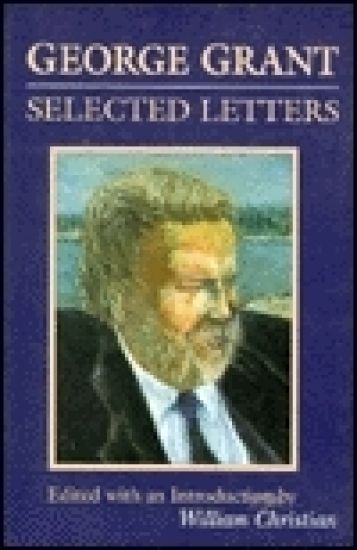
George Grant was one of Canada's foremost political and religious thinkers. In his published writings, Grant was a careful and guarded writer, but in his letters he was frank and spontaneous, expressing ideas and opinions that he hesitated to convey in print. Grant's letters are remarkable for their continuity – about twelve hundred letters survive from 1923 to his death in 1988 – and for their quality. For more than fifty years, he favoured his correspondents with his observations about international relations, Canadian politics, religion, literature, and philosophy. William Christian has selected some three hundred letters, postcards, telegrams, and journal entries which reveal much about Grant – both the troubled man and the daring thinker. His correspondence begins with the letters from his early years at Upper Canada College and his undergraduate days at Queen's University, followed by letters from London during the Second World War, when he struggled with the conflict between his pacifism and his sense of duty. The middle section includes letters that describe his life at Dalhousie in the 1950s, his resignation from York University, and his hopes to create in the department of religion at McMaster University a kind of fifth column that would preserve a university within the multiversities he thought had taken over higher education in Canada. The later letters feature his remorseless attacks on what he felt were the perfidies of Trudeau during his long tenure as prime minister.
The George Grant Reader

The George Grant Reader

George Grant

University of Toronto Press
1998
pokkari
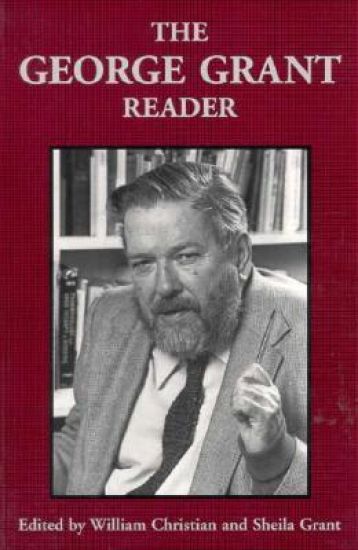
Called the most forceful voice of philosophic radicalism that Canada has so far produced, George Grant was a prolific writer, engaged by subjects ranging from Canadian politics to ancient philosophy. The George Grant Reader is the first book to bring together in one volume a comprehensive selection of his work, allowing readers to sample the whole range of his interests. The reader includes selections from all phases of Grant's career, beginning with The Empire: Yes or No? (1945) and ending with an article on Heidegger, left unfinished at the time of his death in 1988. Forty-six essays, grouped into six sections, encompass his views on politics, morality, philosophy, education, technology, faith, and love. Also featured are Grant's writings on those who most influenced his thought, ranging from St Augustine to Karl Marx and Simone Weil. A number of his more disturbing essays are also included such as his controversial writings on abortion. The editors' substantial introduction places the articles in the wider context of Grant's life and thought. This long-overdue collection contains classic works, little-known masterpieces, and previously unpublished material. The volume is an ideal starting point for those who have never read Grant as well as an indispensable reference for Grant specialists.
George Grant

George Grant

Hugh Donald Forbes

University of Toronto Press
2007
pokkari
George Grant (1918-1988) is widely regarded as one of Canada's most influential philosophers and political theorists. His best-known work, Lament for a Nation (1965), presented a radical reinterpretation of Canadian history and inspired a surge of nationalist sentiment across the country. Along with Grant's other books, it addressed the major cultural shifts and dilemmas of our age, and introduced several generations of students to the basic questions of political philosophy. This study aims to guide the reader toward a clearer understanding of Grant's thought. Focusing on his six short books and some of his most significant articles and speeches, Hugh Donald Forbes provides both an introduction to and an overview of Grant's career and his many contributions to the fields of political science, philosophy, religion, and Canadian studies. Throughout Forbes sheds light on some of Grant's more contradictory and complex ideas, and provides an assessment of his impact on the Canadian political and cultural landscape. Forbes also relates Grant's work to that of three disparate and controversial European thinkers - Martin Heidegger, Leo Strauss, and Simone Weil - providing contexts and comparisons outside of the strictly Canadian framework in which he is normally situated. Comprehensive and lucidly written, George Grant: A Guide to His Thought is an invaluable resource for students, general readers, and academic specialists alike.
Collected Works of George Grant

Collected Works of George Grant

George Grant

University of Toronto Press
2000
pokkari
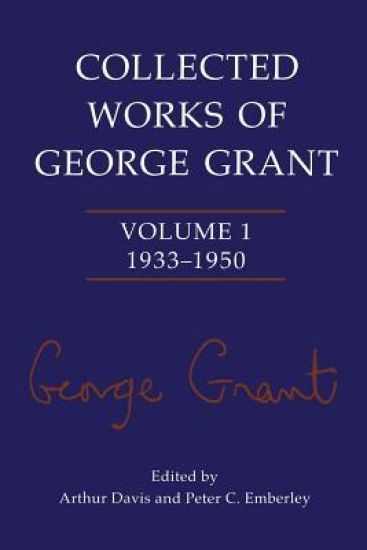
More than a decade after his death, George Grant continues to stimulate, challenge, and inspire. During his lifetime he influenced a broad cross-section of Canadians, urging them to think more deeply about matters of social justice and individual responsibility. He wrote on subjects as diverse as technology, abortion, Canadian politics and nationalism, and the war in Vietnam, and was claimed equally by rightist and leftist causes. Grant's legacy includes six books and more than two hundred articles, as well as numerous broadcast transcripts, extensive correspondence, and a wealth of unpublished lectures, essays, and notes. In this projected eight-volume series, Grant's published and unpublished writings, including his complete correspondence, will be brought together for the first time. The texts are annotated, and each volume includes an introduction to the period that it covers. The series will not only make it possible to see the whole pattern of Grant's thought, but will also invite a reconsideration of the nature and importance of his work. Volume I covers Grant's intellectual development through his student years. Included are his early reviews, a brief journal written as he recovered from tuberculosis in 1942, and his earliest social and political writings about Canadian and international affairs. The most important of Grant's formative years were those spent at Oxford after the war, culminating in the writing of his DPhil thesis on the Scottish philosopher John Oman. In this dissertation, published here in full, we see the main themes of Grant's thought worked out for the first time.
George Grant and the Theology of the Cross

George Grant and the Theology of the Cross

Harris Athanasiadis

University of Toronto Press
2001
sidottu
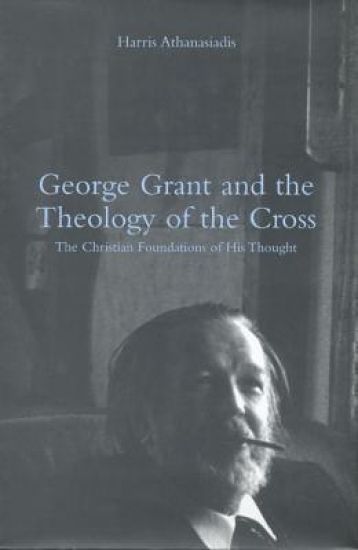
George Grant is considered by many to be Canada's foremost political philosopher. But while his sweeping criticisms of technological globalization may be well known, the religious passion that informed his thought has been largely obscured from public view. In this book, Harris Athanasiadis shows Grant to be not just a philosopher but a mystic, not just an intellectual but a man of faith. Although Grant did not write about his faith to any great extent, he claimed that it was the inspirational centre of everything he thought and wrote. As this book reveals, beneath the philosophical, social, political, ethical, national, and moral issues that Grant tackled throughout his career was a fundamental concern with theodicy - the problem of faith in God in a world of conflict, suffering, and tragedy. Athanasiadis argues that Grant's thinking was driven by a passion to see God in spite of all that might contradict such a vision. He illustrates Grant's profound engagement with what Luther described as 'the theology of the cross,' and goes on to show how this theological orientation developed significance for Grant as he struggled with various thinkers and intellectual movements. One of his most important influences was the philosopher/activist/mystic Simone Weil, who helped Grant find language through which to articulate a theology of the cross within a twentieth-century secular North American context. This book explicates the theology that drove Grant's intellectual quest, thus providing a key to his essentially mystical nature. The author makes a compelling case that the philosopher was at heart a theologian.
George Grant and the Subversion of Modernity
George Grant's mystique as a public philosopher is due in part to the seemingly contradictory political stances he took through the years. His opposition to the Vietnam war and his linking of liberalism with technological progress and imperialism brought him favour among the political left during the 1960s. Then, in the following decade, his opposition to abortion earned him allies on the political right, despite his rejection of limitless capitalist growth and free trade with the US. This collection of original essays reveals the complex philosophic, artistic, and religious sources underlying Grant's public positions of nationalism, pacifism, and conservatism. The collection begins with Grant's previously unpublished writing on Céline. This is a bold and vigorous Grant, writing on a topic about which he is passionate and deeply informed. Grant's own work is followed by two pieces that explore his devotion to Céline, Nietzsche, Heidegger, Weil, and Strauss also receive special attention here. Many of the essays draw on manuscripts and notes left unpublished by Grant, thus contributing new perspectives to the ongoing discussion of his work. The focus of this book is the unknown George Grant, namely, the philosophic, religious, and artistic inspiration behind his well-known public positions. Here we discover the great modern thinkers who animated Grant, and whose writings occupied him for much of his life.
Reading George Grant in the 21st Century

Reading George Grant in the 21st Century

Springer International Publishing AG
2024
sidottu
George Grant (1918-1988) was one of Canada’s foremost public philosophers. Though his thought arose out of reflection on the history of political philosophy, pressing political concerns were never far from view. He was particularly adept at locating the causes of political developments in philosophical movements that were centuries in the making. This book reassesses his ideas in light of philosophical and political developments of recent decades, including the resurgence of nationalism, criticisms of globalization and technocracy, and the ideological realignments having a particularly noticeable effect on right-wing politics. The contemporary reader of Grant is thus able to reflect on his broader criticisms of modernity from within a slightly different historical articulation of modernity. Though George Grant died in 1988, the philosophical themes in his work remain relevant into the 21st century.
Reading George Grant in the 21st Century

Reading George Grant in the 21st Century

Springer International Publishing AG
2025
nidottu
George Grant (1918-1988) was one of Canada’s foremost public philosophers. Though his thought arose out of reflection on the history of political philosophy, pressing political concerns were never far from view. He was particularly adept at locating the causes of political developments in philosophical movements that were centuries in the making. This book reassesses his ideas in light of philosophical and political developments of recent decades, including the resurgence of nationalism, criticisms of globalization and technocracy, and the ideological realignments having a particularly noticeable effect on right-wing politics. The contemporary reader of Grant is thus able to reflect on his broader criticisms of modernity from within a slightly different historical articulation of modernity. Though George Grant died in 1988, the philosophical themes in his work remain relevant into the 21st century.
Collected Works of George Grant

Collected Works of George Grant

Arthur Davis; Henry Roper Roper; Sheila Grant

University of Toronto Press
2009
sidottu
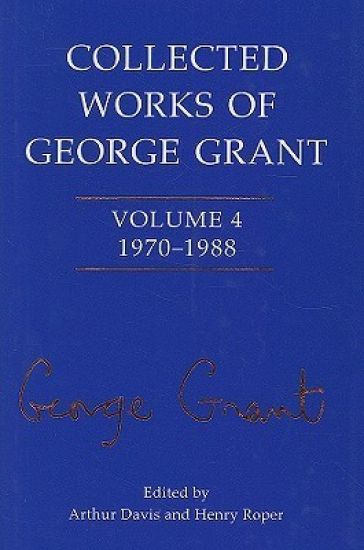
George Grant (1918-88) has often been called Canada's greatest political philosopher and his work continues to influence the country's political, social, and cultural discourse and institutions. The fourth and final volume of the Collected Works of George Grant contains his writings from the last period of his life and includes unpublished material such as lectures, interviews, and excerpts from his notebooks. With comprehensive annotations for his articles, reviews, and the three books he published during this period - Time as History, English-Speaking Justice, and Technology and Justice - the volume also contains his writings on Nietzsche, Heidegger Simone Weil, and Céline that were central to this phase of his thought. Volume 4 reveals his engagement with technology and the nature of technological society that is as insightful today as during Grant's lifetime and is lasting proof of his legacy. Arthur Davis is Associate Professor in the School of Social Sciences, Atkinson Faculty of Liberal and Professional Studies, York University. During the 1950's, he studied undergraduate philosophy with George Grant.
Collected Works of George Grant

Collected Works of George Grant

Arthur Davis

UNIVERSITY OF TORONTO PRESS
2005
pokkari
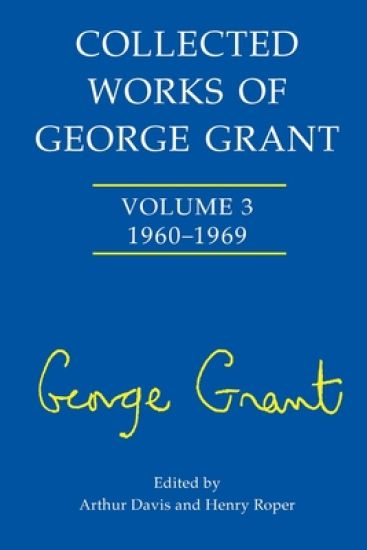
George Grant (1918-1988) has been called Canada's greatest political philosopher. During his lifetime, he encouraged Canadians to think more deeply about matters of social justice and individual responsibility, writing on subjects as diverse as war, technology, abortion, and Canadian politics. His work continues to this day to stimulate, challenge, and inspire.Grant's legacy includes six books, more than two hundred articles, as well as broadcast transcripts, correspondence, and unpublished material. In this, the third volume of the Collected Works of George Grant, editors Arthur Davis and Henry Roper have gathered together Grant's work from the 1960s, when he was a professor at Hamilton, Ontario's McMaster University. This is the era when Grant produced his best-known works including Lament for a Nation (1965) and Technology and Empire (1969), both of which are included in this volume. The 1960s also allowed Grant to comment on some of the massive cultural shifts that were taking place at the time and on major events like the war in Vietnam.As with the previous volumes in the Collected Works, the text is fully annotated and includes an introduction to the period it covers. The series as a whole strives to make evident the pattern of Grant's thought, but also invites a reconsideration of the nature and significance of his work. His collected writings are a valuable contribution to Canadian political thought and intellectual history.
Lament for a Nation

Lament for a Nation

George Grant

McGill-Queen's University Press
2005
nidottu
Canadians have relatively few binding national myths, but one of the most pervasive and enduring is the conviction that the country is doomed. In 1965 George Grant passionately defended Canadian identity by asking fundamental questions about the meaning and future of Canada's political existence. In Lament for a Nation he argued that Canada - immense and underpopulated, defined in part by the border, history, and culture it shares with the United States, and torn by conflicting loyalties to Britain, Quebec, and America - had ceased to exist as a sovereign state. Lament for a Nation became the seminal work in Canadian political thought and Grant became known as the father of Canadian nationalism. This edition includes a major introduction by Andrew Potter that explores Grant's arguments in the context of changes in ethnic diversity, free trade, globalization, post-modernism, and 9/11. Potter discusses the shifting uses of the terms "liberal" and "conservative" and closes with a look at the current state of Canadian nationalism.
Philosophy in the Mass Age

Philosophy in the Mass Age

George Grant

University of Toronto Press
1995
pokkari
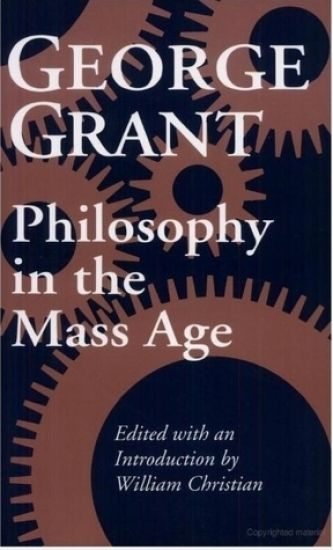
When George Grant delivered Philosophy in the Mass Age over the CBC radio network early in 1958, it was an immediate hit. He criticized the Western notion of progress and affirmed the role of philosophy in teaching and assisting people in understanding. Robert Fulford described it then as stunningly effective: 'Grant's talks, obviously the product of a supple and curious mind, were models of their type - learned but clear, original but persuasive, highly personal but intensely communicative.' Grant's analysis of lhe paradox of modernity is no less intriguing today. The need to reconcile freedom with the moral law 'of which we do not take the measure, but by which we are measured and defined' is still an issue in our times. William Christian has restored the text of the original 1959 edition. He has supplemented it with material from the broadcast version of the lectures, including a ninth lecture, not previously published, in which Grant responded to listeners' questions. The controversial introduction to the 1966 edition appears as an appendix.
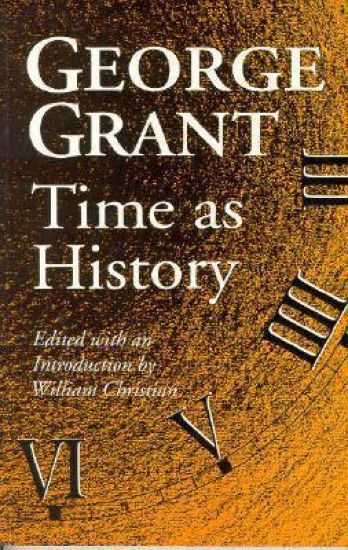
Time As History

Time As History

George Grant

University of Toronto Press
1995
pokkari
In Time as History, a collection of his 1969 Massey lectures, George Grant reviews the thought of Nietzsche and concludes that the conception of time as history is not one in which it is possible to live a fully human life. Grant was the first Canadian philosopher to pay serious attention to the thought of Friedrich Nietzsche, and his analysis of the German philosopher forms the central focus of the lectures. William Christian has restored material from the broadcast version of the lectures. His introduction places Grant's interest in Nietzsche in the perspective of Grant's developing analysis of technology and draws extensively on Grant's unpublished notebooks and lectures.
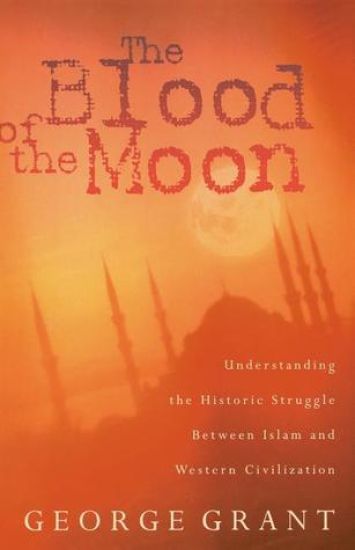
The Blood of the Moon

The Blood of the Moon

George Grant

Thomas Nelson Publishers
2008
nidottu
"Allah has bought from the Umma-the true believers of Islam-their selves and their substance in return for Paradise; they fight in the way of Allah, killing and being killed. Their promise is written in the blood of the moon." -From the Koran, chap. 9, v. 112The conflict between Islam and the West existed long before the destruction of the World Trade Center and the other events that recently touched America. It goes back hundreds, even thousands, of years. Yet the struggle is upon us now as never before. In this well-reasoned, accessible book, Middle East expert George Grant answers the troubling questions on many believers' minds. Who are the followers of Islam, and what do they believe? What could have motivated those who carried out the acts of terror on September 11? Why has there been tension between Islam and the West for centuries? What are the true meanings of terms such as Ji'had, Intifada, and Dhimma? And is there any hope for peace? The call upon believers now-as always-is to prepare and equip ourselves so that we may stand fast. The Blood of the Moon will help readers better understand the history of Islam and its struggle with the Western world, as well as how Christians can share the message of salvation through Jesus Christ with the followers of Allah.