
Kirjahaku
Etsi kirjoja tekijän nimen, kirjan nimen tai ISBN:n perusteella.
1000 tulosta hakusanalla George H. S. Singer

Supporting Families of Children With Developmental Disabilities
Mian Wang; George H. S. Singer
Oxford University Press Inc
2016
sidottu
Supporting Families of Children with Developmental Disabilities: Evidence-based and Emerging Practices provides a comprehensive review of the empirical evidence on interventions for families of individuals - ranging from post-preschool age to adulthood - with developmental disabilities. The book presents both narrative and meta-analytic syntheses of a large body of research to evaluate which interventions meet contemporary standards as evidence based practices. The body of studies reviewed in the book has not previously been gathered into one volume, nor evaluated as a whole for the quality and extent of the evidence. The research is presented in the context of contemporary social policy and practices aimed at maximizing the development of children with disabilities while increasing the quality of life of their families. The criteria and procedures followed for identifying, reviewing, evaluating, and categorizing the studies are articulated in line with other major professional standards. Individual chapters focus on several different schools of practice, including: group psycho-educational interventions, behavioral parent training, multiple component interventions, supportive interventions for families of children with autism, home- and school-based practices, self-help groups, and advocacy programs. Supporting Families of Children with Developmental Disabilities is an important tool for moving the disability field forward for future research, practice, and social policy.

Otis Skinner Presenting George H. Boker's Tragedy of Francesca Da Rimini
George Henry Boker
Kessinger Pub
2006
pokkari

Otis Skinner Presenting George H. Boker's Tragedy of Francesca Da Rimini: With an Appreciation by Lyman B. Glover
George Henry Boker
Literary Licensing, LLC
2014
nidottu
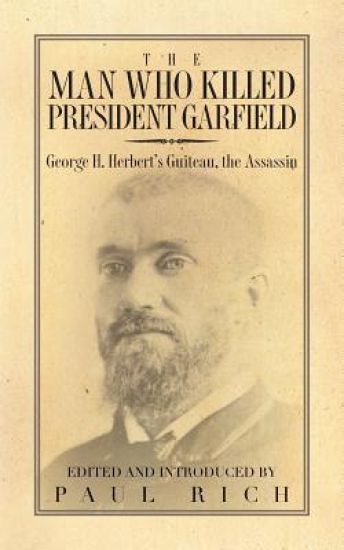
The Man who Killed President Garfield: George H. Herbert's Guiteau, the Assassin
George H. Herbert
Westphalia Press
2013
nidottu
Unveiling Of Ward's Equestrian Statue Of Major-General George H. Thomas (1879)
Stanley Matthews
KESSINGER PUBLISHING, LLC
2010
sidottu

Framingham's Civil War Hero: The Life of General George H. Gordon
Frederic a. Wallace
History Press Library Editions
2011
sidottu

Winning the West: The Lives and Legacies of Ulysses S. Grant, William Tecumseh Sherman, and George H. Thomas
Charles River
Createspace Independent Publishing Platform
2013
nidottu
*Weaves together each general's life and career into one chronological and entertaining narrative. *Includes pictures of the generals and important people, places, and events in their lives. *Includes an original introduction for each general. *Includes maps of some of the generals' most important battles. *Includes an analysis of each general's legacy. *Includes bibliographies on each general for further reading. Despite the fact that the Civil War began over 150 years ago, Americans continue to be fascinated by the Civil War icons who made the difference between victory and defeat in the war's great battles. Although much attention has been fixed on the East, the Civil War was essentially won in the West, where the Union was primarily led by Ulysses S. Grant, William Tecumseh Sherman and George H. Thomas. While all eyes were fixed on the Eastern theater at places like Manassas, Richmond, the Shenandoah Valley and Antietam, Grant went about a steady rise up the ranks through a series of successes in the West. His victory at Fort Donelson, in which his terms to the doomed Confederate garrison earned him the nickname "Unconditional Surrender" Grant, could be considered the first major Union victory of the war, and Grant's fame and rank only grew after that at battlefields like Shiloh and Vicksburg. Along the way, Grant nearly fell prey to military politics and the belief that he was at fault for the near defeat at Shiloh, but President Lincoln famously defended him, remarking, "I can't spare this man. He fights." Lincoln's steadfastness ensured that Grant's victories out West continued to pile up, and after Vicksburg and Chattanooga, Grant had effectively ensured Union control of the states of Kentucky and Tennessee, as well as the entire Mississippi River. William Tecumseh Sherman (February 8, 1820 - February 14, 1891) holds a unique position in American history. Synonymous with barbarity in the South, Sherman is lauded as a war hero in the North, and modern historians consider him the harbinger of total war. As a General in the Union Army during the American Civil War (1861-65), Sherman was recognized for his outstanding command of military strategy but criticized for the harshness of the "scorched earth" policies that he implemented in conducting total war against the Confederate States, especially in 1864 and 1865. Military historian B. H. Liddell Hart famously declared that Sherman was "the first modern general." One of the most unique and effective generals of the Civil War also happens to be one of the most overlooked. While there is a never ending stream of acclaim going to generals like Grant, Lee, and Sherman, General George H. Thomas has managed to fly under the radar, despite having an unusual background as a Southerner fighting for the Union and scoring almost inconceivable successes at Missionary Ridge, Franklin, and Nashville. Thomas also skillfully fought at Perryville, Stones River, and in Sherman's Atlanta Campaign, but he's best remembered as "The Rock of Chickamauga". On September 19, 1863, after a Confederate attack drove a third of the Union army from the field, including commanding general William Rosecrans, Thomas rallied the remaining parts of the army and formed an impromptu defensive stand on Horseshoe Ridge, holding off a series of well-executed (albeit costly) assaults until nightfall. Thomas's heroics prevented the destruction of the Union army and allowed it to successfully retreat to Chattanooga. Winning the West chronicles the lives of the three men primarily responsible for the Union's success in that theater during the Civil War. With pictures, maps, and more, you will learn about Grant, Sherman, and Thomas like you never have before.
The Man I Knew Lib/E: The Amazing Story of George H. W. Bush's Post-Presidency
Jean Becker
Hachette Book Group
2021
cd
Winning the West: The Lives and Legacies of Ulysses S. Grant, William Tecumseh Sherman, and George H. Thomas
Charles River
Createspace Independent Publishing Platform
2017
nidottu
*Weaves together each general's life and career into one chronological and entertaining narrative. *Includes pictures of the generals and important people, places, and events in their lives. *Includes an original introduction for each general. *Includes maps of some of the generals' most important battles. *Includes an analysis of each general's legacy. *Includes bibliographies on each general for further reading. Despite the fact that the Civil War began over 150 years ago, Americans continue to be fascinated by the Civil War icons who made the difference between victory and defeat in the war's great battles. Although much attention has been fixed on the East, the Civil War was essentially won in the West, where the Union was primarily led by Ulysses S. Grant, William Tecumseh Sherman and George H. Thomas. While all eyes were fixed on the Eastern theater at places like Manassas, Richmond, the Shenandoah Valley and Antietam, Grant went about a steady rise up the ranks through a series of successes in the West. His victory at Fort Donelson, in which his terms to the doomed Confederate garrison earned him the nickname "Unconditional Surrender" Grant, could be considered the first major Union victory of the war, and Grant's fame and rank only grew after that at battlefields like Shiloh and Vicksburg. Along the way, Grant nearly fell prey to military politics and the belief that he was at fault for the near defeat at Shiloh, but President Lincoln famously defended him, remarking, "I can't spare this man. He fights." Lincoln's steadfastness ensured that Grant's victories out West continued to pile up, and after Vicksburg and Chattanooga, Grant had effectively ensured Union control of the states of Kentucky and Tennessee, as well as the entire Mississippi River. William Tecumseh Sherman (February 8, 1820 - February 14, 1891) holds a unique position in American history. Synonymous with barbarity in the South, Sherman is lauded as a war hero in the North, and modern historians consider him the harbinger of total war. As a General in the Union Army during the American Civil War (1861-65), Sherman was recognized for his outstanding command of military strategy but criticized for the harshness of the "scorched earth" policies that he implemented in conducting total war against the Confederate States, especially in 1864 and 1865. Military historian B. H. Liddell Hart famously declared that Sherman was "the first modern general." One of the most unique and effective generals of the Civil War also happens to be one of the most overlooked. While there is a never ending stream of acclaim going to generals like Grant, Lee, and Sherman, General George H. Thomas has managed to fly under the radar, despite having an unusual background as a Southerner fighting for the Union and scoring almost inconceivable successes at Missionary Ridge, Franklin, and Nashville. Thomas also skillfully fought at Perryville, Stones River, and in Sherman's Atlanta Campaign, but he's best remembered as "The Rock of Chickamauga". On September 19, 1863, after a Confederate attack drove a third of the Union army from the field, including commanding general William Rosecrans, Thomas rallied the remaining parts of the army and formed an impromptu defensive stand on Horseshoe Ridge, holding off a series of well-executed (albeit costly) assaults until nightfall. Thomas's heroics prevented the destruction of the Union army and allowed it to successfully retreat to Chattanooga. Winning the West chronicles the lives of the three men primarily responsible for the Union's success in that theater during the Civil War. With pictures, maps, and more, you will learn about Grant, Sherman, and Thomas like you never have before.
The Top 10 Greatest Civil War Generals: Ulysses S. Grant, Robert E. Lee, Stonewall Jackson, William Tecumseh Sherman, George H. Thomas, James Longstre
Charles River
Createspace Independent Publishing Platform
2013
nidottu
*Includes pictures and maps of battles. *Includes a bibliography of every general. Despite the fact that the Civil War began over 150 years ago, it remains one of the most widely debated topics in America today, with Americans arguing over its causes, reenacting its famous battles, and arguing over which general was better than others. Americans continue to be fascinated by the Civil War icons who made the difference between victory and defeat in the war's great battles. In particular, the Confederates have been the most popular topics of Civil War history, Foremost among the South's generals were the icons of the Army of Northern Virginia, led by Robert E. Lee and his most trusted subordinates, James Longstreet, Stonewall Jackson, and JEB Stuart. The Confederacy also had its share of controversial generals, notably Patrick Cleburne and Nathan Bedford Forrest. Cleburne was incredibly effective but controversial after suggesting the South should arm its slaves, while Forrest was controversial for the alleged massacre of black Union soldiers at Fort Pillow. While all eyes were fixed on the Eastern theater at places like Manassas, Richmond, the Shenandoah Valley and Antietam, Ulysses S. Grant went about a steady rise up the ranks through a series of successes in the West. Grant eventually came east to face Lee in 1864. Phil Sheridan, his trusted subordinate, came with and operated the Army of the Potomac's cavalry until the end of the war as well. Sheridan proved to be one of the few generals in the war who could competently lead infantry and cavalry. Synonymous with barbarity in the South, William Tecumseh Sherman is lauded as a war hero in the North, and modern historians consider him the harbinger of total war. Military historian B. H. Liddell Hart famously declared that Sherman was "the first modern general." While there is a never ending stream of acclaim going to generals like Grant, Lee, and Sherman, General George H. Thomas has managed to fly under the radar. Thomas scored almost inconceivable successes at Missionary Ridge, Franklin, and Nashville. Thomas also skillfully fought at Perryville, Stones River, and in Sherman's Atlanta Campaign, but he's best remembered as "The Rock of Chickamauga". Thomas' heroics prevented the destruction of the Union army at that battle and allowed it to successfully retreat to Chattanooga.

Ideals, Interests, and U.S. Foreign Policy from George H. W. Bush to Donald Trump
Ronald E. Powaski
Springer International Publishing AG
2018
nidottu
This volume discusses the presidential foreign policies of the post–Cold War era, beginning with George H. W. Bush and ending with the first 17 months of Donald Trump’s presidency. During this period, the United States emerged from the Cold War as the world’s most powerful nation. Nevertheless, the presidents of this era faced a host of problems that tested their ability to successfully blend realism and idealism. Some were more successful than others.

The Top 5 Greatest Civil War Generals: Robert E. Lee, Stonewall Jackson, Ulysses S. Grant, William Tecumseh Sherman, and George H. Thomas
Charles River
Createspace Independent Publishing Platform
2013
nidottu
*Includes pictures and maps of battles. *Includes a bibliography of every general. With the exception of George Washington, perhaps the most famous general in American history is Robert E. Lee, despite the fact he led the Confederate Army of Northern Virginia against the Union in the Civil War. His most famous subordinate, Stonewall Jackson, is one of the most famous generals of the war, but it's still unclear whether that was a compliment for standing strong or an insult for not moving his brigade, but the nickname stuck for the brigade and the general itself. While all eyes were fixed on the Eastern theater at places like Manassas, Richmond, the Shenandoah Valley and Antietam, Ulysses S. Grant went about a steady rise up the ranks through a series of successes in the West. Grant eventually came east to face Lee in 1864. Synonymous with barbarity in the South, William Tecumseh Sherman is lauded as a war hero in the North, and modern historians consider him the harbinger of total war. Military historian B. H. Liddell Hart famously declared that Sherman was "the first modern general." While there is a never ending stream of acclaim going to generals like Grant, Lee, and Sherman, General George H. Thomas has managed to fly under the radar. Thomas scored almost inconceivable successes at Missionary Ridge, Franklin, and Nashville. Thomas also skillfully fought at Perryville, Stones River, and in Sherman's Atlanta Campaign, but he's best remembered as "The Rock of Chickamauga". Thomas' heroics prevented the destruction of the Union army at that battle and allowed it to successfully retreat to Chattanooga.

The Top 5 Greatest Civil War Generals: Robert E. Lee, Stonewall Jackson, Ulysses S. Grant, William Tecumseh Sherman, and George H. Thomas
Charles River
Createspace Independent Publishing Platform
2018
nidottu
*Includes pictures and maps of battles. *Includes a bibliography of every general. With the exception of George Washington, perhaps the most famous general in American history is Robert E. Lee, despite the fact he led the Confederate Army of Northern Virginia against the Union in the Civil War. His most famous subordinate, Stonewall Jackson, is one of the most famous generals of the war, but it's still unclear whether that was a compliment for standing strong or an insult for not moving his brigade, but the nickname stuck for the brigade and the general itself. While all eyes were fixed on the Eastern theater at places like Manassas, Richmond, the Shenandoah Valley and Antietam, Ulysses S. Grant went about a steady rise up the ranks through a series of successes in the West. Grant eventually came east to face Lee in 1864. Synonymous with barbarity in the South, William Tecumseh Sherman is lauded as a war hero in the North, and modern historians consider him the harbinger of total war. Military historian B. H. Liddell Hart famously declared that Sherman was "the first modern general." While there is a never ending stream of acclaim going to generals like Grant, Lee, and Sherman, General George H. Thomas has managed to fly under the radar. Thomas scored almost inconceivable successes at Missionary Ridge, Franklin, and Nashville. Thomas also skillfully fought at Perryville, Stones River, and in Sherman's Atlanta Campaign, but he's best remembered as "The Rock of Chickamauga". Thomas' heroics prevented the destruction of the Union army at that battle and allowed it to successfully retreat to Chattanooga.
Here is the complete guide to running Discon I, the 1963 World Science Fiction Convention, in Washington, D.C. It contains the wit and wisdom of the convention committee, which consisted of George Scithers, Dick Eney, Bob Pavlat, and Bill Evans. Their collective experiences and observations provide insights into what to do (and not to do) for any convention, regardless of size or date.
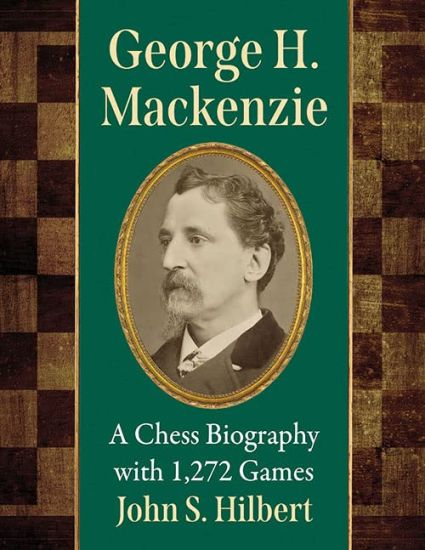
A top ten world chess player, George H. Mackenzie (1837-1891) dominated in the U.S. for more than a quarter century. Scottish by birth, Mackenzie was adopted by American chess players as their representative on the national and international scenes and was beloved as an entertainer wherever he toured. Despite his overwhelming record and global renown, no full-length biography or comprehensive collection of his games has appeared until now. This book details his tragic family life, his British and American war records, relations with the New York, national and international chess communities and his unfortunate and questionable death.

George's Rendezvous with Destiny
George H. Vakey
Createspace Independent Publishing Platform
2014
nidottu
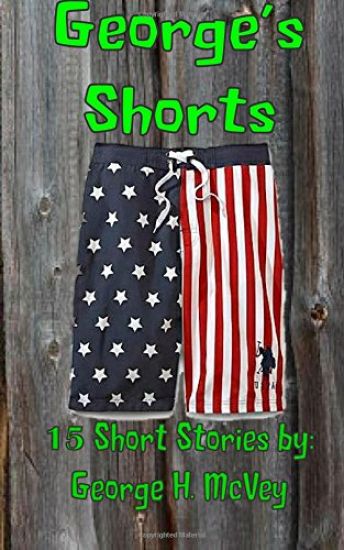
George's Shorts: 15 Short Stories
George H. McVey
Createspace Independent Publishing Platform
2015
nidottu
Speech Of Hon. Geo. H. Yeaman Of Kentucky, On The President's Proclamation, Delivered In The House Of Representatives, December 18, 1862 (1863)
George H. Yeaman
KESSINGER PUBLISHING, LLC
2010
sidottu