In the contemporary atmosphere of concern with the problems of relativism, cultural pluralism, and textuality, the time is ripe for rediscovery of the thought of Richard McKeon, one of the most important but neglected American philosophers of this century. This study by George Kimball Plochmann, a former student of McKeon's, is the first book-length treatment of the ideas of this legendary teacher, scholar, and diplomat who outlined a profound and creative vision for the reorganization of all knowledge and discourse.
""Terms In Their Propositional Contexts In Wittgenstein's Tractatus: An Index"" by George Kimball Plochmann is a comprehensive index of the key terms and concepts used in Ludwig Wittgenstein's seminal work, ""Tractatus Logico-Philosophicus"". The book provides a detailed analysis of the use of language in the Tractatus and how it relates to the logical structure of propositions. Plochmann's index is organized by the numbered propositions in the Tractatus, allowing readers to quickly locate discussions of specific terms and their contexts. The book is an invaluable resource for scholars and students of philosophy, logic, and language who seek a deeper understanding of Wittgenstein's groundbreaking work.This scarce antiquarian book is a facsimile reprint of the old original and may contain some imperfections such as library marks and notations. Because we believe this work is culturally important, we have made it available as part of our commitment for protecting, preserving, and promoting the world's literature in affordable, high quality, modern editions, that are true to their original work.
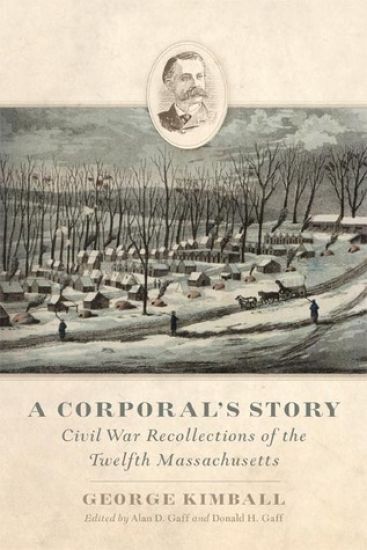
When George Kimball (1840-1916) joined the Twelfth Massachusetts in 1861, he'd been in the newspaper trade for five years. When he mustered out three years later, having been wounded at Fredericksburg and again at Gettysburg (mortally, it was mistakenly assumed at the time), he returned to newspaper life. There he remained, working for the Boston Journal for the next four decades. A natural storyteller, Kimball wrote often about his military service, always with a newspaperman's eye for detail and respect for the facts, relating only what he'd witnessed firsthand and recalled with remarkable clarity. Collected in A Corporal's Story, Kimball's writings form a unique narrative of one man's experience in the Civil War, viewed through a perspective enhanced by time and reflection.With the Twelfth Massachusetts, Kimball saw action at many of the most critical and ferocious battles in the eastern theater of the war, such as Second Bull Run, Antietam, Gettysburg, the Wilderness, Spotsylvania, and Petersburg - engagements he vividly renders from the infantry soldier's point of view. Aware that his readers might not be familiar with what he and comrades had gone through, he also describes many aspects of army life, from the most mundane to the most dramatic. In his accounts of the desperate action and immediate horrors of war, Kimball clearly conveys to readers the cost of preserving the Union. Never vindictive toward Confederates, he embodies instead the late nineteenth-century's spirit of reconciliation.Editors Alan D. Gaff and Donald H. Gaff have added an introduction and explanatory notes, as well as maps and illustrations, to provide further context and clarity, making George Kimball's memoir one of the most complete and interesting accounts of what it was to fight in the Civil War - and what that experience looked like through the lens of time.
In 1968, under pressure from the De Gaulle regime and encouraged by recent U.S. Supreme Court Decisions, the legendary French pornographer Maurice Girodias relocated his famed Olympia Press from Paris to New York. The first titles published under the new Ophelia imprint included J.P. Donleavy's The Ginger Man, Terry Southern and Mason Hoffenberg's Candy, and Only Skin Deep, a hilarious satire on the genre by 24-year-old George Kimball. "Only Skin Deep is a vicious and intolerable mockery of the whole filth industry." -Hunter S. Thompson "The only book I've ever read that had sticky pages." -Joe Flaherty
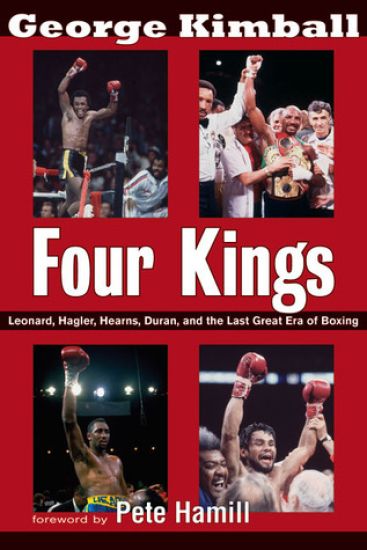
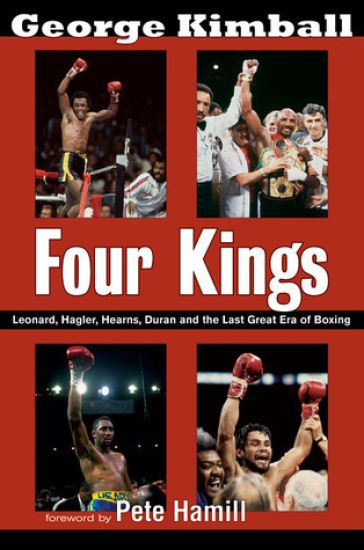
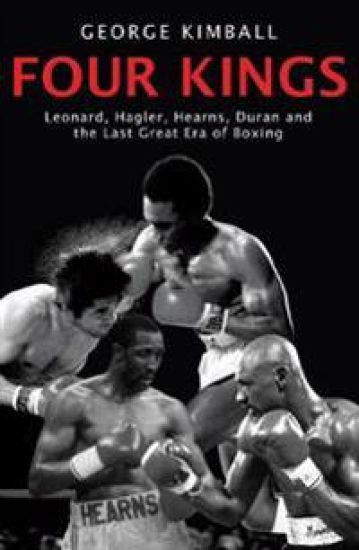
Their names are legendary: Sugar Ray Leonard, Marvelous Marvin Hagler, Thomas Hit Man Hearns, and Roberto Duran. They were exceptional boxers with unique combinations of power and speed. In another era, with few rivals of equal caliber, each might have held championship belts for years on end. But as it was, they matured together in the 1980s and fought each other as middleweights. With unforgettable courage and skill, they ruled the ring and ushered in the last Golden Age of boxing.George Kimball takes an authoritative look at the rivalries that fueled this great era in sports history. Veteran sports journalist Kimball reported on every one of the Four Kings nine internecine fights. Here his eye-witness coverage is enhanced by recent interviews with each of the boxers and other seasoned analysts. The result is a fast-paced, blow-by-blow account of four extraordinary adversaries and a remarkable boxing epoch."
Roberto Duran, Marvelous Marvin Hagler, Sugar Ray Leonard, and Thomas "Hit Man" Hearns all formed the pantheon of boxing greats during the late 1970s and early 1980s--before the pay-per-view model, when prize fights were telecast on network television and still captured the nation's attention. Championship bouts during this era were replete with revenge and fury, often pitting one of these storied fighters against another. From training camps to locker rooms, author George Kimball was there to cover every body shot, uppercut, and TKO. Inside stories full of drama, sacrifice, fear, and pain make up this treasury of boxing tales brought to life by one of the sport's greatest writers.
Sports fans and boxing enthusiasts alike will love this compelling study of the resurgence of boxing in the early 1980s - and the four 'greats' who effected that change. Four Kings captures the contests, fighters and the period with a wonderful perception and vividly conjures up those by-gone smoky and raucous ringside nights in Vegas...'Thrilling, insightful and often humourous' - The Independent'A flawless and singular account of fights that remain potent and important decades after the final bell' - Irish Times'A fascinating read' - ***** Reader review'Very rarely is a non-fiction book so riveting it's almost impossible to put down but this is one of those books' - ***** Reader review'Beautifully written and absolutely fascinating' - ***** Reader review'Outstanding' - ***** Reader review*****************************************************************************By the late 1970s, boxing had lapsed into a moribund state and interest in it was on the wane. In 1980, however, the sport was resuscitated by a riveting series of bouts involving an improbably dissimilar quartet: Sugar Ray Leonard, Marvellous Marvin Hagler, Thomas Hearns and Roberto Duran.Like Ali and Frazier, Dempsey and Tunney, Robinson and LaMotta, the 'Four Kings of the Ring' brought out the best in each other, producing unprecedented multi-million-dollar gates along the way. Each of the nine bouts between the four men was memorable in its own way and at least two of them - Leonard-Hearns in 1981 and Hagler-Hearns in 1985 - are commonly included on any list of the greatest fights of all time. The controversial outcome of another - the 1987 Leonard-Hagler fight - remains the subject of heated debates amongst fans to this day.In Four Kings, award-winning journalist George Kimball documents the remarkable effect they had on the sport and argues that we will never see their likes again. Leonard, Hagler, Hearns and Duran didn't set out to save boxing from itself in the post-Ali era, but somehow they managed to do so.
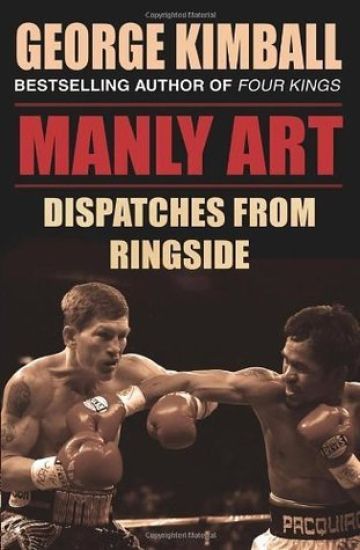
From the legendary Irish Times columnist and award-winning veteran American sports journalist George Kimball, author of the bestselling Four Kings, comes this compilation of boxing-related commentary, criticism, reportage and analysis, representing the best of his work over the last decade. This is a hard-hitting look at the current state of boxing, drawing on columns and articles from a wide variety of sources including the Irish Times, TheSweetScience.com and BoxingTalk.com. Kimball pulls no punches as he dissects the triumphs, defeats and mistakes of the major figures in boxing from yesterday and today including Muhammad Ali, George Foreman, Manny Pacquiao, Oscar De La Hoya and dozens more.Sadly, George Kimball passed away in July 2011. This hugely entertaining and informative collection is a fitting tribute to his long association with the sport of boxing and displays just why Kimball is so warmly regarded. This is boxing writing at its best from a master of the craft.
Outsourcing – entrusting major operations to others, at home or abroad – offers businesses an effective means to achieve efficiencies, improve productivity, and transform operations with advanced technologies such as cloud computing and artificial intelligence. This book provides clear, pragmatic guidance on the legal, commercial, and practical issues in outsourcing agreements and relationships. The authors draw on extensive experience and deep industry knowledge to present strategies and tactics for drafting and negotiating different kinds of outsourcing contracts. The text includes sample provisions and detailed commentary that will help lawyers, business executives, managers, and consultants better understand and navigate the often-complex dynamics of outsourcing.Key Features:Explains the genesis and evolution of outsourcing, from data centres to business processes, as well as onshore and offshore performance.Covers a wide range of engagements and agreements.Analyzes structural frameworks for outsourcing transactions, including master service agreements and supporting documents that govern price, performance, and service levels.Evaluates risks associated with outsourcing, emphasizing an effective allocation of risks and responsibilities, including their financial and regulatory implications, to help assure successful outcomes.Discusses the impact of such transformative technologies as cloud computing, generative AI, deep machine learning, robotic process automation and digital transformationsExamines emerging EU and US regulation of artificial intelligence in relation to legal compliance in outsourcing engagements.Outsourcing Agreements is an essential guide for practising lawyers specializing in commercial law, as well as executives, managers, and consultants negotiating or overseeing outsourcing engagements.
Outsourcing – entrusting major operations to others, at home or abroad – offers businesses an effective means to achieve efficiencies, improve productivity, and transform operations with advanced technologies such as cloud computing and artificial intelligence. This book provides clear, pragmatic guidance on the legal, commercial, and practical issues in outsourcing agreements and relationships. The authors draw on extensive experience and deep industry knowledge to present strategies and tactics for drafting and negotiating different kinds of outsourcing contracts. The text includes sample provisions and detailed commentary that will help lawyers, business executives, managers, and consultants better understand and navigate the often-complex dynamics of outsourcing.Key Features:Explains the genesis and evolution of outsourcing, from data centres to business processes, as well as onshore and offshore performance.Covers a wide range of engagements and agreements.Analyzes structural frameworks for outsourcing transactions, including master service agreements and supporting documents that govern price, performance, and service levels.Evaluates risks associated with outsourcing, emphasizing an effective allocation of risks and responsibilities, including their financial and regulatory implications, to help assure successful outcomes.Discusses the impact of such transformative technologies as cloud computing, generative AI, deep machine learning, robotic process automation and digital transformationsExamines emerging EU and US regulation of artificial intelligence in relation to legal compliance in outsourcing engagements.Outsourcing Agreements is an essential guide for practising lawyers specializing in commercial law, as well as executives, managers, and consultants negotiating or overseeing outsourcing engagements.
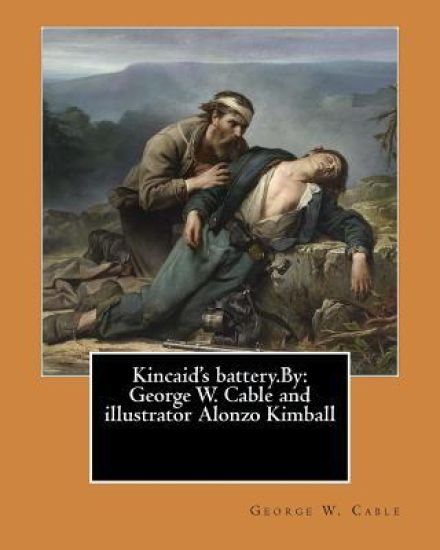
Alonzo Kimball, American artist. Born August 14, 1874 Green Bay, Wisconsin, United States Died August 27, 1923 (aged 49).Studied under Jules Lefebvre, Gustave Courtois, and James McNeill Whistler in Paris, 1894-1900. George Washington Cable (October 12, 1844 - January 31, 1925) was an American novelist notable for the realism of his portrayals of Creole life in his native New Orleans, Louisiana. He has been called "the most important southern artist working in the late 19th century, as well as the first modern southern writer." In his treatment of racism, mixed-race families and miscegenation, his fiction has been thought to anticipate that of William Faulkner. He also wrote articles critical of contemporary society. Due to hostility against him after two 1885 essays encouraging racial equality and opposing Jim Crow, Cable moved with his family to Northampton, Massachusetts. He lived there for the next thirty years, then moved to Florida. Biography: Cable was born in 1844 in New Orleans, Louisiana, the son of George W. Cable, Sr., and Rebecca Boardman Cable. They were wealthy slaveholders who were members of the Presbyterian Church and New Orleans society, whose families had moved there after the Louisiana Purchase. First educated in private schools, the younger Cable had to get work after his father died young. The elder Cable had lost investments, and the family struggled financially. Cable later learned French on his own. He served in the Confederate Army during the American Civil War, in which he took part in support of the Southern cause. His experiences changed his ideas about Southern and Louisiana society, and he began writing during a two-year bout with malaria. In 1870 Cable went into journalism, writing for the New Orleans Picayune. He worked for them from 1865 to 1879, by which time he had become an established writer. In 1869, George Cable married Louisa Stewart Bartlett, with whom he had several children. He was invited to submit stories in Scribner's Monthly, where his story "Sieur George", published in 1873, was a critical and popular success. He published six more stories of Creole life with Scribner's in the following three years. The stories were collected and published in a book in 1879 as Old Creole Days. While romantic in plot, the stories revealed the multi-cultural and multi-racial nature of antebellum New Orleans society, with ties among French, Spanish, African, Native American and Caribbean Creoles. He also addressed conflicts that arose following the Louisiana Purchase, when traditional New Orleans Creoles of color had to confront Anglo-Americans - who ultimately asserted their concept of a biracial society, rather than acknowledging the multiracial class of free people of color.In 1880 Cable published his first novel, The Grandissimes: A Story of Creole Life, portraying multiracial members and different classes of society in the early 1800s shortly after the Louisiana Purchase. It had first been serialized in Scribner's. The plot follows the adventures and romances of several members of the Grandissime family, a French Creole family with mixed-race members. He used this historical romance as a way to explore society and its racial injustice, as he addressed European Creoles, the mixed-race class, pla age, slavery, and lynchings. Also in 1880, the United States Census Bureau commissioned Cable to write a "historical sketch" of pre-Civil War New Orleans for a special section of the 10th United States Census' "Social statistics of cities." He submitted a well-researched 313-page history. It was greatly reduced for publication in 1884. His novella Madame Delphine (1881), expanded from a short story, featured the issue of miscegenation, in which a woman of partially African descent tries to arrange the marriage of her daughter, who has more European ancestry, to one of the French Creole elite. In 1884 he published a work, Dr. Sevier, on prison reform....
George Washington Cable (October 12, 1844 - January 31, 1925) was an American novelist notable for the realism of his portrayals of Creole life in his native New Orleans, Louisiana. He has been called "the most important southern artist working in the late 19th century, as well as the first modern southern writer." In his treatment of racism, mixed-race families and miscegenation, his fiction has been thought to anticipate that of William Faulkner. He also wrote articles critical of contemporary society. Due to hostility against him after two 1885 essays encouraging racial equality and opposing Jim Crow, Cable moved with his family to Northampton, Massachusetts. He lived there for the next thirty years, then moved to Florida.Cable was born in 1844 in New Orleans, Louisiana, the son of George W. Cable, Sr., and Rebecca Boardman Cable. They were wealthy slaveholders who were members of the Presbyterian Church and New Orleans society, whose families had moved there after the Louisiana Purchase. First educated in private schools, the younger Cable had to get work after his father died young. The elder Cable had lost investments, and the family struggled financially. Cable later learned French on his own. He served in the Confederate Army during the American Civil War, in which he took part in support of the Southern cause. His experiences changed his ideas about Southern and Louisiana society, and he began writing during a two-year bout with malaria. In 1870 Cable went into journalism, writing for the New Orleans Picayune. He worked for them from 1865 to 1879, by which time he had become an established writer. In 1869, George Cable married Louisa Stewart Bartlett, with whom he had several children.
This work has been selected by scholars as being culturally important and is part of the knowledge base of civilization as we know it.This work is in the public domain in the United States of America, and possibly other nations. Within the United States, you may freely copy and distribute this work, as no entity (individual or corporate) has a copyright on the body of the work.Scholars believe, and we concur, that this work is important enough to be preserved, reproduced, and made generally available to the public. To ensure a quality reading experience, this work has been proofread and republished using a format that seamlessly blends the original graphical elements with text in an easy-to-read typeface.We appreciate your support of the preservation process, and thank you for being an important part of keeping this knowledge alive and relevant.
This work has been selected by scholars as being culturally important and is part of the knowledge base of civilization as we know it.This work is in the public domain in the United States of America, and possibly other nations. Within the United States, you may freely copy and distribute this work, as no entity (individual or corporate) has a copyright on the body of the work.Scholars believe, and we concur, that this work is important enough to be preserved, reproduced, and made generally available to the public. To ensure a quality reading experience, this work has been proofread and republished using a format that seamlessly blends the original graphical elements with text in an easy-to-read typeface.We appreciate your support of the preservation process, and thank you for being an important part of keeping this knowledge alive and relevant.









![Methods of Operations Research [by] Philip M. Morse [and] George E. Kimball](/covers/9781013915864.jpg)
![Methods of Operations Research [by] Philip M. Morse [and] George E. Kimball](/covers/9781014552099.jpg)