Kirjojen hintavertailu. Mukana 12 459 402 kirjaa ja 12 kauppaa.

Kirjahaku

Etsi kirjoja tekijän nimen, kirjan nimen tai ISBN:n perusteella.

1000 tulosta hakusanalla George Mackay Brown

George MacKay Brown

George MacKay Brown

Ron Ferguson

Saint Andrew Press
2012
nidottu
Enigmatic – mysterious – intriguing: George Mackay Brown was a notoriously private man. He rarely left his native Orkney, and yet became one of the 20th century’s finest poets and prose stylists. In his prolific writings, George Mackay Brown’s spirituality and his love of the wind-scoured island landscape fused to give us some of the most beautiful poetry and prose in the English language. His work is shot through with glimpses of the divine. Ron Ferguson, who was described by George Mackay Brown as 'a true craftsman in litereature' tracks with curiosity and passion his friend’s literary and spiritual journey, including his controversial move from Presbyterianism to Roman Catholicism. He explores the darker, more tormented, side of Orkney’s Bard and uncovers the intense relationship between alcohol, suffering and creativity. This is a riveting journey. Along the way, the author is forced to question some of his own assumputions. And the reader is swept along on a literary and spiritual voyage of discovery that compels to the very end. Weaving a brilliant, enriching narrative, the author draws extensively on the poet's writings, unpublished letters, conversations with the Bard's friends and many well-known writers. SHORTLISTED FOR THE SALTIRE AWARD FOR BEST RESEARCH BOOK OF THE YEAR
George Mackay Brown

George Mackay Brown

Maggie Fergusson

John Murray Publishers Ltd
2007
pokkari
George Mackay Brown was one of Scotland's greatest twentieth-century writers, but in person a bundle of paradoxes. He had a wide international reputation, but hardly left his native Orkney. A prolific poet, admired by such fellow poets as Seamus Heaney, Ted Hughes and Charles Causley, and hailed by the composer Peter Maxwell Davies as 'the most positive and benign influence ever on my own efforts at creation', he was also an accomplished novelist (shortlisted for the 1994 Booker Prize for Beside the Ocean of Time) and a master of the short story. When he died in 1996, he left behind an autobiography as deft as it is ultimately uninformative. 'The lives of artists are as boring and also as uniquely fascinating as any or every other life,' he claimed. Never a recluse, he appeared open to his friends, but probably revealed more of himself in his voluminous correspondence with strangers. He never married - indeed he once wrote, 'I have never been in love in my life.' But some of his most poignant letters and poems were written to Stella Cartwright, 'the Muse of Rose Street', the gifted but tragic figure to whom he was once engaged and with whom he kept in touch until the end of her short life.Maggie Fergusson interviewed George Mackay Brown several times and is the only biographer to whom he, a reluctant subject, gave his blessing. Through his letters and through conversations with his wide acquaintance, she discovers that this particular artist's life was not only fascinating but vivid, courageous and surprising.
George Mackay Brown

George Mackay Brown

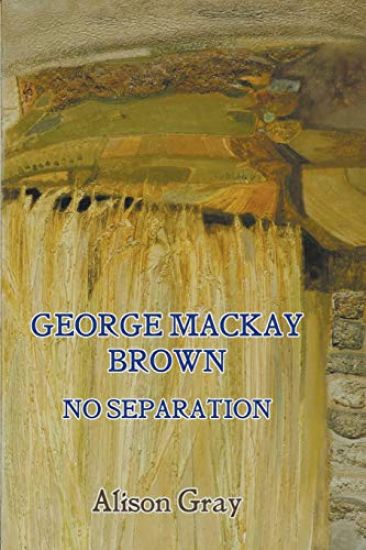
Alison Gray

Gracewing
2017
sidottu
George Mackay Brown, the poet, novelist and dramatist, is seen by some as not just Orkney's, but Britain's best twentieth-century poet - widely praised by Ted Hughes, Seamus Heaney and fellow Orcadian mentor Edwin Muir. Many of his works are concerned with protecting Orkney's cultural heritage from the relentless march of progress and the loss of myth and archaic ritual in the modern world, a concern further influenced by his own conversion to Catholicism. Alison Gray has written No Separation first and foremost as a faith story, opening up the Catholicism of George Mackay Brown that hitherto has remained quiet, unexplored and not greatly understood. Not a Catholic or religious writer as such, but treating all the subjects of literature as a Catholic would treat them, and only could treat them. She places Mackay Brown's writings within an Orkney poetics, a shared Orcadian patrimony that is in touch with its own great past whilst simultaneously being deeply connected to the currents of theology and modern intellectual life in the twentieth century and beyond.
George Mackay Brown and the Philosophy of Community

George Mackay Brown and the Philosophy of Community

Timothy C Baker

Edinburgh University Press
2009
sidottu
George Mackay Brown has long been recognised as one of the most original and important Scottish writers of the twentieth century. This book is the first comprehensive account of Brown's work from a philosophical perspective and offers a radical new approach to the study of Scottish literature. The importance of local community in the work of Scottish novelists ranging from Walter Scott to Neil M. Gunn has often been noted, but few critics have addressed the relation of this concept to current philosophical and sociological models of community. Timothy C. Baker uses Brown's work as a primary case study to demonstrate that the relationship between the individual and the community is a dominant narrative question in Scottish fiction. Baker traces the development of Brown's writing in relation to contemporary developments in the study of community, drawing on both continental and Anglo-American traditions. Focusing on Brown's novels, Baker argues for Brown's importance not only within a Scottish literary tradition, but as a major thinker of community. The book also suggests the utility of community, as opposed to nation and region, for productive discourse on modern literature. Combining close readings with theoretical elaborations, and including a broad national and historical overview, Baker offers a new perspective both on Brown's work and contemporary national literatures. Key Features: *Offers the first philosophically-informed critique of George Mackay Brown *Shows how fiction can contribute to an understanding of the problems of community in modernity *Suggests new directions for the study of contemporary Scottish literature *Takes into account Brown's late and posthumous writings as well as unpublished material not covered before
George Mackay Brown and the Scottish Catholic Imagination

George Mackay Brown and the Scottish Catholic Imagination

Linden Bicket

Edinburgh University Press
2017
sidottu
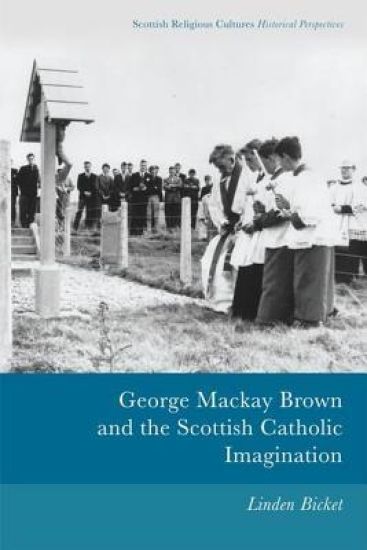
This lively new study is the very first book to offer an absorbing history of the uncharted territory that is Scottish Catholic fiction. For Scottish Catholic writers of the twentieth century, faith was the key influence on both their artistic process and creative vision. By focusing on one of the best known of Scotland's literary converts, George Mackay Brown, this book explores both the Scottish Catholic modernist movement of the twentieth century and the particularities of Brown's writing which have been routinely overlooked by previous studies. The book provides sustained and illuminating close readings of key texts in Brown's corpus and includes detailed comparisons between Brown's writing and an established canon of Catholic writers, including Graham Greene, Muriel Spark, and Flannery O'Connor.This timely book reveals that Brown's Catholic imagination extended far beyond the 'small green world' of Orkney and ultimately embraced a universal human experience.
George Mackay Brown and the Scottish Catholic Imagination

George Mackay Brown and the Scottish Catholic Imagination

Linden Bicket

Edinburgh University Press
2019
nidottu
This lively new study is the very first book to offer an absorbing history of the uncharted territory that is Scottish Catholic fiction. For Scottish Catholic writers of the twentieth century, faith was the key influence on both their artistic process and creative vision. By focusing on one of the best known of Scotland's literary converts, George Mackay Brown, this book explores both the Scottish Catholic modernist movement of the twentieth century and the particularities of Brown's writing which have been routinely overlooked by previous studies. The book provides sustained and illuminating close readings of key texts in Brown's corpus and includes detailed comparisons between Brown's writing and an established canon of Catholic writers, including Graham Greene, Muriel Spark, and Flannery O'Connor.This timely book reveals that Brown's Catholic imagination extended far beyond the 'small green world' of Orkney and ultimately embraced a universal human experience.
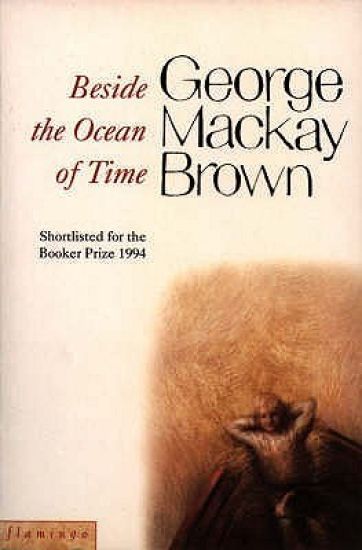
Beside the Ocean of Time

Beside the Ocean of Time

George Mackay Brown

HARPERCOLLINS PUBLISHERS
1995
pokkari
Set in the Orkneys on the fictitious island of Norday, a young poet daydreams the history of the island and its people. He travels back in time to Viking adventures at the court of the Byzantine Emperor in Constantinople. Part of the 1995 Scottish Book Fortnight promotion.
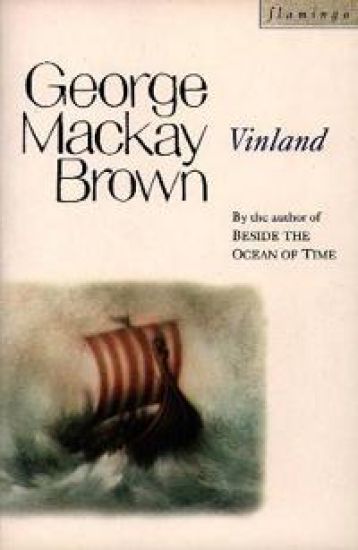
Vinland

Vinland

George Mackay Brown

HARPERCOLLINS PUBLISHERS
2008
pokkari
Vinland, George Mackay Brown's fourth novel, follows the turbulent life of Ranald Sigmunson, a young boy born into the Dark Ages, when Orkney was torn between its Viking past and its Christian future. Lore and legend, the elemental pull of the sea and the land, the sweetness of the early religion and the darker, more ancient rites, weave through this exquisite celebration of Orcadian history and the inexorable seasons of life.
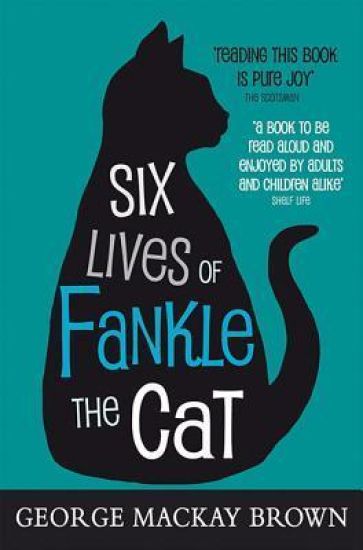
Six Lives of Fankle the Cat

Six Lives of Fankle the Cat

George Mackay Brown

Kelpies
2012
pokkari
When the shopkeeper gives Jenny a skinny, black kitten she has no idea who she has adopted. Fankle is no ordinary cat. The fiercely clever feline has lived six lives so far: lives of adventure, danger, fortune and poverty. He's stared down angry pirates, started a blood feud, won a war, advised an empress and leapt onto the moon.Fankle tells Jenny tales of his former lives -- with the king of pirates, in ancient Egypt and even with the Empress of China. So what is he doing living in a crofter's cottage in Orkney?This classic novel by George Mackay Brown is a rich and rewarding read for adults and children alike.
An Orkney Tapestry

An Orkney Tapestry

George Mackay Brown

BIRLINN GENERAL
2021
pokkari
First published in 1969, An Orkney Tapestry, George Mackay Brown's seminal work, is a unique look at Orkney through the eye of a poet. Originally commissioned by his publisher as an introduction to the Orkney Islands, Brown approached the writing from a unique perspective and went on to produce a rich fusion of ballad, folk tale, short story, drama and environmental writing. The book, written at an early stage in the author’s career, explores themes that appear in his later work and was a landmark in Brown’s development as a writer. Above all, it is a celebration of Orkney's people, language and history. This edition reproduces Sylvia Wishart’s beautiful illustrations, commissioned for the original hardback. Made available again for the first time in over 40 years, this new edition sits alongside Nan Shepherd’s The Living Mountain as an important precursor of environmental writing by the likes of Kathleen Jamie, Robert Macfarlane, Malachy Tallack and, most recently, Amy Liptrot.
Greenvoe

Greenvoe

George Mackay Brown

BIRLINN GENERAL
2019
pokkari
In the end Operation Black Star fails, but not before it has ruined the island; but the book ends on a note of hope as the islanders return to celebrate the ritual rebirth of Hellya.
Magnus

Magnus

George Mackay Brown

Birlinn Ltd
2019
pokkari
First published in 1973 by the Hogarth Press, Magnus is George Mackay Brown’s tour de force – his most poetic and innovative book. He links the twelfth-century story of the saintly Earl Magnus of Orkney’s brutal murder at the hands of his cousin Hakon Paulson, to that of the philosopher Dietrich Bonhoeffer, murdered by the Nazis during World War II. This is a unique exploration of the eternal questions of guilt, goodness and personal sacrifice.
Vinland

Vinland

George Mackay Brown

BIRLINN GENERAL
2019
pokkari
Vinland follows the turbulent life of Ranald Sigmundson, a young boy born into the Dark Ages when Orkney was torn between its Viking past and its Christian future. Struggling to understand the conflicts of his home, Ranald seeks adventure and knowledge across the seas, his journeys taking him as far as Norway, Iceland and Ireland. Through