

Kirjahaku
Etsi kirjoja tekijän nimen, kirjan nimen tai ISBN:n perusteella.
1000 tulosta hakusanalla George Moore
A drama in muslin, a realistic novel (1886) by George Moore (Classics)
George Moore
Createspace Independent Publishing Platform
2016
nidottu
A mummer's wife (1885) by George Moore (Classics)
George Moore
Createspace Independent Publishing Platform
2016
nidottu
A mere accident (1887) George Moore (Classics)
George Moore
Createspace Independent Publishing Platform
2016
nidottu
Esther Waters: A NOVEL (1894) by George Moore (Original Classics)
George Moore
Createspace Independent Publishing Platform
2016
nidottu
The lake (1905) NOVEL by George Moore
George Moore
Createspace Independent Publishing Platform
2016
nidottu
Memoirs of my dead life (1906) by George Moore (Original Version)
George Moore
Createspace Independent Publishing Platform
2016
nidottu
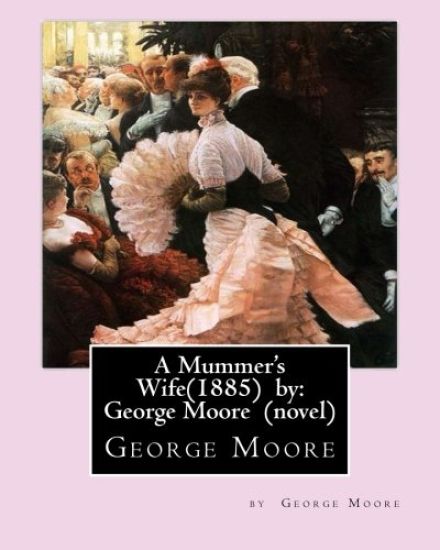
A Mummer's Wife(1885) by: George Moore
George Moore
Createspace Independent Publishing Platform
2016
nidottu
George Augustus Moore (24 February 1852 - 21 January 1933) was an Irish novelist, short-story writer, poet, art critic, memoirist and dramatist. Moore came from a Roman Catholic landed family who lived at Moore Hall in Carra, County Mayo. He originally wanted to be a painter, and studied art in Paris during the 1870s. There, he befriended many of the leading French artists and writers of the day. A Mummer's Wife London is a novel George Moore was born in Moore Hall in 1852. As a child, Moore enjoyed the novels of Walter Scott, which his father read to him. 10] He spent a good deal of time outdoors with his brother, Maurice George Moore, and also became friendly with the young Willie and Oscar Wilde, who spent their summer holidays at nearby Moytura. Oscar was to later quip of Moore: "He conducts his education in public". His father had again turned his attention to horse breeding and in 1861 brought his champion horse, Croagh Patrick, to England for a successful racing season, together with his wife and nine-year-old son. For a while George was left at Cliff's stables until his father decided to send George to his alma mater facilitated by his winnings. Moore's formal education started at St. Mary's College, Oscott, a Catholic boarding school near Birmingham where he was the youngest of 150 boys. He spent all of 1864 at home, having contracted a lung infection brought about by a breakdown in his health. His academic performance was poor while he was hungry and unhappy. In January 1865, he returned to St. Mary's College with his brother Maurice, where he refused to study as instructed and spent time reading novels and poems.That December the principal, Spencer Northcote, wrote a report that: "he hardly knew what to say about George." By the summer of 1867 he was expelled, for (in his own words) 'idleness and general worthlessness', and returned to Mayo. His father once remarked, about George and his brother Maurice: "I fear those two redheaded boys are stupid", an observation which proved untrue for all four boys
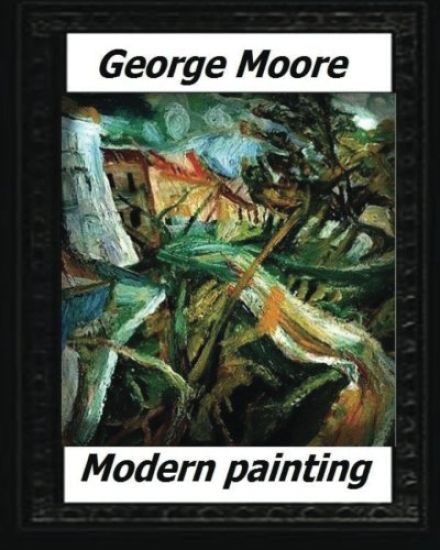
Modern Painting(1893) by: George Moore
George Moore
Createspace Independent Publishing Platform
2016
nidottu
Esther Waters(1894) A novel by: George Moore
George Moore
Createspace Independent Publishing Platform
2016
nidottu
Mike Fletcher(1889) A Novel BY: George Moore (TREDITION CLASSICS)
George Moore
Createspace Independent Publishing Platform
2016
nidottu
Memoirs of My Dead Life(1906) BY: George Moore (novelist)
George Moore
Createspace Independent Publishing Platform
2016
nidottu
A Drama in Muslin London(1886) by: George Moore (realistic novel)
George Moore
Createspace Independent Publishing Platform
2016
nidottu

A modern lover. By: George Moore, A NOVEL: (World's classic's)
George Moore
Createspace Independent Publishing Platform
2016
nidottu
George Augustus Moore (24 February 1852 - 21 January 1933) was an Irish novelist, short-story writer, poet, art critic, memoirist and dramatist. Moore came from a Roman Catholic landed family who lived at Moore Hall in Carra, County Mayo.He originally wanted to be a painter, and studied art in Paris during the 1870s. There, he befriended many of the leading French artists and writers of the day. As a naturalistic writer, he was amongst the first English-language authors to absorb the lessons of the French realists, and was particularly influenced by the works of mile Zola.His writings influenced James Joyce, according to the literary critic and biographer Richard Ellmann, and, although Moore's work is sometimes seen as outside the mainstream of both Irish and British literature, he is as often regarded as the first great modern Irish novelist. Moore returned to London in 1911, where, with the exception of frequent trips to France, he was to spend much of the rest of his life. In 1913, he traveled to Jerusalem to research for his next novel, The Brook Kerith (1916). The book saw Moore once again embroiled in controversy, as it was based on the supposition that a non-divine Christ did not die on the cross but instead was nursed back to health.Other books from this period include a further collection of short-stories called A Storyteller's Holiday (1918), a collection of essays called Conversations in Ebury Street (1924) and a play, The Making of an Immortal (1927). Moore also spent considerable time revising and preparing his earlier writings for new editions. Partly due to Maurice's pro-treaty activity, Moore Hall was burnt by anti-treaty forces in 1923, during the final months of the Irish Civil War.Moore eventually received compensation of 7,000 from the government of the Irish Free State. By this time George and Maurice had become estranged, mainly because of an unflattering portrait of the latter which appeared in Hail and Farewell. Tension also arose as a result of religious differences: Maurice frequently made donations to the Roman Catholic Church from estate funds.Moore later sold a large part of the estate to the Irish Land Commission for 25,000. Moore was friendly with many members of the expatriate artistic communities in London and Paris, and had a long-lasting relationship with Maud, Lady Cunard. Moore took a special interest in the education of Maud's daughter, the well-known publisher and art patron, Nancy Cunard.It has been suggested that Moore, rather than Maud's husband, Sir Bache Cunard, was Nancy's father, but this is not generally credited by historians, and it is not certain that Moore's relationship with Nancy's mother was ever more than platonic.Moore was believed by some to be impotent and was described as "one who told but didn't kiss". Moore's last novel, Aphroditis in Aulis, was published in 1930. He died at his home at Ebury Street in the London district of Belgravia in early 1933, leaving a fortune of 70,000. He was cremated in London at a service attended by Ramsay MacDonald among others. An urn containing his ashes was interred on Castle Island in Lough Carra in view of the ruins of Moore Hall..
Confessions of a young man. By: George Moore: is a memoir by Irish novelist George Moore who spent about 15 years in his teens and 20s in Paris and la
George Moore
Createspace Independent Publishing Platform
2016
nidottu
The Confessions of a Young Man (1886 in French; 1888 in English) is a memoir by Irish novelist George Moore who spent about 15 years in his teens and 20s in Paris and later London as a struggling artist. The book is notable as being one of the first English writings which named important emerging French Impressionists; for its literary criticism; and depictions of bohemian life in Paris during the 1870s and 1880s.In writing style The Confessions of a Young Man is presented as a novel, with a hero named Dayne, but the reader assumes in essence it is an autobiography, a true "confession".Dayne (i.e. Moore) went to Paris as a teenager, and almost becomes a full Parisian nearly forgetting the English language after 15 years. He sketches, with a frankness now jubilant, now cynical, the luscious "vie de Boheme" that Paris alone could offer the young man of health and wealth who loved art.Amid scenes splendid, squalid, or bizarre, move students, cabotins, painters, poets, pale enthusiasts starving for the sake of an idea, actresses, women of fashion, courtesans, clubmen, and spectators.Artistic endeavour and perfumed vice mingle in fraternity; everything is unusual, irregular, fantastic.Dayne emerges from the ordeal of this environment but little changed.For him the enticements of the flesh are not more powerful than those of art.One week he is beguiling the hours in some salon or alcove, the next he is incandescent with aspiration.So the years pass; and at last, having saturated himself with the French theories of literary and graphic art which are bound up with the names of Flaubert, Goncourts, Zola, Degas, and Manet, he one day learns with tragic certainty that he is not destined to be a painter, and he courageously admits that all this periodic, frenzied effort has been misdirected. 1] Then we have interludes of philosophy and literary criticism; the philosophy perhaps not of much account; the criticism often original, epigrammatic, sometimes of an astounding penetration, and always literary. Later, Dayne is driven by adverse circumstances to London and to a lodging in the Strand, where the book ends.Dayne's ideas about art and his temperament can be seen in characteristic passages like the following: "For art was not for us then as it is now-a mere emotion, right or wrong only in proportion to its intensity; we believed then in the grammar of art, perspective, anatomy, and la jambe qui forte.".... George Augustus Moore (24 February 1852 - 21 January 1933) was an Irish novelist, short-story writer, poet, art critic, memoirist and dramatist. Moore came from a Roman Catholic landed family who lived at Moore Hall in Carra, County Mayo.He originally wanted to be a painter, and studied art in Paris during the 1870s. There, he befriended many of the leading French artists and writers of the day. As a naturalistic writer, he was amongst the first English-language authors to absorb the lessons of the French realists, and was particularly influenced by the works of mile Zola. His writings influenced James Joyce, according to the literary critic and biographer Richard Ellmann, and, although Moore's work is sometimes seen as outside the mainstream of both Irish and British literature, he is as often regarded as the first great modern Irish novelist. George Moore was born in Moore Hall in 1852. As a child, Moore enjoyed the novels of Walter Scott, which his father read to him.He spent a good deal of time outdoors with his brother, Maurice George Moore, and also became friendly with the young Willie and Oscar Wilde, who spent their summer holidays at nearby Moytura. Oscar was to later quip of Moore: "He conducts his education in public". His father had again turned his attention to horse breeding and in 1861 brought his champion horse, Croagh Patrick, to England for a successful racing season, together with his wife and nine-year-old son......
A Mere Accident (1887). By: George Moore: Novel (Original Classics)
George Moore
Createspace Independent Publishing Platform
2016
nidottu