Kirjojen hintavertailu. Mukana 11 244 527 kirjaa ja 12 kauppaa.

Kirjahaku

Etsi kirjoja tekijän nimen, kirjan nimen tai ISBN:n perusteella.

1000 tulosta hakusanalla George Smith

A Dissertation on the General Properties of Eclipses; and Particularly the Ensuing Eclipse of 1748, Considered Thro' all its Periods. By George Smith,
The 18th century was a wealth of knowledge, exploration and rapidly growing technology and expanding record-keeping made possible by advances in the printing press. In its determination to preserve the century of revolution, Gale initiated a revolution of its own: digitization of epic proportions to preserve these invaluable works in the largest archive of its kind. Now for the first time these high-quality digital copies of original 18th century manuscripts are available in print, making them highly accessible to libraries, undergraduate students, and independent scholars.Medical theory and practice of the 1700s developed rapidly, as is evidenced by the extensive collection, which includes descriptions of diseases, their conditions, and treatments. Books on science and technology, agriculture, military technology, natural philosophy, even cookbooks, are all contained here.++++The below data was compiled from various identification fields in the bibliographic record of this title. This data is provided as an additional tool in helping to insure edition identification: ++++British LibraryT098453London: printed for E. Cave, 1748. 19, 1]p., plate: map; 8
The use and Abuse of Free-masonry; a Work of the Greatest Utility to the Brethren of the Society, to Mankind in General, and to the Ladies in Particular. By Capt. George Smith,
The 18th century was a wealth of knowledge, exploration and rapidly growing technology and expanding record-keeping made possible by advances in the printing press. In its determination to preserve the century of revolution, Gale initiated a revolution of its own: digitization of epic proportions to preserve these invaluable works in the largest archive of its kind. Now for the first time these high-quality digital copies of original 18th century manuscripts are available in print, making them highly accessible to libraries, undergraduate students, and independent scholars.The Age of Enlightenment profoundly enriched religious and philosophical understanding and continues to influence present-day thinking. Works collected here include masterpieces by David Hume, Immanuel Kant, and Jean-Jacques Rousseau, as well as religious sermons and moral debates on the issues of the day, such as the slave trade. The Age of Reason saw conflict between Protestantism and Catholicism transformed into one between faith and logic -- a debate that continues in the twenty-first century.++++The below data was compiled from various identification fields in the bibliographic record of this title. This data is provided as an additional tool in helping to insure edition identification: ++++British LibraryT098248With a half-title.London: printed for the author; and sold by G. Kearsley, 1783. xxvii, 1],399, 1]p.; 8
A Compleat Body of Distilling, Explaining the Mysteries of That Science, in a Most Easy and Familiar Manner, ... In two Parts. By George Smith, ... The Second Edition
The 18th century was a wealth of knowledge, exploration and rapidly growing technology and expanding record-keeping made possible by advances in the printing press. In its determination to preserve the century of revolution, Gale initiated a revolution of its own: digitization of epic proportions to preserve these invaluable works in the largest archive of its kind. Now for the first time these high-quality digital copies of original 18th century manuscripts are available in print, making them highly accessible to libraries, undergraduate students, and independent scholars.Medical theory and practice of the 1700s developed rapidly, as is evidenced by the extensive collection, which includes descriptions of diseases, their conditions, and treatments. Books on science and technology, agriculture, military technology, natural philosophy, even cookbooks, are all contained here.++++The below data was compiled from various identification fields in the bibliographic record of this title. This data is provided as an additional tool in helping to insure edition identification: ++++British LibraryT053927With a final leaf of index. Part 2 has a separate titlepage, but the pagination and register are continuous. The edition statement is erroneous.London: printed for L. Hawes, W. Clarke, and R. Collins, MDDCLXVI 1766]. 6],150, 2]p., plate; 8
A Compleat Body of Distilling, Explaining the Mysteries of That Science, in a Most Easy and Familiar Manner; Containing an Exact and Accurate Method of Making all the Compound Cordial-waters now in use, ... In two Parts. By George Smith,
The 18th century was a wealth of knowledge, exploration and rapidly growing technology and expanding record-keeping made possible by advances in the printing press. In its determination to preserve the century of revolution, Gale initiated a revolution of its own: digitization of epic proportions to preserve these invaluable works in the largest archive of its kind. Now for the first time these high-quality digital copies of original 18th century manuscripts are available in print, making them highly accessible to libraries, undergraduate students, and independent scholars.Medical theory and practice of the 1700s developed rapidly, as is evidenced by the extensive collection, which includes descriptions of diseases, their conditions, and treatments. Books on science and technology, agriculture, military technology, natural philosophy, even cookbooks, are all contained here.++++The below data was compiled from various identification fields in the bibliographic record of this title. This data is provided as an additional tool in helping to insure edition identification: ++++British LibraryT134848London: printed for Henry Lintot, 1749. 8],150, 2]p.: ill.; 8
An Universal Military Dictionary, or a Copious Explanation of the Technical Terms &c. Used in the Equipment, Machinery, Movements, and Military Operations of an Army. By Capt. George Smith,
The 18th century was a wealth of knowledge, exploration and rapidly growing technology and expanding record-keeping made possible by advances in the printing press. In its determination to preserve the century of revolution, Gale initiated a revolution of its own: digitization of epic proportions to preserve these invaluable works in the largest archive of its kind. Now for the first time these high-quality digital copies of original 18th century manuscripts are available in print, making them highly accessible to libraries, undergraduate students, and independent scholars.Medical theory and practice of the 1700s developed rapidly, as is evidenced by the extensive collection, which includes descriptions of diseases, their conditions, and treatments. Books on science and technology, agriculture, military technology, natural philosophy, even cookbooks, are all contained here.++++The below data was compiled from various identification fields in the bibliographic record of this title. This data is provided as an additional tool in helping to insure edition identification: ++++British LibraryT140172The titlepage is engraved. With a list of subscribers and a list of errata.London: printed for J. Millan, 1779. 2], ii, xvii, 313]p., XVI plates, table; 4
A Sermon, Delivered in Attercliffe Chapel, on Friday, February 28th, 1794, Being the day Appointed for a General Fast. To Which is Annexed, A Narrative of Transactions Relative to the Late Disposal of the Vicarage of Rotherham. By George Smith,
The 18th century was a wealth of knowledge, exploration and rapidly growing technology and expanding record-keeping made possible by advances in the printing press. In its determination to preserve the century of revolution, Gale initiated a revolution of its own: digitization of epic proportions to preserve these invaluable works in the largest archive of its kind. Now for the first time these high-quality digital copies of original 18th century manuscripts are available in print, making them highly accessible to libraries, undergraduate students, and independent scholars.The Age of Enlightenment profoundly enriched religious and philosophical understanding and continues to influence present-day thinking. Works collected here include masterpieces by David Hume, Immanuel Kant, and Jean-Jacques Rousseau, as well as religious sermons and moral debates on the issues of the day, such as the slave trade. The Age of Reason saw conflict between Protestantism and Catholicism transformed into one between faith and logic -- a debate that continues in the twenty-first century.++++The below data was compiled from various identification fields in the bibliographic record of this title. This data is provided as an additional tool in helping to insure edition identification: ++++British LibraryT223027'A narrative' has separate pagination and register.Sheffield: printed for the author, and sold by Deighton, London; Merrils, Cambridge; Crookes, Rotherham; Sheardown, Doncaster; and by the booksellers in Sheffield, 1794]. 24,18p.; 8
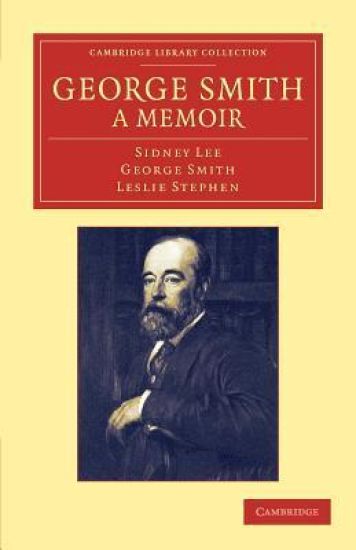
George Smith, a Memoir

George Smith, a Memoir

Sidney Lee; George Smith; Leslie Stephen

Cambridge University Press
2012
pokkari
This 1902 book, originally intended for private circulation, is a memoir of George Smith (1824–1901), founder, proprietor and publisher of The Cornhill Magazine and later the Dictionary of National Biography. The small volume, compiled by Smith's wife, consists of a memoir of Smith by Sidney Lee, followed by four short autobiographical pieces that Smith wrote for The Cornhill. He recalls his years at the publishing house of Smith, Elder and Co.; his encounters with Charlotte Brontë, who stayed with the Smiths in London; his idea of founding a magazine; and the 'lawful pleasures' of court cases for libel. The final item is Sir Leslie Stephen's obituary of Smith, first published in The Cornhill. The book, illustrated with two portraits of Smith, and a photograph of his memorial tablet in St Paul's Cathedral, provides an engaging portrait of a significant Victorian publisher and man of letters.
A Few Observations on the Component Parts of Animal Matters; And on Their Conversion Into a Substance Resembling Spermaceti. by George Smith Gibbes, ...
The 18th century was a wealth of knowledge, exploration and rapidly growing technology and expanding record-keeping made possible by advances in the printing press. In its determination to preserve the century of revolution, Gale initiated a revolution of its own: digitization of epic proportions to preserve these invaluable works in the largest archive of its kind. Now for the first time these high-quality digital copies of original 18th century manuscripts are available in print, making them highly accessible to libraries, undergraduate students, and independent scholars.Medical theory and practice of the 1700s developed rapidly, as is evidenced by the extensive collection, which includes descriptions of diseases, their conditions, and treatments. Books on science and technology, agriculture, military technology, natural philosophy, even cookbooks, are all contained here.++++The below data was compiled from various identification fields in the bibliographic record of this title. This data is provided as an additional tool in helping to insure edition identification: ++++British LibraryT134263With a half-title.Bath: printed by W. Meyler, and sold by Messrs. Robinson, London, 1796. 2],38p.; 8
A few Observations on the Component Parts of Animal Matters; and on Their Conversion Into a Substance Resembling Spermaceti. By George Smith Gibbes,
The 18th century was a wealth of knowledge, exploration and rapidly growing technology and expanding record-keeping made possible by advances in the printing press. In its determination to preserve the century of revolution, Gale initiated a revolution of its own: digitization of epic proportions to preserve these invaluable works in the largest archive of its kind. Now for the first time these high-quality digital copies of original 18th century manuscripts are available in print, making them highly accessible to libraries, undergraduate students, and independent scholars.Medical theory and practice of the 1700s developed rapidly, as is evidenced by the extensive collection, which includes descriptions of diseases, their conditions, and treatments. Books on science and technology, agriculture, military technology, natural philosophy, even cookbooks, are all contained here.++++The below data was compiled from various identification fields in the bibliographic record of this title. This data is provided as an additional tool in helping to insure edition identification: ++++British LibraryT134263With a half-title.Bath: printed by W. Meyler, and sold by Messrs. Robinson, London, 1796. 2],38p.; 8