
Kirjahaku
Etsi kirjoja tekijän nimen, kirjan nimen tai ISBN:n perusteella.
1000 tulosta hakusanalla Gerald D McGowan

While he did the research for this book, Gerald Suttles lived for almost three years in the high-delinquency area around Hull House on Chicago's New West Side. He came to know it intimately and was welcomed by its residents, who are Italian, Mexican, Puerto Rican, and Negro. Suttles contends that the residents of a slum neighborhood have a set of standards for behavior that take precedence over the more widely held "moral standards" of "straight" society. These standards arise out of the specific experience of each locality, are peculiar to it, and largely determine how the neighborhood people act. One of the tasks of urban sociology, according to Suttles, is to explore why and how slum communities provide their inhabitants with these local norms. The Social Order of the Slum is the record of such an exploration, and it defines theoretical principles and concepts that will aid in subsequent research.

With its extraordinary uniform street grid, its magnificent lake-side park, and innovative architecture and public sculpture, Chicago is one of the most planned cities of the modern era. Yet over the past few decades Chicago has come to epitomize some of the worst evils of urban decay: widespread graft and corruption, political stalemates, troubled race relations, and economic decline. Broad-shouldered boosterism can no longer disguise the city's failure to keep pace with others, its failure to attract new "sunrise" industries and world-class events. For Chicago, as for other rust-belt cities, new ways of planning and managing the urban environment are now much more than civic beautification; they are the means to survival.Gerald D. Suttles here offers an irreverent, highly critical guide to both the realities and myths of land-use planning and development in Chicago from 1976 through 1987.

In an age when pundits constantly decry bias in the media, we have naturally become skeptical of the news. But the bluntness of such critiques masks the much more sophisticated way in which the media frame important stories. In "Front Page Economics", Gerald D. Suttles delves deep into the archives to examine coverage of two major economic crashes - in 1929 and 1987 - in order to systematically break down the way newspapers normalize crises. Poring over the articles generated by the crashes - as well as the people in them, the writers who wrote them, and the cartoons alongside them - Suttles uncovers dramatic changes between the ways the first and second crashes were reported. In the intervening half-century, an entire new economic language had arisen and the practice of business journalism had been completely altered. Both of these transformations, Suttles demonstrates, allowed journalists to describe the 1987 crash in a vocabulary that was normal and familiar to readers, rendering it routine. A subtle and probing look at how ideologies are packaged and transmitted to the casual newspaper reader, "Front Page Economics" brims with important insights applicable to our current economic crisis.

Dozens of outstanding practitioners and scholars explain how quickly the career opportunities for graduates with psychology degrees are growing. Oster contacted dozens of working psychologists and asked them what advice they would offer today's aspiring psychologists. Their responses provide a glimpse into a changing and ever-expanding field. The book includes advice on making the right choice from among psychology careers in fields old and new, the ins and outs of graduate school, and the lessons seasoned professionals learned in their quests for meaningful careers. Web sites for more information on specialties are listed, as are suggested additional readings. This insightful work will interest high school students and college undergraduates, career-changers and psychologists seeking new directions, as well as guidance counselors and parents.Psychology is one of the most popular majors in college today, with the number of students enrolled in the discipline having surged some 200% in the last 10 years. In this book, dozens of outstanding practitioners and scholars explain how quickly the career opportunities for graduates with psychology degrees are growing—in talk therapy and clinical research, but also at agencies ranging from the CIA and Homeland Security to the Library of Congress and the Securities and Exchange Commission. In preparing his book, Oster contacted dozens of working psychologists and asked them what advice they would offer today's aspiring psychologists. Their responses provide a glimpse into a changing and ever-expanding field. Dozens of contributors recall their thoughts and actions as they plotted careers—or landed jobs by surprise. From one psychologist who put her research aside to become president of a university, to another who ended his work with children to become an author of psychological mystery books, the dozens of practitioners interviewed share the sometimes-humorous, often-difficult experiences and decisions they faced as they completed their college years and built successful careers.The book includes advice on making the right choice from among psychology careers in fields old and new, the ins and outs of graduate school, and the lessons seasoned professionals learned in their quests for meaningful careers. Web sites for more information on specialties are listed, as are suggested additional readings. The book also includes sections on making the most of undergraduate years, and on balancing the demands of career and family.

This textbook is for a course in advanced solid-state theory. It is aimed at graduate students in their third or fourth year of study who wish to learn the advanced techniques of solid-state theoretical physics. The method of Green's functions is introduced at the beginning and used throughout. Indeed, it could be considered a book on practical applications of Green's functions, although I prefer to call it a book on physics. The method of Green's functions has been used by many theorists to derive equations which, when solved, provide an accurate numerical description of many processes in solids and quantum fluids. In this book I attempt to summarize many of these theories in order to show how Green's functions are used to solve real problems. My goal, in writing each section, is to describe calculations which can be compared with experiments and to provide these comparisons whenever available. The student is expected to have a background in quantum mechanics at the level acquired from a graduate course using the textbook by either L. I. Schiff, A. S. Davydov, or I. Landau and E. M. Lifshiftz. Similarly, a prior course in solid-state physics is expected, since the reader is assumed to know concepts such as Brillouin zones and energy band theory. Each chapter has problems which are an important part of the lesson; the problems often provide physical insights which are not in the text. Sometimes the answers to the problems are provided, but usually not.

Local Density Theory of Polarizability
Gerald D. Mahan; K.R. Subbaswamy
Kluwer Academic/Plenum Publishers
1990
sidottu
During the past decade the theoretical physics community has learned how to evaluate accurately polarizabilities and susceptibilities for many-electron systems such as atoms, solids, and liquids. The most accurate numerical technique employs a method often called the Time-Dependent Local Density Approximation, which is abbreviated TDLDA. The present volume is a review of recent research on the theory of po larizabilities and susceptibilities. Both authors have been doing these cal culations. However, this review surveys the entire field, summarizing the research of many contributors. The application of an external field, either ac or de, will induce a dipole moment which can be calculated and compared with experiment. For mod erately strong fields, both linear and nonlinear processes contribute to the moment. We cover topics such as polarizability, hyperpolarizability, pho toionization, phonons, and piezoelectricity. Density functional theory in the Local Density Approximation (LDA) has been shown to be a very accurate method for calculating ground state prop erties of electronic system. For static external fields, the induced moments are properties of the ground state. Then the calculation of the polarizability · is very accurate. For ac fields, the moment is not part of the ground state. However, the TDLDA methods are still very accurate.
Adult Development, Therapy, and Culture
Gerald D. Young
Kluwer Academic/Plenum Publishers
1997
sidottu
This volume proposes a theoretical integration of several major streams in contemporary psychological theory about adult development and therapy. It adopts the perspective that there are steps in development throughout the adult period, and that they are characterized by a union of the cognitive and affective, the self and the other, and idea with idea (in second-order collective abstractions). That is, they are at once postformal in terms of Piaget's theory, sociocultural in terms ofVygotsky's theory, and postmodern with the latter perspective providing an integrating theme. The affirmative, multivoiced, contextual, relational, other-sensitive side ofpostmodernism is emphasized. Levinas's philosophy of responsibility for the other is seen as congruent with this ethos. The neopiagetian model of development on which the current ap proach is based proposes that the last stage in development concerns collective intelligence, or postmodern, postformal thought. Kegan (1994) has attempted independently to describe adult development from the same perspective. His work on the development of the postmodern mind of the adult is groundbreaking and impressive in its depth. However, I ana lyze the limitations as well as the contributions of his approach, under scoring the advantages of my particular model.

The first, second, and third editions of this book seem to occur at ten year intervals. The intent is to keep the book up-to-date. Many-body theory is a field which continually evolves in time. Journals only publish new results, conferences only invite speakers to report new phenomena, and agencies only fund scientists to do new physics. Today's physics is old hat by tomorrow. Students want to learn new material, and textbooks must be modified to keep up with the times. The early chapters in this book teach the techniques of many-body theory. They are largely unchanged in format. The later chapters apply the techniques to specific problems. The third edition increases the number of applications. New sections have been added, while old sections have been modified to include recent applications. The previous editions were set in type using pre-computer technology. No computer file existed of the prior editions. The publisher scanned the second edition and gave me a disk with the contents. This scan recorded the words accurately and scrambled the equations into unintelligible form. So I retyped the equations using LaTeX. Although tedious, it allowed me to correct the infinite numbers of typographical errors in the previous edition. The earlier typesetting methods did not permit such corrections. The entire book was edited sentence-by sentence. Most old sections of the book were shortened by editing sentences and paragraphs.

This volume is a textbook for a year-long graduate level course in All research universities have applied mathematics for scientists and engineers. such a course, which could be taught in different departments, such as mathematics, physics, or engineering. I volunteered to teach this course when I realized that my own research students did not learn much in this course at my university. Then I learned that the available textbooks were too introduc tory. While teaching this course without an assigned text, I wrote up my lecture notes and gave them to the students. This textbook is a result of that endeavor. When I took this course many, many, years ago, the primary references were the two volumes of P. M. Morse and H. Feshbach, Methods of Theoretical Physics (McGraw-Hill, 1953). The present text returns the contents to a similar level, although the syllabus is quite different than given in this venerable pair of books.
Beyond Transformative Learning in African-American Adult Education
Gerald D. Redwine
Routledge
2019
sidottu
By exploring how the religious beliefs, scientific knowledge, and social surroundings of African-American sufferers of type 2 diabetes mellitus (T2DM) impacts their understanding of the condition, this book develops a new model of effective adult learning.Presenting the findings of rigorous qualitative research undertaken with five individuals with T2DM, this volume considers how individuals’ educational background, their personal experiences, and their relationship with African-American theism have impacted on their efforts to understand and manage the disease. Identification of the social and spiritual dynamics which govern adults’ acceptance of a chronic condition such as diabetes, and their ability to manage the illness according to modern medical principles, informs the development of a new theory of adult learning known as permeated learning. This model, which extends beyond transformative learning to recognize the influence of social constructs specific to African-American communities, will have broad application to adult education and the management of chronic diseases.This scholarly text will be of great interest to graduate and postgraduate students, researchers, academics, and policymakers in the field of adult education, African-American education, transformative learning, lifelong learning, and multicultural education.

Helping Your Depressed Teenager
Gerald D. Oster; Sarah S. Montgomery
John Wiley Sons Inc
1995
nidottu
Discusses preventing and recognizing teen depression, knowing when to seek professional help, choosing treatment options, and more

Software Testing presents one of the first comprehensive guides to testing activities, ranging from test planning through test completion for every phase of software under development, and software under revision. Real life case studies are provided to enhance understanding as well as a companion website with tools and examples.

Allianz and the German Insurance Business, 1933–1945
Gerald D. Feldman
Cambridge University Press
2006
pokkari
This history of the internationally prominent insurance corporation Allianz AG in the Nazi era is based largely on new or previously unavailable archival sources. Feldman takes the reader through varied cases of collaboration and conflict with the Nazi regime with fairness and a commitment to informed analysis. He touches on issues of damages in the Pogrom of 1938, insuring facilities used in forced labour camps, and the problems of de-Nazification and restitution. The broader issues examined in this study - cooperation with Nazi policies, the way in which profit, ideology, and opportunism played a role in corporate decision-making, and the question of how Jewish insurance assets were expropriated - are particularly relevant today given the ongoing international debate about restitution for Holocaust survivors. This book joins a growing body of scholarship based on free access to the records of German corporations in the Nazi era.

Harmony is an integral part of our auditory environment. Resonances characterised by harmonic frequency relationships are found throughout the natural world and harmonic sounds are essential elements of speech, communication and, of course, music. Providing neurophysiological data and theories that are suitable to explain the neural code of pitch and harmony, the author demonstrates that musical pitch is a temporal phenomenon and musical harmony is a mathematical necessity based on neuronal mechanisms. Moreover, he offers new evidence for the role of an auditory time constant for speech and music perception as well as for similar neuronal processing mechanisms of auditory and brain waves. Successfully relating current neurophysiological results to the ancient ideas of Pythagoras, this unique title will appeal to specialists in the fields of neurophysiology, neuroacoustics, linguistics, behavioural biology and musicology as well as to a broader audience interested in the neural basis of music perception.

Allianz and the German Insurance Business, 1933–1945
Gerald D. Feldman
Cambridge University Press
2001
sidottu
This history of the internationally prominent insurance corporation Allianz AG in the Nazi era is based largely on new or previously unavailable archival sources. Feldman takes the reader through varied cases of collaboration and conflict with the Nazi regime with fairness and a commitment to informed analysis. He touches on issues of damages in the Pogrom of 1938, insuring facilities used in forced labor camps, and the problems of de-Nazification and restitution. The broader issues examined in this study - cooperation with Nazi policies, the way in which profit, ideology, and opportunism played a role in corporate decision making, and the question of how Jewish insurance assets were expropriated - are particularly relevant today given the ongoing international debate about restitution for Holocaust survivors. This book joins a growing body of scholarship based on free access to the records of German corporations in the Nazi era.
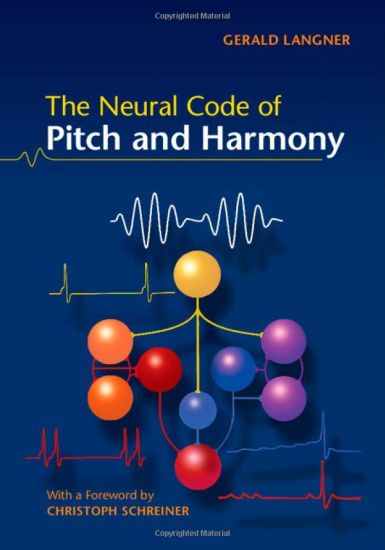
Harmony is an integral part of our auditory environment. Resonances characterised by harmonic frequency relationships are found throughout the natural world and harmonic sounds are essential elements of speech, communication and, of course, music. Providing neurophysiological data and theories that are suitable to explain the neural code of pitch and harmony, the author demonstrates that musical pitch is a temporal phenomenon and musical harmony is a mathematical necessity based on neuronal mechanisms. Moreover, he offers new evidence for the role of an auditory time constant for speech and music perception as well as for similar neuronal processing mechanisms of auditory and brain waves. Successfully relating current neurophysiological results to the ancient ideas of Pythagoras, this unique title will appeal to specialists in the fields of neurophysiology, neuroacoustics, linguistics, behavioural biology and musicology as well as to a broader audience interested in the neural basis of music perception.