Kirjojen hintavertailu. Mukana 11 391 745 kirjaa ja 12 kauppaa.

Kirjahaku

Etsi kirjoja tekijän nimen, kirjan nimen tai ISBN:n perusteella.

1000 tulosta hakusanalla Gerald Schoenewolf

The Art of Hating

The Art of Hating

Gerald Schoenewolf

Jason Aronson Inc. Publishers
1990
sidottu
"The world is full of hate but few people know how to hate well". So begins Gerald Schoenewolf's study of hate. His main argument is that most people hate in destructive ways. As individuals we routinely act out hateful feelings - from jealousy to loathing to bitterness to contempt to disgust to irritation to rage - with hardly a backward glance. We are concerned with the immediate need to protect ourselves, or to get and create a climate of animosity and distrust. To hate well, we must be able to distinguish between our objective and subjective hate, willing to risk verbalizing the objective hate and determined to ride out the consequences of verbalizing it. This book explores the many ways people express subjective hate - including characterological, perverse, cultural, political, sexual and parent-child hate. It provides a history of the development of the art of hating in the psychotherapeutic laboratory, and then a chapter on the "art of hating in everyday life". In a final chapter, "The Future of Hate", Schoenewolf confesses that this book is itself an expression of hate - objective hate - which he hopes will move readers to become more aware of how their subjective hate impedes them, It is written without psychoanalytic jargon and aims to be of interest to both professionals and lay people.
Freud in Love: And Three Other Screenplays

Freud in Love: And Three Other Screenplays

Gerald Schoenewolf

Independently Published
2019
nidottu
This is the second volume of a series that collects my most prominent screenplays. FREUD IN LOVE AND THREE OTHER SCREENPLAYS is, like those in the first volume, is comprised of literary screenplays; two are adaptions of noted literary works and the other two are the most literary of the screenplays I have written. One, MAID OF THE MIST, was specifically written in verse to be read-as well as to be produced. The other one, Freud in Love, though not written in verse, is a classic story about real characters involved in a universal theme. FREUD IN LOVE, the lead-off script, is based on historical accounts of not only Sigmund Freud but the fascinating psychoanalytic world of Vienna in the Victorian era. It is a love triangle focusing on Freud, his handsome but troubled young prot g , Victor Tausk, and an emancipated psychoanalyst-belle from France, Lou Andreas-Salome. NOTES FROM THE UNDERGROUND is one of Dostoyevski's darkest and most psychological novels. Adapting it into a screenplay was not difficult, for he wrote wonderful scenes with ironic streams of consciousness and brilliant stretches of dialog between The Mouse and Liza, the tender whore whom the Mouse uses and abuses. The title, MAID OF THE MIST, was taken from the name of the boat that for many years has taken tourists up to the Niagara Falls. The girl who was known as the Maid of the Mist was named Lelawala, daughter of Chief Eagle Eye, and it is her myth that was the source of this screenplay, based in part on the notes of French explorer LaSalle. It is a musical, written in verse and with songs. The modern version of HAMLET included here is absolutely true to Shakespeare. Old English has been changed to modern English, but otherwise it is line for line just the way Shakespeare wrote it. I have edited it a bit to adapt it for the screen. I hope this version will be produced, so modern audiences can again enjoy the vitality of this enduring tragedy.
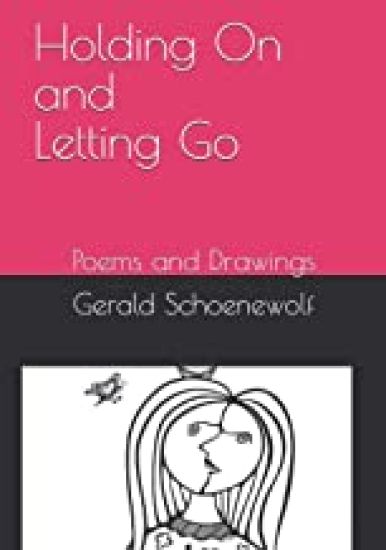
Holding On and Letting Go: Poems and Drawings

Holding On and Letting Go: Poems and Drawings

Gerald Schoenewolf

Createspace Independent Publishing Platform
2009
nidottu
The author, a psychoanalyst, has collected his philosophical poems and primitive drawings (the latter which he did while his patients were on the couch. Two categories of poems populate the book. Those in the first section, "Holding On," were mainly done in the first half of his life, and evidence a disturbed viewpoint of regretting and brooding about things. Those in the second section, "Letting Go," describe the state of accepting life as it is and living in harmony, a state which he aspired to obtain after about 40 years of his own psychotherapy. In all there are 58 poems and 50 drawingsWhile the author believes that the later poems represent emotional maturity, he does not now see himself as mature, but rather, improved. He passes on this collection in the hope that others will benefit from his journey.
Counterresistance

Counterresistance

Gerald Schoenewolf

Jason Aronson Inc. Publishers
1977
sidottu
Advances the proposition that the first responsibility of psychotherapists is to analyse their own resistance to their patients. This primer aims at both new and experienced professionals, outlining the various kinds of counterresistance, their manifestations and how to analyse and resolve them.
The Couple Who Fell in Hate

The Couple Who Fell in Hate

Gerald Schoenewolf

Jason Aronson Inc. Publishers
1996
sidottu
Arguing that no one approach is correct for all patients, this textbook provides an overview of the various disorders observed by psychotherapists. It describes how gestalt and behavioural orientations are integrated with a psychodynamic understanding to produce individualised treatment.
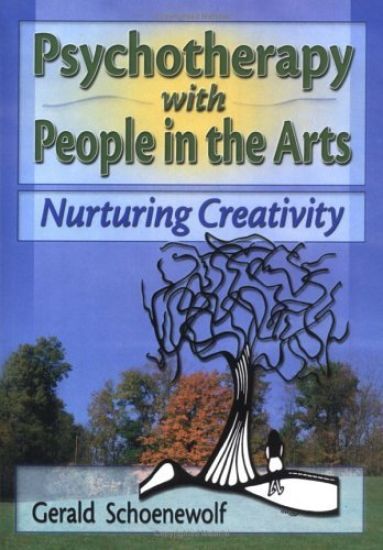
Psychotherapy with People in the Arts

Psychotherapy with People in the Arts

Terry S Trepper; Gerald Schoenewolf

Routledge Member of the Taylor and Francis Group
2002
sidottu
Learn to free creativity from the shackles of emotional conflicts!This riveting collection of case histories illustrates the dark interplay of neurosis and creativity. Psychotherapy with People in the Arts explores the struggles of writers, painters, actors, and composers to reconcile their overwhelming need to create and the self-doubts, frustrations, and neuroses that block their potential. In addition to ten inspiring tales of healing and self-knowledge, Psychotherapy with People in the Arts provides a solid introduction to the primary issues related to emotional disorders and creativity. It begins with a study of the notoriously reclusive and eccentric writer J. D. Salinger. Using both theory and case example, it shows how family history, present relations, and genetics can combine to impede the flow of an artist’s natural gifts-and how a good therapist can help unblock that creative power. It also includes a series of tests to diagnose blocked creativity. Psychotherapy with People in the Arts explores such compelling themes as: dealing with racism and internalized self-hatred the conflict between commercial and high art anger and blocked tears the drive for an impossible perfection emotional alienation and sexual acting outPsychotherapy with People in the Arts is a fascinating look at a complex and controversial subject. Though not everyone is a professional artist, every human being has creative potential that can be blocked by emotional disturbances. And every therapist, mental health educator, and artist will find rich sources of information and inspiration in this book. Visit the author's website at http://www.livingcenter.net
Psychotherapy with People in the Arts

Psychotherapy with People in the Arts

Terry S Trepper; Gerald Schoenewolf

Routledge Member of the Taylor and Francis Group
2002
nidottu
Learn to free creativity from the shackles of emotional conflicts!This riveting collection of case histories illustrates the dark interplay of neurosis and creativity. Psychotherapy with People in the Arts explores the struggles of writers, painters, actors, and composers to reconcile their overwhelming need to create and the self-doubts, frustrations, and neuroses that block their potential. In addition to ten inspiring tales of healing and self-knowledge, Psychotherapy with People in the Arts provides a solid introduction to the primary issues related to emotional disorders and creativity. It begins with a study of the notoriously reclusive and eccentric writer J. D. Salinger. Using both theory and case example, it shows how family history, present relations, and genetics can combine to impede the flow of an artist’s natural gifts-and how a good therapist can help unblock that creative power. It also includes a series of tests to diagnose blocked creativity. Psychotherapy with People in the Arts explores such compelling themes as: dealing with racism and internalized self-hatred the conflict between commercial and high art anger and blocked tears the drive for an impossible perfection emotional alienation and sexual acting outPsychotherapy with People in the Arts is a fascinating look at a complex and controversial subject. Though not everyone is a professional artist, every human being has creative potential that can be blocked by emotional disturbances. And every therapist, mental health educator, and artist will find rich sources of information and inspiration in this book. Visit the author's website at http://www.livingcenter.net