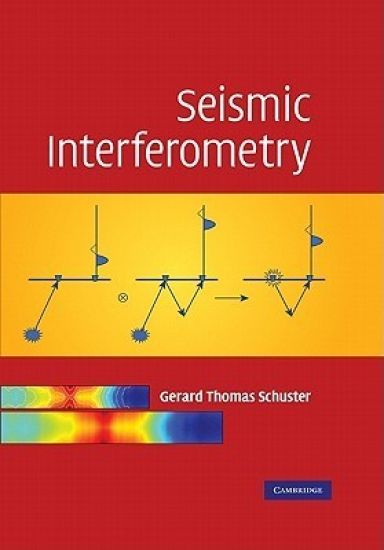
Seismic interferometry is an exciting field in geophysics utilising multiple scattering events to provide unprecedented views of the Earth's subsurface. This is a comprehensive book describing the theory and practice of seismic interferometry with an emphasis on applications in exploration seismology. Exercises are provided at the end of each chapter, and the text is supplemented by online MATLAB codes that illustrate important ideas and allow readers to generate synthetic traces and invert these to determine the Earth's reflectivity structure. Later chapters reinforce these principles by deriving the rigorous mathematics of seismic interferometry. Incorporating examples that apply interferometric imaging to synthetic and field data, from applied geophysics and earthquake seismology, this book is a valuable reference for academic researchers and oil industry professionals. It can also be used to teach a one-semester course for advanced students in geophysics and petroleum engineering.
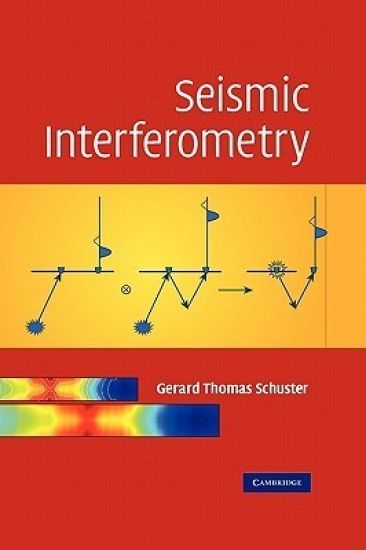
Seismic interferometry is an exciting field in geophysics utilising multiple scattering events to provide unprecedented views of the Earth's subsurface. This is a comprehensive book describing the theory and practice of seismic interferometry with an emphasis on applications in exploration seismology. Exercises are provided at the end of each chapter, and the text is supplemented by online MATLAB codes that illustrate important ideas and allow readers to generate synthetic traces and invert these to determine the Earth's reflectivity structure. Later chapters reinforce these principles by deriving the rigorous mathematics of seismic interferometry. Incorporating examples that apply interferometric imaging to synthetic and field data, from applied geophysics and earthquake seismology, this book is a valuable reference for academic researchers and oil industry professionals. It can also be used to teach a one-semester course for advanced students in geophysics and petroleum engineering.
Describes the theory and practice of inverting seismic data for subsurface rock properties of the earth. The primary application is for inverting reflection and transmission data from engineering or exploration surveys, but methods also can be used for earthquake studies. Computational labs are provided for most chapters.
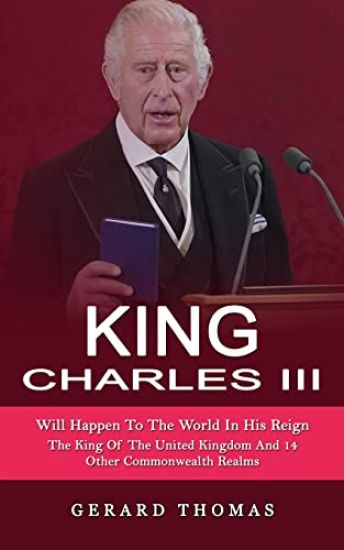
Would you love to know to know about the new King of England?Would you love to know more detailed fact about King Charles III?In this detailed, quality and precise guide, you will learn everything about the new King of England.Charles III is the new King of the UK and fourteen other commonwealth region.Mark Gilbert gets back with a short and enrapturing study of Britain's new monarch, King Charles III.King Charles acceded to the throne on 8 September 2022 upon the death of his mother, Queen Elizabeth II.In 2008, The Daily Telegraph described Charles as the "hardest-working member of the royal family." He carried out 560 official engagements in 2008, 499 in 2010, and over 600 in 2011.He is also the longest serving Leader of Wales since July, 1958 until his agreement.He is the eldest individual ever to assume the British seat.Get this book today
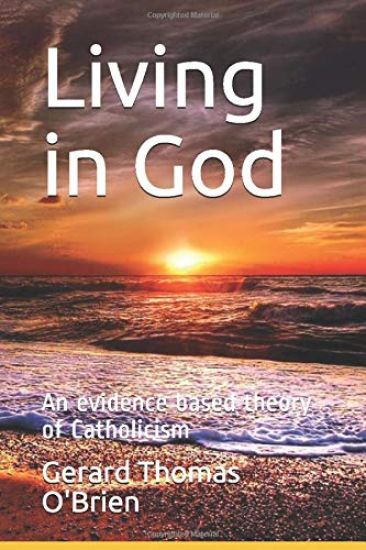
Living in God presents a theory of Catholicism based upon the evidence of faith as revealed through the sacramental celebration of Baptism. In a general sense it is intended for those readers who have an interest in developing a more logical and scientific approach to the domain of Catholic Christianity. More particularly for Catholic Christians it seeks to provide them with an exact and coherent way of understanding how they dwell inside the mystery of God.
The Mercantilist School never presented a common front but is associated with a common outlook: the idea of specie or bullion as the essence of wealth and the notion that a positive balance of trade is an index of national welfare. It is also associated with an emphasis on population growth and low wages, a concern with full employment and the far reaching denial of foreign trade as a source of net gain to the world as a whole; that is, international trade was regarded as a zero-sum gain and particular nations were thought to benefit from international trade only at the expense of others. The underlying idea that a permanent balance of trade surplus should be beneficial to a nation has been a source of discussion right down to the present day.
The 18th century was a wealth of knowledge, exploration and rapidly growing technology and expanding record-keeping made possible by advances in the printing press. In its determination to preserve the century of revolution, Gale initiated a revolution of its own: digitization of epic proportions to preserve these invaluable works in the largest archive of its kind. Now for the first time these high-quality digital copies of original 18th century manuscripts are available in print, making them highly accessible to libraries, undergraduate students, and independent scholars.Delve into what it was like to live during the eighteenth century by reading the first-hand accounts of everyday people, including city dwellers and farmers, businessmen and bankers, artisans and merchants, artists and their patrons, politicians and their constituents. Original texts make the American, French, and Industrial revolutions vividly contemporary.++++The below data was compiled from various identification fields in the bibliographic record of this title. This data is provided as an additional tool in helping to insure edition identification: ++++British LibraryT099766Editor's preface signed: G. Jermyn.Ipswich: printed and sold by G. Jermyn. Sold by R. Loder, Woodbridge; and by Messrs. Rivingtons, London, 1790. 133, 1]p.; 8
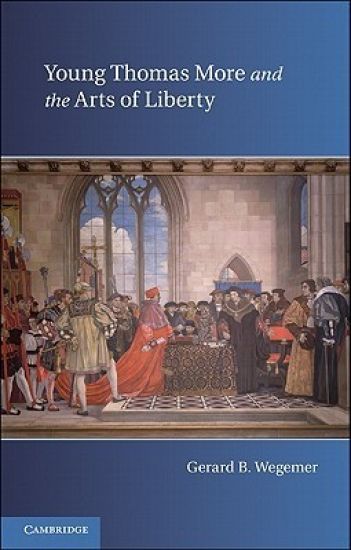
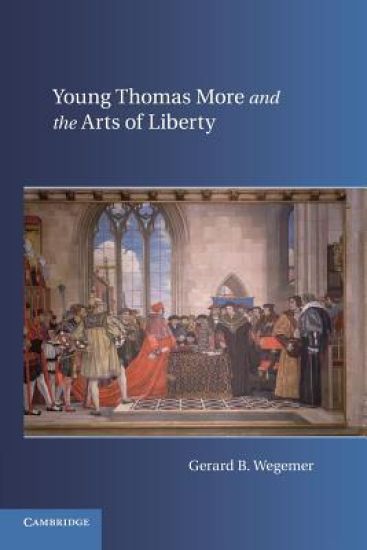
What does it mean to be a free citizen in times of war and tyranny? What kind of education is needed to be a 'first' or leading citizen in a strife-filled country? And what does it mean to be free when freedom is forcibly opposed? These concerns pervade Thomas More's earliest writings, writings mostly unknown, including his 280 poems, declamation on tyrannicide, coronation ode for Henry VIII and his life of Pico della Mirandola, all written before Richard III and Utopia. This book analyzes those writings, guided especially by these questions: Faced with generations of civil war, what did young More see as the causes of that strife? What did he see as possible solutions? Why did More spend fourteen years after law school learning Greek and immersed in classical studies? Why do his early works use vocabulary devised by Cicero at the end of the Roman Republic?
What does it mean to be a free citizen in times of war and tyranny? What kind of education is needed to be a 'first' or leading citizen in a strife-filled country? And what does it mean to be free when freedom is forcibly opposed? These concerns pervade Thomas More's earliest writings, writings mostly unknown, including his 280 poems, declamation on tyrannicide, coronation ode for Henry VIII and his life of Pico della Mirandola, all written before Richard III and Utopia. This book analyzes those writings, guided especially by these questions: Faced with generations of civil war, what did young More see as the causes of that strife? What did he see as possible solutions? Why did More spend fourteen years after law school learning Greek and immersed in classical studies? Why do his early works use vocabulary devised by Cicero at the end of the Roman Republic?
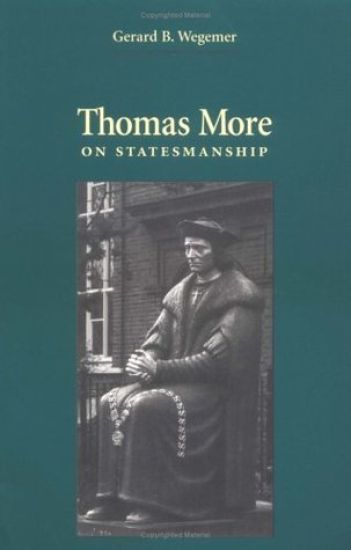
The term ""statesman"" entered the English language during the Renaissance as a result of the widespread return to the Greek and Roman classics. Sir Thomas More, who brought his careful study of Plato and Aristotle, Cicero and Augustine to bear upon his political life, contributed most to the recovery of the ancient Greco-Roman concept of the statesman. Throughout More's writings and his actions one finds a consistent and principled approach to statesmanship that emphasizes the free character of the human person and integrates classical and Christian thought with the best of England's common law tradition of self-rule. This study is the first to examine More's complete works in view of his concept of statesmanship, and, in the process, link More's humanism, his faith, and his legal and political vocations into a coherent narrative. In Part One Gerard B. Wegemer sets forth More's theory of statesmanship, drawing heavily from the entire corpus of his work. In the second part he presents More's understanding of literature and applies this understanding to his book Utopia. In Part Three he investigates the two most controversial events in More's life: his treatment of heretics and his refusal to obey his king. More presented a consistent defense of institutional arrangements now taken as basic to all democratic government: rule of law, division of power, separation of church and state, elected representation, and protected forms of free and public deliberation. He believed that the essential work of the statesman is to draw upon the nation's deepest and longest-standing consensus, as expressed in its literature and its laws, in order to govern with the people's consent. More was convinced that law, not individual persons, should rule.This book, which integrates the literature, philosophy, history, and politics of the Renaissance, will appeal across disciplines to scholars of early modern England and to anyone fascinated by the life and times of St. Thomas More. Gerard B. Wegemer is the author of Thomas More: A Portrait of Courage (1995) and has written about More and his times for such journals as Renascence, Philosophy and Rhetoric, Moreana, and The Review of Politics. He holds master's degrees in political philosophy and literature from Boston College and Georgetown respectively, and a doctorate in English literature from Notre Dame. He is associate professor of literature at the University of Dallas, and he teaches and lectures regularly on St. Thomas More. -------------------------------------------------------------------------------- ""Professor Wegemer's book is an extraordinary work of interpretation. The key to its success is a comprehensive grasp of More's life and work, rooted in a profound sympathy for the man and his goals. With a calm and confident hand, Wegemer sheds new light on More's views of statesmanship and its requirements, on the inner structure of his enigmatic and playful masterpiece Utopia, and on the guiding conceptions of his practical political life. Rarely do authors show such a capacity for leaping across the chasm of culture and years to understand the vision that makes sense of a man's life and thought.""-- Professor Christopher Wolfe, Department of Political Science, Marquette UniversityTable of ContentsIntroductionI. More's Understanding of the Statesman's Work1. Can Reason Rule the Free?2. First, Self-Rule3. Ruling Citizens: What Is Needed?II. Utopia: A Statesman's Puzzle4. Literature and the Acquisition of Political Prudence5. Utopia 1 and 2: Dramatizing Competing Philosophies of Life6. Utopia 1: Ciceronian Statesmanship7. Utopia 2: Augustinian RealistIII. Issues in More's Career as Statesman8. The Limits of Reason and the Need for Law9. Reform over Revolution: In Defense of Free