Kirjojen hintavertailu. Mukana 11 238 995 kirjaa ja 12 kauppaa.

Kirjahaku

Etsi kirjoja tekijän nimen, kirjan nimen tai ISBN:n perusteella.

1000 tulosta hakusanalla Gerhard Ferres

Der Mythos von Medea: Didaktische Ausarbeitung zu Christa Wolfs Medea

Der Mythos von Medea: Didaktische Ausarbeitung zu Christa Wolfs Medea

Gerhard Ferres

Createspace Independent Publishing Platform
2015
nidottu
Medea ist ein alter Mythos, mit dem sich seit dem viele Autoren befasst haben und durch ihre Bearbeitung jedes Mal neuen Interpretationsspielraum hinzugef gt haben. Der Medea-Stoff stammt nicht von Christa Wolf. Sie hat diesen Stoff aufgegriffen und auf ihre eigene Weise dargestellt, wie es ber die vielen Jahrhunderte auch schon passiert ist. So entstammt der Mythos der Medea dem alten Griechenland, wo sich nicht nur Euripides mit diesem besch ftigt hat. In ber 2000 Jahren hat sich der Mythos gewandelt. Je nach Autor wird sie als D monin und M rderin gestaltet, die wenig Gutes in sich hat und als Katastrophenverursacherin gesehen wird. Dann gibt es noch das Bild der zu bemitleidenden Frau, die von Jason betrogen wird und ihr aus Schmerz nichts anderes brig bleibt, als Jason da zu treffen, wo es ihm am wehesten tut. Er kann keine Macht in Korinth erlangen, solange er nicht Kreusa/ Glauke heiratet, also muss sie sterben, genauso wie seine Kinder, die er liebt. In der Mythologie hat Medea ihre Familie verraten aus Liebe zu Jason. Christa Wolf zeichnet nun ein anderes Bild. Diese Arbeit wird sich damit besch ftigen, inwieweit Medea. Stimmen mit den ltesten berlieferten Bearbeitungen der griechischen und r mischen Antike bereinstimmt und was Christa Wolf aus welchen Gr nden anders gestaltet hat. Dabei ist es erst einmal wichtig zu verstehen, was ein Mythos berhaupt ist. Welche unterschiedlichen Sichtweisen gab es bereits in der Antike? Warum griff Christa Wolf darauf zur ck? Im Weiteren wird es um eine didaktische Perspektive f r den Unterricht gehen. Warum sollten Mythen in der heutigen Zeit behandelt werden? Wie kann man Medea. Stimmen in den Unterricht einbetten? Dies sind die Hauptfragen, mit denen sich diese Hausarbeit besch ftigt. Inhaltsangabe: 1.Einleitung 2.Bedeutung eines Mythos 3.Der Mythos Medea 3.1.Medea als alter griechischer Mythos 3.2.Medea bei Euripides 3.3.Medea in der r mischen Antike 4.Mythen im literarischen Schaffen von Christa Wolf 4.1.Christa Wolfs R ckgriff auf den Medea-Mythos 4.2.Kassandra - Wolfs erste R ckbeziehung auf einen mythischen Stoff 5.Literaturdidaktische Diskussion zum Umgang mit mythischen Stoffen im Unterricht unter besonderer Ber cksichtigung von Christa Wolfs Medea 6.Schlussbetrachtung 7.Literaturverzeichnis 7.1.Prim rliteratur 7.2.Sekund rliteratur Studienarbeit Autor: Gerhard Ferres (Pseudonym dokumente-online.com) Otto-von-Guerice-Universit t Magdeburg 2015

Eine Analyse des historischen Romans "Halbschatten" von Uwe Timm: Inklusive Ausblicke für eine mögliche Umsetzung als EBook
Der historische Roman ist weitgehend durch seine Stoff- und Themenwahl bestimmt. Diese Sonderform des Romans kann jedoch nicht nur auf eine Verarbeitung von geschichtlichen Ereignissen durch menschliche Handlungen reduziert werden. Vielmehr flie en im historischen Roman unterschiedliche Aspekte ein, die innerhalb der Definition bedacht werden m ssen. Die dargestellten Geschehnisse innerhalb des historischen Romans scheinen auf Tatsachen zu beruhen. Allerdings sind die Geschehnisse bei intensiverer Betrachtung kein Repr sentant einer unmittelbaren Wirklichkeit. Nur einige und nicht alle Handlungen m ssen tats chlich geschehen sein. "Der Aspekt der Vergangenheit dient dazu, den historischen Roman als realistisches Genre vom Zeit-, Gegenwarts- und Gesellschaftsroman zu unterscheiden." Die Vergangenheit setzt zwar einen markanten 'Damals-heute-Gegensatz" voraus und meint damit nicht die "Gegenwart"; bleibt aber trotzdem ein Begriff mit flie enden Grenzen. D.h. dass es sich hierbei nicht unbedingt um zur ckliegende und abgeschlossene Ereignisse handeln muss, sondern dass diese durch die Verbindung mit der Gegenwart in besonderer Erinnerung symbolisch verankert und somit pr sent sein k nnen. Das Vergangene ist nicht abgeschlossen, sondern hat einen wirkenden Einfluss auf die gegenw rtige Situation. Der historische Roman ist dominant narrativ angelegt, enth lt aber auch dramatische und lyrische Darstellungsweisen, um somit eine Verlebendigung der Geschehnisse zu erzielen. Verlebendigung beinhaltet die Entdeckung des verlebendigenden Erz hlens in Historiographie und Fiktion. Die Vergangenheit wird dabei als eine errinnerungswerte Vorgeschichte erlebt, die das Interesse f r das Verschwundene und Andere weckt. Zusammenfassend zeigt sich, dass der historische Roman die Vergangenheit anschaulich macht, die in der Gegenwart wieder ins Bewusstsein treten soll. Dies erreicht der Roman, indem er verlebendigt, was tats chlich vergangen und somit endg ltig tot ist. Er erg nzt, was zwar nicht berliefert wurde oder nicht geschehen ist, aber in einer bestimmten Konstellation eine sinnvolle Verkn pfung herstellt. Er erkl rt, weshalb etwas geschehen ist und welche Wirkungen es haben wird. Historische Gegebenheiten werden entlarvt bzw. korrigiert. Er reflektiert ber Geschichte, Geschichtsschreibung und historisches Erz hlen und demontiert offizielle Verst ndigungen ber Wahrheit, Geschichtssinn, Ged chtnis und Erinnerung. Kann der Roman Halbschatten von Uwe Timm in der Gattung des historischen Roman aufgegriffen werden? Schauplatz des Romans "Halbschatten" ist der Berliner Invalidenfriedhof, ein zentraler Ort deutscher Milit rgeschichte. Hier liegt eine au ergew hnliche Frau begraben, die Fliegerin Marga von Etzdorf, die 1931 mit einem Flugzeug im Alleinflug in nur elf Flugtagen die Strecke Berlin - Tokio bew ltigte; zu damaliger Zeit ein Rekordflug. 1.Definition des historischen Romans 1.1.Formen des historischen Romans 2.Kann der Roman Halbschatten von Uwe Timm in der Gattung des historischen Roman aufgegriffen werden? 2.1.Informationen zum Autor 2.2.Inhaltsangabe des Romans "Halbschatten" 2.3.R ckgriff auf die Frage des Gattungsbegriffs 3.Informationen zum Titel "Halbschatten" 4.Sprachliche Besonderheiten des Romans 4.1.Die Gedichte innerhalb des Romans 5.Das elektronische Buch als eine Form der Erweiterung des Buchdrucks? 6. berlegungen zur Umsetzung des Romans Halbschatten als E- Book 7.Schluss berlegung: 8.Anhang 8.1.Literaturverzeichnis 8.2.Internet Studienarbeit Autor: Gerhard Ferres (Pseudonym dokumente-online.com) Universit t zu K ln 2015
Audrey Ferris. a Novel.

Audrey Ferris. a Novel.

Frances A Gerard

British Library, Historical Print Editions
2011
pokkari
Title: Audrey Ferris. A novel.Publisher: British Library, Historical Print EditionsThe British Library is the national library of the United Kingdom. It is one of the world's largest research libraries holding over 150 million items in all known languages and formats: books, journals, newspapers, sound recordings, patents, maps, stamps, prints and much more. Its collections include around 14 million books, along with substantial additional collections of manuscripts and historical items dating back as far as 300 BC.The FICTION & PROSE LITERATURE collection includes books from the British Library digitised by Microsoft. The collection provides readers with a perspective of the world from some of the 18th and 19th century's most talented writers. Written for a range of audiences, these works are a treasure for any curious reader looking to see the world through the eyes of ages past. Beyond the main body of works the collection also includes song-books, comedy, and works of satire. ++++The below data was compiled from various identification fields in the bibliographic record of this title. This data is provided as an additional tool in helping to insure edition identification: ++++ British Library Gerard, Frances A.; null 8 . 012633.m.48.
Modular Technologies for Zero/Low Emissions Ferries and Yachts

Modular Technologies for Zero/Low Emissions Ferries and Yachts

Gerard Falcou; Marielle Labrosse; Dominique Millet

Createspace Independent Publishing Platform
2012
nidottu
This book summarizes some key results of a research project based on an innovative eco-design methodology while delivering a practical critical review of existing approaches for dealing with both Eco-Design and Hybrid-Electric Propulsion Trains before considering a proper understanding of these elements and how to make a proper and critical choice for designing zero/low emissions ships. The authors also illustrate the various and different attempts to integrate zero/low emissions with Operational Specifications and the likely features of these attempts are considered, and the scope for developing "fresh" approaches is then presented. One case example is used to show how the methodology can offer an effective approach for designing and operating ships that can meet improved zero/low emissions requirements. Furthermore, this book will present guidelines for new low-emissions designs for passenger ferries, where the scenarios' challenging issue is to achieve both and simultaneously: - "ZERO/LOW EMISSIONS" passenger vessels (limiting the negative environmental impact due to gas emissions and fuel consumption) - Operational capability to reach and maintain an acceptable speed to ensure a daily service, competitive with the other modes of transport.
Shaping Abortion Discourse

Shaping Abortion Discourse

Myra Marx Ferree; William Anthony Gamson; Jürgen Gerhards; Dieter Rucht

Cambridge University Press
2002
sidottu
Using controversy over abortion as a lens through which to compare the political process and role of the media in these two very different democracies, this book examines the contest over meaning that is being waged by social movements, political parties, churches and other social actors. Abortion is a critical battleground for debates over social values in both countries, but the constitutional premises on which arguments rest differ, as do the strategies that movements and parties adopt and the opportunities for influence that are open to them. By examining how these debates are conducted and by whom in light of the normative claims made by democratic theorists, the book also offers a means of judging how well either country lives up to the ideals of democratic debate in practice.
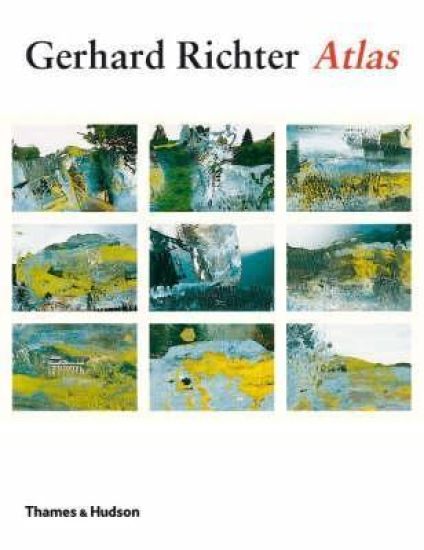
Gerhard Richter

Gerhard Richter

Dietmar Elger

University of Chicago Press
2010
sidottu
Gerhard Richter is one of the most important and popular artists of the postwar era. For decades he has sought innovative ways to make painting more relevant, often through a multifaceted dialogue with photography. Today Richter is most widely recognized for the photo-paintings he made during the 1960s that rely on images culled from mass media and pop culture. Always fascinated with the limits and uncertainties of representation, he has since then produced landscapes, abstractions, glass and mirror constructions, prints, sculptures, and installations. Though Richter has been known in the United States for quite some time, the highly successful retrospective of his work at the MOMA in 2002 catapulted him to unprecedented fame. Enter noted curator Dietmar Elger, who here presents the first biography of this contemporary artist. Written with full access to Richter and his archives, this fascinating book offers unprecedented insight into his life and work. Elger explores Richter's childhood in Nazi Germany; his years as a student and mural painter in communist East Germany; his time in the West during the turbulent 1960s and '70s, when student protests, political strife, and violence tore the Federal Republic of Germany apart; and, his rise to international acclaim during the 1980s and beyond. Richter has always been a difficult personality to parse, and the seemingly contradictory strands of his artistic practice have frustrated and sometimes confounded critics. But the extensive interviews on which this book is based disclose a Richter who is far more candid and vivid than ever before. The result is a book that will be the foundational portrait of this artist and his profoundly influential oeuvre.
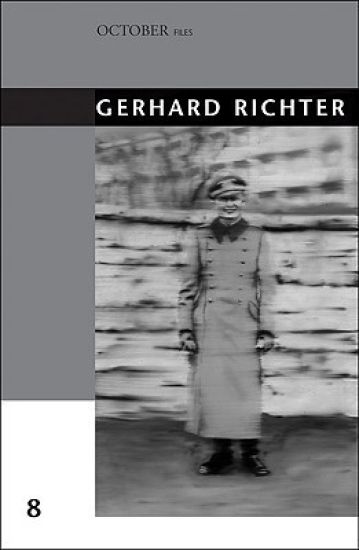
Gerhard Richter
The first collection of essays on Gerhard Richter, who has been called "the greatest modern painter."The contemporary painter Gerhard Richter (born in 1932) has been heralded both as modernity's last painter and as painting's modern savior, seen to represent both the end of painting and its resurrection. Richter works in a dizzying variety of styles, from abstraction to a German cool pop that combines painterly technique and appropriation; his work includes photo paintings, large abstract canvases, and stained glass windows. This collection features writing by prominent critics, including Hal Foster, Gertrud Koch, and Thomas Crow; an essay by Rachel Haidu on Richter's family pictures that is published here for the first time; and an essay and two interviews with the artist by Benjamin H. D. Buchloh, Richter's "longtime sparring partner" (as the curator Robert Storr has called him). These writings examine Richter's work as a whole, from October 18, 1977, his dreamlike series of paintings depicting the dead Baader-Meinhof gang, to his abstract trio Abstract Paintings; from his unsettling portrait of "Uncle Rudi" in Nazi garb to his late series of portraits of his wife and young child. This addition to the October Files series will be an essential handbook to one of the most enigmatic figures in contemporary artContents Gerhard Richter and Benjamin H. D. Buchloh Interview (1986) Gertrud Koch The Richter-Scale of Blur (1992) Thomas Crow Hand-Made Photographs and Homeless Representation (1992) Birgit Pelzer The Tragic Desire (1993) Benjamin H. D. Buchloh Divided Memory and Post-Traditional Identity: Gerhard Richter's Work of Mourning (1996) Peter Osborne Abstract Images: Sign, Image, and Aesthetic in Gerhard Richter's Painting (1998) Hal Foster Semblance According to Gerhard Richter (2003) Johannes Meinhardt Illusionism in Painting and the Punctum of Photography (2005) Rachel Haidu Arrogant Texts: Gerhard Richter's Family Pictures (2007) Gerhard Richter and Benjamin H. D. Buchloh Interview (2004)
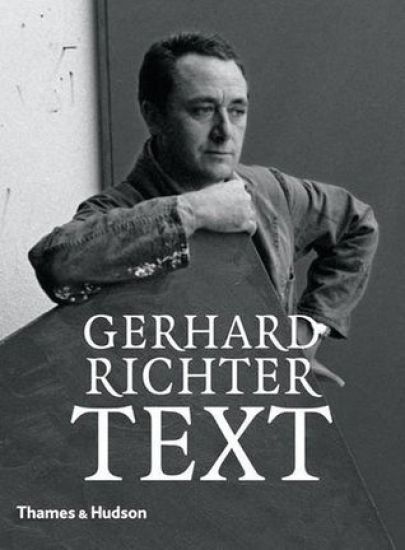
Gerhard Richter - Text

Gerhard Richter - Text

Hans Ulrich Obrist

Thames Hudson Ltd
2009
sidottu
Gerhard Richter is one of the foremost artists of his generation. This book provides a wider selection of Richters texts, from all periods of his career. It includes letters and interviews; private reflections from personal correspondence; and, excerpts from journals discussing the intentions, subjects, methods and sources of his works.
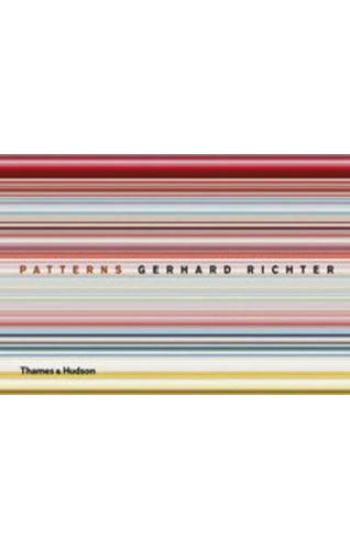
Gerhard Richter Patterns

Gerhard Richter Patterns

Gerhard Richter

Thames Hudson Ltd
2012
sidottu
Documents the author's experiment of taking an image of an original abstract painting and dividing it vertically into two. In this book, each divided part is divided again, mirrored and repeated, producing ever narrower strips, which results in patterns. It includes a total of 238 selected patterns.
Gerhard Richter

Gerhard Richter

Thames Hudson Ltd
2007
sidottu
Maps the ideas, processes, life and times of one of the most important painters at work in the world today - Includes 733 full page, multi-panel, colour images. Richter himself devised the books concept and oversaw its creation. Can also be read as a reflection of recent German history.
Gerhard Herzberg

Gerhard Herzberg

Boris Stoicheff

Canadian Forest Service,Canada
2002
sidottu
Gerhard Herzberg (1904-1999), winner of the 1971 Nobel Prize in Chemistry, is considered the founder of molecular spectroscopy. Born and educated in Germany, he started his seven decades of research just as the discovery of quantum mechanics began unraveling the mysteries of the microscopic world. He chose to study spectroscopy, the light emitted and absorbed by atoms and molecules, eventually moving to Canada where he established the spectroscopy laboratory for the National Research Council. His Ottawa laboratory became a mecca for generations of young scientists from around the world. There Herzberg systematized the knowledge of the field in the classic trilogy Molecular Spectra and Molecular Structure, Atomic Spectra, and Atomic Structure. In awarding the Nobel Prize the Swedish Academy said, "It's quite exceptional in the field of science that a single individual, however distinguished, can be a leader of a whole area of research of general importance."
Gerhard Brunzema

Gerhard Brunzema

Thomas Donahue

Scarecrow Press
1998
sidottu
Documents the craft of the organbuilder Gerhard Brunzema (1927-1992) in terms of the organs he built and how his instruments and his approach to organbuilding had an influence on music history. Divided into two parts, Part I contains essays by people who knew Brunzema and his work, and documents his skill both in the restoration of historically significant instruments in Europe, as well as in the building of new organs in his own style throughout the world. Also included in this section are two musical compositions in his memory by Gerhard Krapf and Barrie Cabena. Part II details the organs themselves during the three phases of his career: in Germany (1954-1971) with his partner Jurgen Ahrend; in Quebec, Canada (1972-1979) with Casavant Freres; and in Ontario (1980-1992) in his own workshop. This section features a complete listing of all the organs he built, descriptions of seventy organs, and a complete technical documentation of one of his instruments. Also included are three articles by Brunzema, proposals for organs that were never built, an annotated discography, a listing of the published photographs of his organs, videography, bibliography, 16 black and white photographs and 41 line drawings.
Gerhard G. Mueller: Father of International Accounting Education
This set of volumes places the labor markets, workplaces, jobs and workers of Europe in comparative perspective. It focuses on the politics, economics, sociology, and history of work and workers in Europe. Authors contribute a variety of methodological and theoretical perspectives, with papers that push the boundaries of evidence and argument. In order to place European workers in comparative perspectives, the volume features articles that analyze specific European countries, industries and firms, analyze Europe as one of a few cases, and analyze many European countries within a cross-national sample. Specific topics covered include: a multilevel study of perceived job insecurity in 27 European countries; work values and job rewards among European workers; managerial intensity and earnings inequality in affluent democracies; cross-national patterns in individual and household employment and work hours by gender and parenthood; the political economy of active social policy in postindustrial democracies; social protection dualism, deindustrialization and cost containment; organized labor in Europe; and, unionization in East European ex-communist countries.
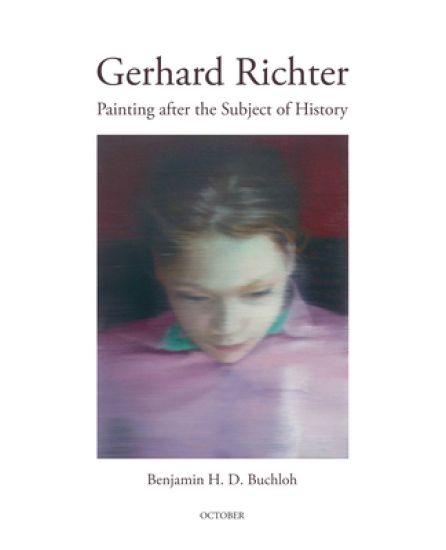
Gerhard Richter, Individualism, and Belonging in West Germany
This book reevaluates the art of Gerhard Richter (b. 1932) in relation to his efforts to achieve belonging in the face of West Germany’s increasing individualism between the 1960s and the 1990s.Richter fled East Germany in 1961 to escape the constraints of socialist collectivism. His varied and extensive output in the West attests to his greater freedom under capitalism, but also to his struggles with belonging in a highly individualised society, a problem he was far from alone in facing. The dynamic of increasing individualism has been closely examined by sociologists, but has yet to be employed as a framework for understanding broader trends in recent German art history. Rather than critique this development from a socialist perspective or experiment with new communal structures like a number of his colleagues, Richter sought and found security in traditional modes of bourgeois collectivity, like the family, religion, painting and the democratic capitalist state.The book will be of interest to scholars working in art history as well as German history, culture and politics.
Gerhard Richter, Individualism, and Belonging in West Germany
This book reevaluates the art of Gerhard Richter (b. 1932) in relation to his efforts to achieve belonging in the face of West Germany’s increasing individualism between the 1960s and the 1990s.Richter fled East Germany in 1961 to escape the constraints of socialist collectivism. His varied and extensive output in the West attests to his greater freedom under capitalism, but also to his struggles with belonging in a highly individualised society, a problem he was far from alone in facing. The dynamic of increasing individualism has been closely examined by sociologists, but has yet to be employed as a framework for understanding broader trends in recent German art history. Rather than critique this development from a socialist perspective or experiment with new communal structures like a number of his colleagues, Richter sought and found security in traditional modes of bourgeois collectivity, like the family, religion, painting and the democratic capitalist state.The book will be of interest to scholars working in art history as well as German history, culture and politics.
Gerhard on Music

Gerhard on Music

Roberto Gerhard; Meirion Bowen

Routledge
2020
nidottu
This title was first published in 2000: Catalan-born composer Roberto Gerhard (1896-1970) left significant legacies - both musical and documentary. Exiled in Cambridge with the onset of the Spanish Civil War, he gradually achieved wide recognition by performers and conductors, in both Britain and America, as a composer whose music was essential to the modern repertoire. In this work, Meirion Bowen collects many of the composer's articles, reviews, lectures and broadcasts to demonstrate the full extent and continuity of Gerhard's artistic and creative thinking. The writings have been arranged thematically to emphasize the evolution of Gerhard's musical interests. His attachment to Spanish and Catalonian traditions broadened into a fascination with folk music of all kinds. His studies with Schoenberg in the mid 1920s gave him the key to his own creative individuality; thereafter, his imaginative vitality led him eventually to experiment with electronic and concrete music and he continued breaking new ground, even in his final years.
Gerhard on Music

Gerhard on Music

Roberto Gerhard; Meirion Bowen

Routledge
2019
sidottu
This title was first published in 2000: Catalan-born composer Roberto Gerhard (1896-1970) left significant legacies - both musical and documentary. Exiled in Cambridge with the onset of the Spanish Civil War, he gradually achieved wide recognition by performers and conductors, in both Britain and America, as a composer whose music was essential to the modern repertoire. In this work, the author collects many of the composer's articles, reviews, lectures and broadcasts to demonstrate the full extent and continuity of Gerhard's artistic and creative thinking. The writings have been arranged thematically to emphasize the evolution of Gerhard's musical interests. His attachment to Spanish and Catalonian traditions broadened into a fascination with folk music of all kinds. His studies with Schoenberg in the mid 1920s gave him the key to his own creative individuality; thereafter, his imaginative vitality led him eventually to experiment with electronic and concrete music and he continued breaking new ground, even in his final years.