

Kirjahaku
Etsi kirjoja tekijän nimen, kirjan nimen tai ISBN:n perusteella.
1000 tulosta hakusanalla Gerhard Habarta


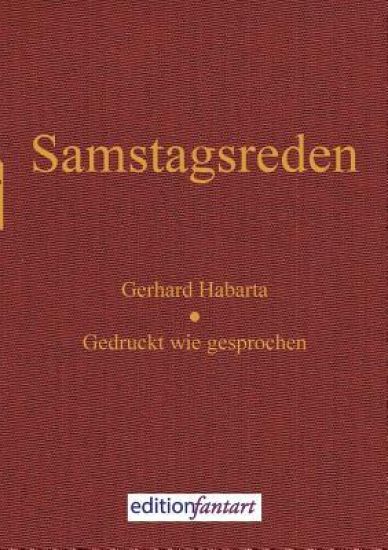
Er ffnungsreden dauern in der Regel etwa 10 Minuten. Man will als Redner m glichst viel ber den K nstler, sein Werk, seine Zeit und sein Leben, die Problematik, die Inhalte und die Rezeption den Besuchern mitteilen. Man will ihnen einen Gesamteindruck der Schau geben und sie auf Details, die einem wichtig erscheinen, hinweisen. Es sind Miniaturen, die als Panoramagem lde daher kommen. Das macht ziemlich viel Arbeit und ist nach kurzem Beifall vorbei. Die Lebensdauer einer Er ffnungsrede, ist sie einmal hinausgeblasen, ist k rzer als die einer Tageszeitung. Und weil nicht gedruckt, ist sie nicht einmal mehr, wie die Redensart von der Tageszeitung behauptet, geeignet um einen toten Fisch einzupacken. Um dem Vergehen zu entgehen, deshalb diese Sammlung von Reden. Die meisten von Er ffnungen von Ausstellungen im PhantastenMuseum, die fast immer samstags stattfinden. Samstagsreden und immer der Versuch, keine Sonntagsreden zu halten. Da ich zur altersgem en Geschw tzigkeit, der weitschweifigen und ausufernden Rede neige, habe ich die meisten in den letzten Jahren aufgeschrieben um sie vorzutragen. Hier sind sie: Gedruckt wie gesprochen.



Gerhard Richter is one of the most important and popular artists of the postwar era. For decades he has sought innovative ways to make painting more relevant, often through a multifaceted dialogue with photography. Today Richter is most widely recognized for the photo-paintings he made during the 1960s that rely on images culled from mass media and pop culture. Always fascinated with the limits and uncertainties of representation, he has since then produced landscapes, abstractions, glass and mirror constructions, prints, sculptures, and installations. Though Richter has been known in the United States for quite some time, the highly successful retrospective of his work at the MOMA in 2002 catapulted him to unprecedented fame. Enter noted curator Dietmar Elger, who here presents the first biography of this contemporary artist. Written with full access to Richter and his archives, this fascinating book offers unprecedented insight into his life and work. Elger explores Richter's childhood in Nazi Germany; his years as a student and mural painter in communist East Germany; his time in the West during the turbulent 1960s and '70s, when student protests, political strife, and violence tore the Federal Republic of Germany apart; and, his rise to international acclaim during the 1980s and beyond. Richter has always been a difficult personality to parse, and the seemingly contradictory strands of his artistic practice have frustrated and sometimes confounded critics. But the extensive interviews on which this book is based disclose a Richter who is far more candid and vivid than ever before. The result is a book that will be the foundational portrait of this artist and his profoundly influential oeuvre.
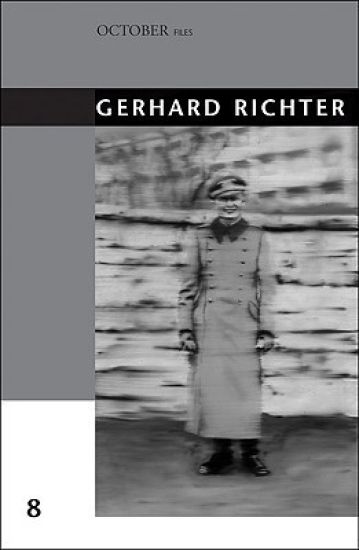
Gerhard Richter
MIT Press
2009
pokkari
The first collection of essays on Gerhard Richter, who has been called "the greatest modern painter."The contemporary painter Gerhard Richter (born in 1932) has been heralded both as modernity's last painter and as painting's modern savior, seen to represent both the end of painting and its resurrection. Richter works in a dizzying variety of styles, from abstraction to a German cool pop that combines painterly technique and appropriation; his work includes photo paintings, large abstract canvases, and stained glass windows. This collection features writing by prominent critics, including Hal Foster, Gertrud Koch, and Thomas Crow; an essay by Rachel Haidu on Richter's family pictures that is published here for the first time; and an essay and two interviews with the artist by Benjamin H. D. Buchloh, Richter's "longtime sparring partner" (as the curator Robert Storr has called him). These writings examine Richter's work as a whole, from October 18, 1977, his dreamlike series of paintings depicting the dead Baader-Meinhof gang, to his abstract trio Abstract Paintings; from his unsettling portrait of "Uncle Rudi" in Nazi garb to his late series of portraits of his wife and young child. This addition to the October Files series will be an essential handbook to one of the most enigmatic figures in contemporary artContents Gerhard Richter and Benjamin H. D. Buchloh Interview (1986) Gertrud Koch The Richter-Scale of Blur (1992) Thomas Crow Hand-Made Photographs and Homeless Representation (1992) Birgit Pelzer The Tragic Desire (1993) Benjamin H. D. Buchloh Divided Memory and Post-Traditional Identity: Gerhard Richter's Work of Mourning (1996) Peter Osborne Abstract Images: Sign, Image, and Aesthetic in Gerhard Richter's Painting (1998) Hal Foster Semblance According to Gerhard Richter (2003) Johannes Meinhardt Illusionism in Painting and the Punctum of Photography (2005) Rachel Haidu Arrogant Texts: Gerhard Richter's Family Pictures (2007) Gerhard Richter and Benjamin H. D. Buchloh Interview (2004)
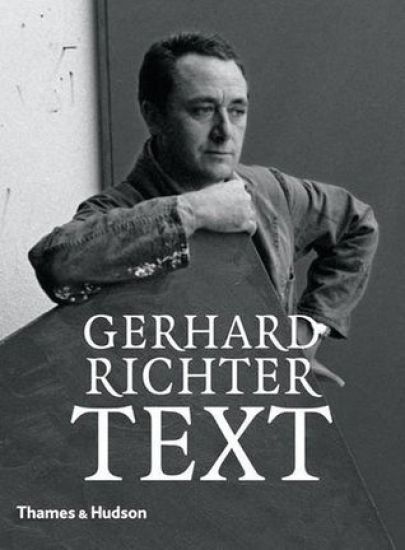
Gerhard Richter is one of the foremost artists of his generation. This book provides a wider selection of Richters texts, from all periods of his career. It includes letters and interviews; private reflections from personal correspondence; and, excerpts from journals discussing the intentions, subjects, methods and sources of his works.
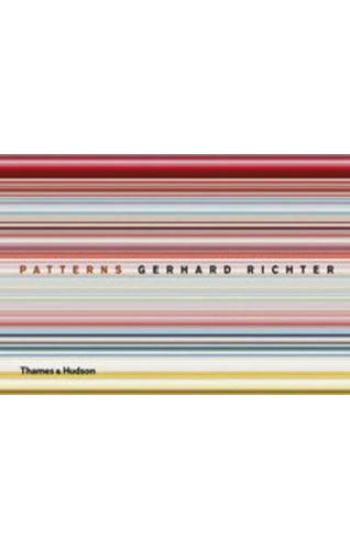
Documents the author's experiment of taking an image of an original abstract painting and dividing it vertically into two. In this book, each divided part is divided again, mirrored and repeated, producing ever narrower strips, which results in patterns. It includes a total of 238 selected patterns.
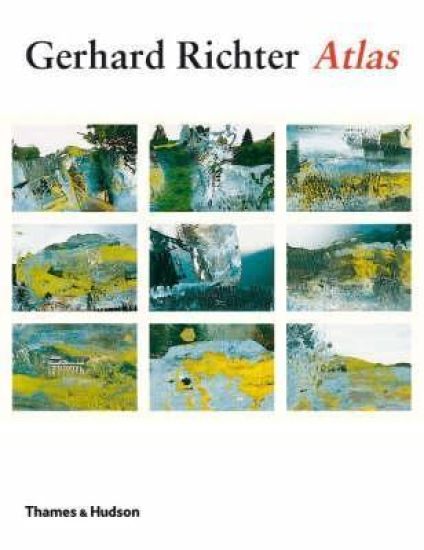
Gerhard Richter
Thames Hudson Ltd
2007
sidottu
Maps the ideas, processes, life and times of one of the most important painters at work in the world today - Includes 733 full page, multi-panel, colour images. Richter himself devised the books concept and oversaw its creation. Can also be read as a reflection of recent German history.

Gerhard Herzberg (1904-1999), winner of the 1971 Nobel Prize in Chemistry, is considered the founder of molecular spectroscopy. Born and educated in Germany, he started his seven decades of research just as the discovery of quantum mechanics began unraveling the mysteries of the microscopic world. He chose to study spectroscopy, the light emitted and absorbed by atoms and molecules, eventually moving to Canada where he established the spectroscopy laboratory for the National Research Council. His Ottawa laboratory became a mecca for generations of young scientists from around the world. There Herzberg systematized the knowledge of the field in the classic trilogy Molecular Spectra and Molecular Structure, Atomic Spectra, and Atomic Structure. In awarding the Nobel Prize the Swedish Academy said, "It's quite exceptional in the field of science that a single individual, however distinguished, can be a leader of a whole area of research of general importance."