Kirjojen hintavertailu. Mukana 11 213 693 kirjaa ja 12 kauppaa.

Kirjahaku

Etsi kirjoja tekijän nimen, kirjan nimen tai ISBN:n perusteella.

1000 tulosta hakusanalla Gerhard Ratzlaff

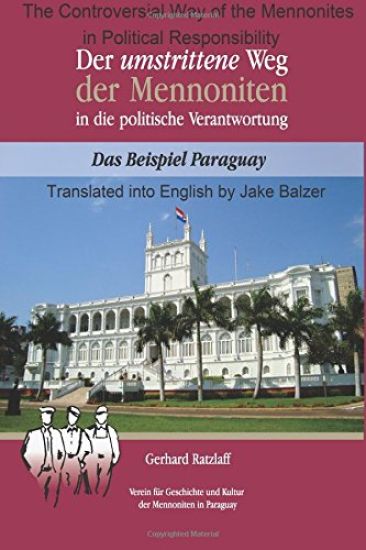
Der umstrittene Weg der Mennoniten in die politische Verantwortung: Das Beispiel Paraguay

Der umstrittene Weg der Mennoniten in die politische Verantwortung: Das Beispiel Paraguay

Gerhard Ratzlaff

Createspace Independent Publishing Platform
2014
nidottu
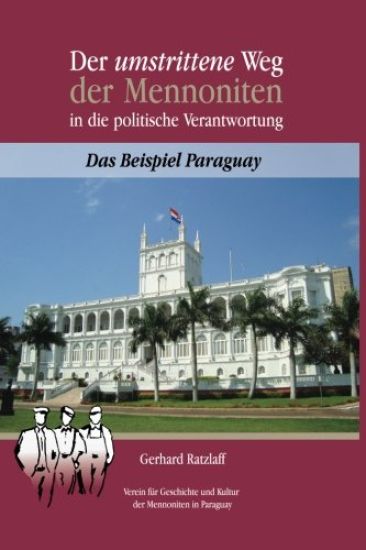
In der Nacht vom 2. zum 3. Februar 1989 fand in Paraguay ein umw lzendes politisches Ereignis statt. Nach fast 35 Jahren an der Regierung, wurde der paraguayische Staatspr sident General Alfredo Stroessner gest rzt. Damit brach eine neue Zeit in Paraguay an. Auf politischer eben setzte ein demokratischer Prozess ein, in dem auch die Mennoniten Paraguays unwiderstehlich hineingezogen wurden. Mit der neuen Staatsverfassung von 1992, an deren Ausarbeitung sich auch die Mennoniten mit Erfolg beteiligt hatten, stand dann pl tzlich auch ihnen der Weg in die nationale Politik offen. Dieses Buch befasst sich mit der umstrittenen Frage einer Beteiligung der Mennoniten an der Politik. Der Inhalt folgt dem Verlauf der Geschichte der Mennoniten von fast 500 Jahren und sucht das Verhalten zur Politik in ihrem jeweiligen Umfeld zu analysieren. -Es zeigt die Entwicklung einer Glaubensgemeinde im 16. Jahrhundert zu einer ethischen und v lkischen Gemeinschaft in Preu en, Russland und Paraguay -Es zeigt die Glaubensprinzipien die in der Geschichte oft wie Kohlen unter der Asche gl hen und zu gegebener Zeit wieder lichterloh brennen. -Es zeigt die Mennoniten in Paraguy, die Entwicklung ihrer eigenen Geschichte und Kultur mit ihren Licht- und Schatteseiten und den Faktoren, die dazu f hren. -Es kritisiert einerseits das Verhalten der Mennoniten zu verschiedenen Zeiten, aber die Kritik ist konstruktiv gedacht und soll zur Besinnung motivieren. -Der Inhalt des Buches kann den Mennoniten helfen, Fehler der Vergangenheit zu vermeiden und bewusst f r die Zukunft zu planen. -Das Buch m chte dazu beitragen, dass wir uns als Mennoniten und paraguyische Staatsb rger besser verstehen und ernst nehmen. -Das Buch m chte anregen, politische Erziehung einzuf hren, um die Gefahren der Politik aufzuzeigen und andererseits die ethischen Prinzipien und Werte zu lehren, die, in der Politik eingesetzt, das allgemeine Wohl des Landes f rdern.

Historia, Fe y Practicas Menonitas: Un enfoque paraguayo

Historia, Fe y Practicas Menonitas: Un enfoque paraguayo

Gerhard Ratzlaff

Createspace Independent Publishing Platform
2014
nidottu
Esta es una obra que llega al p blico hispano parlante, en un momento oportuno. Es un material muy bueno para todo aquel que desea tener conocimiento de fuente fidedigna y seria sobre los menonitas en el mundo y el Paraguay. Por sus caracter sticas puede servir tanto para seminarios como para las iglesias. El profesor Ratzlaff, autor del libro, es un avezado investigador y profundo conocedor de la historia menonita. En esta ocasi n pone en nuestras manos una obra producto de sus largos a os de investigaci n y ense anza. Estoy seguro que el lector, sea estudiante, profesor o simplemente aquel amante de la lectura quedar plenamente satisfecho con la obra. Juan Silverio Ver n (pastor y consejero de Radio Obedira) Si un vers culo puede sintetizar la historia menonita y su presente es Efesios 2:8 -10 "... por gracia sois salvos....creados en Cristo Jes s para buenas obras ...". Los menonitas han comprendido que la gracia de Dios es el punto de partida para una nueva vida espiritual que refleja un nuevo estilo de vida caracterizado por el servicio al projimo y a la sociedad. El libro provee numerosos ejemplos de la forma en que los menonitas cristianos se han convertido en sal y luz. Flavio y Martha Florentin (Flavio es profesor y decano acad mico del IBA)
The Controversial Way of the Mennonites to Political Responsibility in Paraguay: Translated from Der umstrittene Weg der Mennoniten in die politische
This book is "Der umstrittine Weg der Mennoniten in die politische Verantwortung Das Biespiel Paraguay" translated into English. It is the history of the life of the Mennonites in Russia, the reasons for some to leave and settle in Paraguay, and their life in Paraguay.
Die mennonitischen Privilegien: Gipfelpunkt in Paraguay

Die mennonitischen Privilegien: Gipfelpunkt in Paraguay

Gerhard Ratzlaff

Createspace Independent Publishing Platform
2017
nidottu
"Der Leser hat ein sehr wertvolles Buch in der Hand. - Der Kampf um Privilegien ist seit Jahrhunderten ein zentraler Bestandteil der mennonitischen Geschichte gewesen. Privilegien und Sonderrechte vor anderen sind aber im Prinzip eine Ursache f r eine konfliktive Situation. Dadurch entstehen leicht Neid, Missgunst und manchmal auch Hass. Erstmals in Paraguay hatten wir vor 25 Jahren (1992) die Einsicht, etwas gegen diese offensichtliche Konfliktsituation unternehmen zu k nnen. Nicht dass wir vorschlugen, unser Privilegium - die Befreiung vom Milit rdienst aus Gewissensgr nden - aufzuheben, sondern uns daf r einzusetzen, dass des verfassungsm ig als Recht f r alle Paraguayer erkl rt wurde. Ein historischer Meilenstein." Heinrich Dyck Kurz und b ndig: "Das Buch Die mennonitischen Privilegien: Gipfelpunkt in Paraguay, sollte von allen Mennoniten in Paraguay gelesen und in den Schulen eingesetzt werden, und es sollte alle Mennoniten zu gro em dank an Paraguay bewegen und ihnen ihre Verantwortung in ihrer Umwelt bewusst machen." Erwin Boschmann "In diesem Buch stellt Gerhard Ratzlaff die Bedeutung der mennonitischen Privilegien in Vergangenheit, Gegenwart und f r zuk nftige Generationen klar heraus. Dies geschieht meisterhaft in Zusammenhang mit der mennonitischen Geschichte. Der gr te Wert des Buches besteht wohl darin, dass es aufzeigt, wie heute die in den Privilegien enthaltenen biblischen Prinzipien f r nichtmennonitische Kreise in Paraguay Bedeutung und Anwendung finden. Die Verantwortung der Mennoniten f r ihre Umwelt steigt damit beachtlich." Edgar Stoesz
Gerhard Richter

Gerhard Richter

Dietmar Elger

University of Chicago Press
2010
sidottu
Gerhard Richter is one of the most important and popular artists of the postwar era. For decades he has sought innovative ways to make painting more relevant, often through a multifaceted dialogue with photography. Today Richter is most widely recognized for the photo-paintings he made during the 1960s that rely on images culled from mass media and pop culture. Always fascinated with the limits and uncertainties of representation, he has since then produced landscapes, abstractions, glass and mirror constructions, prints, sculptures, and installations. Though Richter has been known in the United States for quite some time, the highly successful retrospective of his work at the MOMA in 2002 catapulted him to unprecedented fame. Enter noted curator Dietmar Elger, who here presents the first biography of this contemporary artist. Written with full access to Richter and his archives, this fascinating book offers unprecedented insight into his life and work. Elger explores Richter's childhood in Nazi Germany; his years as a student and mural painter in communist East Germany; his time in the West during the turbulent 1960s and '70s, when student protests, political strife, and violence tore the Federal Republic of Germany apart; and, his rise to international acclaim during the 1980s and beyond. Richter has always been a difficult personality to parse, and the seemingly contradictory strands of his artistic practice have frustrated and sometimes confounded critics. But the extensive interviews on which this book is based disclose a Richter who is far more candid and vivid than ever before. The result is a book that will be the foundational portrait of this artist and his profoundly influential oeuvre.
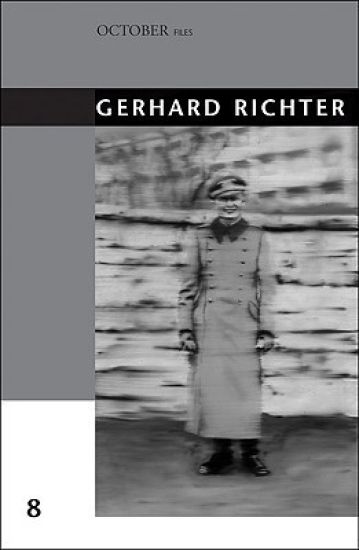
Gerhard Richter
The first collection of essays on Gerhard Richter, who has been called "the greatest modern painter."The contemporary painter Gerhard Richter (born in 1932) has been heralded both as modernity's last painter and as painting's modern savior, seen to represent both the end of painting and its resurrection. Richter works in a dizzying variety of styles, from abstraction to a German cool pop that combines painterly technique and appropriation; his work includes photo paintings, large abstract canvases, and stained glass windows. This collection features writing by prominent critics, including Hal Foster, Gertrud Koch, and Thomas Crow; an essay by Rachel Haidu on Richter's family pictures that is published here for the first time; and an essay and two interviews with the artist by Benjamin H. D. Buchloh, Richter's "longtime sparring partner" (as the curator Robert Storr has called him). These writings examine Richter's work as a whole, from October 18, 1977, his dreamlike series of paintings depicting the dead Baader-Meinhof gang, to his abstract trio Abstract Paintings; from his unsettling portrait of "Uncle Rudi" in Nazi garb to his late series of portraits of his wife and young child. This addition to the October Files series will be an essential handbook to one of the most enigmatic figures in contemporary artContents Gerhard Richter and Benjamin H. D. Buchloh Interview (1986) Gertrud Koch The Richter-Scale of Blur (1992) Thomas Crow Hand-Made Photographs and Homeless Representation (1992) Birgit Pelzer The Tragic Desire (1993) Benjamin H. D. Buchloh Divided Memory and Post-Traditional Identity: Gerhard Richter's Work of Mourning (1996) Peter Osborne Abstract Images: Sign, Image, and Aesthetic in Gerhard Richter's Painting (1998) Hal Foster Semblance According to Gerhard Richter (2003) Johannes Meinhardt Illusionism in Painting and the Punctum of Photography (2005) Rachel Haidu Arrogant Texts: Gerhard Richter's Family Pictures (2007) Gerhard Richter and Benjamin H. D. Buchloh Interview (2004)
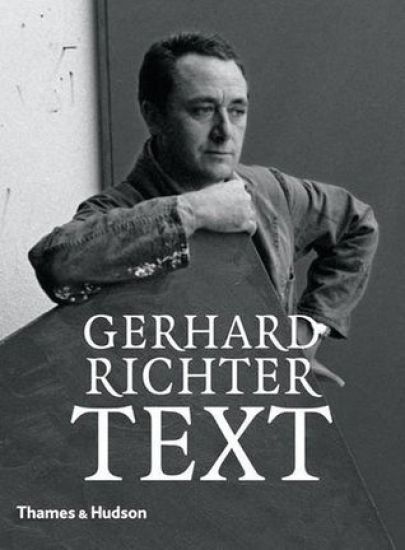
Gerhard Richter - Text

Gerhard Richter - Text

Hans Ulrich Obrist

Thames Hudson Ltd
2009
sidottu
Gerhard Richter is one of the foremost artists of his generation. This book provides a wider selection of Richters texts, from all periods of his career. It includes letters and interviews; private reflections from personal correspondence; and, excerpts from journals discussing the intentions, subjects, methods and sources of his works.
Gerhard Richter Patterns

Gerhard Richter Patterns

Gerhard Richter

Thames Hudson Ltd
2012
sidottu
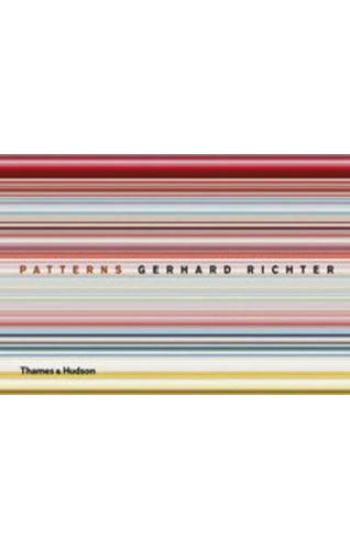
Documents the author's experiment of taking an image of an original abstract painting and dividing it vertically into two. In this book, each divided part is divided again, mirrored and repeated, producing ever narrower strips, which results in patterns. It includes a total of 238 selected patterns.
Gerhard Richter

Gerhard Richter

Thames Hudson Ltd
2007
sidottu
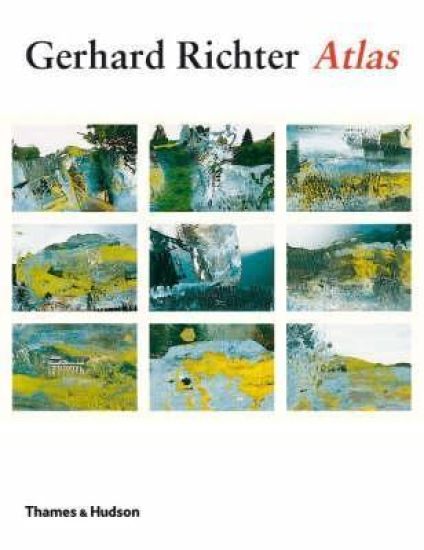
Maps the ideas, processes, life and times of one of the most important painters at work in the world today - Includes 733 full page, multi-panel, colour images. Richter himself devised the books concept and oversaw its creation. Can also be read as a reflection of recent German history.
Gerhard Herzberg

Gerhard Herzberg

Boris Stoicheff

Canadian Forest Service,Canada
2002
sidottu
Gerhard Herzberg (1904-1999), winner of the 1971 Nobel Prize in Chemistry, is considered the founder of molecular spectroscopy. Born and educated in Germany, he started his seven decades of research just as the discovery of quantum mechanics began unraveling the mysteries of the microscopic world. He chose to study spectroscopy, the light emitted and absorbed by atoms and molecules, eventually moving to Canada where he established the spectroscopy laboratory for the National Research Council. His Ottawa laboratory became a mecca for generations of young scientists from around the world. There Herzberg systematized the knowledge of the field in the classic trilogy Molecular Spectra and Molecular Structure, Atomic Spectra, and Atomic Structure. In awarding the Nobel Prize the Swedish Academy said, "It's quite exceptional in the field of science that a single individual, however distinguished, can be a leader of a whole area of research of general importance."
Gerhard Brunzema

Gerhard Brunzema

Thomas Donahue

Scarecrow Press
1998
sidottu
Documents the craft of the organbuilder Gerhard Brunzema (1927-1992) in terms of the organs he built and how his instruments and his approach to organbuilding had an influence on music history. Divided into two parts, Part I contains essays by people who knew Brunzema and his work, and documents his skill both in the restoration of historically significant instruments in Europe, as well as in the building of new organs in his own style throughout the world. Also included in this section are two musical compositions in his memory by Gerhard Krapf and Barrie Cabena. Part II details the organs themselves during the three phases of his career: in Germany (1954-1971) with his partner Jurgen Ahrend; in Quebec, Canada (1972-1979) with Casavant Freres; and in Ontario (1980-1992) in his own workshop. This section features a complete listing of all the organs he built, descriptions of seventy organs, and a complete technical documentation of one of his instruments. Also included are three articles by Brunzema, proposals for organs that were never built, an annotated discography, a listing of the published photographs of his organs, videography, bibliography, 16 black and white photographs and 41 line drawings.
Gerhard G. Mueller: Father of International Accounting Education
This set of volumes places the labor markets, workplaces, jobs and workers of Europe in comparative perspective. It focuses on the politics, economics, sociology, and history of work and workers in Europe. Authors contribute a variety of methodological and theoretical perspectives, with papers that push the boundaries of evidence and argument. In order to place European workers in comparative perspectives, the volume features articles that analyze specific European countries, industries and firms, analyze Europe as one of a few cases, and analyze many European countries within a cross-national sample. Specific topics covered include: a multilevel study of perceived job insecurity in 27 European countries; work values and job rewards among European workers; managerial intensity and earnings inequality in affluent democracies; cross-national patterns in individual and household employment and work hours by gender and parenthood; the political economy of active social policy in postindustrial democracies; social protection dualism, deindustrialization and cost containment; organized labor in Europe; and, unionization in East European ex-communist countries.
Gerhard Richter, Individualism, and Belonging in West Germany
This book reevaluates the art of Gerhard Richter (b. 1932) in relation to his efforts to achieve belonging in the face of West Germany’s increasing individualism between the 1960s and the 1990s.Richter fled East Germany in 1961 to escape the constraints of socialist collectivism. His varied and extensive output in the West attests to his greater freedom under capitalism, but also to his struggles with belonging in a highly individualised society, a problem he was far from alone in facing. The dynamic of increasing individualism has been closely examined by sociologists, but has yet to be employed as a framework for understanding broader trends in recent German art history. Rather than critique this development from a socialist perspective or experiment with new communal structures like a number of his colleagues, Richter sought and found security in traditional modes of bourgeois collectivity, like the family, religion, painting and the democratic capitalist state.The book will be of interest to scholars working in art history as well as German history, culture and politics.
Gerhard Richter, Individualism, and Belonging in West Germany
This book reevaluates the art of Gerhard Richter (b. 1932) in relation to his efforts to achieve belonging in the face of West Germany’s increasing individualism between the 1960s and the 1990s.Richter fled East Germany in 1961 to escape the constraints of socialist collectivism. His varied and extensive output in the West attests to his greater freedom under capitalism, but also to his struggles with belonging in a highly individualised society, a problem he was far from alone in facing. The dynamic of increasing individualism has been closely examined by sociologists, but has yet to be employed as a framework for understanding broader trends in recent German art history. Rather than critique this development from a socialist perspective or experiment with new communal structures like a number of his colleagues, Richter sought and found security in traditional modes of bourgeois collectivity, like the family, religion, painting and the democratic capitalist state.The book will be of interest to scholars working in art history as well as German history, culture and politics.
Gerhard on Music

Gerhard on Music

Roberto Gerhard; Meirion Bowen

Routledge
2020
nidottu
This title was first published in 2000: Catalan-born composer Roberto Gerhard (1896-1970) left significant legacies - both musical and documentary. Exiled in Cambridge with the onset of the Spanish Civil War, he gradually achieved wide recognition by performers and conductors, in both Britain and America, as a composer whose music was essential to the modern repertoire. In this work, Meirion Bowen collects many of the composer's articles, reviews, lectures and broadcasts to demonstrate the full extent and continuity of Gerhard's artistic and creative thinking. The writings have been arranged thematically to emphasize the evolution of Gerhard's musical interests. His attachment to Spanish and Catalonian traditions broadened into a fascination with folk music of all kinds. His studies with Schoenberg in the mid 1920s gave him the key to his own creative individuality; thereafter, his imaginative vitality led him eventually to experiment with electronic and concrete music and he continued breaking new ground, even in his final years.
Gerhard on Music

Gerhard on Music

Roberto Gerhard; Meirion Bowen

Routledge
2019
sidottu
This title was first published in 2000: Catalan-born composer Roberto Gerhard (1896-1970) left significant legacies - both musical and documentary. Exiled in Cambridge with the onset of the Spanish Civil War, he gradually achieved wide recognition by performers and conductors, in both Britain and America, as a composer whose music was essential to the modern repertoire. In this work, the author collects many of the composer's articles, reviews, lectures and broadcasts to demonstrate the full extent and continuity of Gerhard's artistic and creative thinking. The writings have been arranged thematically to emphasize the evolution of Gerhard's musical interests. His attachment to Spanish and Catalonian traditions broadened into a fascination with folk music of all kinds. His studies with Schoenberg in the mid 1920s gave him the key to his own creative individuality; thereafter, his imaginative vitality led him eventually to experiment with electronic and concrete music and he continued breaking new ground, even in his final years.