Kirjojen hintavertailu. Mukana 11 699 587 kirjaa ja 12 kauppaa.

Kirjahaku

Etsi kirjoja tekijän nimen, kirjan nimen tai ISBN:n perusteella.

1000 tulosta hakusanalla Germaine Comeau

Laville

Laville

Germaine Comeau

Perce-Neige
2008
pokkari
tudiante Paris, Ariane est une jeune femme de la Baie Sainte-Marie, en Nouvelle- cosse, qui change des courriels avec sa m re en m me temps qu'elle crit un roman. Absorb e par ses tudes, Ariane est contrainte d'abandonner son projet. Elle demande alors sa m re de prendre le relais et de nous conduire elle-m me au cOEur de Laville. Il en nait un r cit dans le roman, un jeu avec le temps et l'espace qui fr le parfois le vertige. Parce qu'il faut bien reconnaitre quel point le monde est fragile.
Germaine

Germaine

Edmond About

Createspace Independent Publishing Platform
2015
nidottu
Le 1er janvier 1853, les domestiques de l'h tel de Sangli Paris voient la duchesse Mlle Germaine, malade et dont le p re est ruin , aller vendre sa bague au mont-de-pi t . Mme de Chermidy lui fait pouser Don Diego pour l'argent. Ils vont en Italie o Germaine se refait une sant . Ils adoptent Gomez, fils de Mme de Chermidy. Germaine est empoisonn e et Mme de Chermidy veut pouser Don Diego mais Germaine r chappe et Mme de Chermidy est tu e par un domestique de Germaine. Ils rentrent en France.
Germaine

Germaine

Edmound About

Createspace Independent Publishing Platform
2017
nidottu
Le 1er janvier 1853, les domestiques de l'h tel de Sangli Paris voient la duchesse Mlle Germaine, malade et dont le p re est ruin , aller vendre sa bague au mont-de-pi t . Mme de Chermidy lui fait pouser Don Diego pour l'argent. Ils vont en Italie o Germaine se refait une sant . Ils adoptent Gomez, fils de Mme de Chermidy. Germaine est empoisonn e et Mme de Chermidy veut pouser Don Diego mais Germaine r chappe et Mme de Chermidy est tu e par un domestique de Germaine. Ils rentrent en France.
Germaine

Germaine

Edmound About

Createspace Independent Publishing Platform
2017
nidottu
Le 1er janvier 1853, les domestiques de l'h tel de Sangli Paris voient la duchesse Mlle Germaine, malade et dont le p re est ruin , aller vendre sa bague au mont-de-pi t . Mme de Chermidy lui fait pouser Don Diego pour l'argent. Ils vont en Italie o Germaine se refait une sant . Ils adoptent Gomez, fils de Mme de Chermidy. Germaine est empoisonn e et Mme de Chermidy veut pouser Don Diego mais Germaine r chappe et Mme de Chermidy est tu e par un domestique de Germaine. Ils rentrent en France.
Germaine

Germaine

Edmond About

Hesiode Editions
2022
pokkari
Germaine, roman incontournable d'Edmond About, a t publi pour la premi re fois en France en 1858. Vous souhaitez lire autrement et profiter d'une exp rience de lecture originale ? Gr ce notre charte ditoriale, nous vous offrons l'opportunit de d couvrir ce roman dans une dition a r e et dans un grand format, facilitant ainsi votre lecture pour vous permettre de profiter d'une exp rience de lecture unique.
Germaine

Germaine

Edmond About

tredition GmbH
2017
nidottu
Paris im Jahr 1853. Germaine, eine junge Frau aus adeligem Haus, ist an Schwindsucht erkrankt und dem Tod geweiht. Dieser Umstand wird zur Grundlage eines Deals: sie soll den Grafen Don Diego heiraten und damit dessen unehelichem Kind einen Namen geben. Im Gegenzug bekommen die Eltern von Germaine eine stattliche Abfindung. Eine lange Reise durch Italien bis nach Korfu, gemeinsam mit ihrem Ehemann, dessen Mutter und dem Kind, k nnte doch noch ein gl ckliches Ende nehmen, w re da nicht Madame Chermidy, ehemalige Geliebte von Don Diego und Mutter des Kindes. Sie liebt ihn immer noch und ist zu ungeduldig, auf ein nat rliches Ableben von Germaine zu warten. So verfolgt sie einen intriganten Plan, bei dem ihr jedes Mittel recht ist, der Nebenbuhlerin nach dem Leben zu trachten.
Germaine

Germaine

Edmond About

tredition GmbH
2017
sidottu
Paris im Jahr 1853. Germaine, eine junge Frau aus adeligem Haus, ist an Schwindsucht erkrankt und dem Tod geweiht. Dieser Umstand wird zur Grundlage eines Deals: sie soll den Grafen Don Diego heiraten und damit dessen unehelichem Kind einen Namen geben. Im Gegenzug bekommen die Eltern von Germaine eine stattliche Abfindung. Eine lange Reise durch Italien bis nach Korfu, gemeinsam mit ihrem Ehemann, dessen Mutter und dem Kind, k nnte doch noch ein gl ckliches Ende nehmen, w re da nicht Madame Chermidy, ehemalige Geliebte von Don Diego und Mutter des Kindes. Sie liebt ihn immer noch und ist zu ungeduldig, auf ein nat rliches Ableben von Germaine zu warten. So verfolgt sie einen intriganten Plan, bei dem ihr jedes Mittel recht ist, der Nebenbuhlerin nach dem Leben zu trachten.
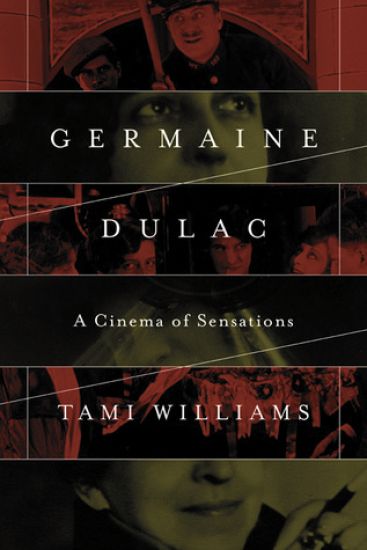
Germaine Dulac

Germaine Dulac

Tami Williams

University of Illinois Press
2014
sidottu
Best known for directing the Impressionist classic The Smiling Madame Beudet and the first Surrealist film The Seashell and the Clergyman, Germaine Dulac, feminist and pioneer of 1920s French avant-garde cinema, made close to thirty fiction films as well as numerous documentaries and newsreels. Through her filmmaking, writing, and cine-club activism, Dulac’s passionate defense of the cinema as a lyrical art and social practice had a major influence on twentieth century film history and theory.In Germaine Dulac: A Cinema of Sensations, Tami Williams makes unprecedented use of the filmmaker's personal papers, production files, and archival film prints to produce the first full-length historical study and critical biography of Dulac. Williams's analysis explores the artistic and sociopolitical currents that shaped Dulac's approach to cinema while interrogating the ground breaking techniques and strategies she used to critique conservative notions of gender and sexuality. Moving beyond the director’s work of the 1920s, Williams examines Dulac's largely ignored 1930s documentaries and newsreels establishing clear links with the more experimental impressionist and abstract works of her early period. This vivid portrait will be of interest to general readers, as well as to scholars of cinema and visual culture, performance, French history, women’s studies, queer cinema, in addition to studies of narrative avant-garde, experimental, and documentary film history and theory.
Germaine Dulac

Germaine Dulac

Tami Williams

University of Illinois Press
2014
nidottu
Best known for directing the Impressionist classic The Smiling Madame Beudet and the first Surrealist film The Seashell and the Clergyman, Germaine Dulac, feminist and pioneer of 1920s French avant-garde cinema, made close to thirty fiction films as well as numerous documentaries and newsreels. Through her filmmaking, writing, and cine-club activism, Dulac’s passionate defense of the cinema as a lyrical art and social practice had a major influence on twentieth century film history and theory.In Germaine Dulac: A Cinema of Sensations, Tami Williams makes unprecedented use of the filmmaker's personal papers, production files, and archival film prints to produce the first full-length historical study and critical biography of Dulac. Williams's analysis explores the artistic and sociopolitical currents that shaped Dulac's approach to cinema while interrogating the ground breaking techniques and strategies she used to critique conservative notions of gender and sexuality. Moving beyond the director’s work of the 1920s, Williams examines Dulac's largely ignored 1930s documentaries and newsreels establishing clear links with the more experimental impressionist and abstract works of her early period. This vivid portrait will be of interest to general readers, as well as to scholars of cinema and visual culture, performance, French history, women’s studies, queer cinema, in addition to studies of narrative avant-garde, experimental, and documentary film history and theory.
Germaine Tailleferre

Germaine Tailleferre

Robert Shapiro

Greenwood Press
1993
sidottu
The name of Germaine Tailleferre (1892-1983) commonly brings to mind the intriguing group of French composers referred to in the 1920s as iconoclasts, and known as Les Six (with Poulenc, Auric, Durey, Milhaud, and Honegger). To envision her solely in this most brief of lights, however, does not bring a sense of justice to her legacy, for Tailleferre leaves behind a large and diverse body of musical work that spans 70 years, writing for more than a half-century after the precarious summit of Les Six. Although she was well acquainted with many influential 20th-century artists, from Picasso to Stravinsky to Charlie Chaplin, she remains a curiously mysterious, if not absent, figure in biographical studies and in studies of the times of which she was an integral part.
Germaine Greer
Germaine Greer is one of the most enduring and influential figures of the second wave of the women’s movement. The Female Eunuch (1970) is one of second-wave feminism’s most widely recognised publications and its author has come to embody and indeed expand our understanding of second-wave feminism in a way that few others have. Yet, while Greer’s public visibility never seems to wane, her writings and her politics have failed to attract the kind of sustained critical engagement they warrant. This volume represents the first collection of essays to examine Greer, her politics, her writing, and her status as a feminist celebrity. The essays in this collection cover The Female Eunuch (1970), Greer’s public rivalry with Arianna Stassinopoulos, her time in America, her ideas and politics, and her styling as feminist fashion icon. Many essays include new insights drawn from previously unseen material in the recently launched Germaine Greer Archive at the University of Melbourne, Australia. This book was originally published as a Special Issue of Australian Feminist Studies.
Germaine Richier

Germaine Richier

Ariane Coulondre

THAMES HUDSON LTD
2023
sidottu
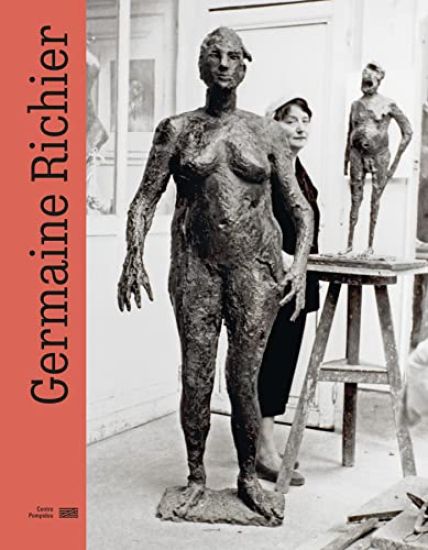
A major reassessment of Germaine Richier's work and impact on 20th-century sculpture. Germaine Richier (1902–59) occupies a central position in the history of modern sculpture. Predominantly working in bronze, her art revitalized the form of the figure, forging radical new images of men and women in the post-war period which blended the human body and natural forms in a hybrid of abstraction and figuration. As the first woman artist to have a solo exhibition in her own lifetime at the Musée National d’Art Moderne, Paris, she held a unique position in the 1940s and 50s as a successful female career artist, exhibiting internationally and developing a style that has been largely overshadowed by the predominant male canon. This major reassessment of Richier’s complete oeuvre establishes her key position within the artistic context of her time and, more broadly, her influential impact on 20th-century sculpture. Writers including Mika Biermann, Marie Darrieussecq, Maryline Desbiolles and Philippe Lançon, the philosopher Geneviève Fraisse, the anthropologist Charles Stépanoff and the artist ORLAN, evaluate the contemporary resonance of Richier’s creations, where her themes of identity, existence and our relationship with nature are increasingly relevant today. An anthology of the artist’s own writings, plus extracts from previously unpublished letters, complete this definitive volume, marking a long overdue appreciation of Germaine Richier’s distinct artistic originality.