
Kirjahaku
Etsi kirjoja tekijän nimen, kirjan nimen tai ISBN:n perusteella.
416 tulosta hakusanalla Gershom Flagg

Gershom Scholem (1897 1982) was ostensibly a scholar of Jewish mysticism, yet he occupies a powerful role in today's intellectual imagination, having an influential contact with an extraordinary cast of thinkers, including Hans Jonas, Martin Buber, Walter Benjamin, Hannah Arendt, and Theodor Adorno. In this first biography of Scholem, Amir Engel shows how Scholem grew from a scholar of an esoteric discipline to a thinker wrestling with problems that reach to the very foundations of the modern human experience. As Engel shows, in his search for the truth of Jewish mysticism Scholem molded the vast literature of Jewish mystical lore into a rich assortment of stories that unveiled new truths about the modern condition. Positioning Scholem's work and life within early twentieth-century Germany, Palestine, and later the state of Israel, Engel intertwines Scholem's biography with his historiographical work, which stretches back to the Spanish expulsion of Jews in 1492, through the lives of Rabbi Isaac Luria and Sabbatai Zevi, and up to Hasidism and the dawn of the Zionist movement. Through parallel narratives, Engel touches on a wide array of important topics including immigration, exile, Zionism, World War One, and the creation of the state of Israel, ultimately telling the story of the realizations and failures of a dream for a modern Jewish existence.
Gershom Scholem (1897-1982) was ostensibly a scholar of Jewish mysticism, yet he occupies a powerful role in today's intellectual imagination, having an influential contact with an extraordinary cast of thinkers, including Hans Jonas, Martin Buber, Walter Benjamin, Hannah Arendt, and Theodor Adorno. In this first biography of Scholem, Amir Engel shows how Scholem grew from a scholar of an esoteric discipline to a thinker wrestling with problems that reach to the very foundations of the modern human experience. As Engel shows, in his search for the truth of Jewish mysticism Scholem molded the vast literature of Jewish mystical lore into a rich assortment of stories that unveiled new truths about the modern condition. Positioning Scholem's work and life within early twentieth-century Germany, Palestine, and later the state of Israel, Engel intertwines Scholem's biography with his historiographical work, which stretches back to the Spanish expulsion of Jews in 1492, through the lives of Rabbi Isaac Luria and Sabbatai Zevi, and up to Hasidism and the dawn of the Zionist movement. Through parallel narratives, Engel touches on a wide array of important topics including immigration, exile, Zionism, World War One, and the creation of the state of Israel, ultimately telling the story of the realizations--and failures--of a dream for a modern Jewish existence.
From the prizewinning Jewish Lives series, a new biography of the seminal twentieth-century historian and thinker who pioneered the study of Jewish mysticism and profoundly influenced the Zionist movement"Biale . . . not only captures Scholem’s scholarship, but also his personal involvement in the major issues, conflicts, tragedies, and triumphs of Jewish life during the last century. . . . [An] excellent new book."—Reform Judaism Gershom Scholem (1897–1982) was perhaps the foremost Jewish intellectual of the twentieth century. Pioneering the study of Jewish mysticism as a legitimate academic discipline, he overturned the rationalist bias of his predecessors and revealed an extraordinary world of myth and messianism. In his youth, he rebelled against the assimilationist culture of his parents and embraced Zionism as the vehicle for the renewal of Judaism in a secular age. He moved to Palestine in 1923 and participated in the creation of the Hebrew University, where he was a towering figure for nearly seventy years. David Biale traces Scholem’s tumultuous life of political activism and cultural criticism, including his falling-out with Hannah Arendt over the Eichmann trial. Mining a rich trove of diaries, letters, and other writings, Biale shows that his subject’s inner life illuminates his most important writings. Scholem emerges as a passionately engaged man of his times—a period that encompassed two world wars, the rise of Nazism, and the Holocaust. About Jewish Lives: Jewish Lives is a prizewinning series of interpretative biography designed to explore the many facets of Jewish identity. Individual volumes illuminate the imprint of Jewish figures upon literature, religion, philosophy, politics, cultural and economic life, and the arts and sciences. Subjects are paired with authors to elicit lively, deeply informed books that explore the range and depth of the Jewish experience from antiquity to the present. In 2014, the Jewish Book Council named Jewish Lives the winner of its Jewish Book of the Year Award, the first series ever to receive this award. More praise for Jewish Lives: "Excellent" –New York Times "Exemplary" –Wall Street Journal "Distinguished" –New Yorker "Superb" –The Guardian
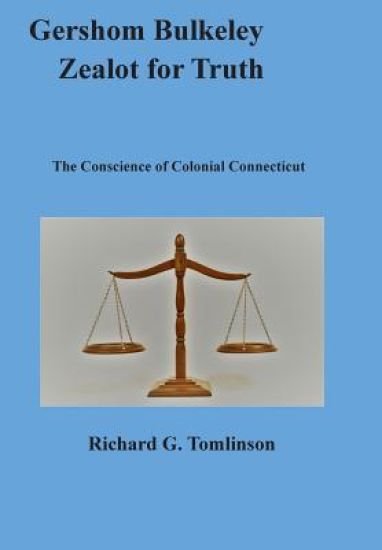
Gershom Bulkeley, Zealot for Truth: The Conscience of Colonial Connecticut
Richard G. Tomlinson
Richard Tomlinson
2018
sidottu
Gershom Bulkeley (1635-1713), scientist, surgeon, minister, doctor, miller, lawyer and alchemist, was an important figure in all the events in Connecticut during his lifetime. He was born into the Puritan elite, graduated from Harvard and attained an advanced degree. He married Sarah Chauncey, daughter of the President of Harvard, and he might have spent his life as a quiet academic. But he left the university to be minister to the church in New London, Connecticut and then Wethersfield, Connecticut. He served with distinction as surgeon and advisor to the Army in the King Phillip War. He conducted research in his laboratory to create new medicines and wrote the most comprehensive summary of the state of medicine in seventeenth century Colonial Connecticut. He was an honored medical doctor and respected counselor. His opinion was often sought in legal and church disputes. He chose to involve himself in some of the most controversial cases of murder, witchcraft, incest and politics. He often defended the weak, the vulnerable and the unpopular. He could be arrogant and cranky and was no friend of democracy. But he believed in the rule of law and of the right to an impartial hearing. He helped to create a legal precedent that virtually ended the witchcraft trials. He fell from grace in popular opinion for his stubborn opposition to the legality of Connecticut's government. The Charters of the New England Colonies had been revoked during the reign of King James. After James was deposed, Bulkeley argued that the Colonies could not re-establish Charter government without new royal permission. He is best known for his treatise, Will & Doom, or the Miseries of Connecticut by under an Usurped and Arbitrary Power. Some historians continued to denounce him well into the 19th century and his contributions have never been fully acknowledged.Gershom Bulkeley (1635-1713), scientist, surgeon, minister, doctor, miller, lawyer and alchemist, was an important figure in all the events in Connecticut during his lifetime. He was born into the Puritan elite, graduated from Harvard and attained an advanced degree. He married Sarah Chauncey, daughter of the President of Harvard, and he might have spent his life as a quiet academic. But he left the university to be minister to the church in New London, Connecticut and then Wethersfield, Connecticut. He served with distinction as surgeon and advisor to the Army in the King Phillip War. He conducted research in his laboratory to create new medicines and wrote the most comprehensive summary of the state of medicine in seventeenth century Colonial Connecticut. He was an honored medical doctor and respected counselor. His opinion was often sought in legal and church disputes. He chose to involve himself in some of the most controversial cases of murder, witchcraft, incest and politics. He often defended the weak, the vulnerable and the unpopular. He could be arrogant and cranky and was no friend of democracy. But he believed in the rule of law and of the right to an impartial hearing. He helped to create a legal precedent that virtually ended the witchcraft trials. He fell from grace in popular opinion for his stubborn opposition to the legality of Connecticut's government. The Charters of the New England Colonies had been revoked during the reign of King James. After James was deposed, Bulkeley argued that the Colonies could not re-establish Charter government without new royal permission. He is best known for his treatise, Will & Doom, or the Miseries of Connecticut by under an Usurped and Arbitrary Power. Some historians continued to denounce him well into the 19th century and his contributions have never been fully acknowledged.
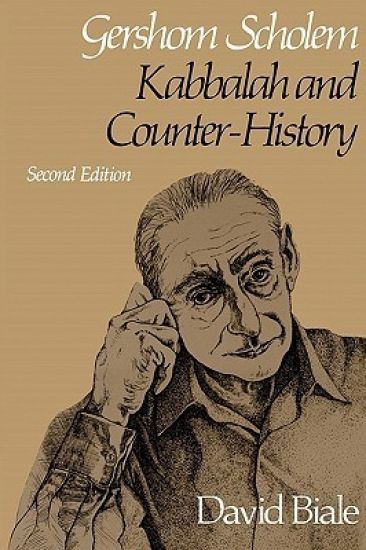
Through a lifetime of passionate scholarship, Gershom Scholem (1897–1982) uncovered the “domains of tradition hidden under the debris of centuries” and made the history of Jewish mysticism and messianism comprehensible and relevant to current Jewish thought.In this paperback edition of his definitive book on Scholem’s work, David Biale has shortened and rearranged his study for the benefit of the general reader and the student. A new introduction and new passages in the main text highlight the pluralistic character of Jewish theology as seen by Scholem, the place of the Kabbalah in debates over Zionism versus assimilation, and the interpretation of Kafka as a Jewish writer.
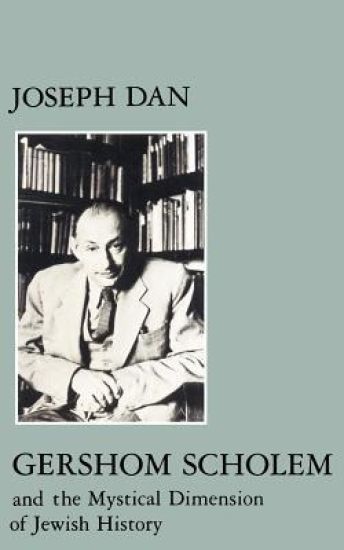
Gershom Scholem and the Mystical Dimension of Jewish History
New York University Press
1988
pokkari
"An excellent overview of the history of Jewish mysticism from its early beginnings to contemporary Hasidism...scholarly and complex." ?Library Journal "An excellent work, clear and solidly documented by Joseph Dan on Gershom Scholem and on his work." ?Notes Bibliographiques "An excellent guide to Scholem's work." ?Christian Century
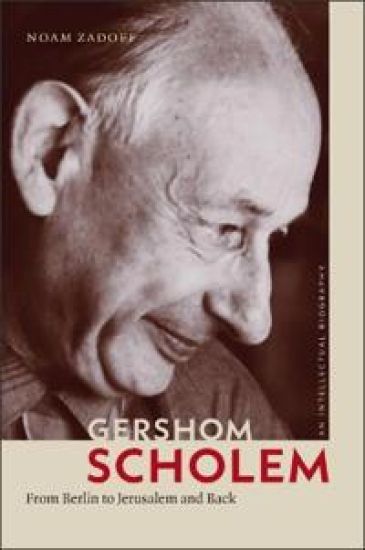
The German-born Gerhard (Gershom) Scholem (1897–1982), the preeminent scholar of Jewish mysticism, delved into the historical analysis of kabbalistic literature from late antiquity to the twentieth century. His writings traverse Jewish historiography, Zionism, the phenomenology of mystical religion, and the spiritual and political condition of contemporary Judaism and Jewish civilization. During his lifetime, he published over forty volumes and close to seven hundred articles and trained at least three generations of scholars of Jewish thought, many of whom still teach in Israel, Europe, and North America. Scholem famously recounted rejecting his parents’ assimilationist liberalism in favor of Zionism and immigrating to Palestine in 1923, where he became a central figure in the German Jewish immigrant community that dominated the nation’s intellectual landscape in Mandate Palestine until the World War II. Despite Scholem’s public renunciation of Germany for Israel, Zadoff explores how life and work of Scholem reflect ambivalence toward Zionism and his German origins. Zadoff divides the book into three parts. He first examines how Scholem created new academic and social circles in Palestine, while at the same time continuing to publish in German and take part in Jewish cultural projects in his country of origin. Zadoff then turns to the reaction of Scholem to the Holocaust and its aftermath, which constituted a turning point in his life. The third part of the book deals with Scholem’s gradual return to the German intellectual world after World War II. Zadoff's erudite interpretations of Scholem’s scholarship, embedded in its rich social and cultural contexts, show anew the remarkable contested worlds Scholem inhabited, resisted, and accommodated to—sometimes in ways that ran counter to his own self-portrait.

The German-born Gerhard (Gershom) Scholem (1897–1982), the preeminent scholar of Jewish mysticism, delved into the historical analysis of kabbalistic literature from late antiquity to the twentieth century. His writings traverse Jewish historiography, Zionism, the phenomenology of mystical religion, and the spiritual and political condition of contemporary Judaism and Jewish civilization. During his lifetime, he published over forty volumes and close to seven hundred articles and trained at least three generations of scholars of Jewish thought, many of whom still teach in Israel, Europe, and North America. Scholem famously recounted rejecting his parents’ assimilationist liberalism in favor of Zionism and immigrating to Palestine in 1923, where he became a central figure in the German Jewish immigrant community that dominated the nation’s intellectual landscape in Mandate Palestine until the World War II. Despite Scholem’s public renunciation of Germany for Israel, Zadoff explores how life and work of Scholem reflect ambivalence toward Zionism and his German origins. Zadoff divides the book into three parts. He first examines how Scholem created new academic and social circles in Palestine, while at the same time continuing to publish in German and take part in Jewish cultural projects in his country of origin. Zadoff then turns to the reaction of Scholem to the Holocaust and its aftermath, which constituted a turning point in his life. The third part of the book deals with Scholem’s gradual return to the German intellectual world after World War II. Zadoff's erudite interpretations of Scholem’s scholarship, embedded in its rich social and cultural contexts, show anew the remarkable contested worlds Scholem inhabited, resisted, and accommodated to—sometimes in ways that ran counter to his own self-portrait.

Wellcome to 31. issue of The Reader's House a pop culture magazine - inspires people with a content that sparks curiosity, attention and conversation. The Reader's House continues to connect writers, authors, artists, and coaches who share their story and passion. We bring them long-form writings on different topics and unique interview subjects. Acclaimed Author Dr. Gershom Sikaala on the cover of this issue. Dr. Sikaala is a Mentor, Pastor, Entrepreneur and he enjoys journeying with people through mentorship. Bringing people into financial freedom and understanding the science behind the talent and gifts and how they can use that to improve their lives and eradicate poverty.In this issue; A new book In Love By Amy Bloom, on page 14 offers A Memoir of love and Loss. On following pages we have an interview with Sally Barlett, Improves Body Confidence & Self Love.Editor's Choice, What to Read and New Releases, on page 24, offers new titles in novel, story and literature. I have selected four new titles to read this season on editor's choice sectiom. I also selected for new title on what to read section.We offer new titles on this issue. On page 28, We conducted an interview with Sparkle Specialist Naziya Sagher, on page 32 we have another interview with acclaimed Author Jennifer Anne Gordon "I need to fall in love with the characters." says, when she writes her novels.On page 32 How Do You Embrace a Growth Mindset? an article by Jon Allo gives 5 ways to embrace a growth mindset. Enjoy Reading.
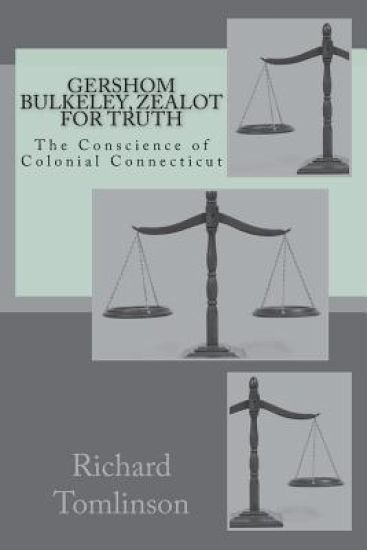
Gershom Bulkeley: Zealot for Truth, Conscience of Colonial Connecticut
Richard G. Tomlinson
Createspace Independent Publishing Platform
2018
nidottu
This is an important and eye-opening study of one of colonial New England's most important and contrarian figures. Gershom Bulkeley - minister, alchemist, healer, political figure, and man-with-an-opinion-about everything - was in his early life a brilliant, admired member of the Puritan elite destined for great things. He accomplished great things, too - as a minister, alchemical healer, arbitrator in witchcraft cases, spokesman for the colony against intervention in colonial affairs, and member of the three-man War Council during King Philip's War.In later years, though, especially after the overthrow of Sir Edmund Andros and the Dominion of New England, Bulkeley became colonial Connecticut's gadfly - the insider turned whistle-blower, too loud and too powerful to be ignored, but dangerous if unchecked. After the publication of Will and Doom, his essay challenging the legitimacy of Connecticut's government, an existential threat to Connecticut's fiercely prized virtual self-rule. This is an interesting, highly readable, and refreshingly jargon-free biography of a figure of real significance, both during his own lifetime and afterwards, through the legacy of his actions involving witch trials, government, and the nature of political authority. The presentation of the events leading to the takeover of Connecticut's colonial government by Sir Edmund Andros - lays waste to the story of the Charter Oak - the most iconic tale Connecticans tell themselves about their colonial past, and their commitment to independent self-government. This work presents new insights on both Bulkeley's role in redefining the standards of evidence used to convict witches, and the powerful rejection of deviation from those standards issued by Connecticut magistrates during the time of the Salem witch hunt. General readers will find Gershom Bulkeley, Zealot for Truth refreshingly accessible - a good read, with much of interest. .
Die Herausforderung religionsgeschichtlicher Forschung besteht darin, die Erschließung von Quellen in ihren Kontexten und ihre theoriegeleitete Erklärung mit einer historisch-kritischen Reflexion der Wissensproduktion selbst zu verknüpfen. Die Reihe Religionsgeschichtliche Versuche und Vorarbeiten (RGVV) will dieser Komplementarität von historischer Kontextualisierung, theoretischer Verdichtung und disziplinärer Positionierung Rechnung tragen. Studien zu kulturspezifischen Sachzusammenhängen stehen neben vergleichenden Arbeiten, in Form von Monographien oder thematisch fokussierten Sammelbänden.
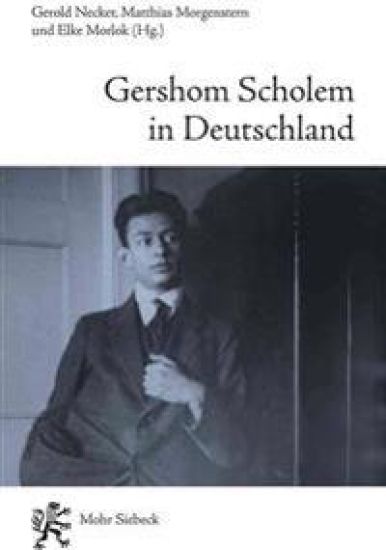
Gershom Scholem in Deutschland
Mohr Siebeck
2014
nidottu
Die Biographie des in Berlin geborenen und ab 1923 in Jerusalem lebenden Kabbala-Forschers Gershom Gerhard Scholem ist von den Katastrophen und Umbrüchen des 20. Jahrhunderts geprägt. Im Horizont des für Scholem ambivalenten deutsch-jüdischen Verhältnisses nehmen die Autoren des Bandes seinen Werdegang im Kaiserreich und in der Weimarer Republik in den Blick sowie die Bedeutung, die er als israelischer Gesprächspartner für die Zeitgeschichte der Bundesrepublik Deutschland hatte. Die Beziehungen zu Walter Benjamin und Hannah Arendt, zu dem Theologen Otto Michel und dem Verleger Siegfried Unseld dokumentieren auf unterschiedlichen Ebenen Scholems Verbindung zu Deutschland, die ihn auch bei persönlicher Lyrik und sogar bei seiner wissenschaftlichen Prosa zur jüdischen Mystik begleitete.

Hannah Arendt / Gershom Scholem Der Briefwechsel
Gershom Scholem; Hannah Arendt
Juedischer Verlag
2010
sidottu

Fragen Der Sprache in Gershom Scholems Frühen Schriften: Wege Zu Einer Neuen Methodologie Des Lesens in Der Deutsch-Jüdischen Philosophie
Ghilad H. Shenhav
De Gruyter
2024
sidottu
Dieses Buch bietet eine Untersuchung von Gershom Scholems fr hen Schriften zur Frage der Sprache und entwickelt eine neue Methodologie, um Texte des modernen j dischen Denkens in Bezug auf Gender-Fragen zu lesen. Scholems Texte (1916-1928) verbinden philosophische Fragen mit Diskussionen ber die hebr ischen Schriften und Sprache. In den Kapiteln werden Scholems Texte ber die Klagelieder, das Hohelied und das Buch Jona sowie seine Gedanken ber die S kularisierung des Hebr ischen behandelt. Die vorliegende Arbeit beschreibt, wie Scholems Schriften eine " konomie des Lesens" darstellen: bestimmte Aspekte der religi sen Texte werden aufdeckt, andere verborgen. Scholem findet in den j dischen Quellen Antworten auf Fragen nach dem Wesen der Sprache. Sein deutscher Hintergrund und seine philosophischen Motivationen hindern ihn jedoch daran, die Heterogenit t des liturgischen Textes wahrzunehmen, insbesondere die weiblichen und m tterlichen Stimmen. Durch die Konfrontation von Scholems Thesen mit den biblischen Texten und ihren traditionellen Kommentaren bietet das Buch eine "gro z gige Leseart", die seine Argumente erweitert und sie f r aktuelle Diskussionen ber Geschlechterfragen inklusiver und relevanter macht.

The Journeys of Gershom and Jasmine
Jessica Fortenberry
Createspace Independent Publishing Platform
2017
pokkari
When Gershom finds out that he's being moved to yet another foster home, he grabs his sister and together they run away to find their birth mother, who just happens to live eight states away, in Alabama. The siblings face hunger, loneliness, and fear, but with the help of strangers-and God-they manage to survive. When they arrive at their destination, what awaits them is not what they expected. Will the siblings ever find the family they are looking for?
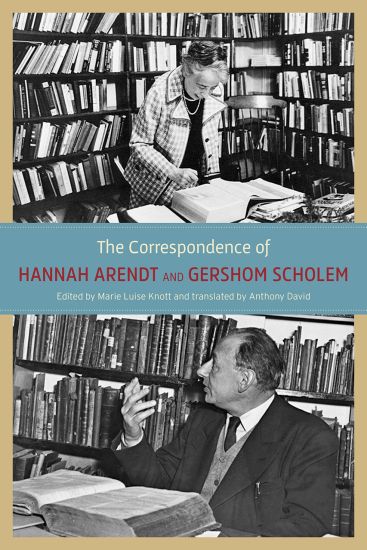
The Correspondence of Hannah Arendt and Gershom Scholem
Hannah Arendt; Gershom Scholem
University of Chicago Press
2017
sidottu
Few people thought as deeply or incisively about Germany, Jewish identity, and the Holocaust as Hannah Arendt and Gershom Scholem. And, as this landmark volume reveals, much of that thinking was developed in dialogue, through more than two decades of correspondence. Arendt and Scholem met in 1932 in Berlin and quickly bonded over their mutual admiration for and friendship with Walter Benjamin. They began exchanging letters in 1939, and their lively correspondence continued until 1963, when Scholem's vehement disagreement with Arendt's Eichmann in Jerusalem led to a rupture that would last until Arendt's death a dozen years later. The years of their friendship, however, yielded a remarkably rich bounty of letters: together, they try to come to terms with being both German and Jewish, the place and legacy of Germany before and after the Holocaust, the question of what it means to be Jewish in a post-Holocaust world, and more. Walter Benjamin is a constant presence, as his life and tragic death are emblematic of the very questions that preoccupied the pair. Like any collection of letters, however, the book also has its share of lighter moments: accounts of travels, gossipy dinner parties, and the quotidian details that make up life even in the shadow of war and loss. In a world that continues to struggle with questions of nationalism, identity, and difference, Arendt and Scholem remain crucial thinkers. This volume offers us a way to see them, and the development of their thought, anew.
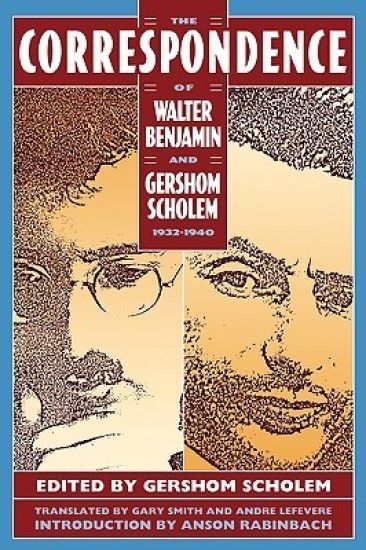
The Correspondence of Walter Benjamin and Gershom Scholem 1932-1940
Walter Benjamin; Gershom Scholem; Gary (TRN) Smith
Harvard University Press
1992
pokkari
The legendary correspondence between the critic Walter Benjamin and the historian Gershom Scholem bears witness to the inner lives of two remarkable and enigmatic personalities. Benjamin, acknowledged as one of the leading literary and social critics of his day, was known during his lifetime by only a small circle of friends and intellectual confreres. Scholem recognized the genius of his friend and mentor during their student days in Berlin, and the two began to correspond after Scholem's emigration to Palestine. Their impassioned exchange draws the reader into the very heart of their complex relationship during the anguished years from 1932 until Benjamin's death in 1940.