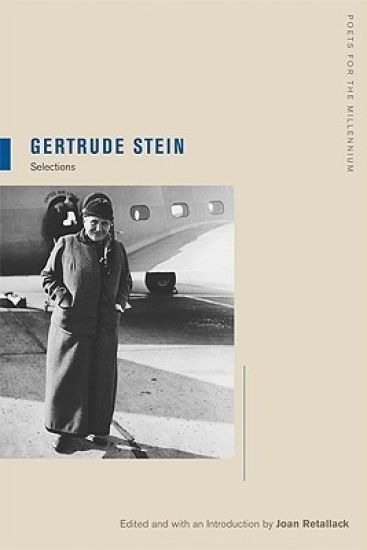
This selection of Gertrude Stein's work is taken from the period between 1905 and 1936, when the iconic modernist poet was engaged in an astounding number of still-surprising literary experiments, whose innovations continue to influence all the arts. Editor Joan Retallack has chosen complete texts or selections that lend themselves to a clarified vision of Stein's oeuvre. In her brilliant introduction, Retallack provides the historical and biographical context for Stein's lifelong project of composing a 'continuous present,' an effort which parallels many of the most important technological and scientific developments of her era - from moving pictures to Einstein's revision of our understanding of space and time.Retallack also addresses persistent questions about Stein's work and the best way to read it in our contemporary moment. In suggesting a performative 'reading poesis' for these works, Retallack follows Stein's dictum by arguing that to actively experience the work is to enjoy it, and to enjoy it is to understand it.
'Strikingly accomplished . . . utterly compelling.' SUNDAY TIMES'A masterpiece of biography.' SUNDAY TELEGRAPH'A total joy to read.' SARAH BAKEWELL'I feel like I've been waiting for this book my whole life.' SHEILA HETIFrom the celebrated author of Square Haunting comes a biography as unconventional and surprising as the life it tells.'Think of the Bible and Homer, think of Shakespeare and think of me,' wrote Gertrude Stein in 1936. Admirers called her a genius, sceptics a charlatan: she remains one of the most confounding - and contested - writers of the twentieth century.In this literary detective story, Francesca Wade delves into the creation of the Stein myth. We see her posing for Picasso's portrait; at the centre of Bohemian Parisian life hosting the likes of Matisse and Hemingway; racing through the French countryside with her enigmatic companion Alice B. Toklas; dazzling American crowds on her sell-out tour for her sensational Autobiography - a veritable celebrity. Yet Stein hoped to be remembered not for her personality but for her work. From her deathbed, she charged her partner with securing her place in literary history. How would her legend shift once it was Toklas's turn to tell the stories - especially when uncomfortable aspects of their past emerged from the archive? Using astonishing never-before-seen material, Wade uncovers the origins of Stein's radical writing, and reveals new depths to the storied relationship which made it possible.This is Gertrude Stein as she was when nobody was watching: captivating, complex and human.
SHORTLISTED FOR THE AMERICAN LIBRARY IN PARIS BOOK AWARD 2025 'Strikingly accomplished . . . utterly compelling.' SUNDAY TIMES 'A masterpiece of biography.' DAILY TELEGRAPH 'A total joy to read.' SARAH BAKEWELL 'I feel like I've been waiting for this book my whole life.' SHEILA HETI From the celebrated author of Square Haunting comes a biography as unconventional and surprising as the life it tells. 'Think of the Bible and Homer think of Shakespeare and think of me,' Stein wrote. Admirers called her a genius, sceptics a charlatan. Gertrude Stein remains one of the most confounding - and contested - writers of the twentieth century. The host of glamorous salons at 27 rue de Fleurus, brushing shoulders with Picasso and Hemingway in her long brown robe, Stein never ceased plotting her own legacy. She would be known as the literary innovator of her time. And her enigmatic partner, Alice B. Toklas, would make sure of it.
This book is a study of Gertrude Stein’s diverse and idiosyncratic oeuvre, ranging from established works such as ‘The Autobiography of Alice B. Tolkas’ to her lesser known pieces of theatre. Drawing upon feminist, psychoanalytic and performance theory, Nicola Shaughnessy re-evaluates Stein’s prose, poetry and drama. Reference is made to Stein’s unpublished material, in particular her notebooks or ‘carnets’ which offer new insights into her life and work. The book explores the importance of autobiography as a pervasive element throughout Stein’s writing. Above all, Nicola Shaughnessy shows how Stein’s work benefits from being situated in an interdisciplinary artistic context with influences from art, theatre and music as well as literature.
In her provocative study of Gertrude Stein, G.F. Mitrano argues that Stein's particular take on modernity has special relevance for today. Tracing what she describes as Stein's deeply modernist story of transformation from a nineteenth-century American woman to the disquieting muse of avant-garde culture portrayed in Picasso's famous portrait, Mitrano illuminates Stein's immense appetite for life, her love of thinking, and her craving for recognition. Her approach is innovative, combining the exegetical, the visual, and the theoretical, to emphasize Stein's struggle for individuality and public achievement as a profoundly historical struggle involving personal choices linked, for example, to her sexuality or the uses of her physical appearance. Stein continues to attract attention, Mitrano contends, because she anticipates many contemporary concerns, especially in the field of critical thinking: from the question of subjectivity, to the status of the writer as a laborer among many, to the meaning of fame and the private/public divide.
The first extensive examination of Stein's notebooks, manuscripts and letters, prepared over a period of twenty years, Gertrude Stein: The Language That Rises asks new questions and explores new ways of reading Stein. This definitive study give us a finely detailed, deeply felt understanding of Stein, the great modernist, throughout one of her most productive periods. From "An Elucidation" in 1923 to Lectures In America in 1934, Ulla E. Dydo examines the process of the making and remaking of Stein's texts as they move from notepad to notebook to manuscript, from an idea to the ultimate refinement of the author's intentions. The result is an unprecedented view of the development of Stein's work, word by word, text by text, and over time.
The groundbreaking writer Gertrude Stein (1874-1946) was intensely American, though she lived most of her life in France. She returned only once to the United States, having left it at the age of twenty-nine, yet she never lost her plain American accent and manner nor her ardor for the United States. Stein approached her country with an appreciation akin to discovery. She wrote about it all—railroad stations, mailboxes, cities, farms, five-and-dime stores, drugstores, the food, the landscape, the speech, the ideas. She wrote, too, about Americans she met in France, the writers and artists who flocked there in the twenties and early thirties, the doughboys of World War I, the GIs of World War II, and Americans she met when she came home briefly in 1934-35.
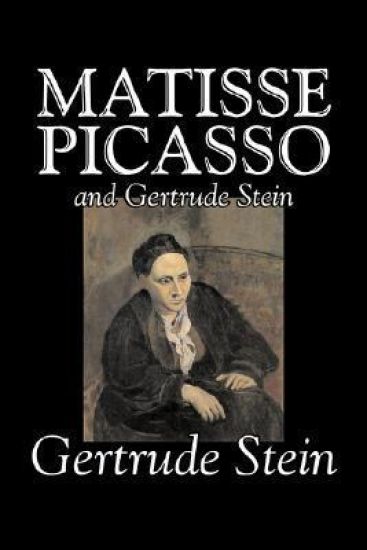
Gertrude Stein, a pivotal figure in modernism, offers a unique and insightful perspective on two giants of 20th-century art in "Matisse Picasso and Gertrude Stein: With Two Shorter Stories." This collection presents Stein's distinctive voice in essays and shorter experimental fiction pieces. Stein's writing provides an intimate glimpse into the artistic landscape of her time, exploring the groundbreaking work of Henri Matisse and Pablo Picasso. As a contemporary and friend, Stein offers unparalleled observations on their artistic processes and revolutionary contributions to art history. More than just art criticism, this volume showcases Stein's own innovative approach to language and narrative. Her experimental style challenges conventional storytelling, making this a compelling read for those interested in the intersection of art, literature, and biography. Delve into the mind of a literary innovator and gain a fresh understanding of the artists who shaped the modern world.This work has been selected by scholars as being culturally important, and is part of the knowledge base of civilization as we know it.This work is in the public domain in the United States of America, and possibly other nations. Within the United States, you may freely copy and distribute this work, as no entity (individual or corporate) has a copyright on the body of the work.Scholars believe, and we concur, that this work is important enough to be preserved, reproduced, and made generally available to the public. We appreciate your support of the preservation process, and thank you for being an important part of keeping this knowledge alive and relevant.
Gertrude Stein, a pivotal figure in modernism, offers a unique and insightful perspective on two giants of 20th-century art in "Matisse Picasso and Gertrude Stein: With Two Shorter Stories." This collection presents Stein's distinctive voice in essays and shorter experimental fiction pieces. Stein's writing provides an intimate glimpse into the artistic landscape of her time, exploring the groundbreaking work of Henri Matisse and Pablo Picasso. As a contemporary and friend, Stein offers unparalleled observations on their artistic processes and revolutionary contributions to art history. More than just art criticism, this volume showcases Stein's own innovative approach to language and narrative. Her experimental style challenges conventional storytelling, making this a compelling read for those interested in the intersection of art, literature, and biography. Delve into the mind of a literary innovator and gain a fresh understanding of the artists who shaped the modern world.This work has been selected by scholars as being culturally important, and is part of the knowledge base of civilization as we know it.This work is in the public domain in the United States of America, and possibly other nations. Within the United States, you may freely copy and distribute this work, as no entity (individual or corporate) has a copyright on the body of the work.Scholars believe, and we concur, that this work is important enough to be preserved, reproduced, and made generally available to the public. We appreciate your support of the preservation process, and thank you for being an important part of keeping this knowledge alive and relevant.
Gertrude Stein (1874-1946) was an American poet, novelist, art collector, and playwright who famously hosted a Paris salon frequented by the likes of F. Scott Fitzgerald, Pablo Picasso, and Ernest Hemingway. Before she was a patron to "The Lost Generation" artists, Stein was an esteemed author who influenced many 20th-century writers with her innovative and experimental prose. First published in 1933, "Matisse Picasso and Gertrude Stein" contains three prose pieces written in the stream-of-consciousness style that Stein was famous for. A modernist classic not to be missed by fans and collectors of Stein's seminal work. Contents include: "The Work of Gertrude Stein, by Sherwood Anderson", "A Long Gay Book", "Many Many Women", and "G. M. P." Other notable works by this author include: "Three Lives" (1909), "White Wines" (1913), and "An Exercise in Analysis" (1917). Read & Co. Classics is republishing this work now in a new edition complete with an introductory essay by Sherwood Anderson.
Three Lives (1909) was American writer Gertrude Stein's first published book. The book is separated into three stories, "The Good Anna", "Melanctha", and "The Gentle Lena". The three stories are independent of each other, but all are set in Bridgepoint, a fictional town based on Baltimore."The Good Anna", the first of Gertrude Stein's Three Lives, is a novella set in "Bridgepoint" about Anna Federner, a servant of "solid lower middle-class south german stock". Part I describes Anna's happy life as housekeeper for Miss Mathilda and her difficulties with unreliable under servants and "stray dogs and cats". She loves her "regular dogs" Baby, an old, blind, terrier; "bad Peter," loud and cowardly; and "the fluffy little Rags." Anna is the undisputed authority in the household, and in her five years with Miss Mathilda she oversees in turn four under servants: Lizzie, Molly, Katy, and Sallie. Sometimes even the lazy and benign Miss Mathilda feels rebellious under Anna's iron hand; she is also concerned because Anna is always giving away money, and tries to protect her from her many poor friends. Part II, "The Life of the Good Anna", fills in the background. Born in Germany, in her teens Anna emigrates to "the far South", where her mother dies of consumption. She moves to Bridgepoint near her brother, a baker, and takes charge of the household of Miss Mary Wadsmith and her young nephew and niece, who are orphans. Little Jane resists Anna's strong will, but after Anna has provoked a showdown becomes "careful and respectful" and even gives Anna a green parrot. When after six years Jane is finally married, Anna refuses to follow Miss Mary in the new household. Mrs. Lehntman, a widow and midwife who "was the romance of Anna's life", helps Anna tell Miss Wadsmith that she cannot accompany her. Anna then goes to work for Doctor Shonjen, a hearty bachelor, with whom she gets along. Previously Shonjen has operated on her, and Anna's general health remains poor: she has headaches and is "thin and worn". When Mrs. Lehntman, who has two careless children, adopts a baby without consulting Anna, the latter is offended and spends more time with another large working family, the Drehtens. She also visits her brother the baker, but has trouble with her sister-in-law, though she eventually helps with her savings when her god-daughter niece is married. Mrs. Lehntman rashly decides to open a boarding house, and Anna despite her misgivings lends her the necessary money, for "Romance is the ideal in one's life and it is very lonely living with it lost". Having been once defeated in the matter of Johnny's adoption, she can no longer impose her will in the relationship. ("In friendship, power always has its downward curve.") When Dr. Shonjen marries a "proud" and "unpleasant" woman, Anna seeks a new position. Encouraged by a fortune-teller, she goes to work for Miss Mathilda, and these are her happiest years, until finally her ailing favorite dog Baby dies and Miss Mathilda leaves permanently for Europe........Gertrude Stein (February 3, 1874 - July 27, 1946) was an American novelist, poet, playwright, and art collector. Born in the Allegheny West neighborhood of Pittsburgh, Pennsylvania, and raised in Oakland, California, Stein moved to Paris in 1903, and made France her home for the remainder of her life. She hosted a Paris salon, where the leading figures of modernism in literature and art, such as Pablo Picasso, Ernest Hemingway, F. Scott Fitzgerald, Sinclair Lewis, Ezra Pound, and Henri Matisse would meet. In 1933, Stein published a kind-of memoir of her Paris years, The Autobiography of Alice B. Toklas, written in the voice of her life partner, Alice B. Toklas, an American-born member of the Parisian avant-garde.....
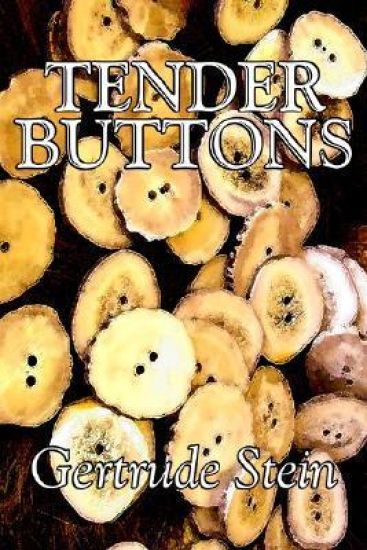
The change of color is likely and a difference a very little difference is prepared. Sugar is not a vegetable. -- Gertrude Stein Gertrude Stein wrote many odd and peculiar texts and this work -- Tender Buttons -- is among the best known of them. Stein's wonderful and peculiar approach to the language seems to focus on sounds and rhythms rather than the sense of words. Abandoning the sense of things, it's said, she attempted to capture "moments of consciousness," independent of time and memory. That may and may not be the case, but over the years, this and many similar works have been described by critics as a "feminist reworking of patriarchal language." We don't know about that, but we do like the work, just as we like Stein.
Gertrude Stein is best known for the quote, "A rose is a rose is a rose is a rose." She was an early 20th century writer whose work mirrored the experimentalism of the Cubist art movement."A Long Gay Book" (the novella that opens this volume -- a novella so substantial that it could well fill a volume by itself) is written in the stream-of-consciousness style that Stein helped to make famous.
The book is sep," "Melarated into three stories, "The Good Annaanctha," and "The Gentle Lena." Gertrude Stein (February 3, 1874 - July 27, 1946) was an American novelist, poet, playwright, and art collector. Born in the Allegheny West neighborhood of Pittsburgh, Pennsylvania, and raised in Oakland, California, Stein moved to Paris in 1903, and made France her home for the remainder of her life. She hosted a Paris salon, where the leading figures of modernism in literature and art, such as Pablo Picasso, Ernest Hemingway, F. Scott Fitzgerald, Sinclair Lewis, Ezra Pound, Sherwood Anderson and Henri Matisse, would meet. In 1933, Stein published a quasi-memoir of her Paris years, The Autobiography of Alice B. Toklas, written in the voice of Alice B. Toklas, her life partner and an American-born member of the Parisian avant-garde. The book became a literary bestseller and vaulted Stein from the relative obscurity of the cult-literature scene into the limelight of mainstream attention. Two quotes from her works have become widely known: "Rose is a rose is a rose is a rose"and "there is no there there," with the latter often taken to be a reference to her childhood home of Oakland, California. Her books include Q.E.D. (Quod Erat Demonstrandum) (1903), about a lesbian romantic affair involving several of Stein's female friends, Fernhurst, a fictional story about a romantic affair, Three Lives (1905-06), and The Making of Americans (1902-1911). In Tender Buttons (1914), Stein commented on lesbian sexuality. Her activities during World War II have been the subject of analysis and commentary. As a Jew living in Nazi-occupied France, Stein may have only been able to sustain her lifestyle as an art collector, and indeed to ensure her physical safety, through the protection of the powerful Vichy government official and Nazi collaborator Bernard Faÿ. After the war ended, Stein expressed admiration for another Nazi collaborator, Vichy leader Marshal P tain. Some have argued that certain accounts of Stein's wartime activities have amounted to a "witch hunt.."................