Kirjahaku
Etsi kirjoja tekijän nimen, kirjan nimen tai ISBN:n perusteella.
262 tulosta hakusanalla Gesine Froese


MARCO POLO Reiseführer Karibik, Große Antillen, Dominikanische Republik, Puerto Rico, Kuba, Jamaika, Bahamas, Cayman Islands
Gesine Froese; Karl Teuschl; Irmeli Tonollo
MairDumont
2024
pokkari


MARCO POLO Reiseführer Karibik, Kleine Antillen - Barbados, Trinidad & Tobago, Windward Island, Französische & Niederländische Antillen, Leeward & Virgin Islands
Gesine Froese; Irmeli Tonollo
MairDumont
2024
nidottu


Hymne de la gesine de Nostre Dame, vers héroïques dédiée à Madame de Soyecourt
François Morand
Hachette Livre Bnf
2021
pokkari

2 Japanese Folk Songs and Gesine: For Harp Solo
SCHOTT
2009
nidottu
(Misc). Apart from the technical aspect that is to the fore, Hosokawa also opens the listener's eyes to the soft Impressionist color of Japanese poetry: a cherry blossom celebration, a lullaby-and again and again an approach to the sound of the koto, the traditional Japanese zither.
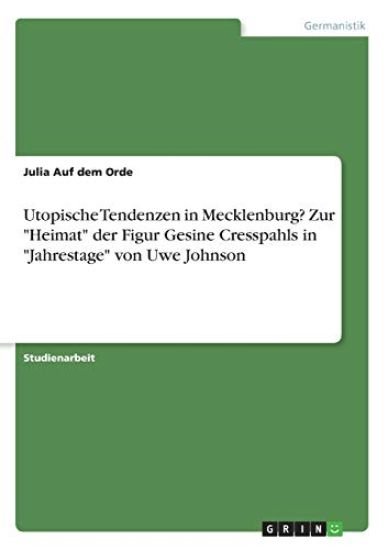
Utopische Tendenzen in Mecklenburg? Zur "Heimat" der Figur Gesine Cresspahls in "Jahrestage" von Uwe Johnson
Julia Auf dem Orde
GRIN Verlag
2017
nidottu


The Agrarian Speeches (Orationes de lege agraria) were delivered in January 63 BCE, just after Cicero had entered office as consul; they are his inaugural orations and therefore the first element of his consular activity. They not only provide valuable testimony for approaches to agrarian legislation in the late Republic, but also show how the new consul presented himself before the Senate and the People at the beginning of his consular year, a significant political event for which very few extensive sources remain. These speeches are also significant in demonstrating Cicero's rhetorical virtuosity and the sophistication of his political tactics in arguing against a proposal for a grand scheme of buying, selling, and allocating land put forward by the Tribune of the People, P. Servilius Rullus. Delivered in the same year as his arguably more famous orations against Catiline, they have nevertheless found less attention in modern scholarship. This edition offers a comprehensive introduction, a revised Latin text alongside a new English translation, and the first detailed commentary on the corpus, which, besides addressing numerous linguistic and textual issues, also explains the complex legal and historical situation and illustrates Cicero's sophisticated argumentative techniques. Drawing on the contemporary resurgence of academic interest in political oratory, it aims to bring these neglected speeches to a wider audience and will be particularly suitable for both scholars and students interested in Cicero, oratory, Roman law, or the history of the Roman Republic.

Cicero, Post Reditum Speeches: Introduction, Text, Translation, and Commentary
Gesine Manuwald
Oxford University Press
2021
sidottu
The high point in Cicero's life (according to his own assessment), his reaching the consulship at the earliest opportunity in 63 BCE and his successful confrontation of the Catilinarian Conspiracy during that year, was soon followed by a backlash, which made Cicero withdraw from Rome in 58 to 57 BCE. Upon return to Rome from this absence (traditionally called 'exile' by a term Cicero himself never uses in this context), Cicero delivered two speeches, in the Senate and before the People respectively, to express his gratitude for his recall and to establish himself again as a respected senior statesmen. This volume offers the first-full scale commentary in English, including a revised Latin text and a fresh English translation, on these speeches, which have suffered from neglect in scholarship and doubts about their authenticity. This book outlines their particular nature, the characteristics of their specific oratorical genre and their importance as documents of Cicero's techniques as an orator and of the strategies of presenting himself. In addition, the book includes the spurious speech, Pridie quam in exilium iret, that Cicero supposedly gave on the eve of his departure. Thus, offering the first proper study of this speech, this volume presents all oratorical material related to Cicero's departure from and return to Rome in a single volume and enables direct comparison between speeches now confirmed to be genuine and a later spurious speech, which also gives insights into the reception history of Cicero's works. This book will therefore be an essential tool especially for Classicists and Ancient Historians interested in Cicero, in exile literature and in the history of the Roman Republic and Roman oratory.
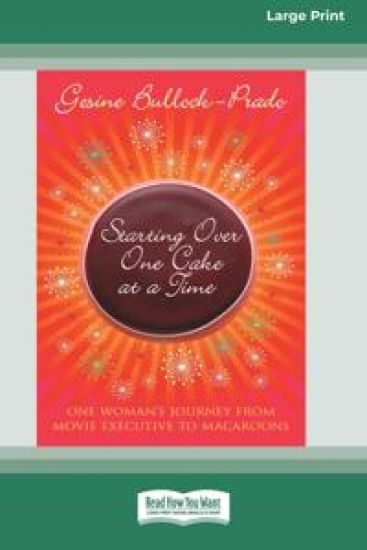
Starting Over, One Cake at a Time (16pt Large Print Edition)
Gesine Bullock-Prado
Readhowyouwant
2013
pokkari

Theatre flourished in the Roman Republic, from the tragedies of Ennius and Pacuvius to the comedies of Plautus and Terence and the mimes of Laberius. Yet apart from the surviving plays of Plautus and Terence the sources are fragmentary and difficult to interpret and contextualise. This book provides a comprehensive history of all aspects of the topic, incorporating recent findings and modern approaches. It discusses the origins of Roman drama and the historical, social and institutional backgrounds of all the dramatic genres to be found during the Republic (tragedy, praetexta, comedy, togata, Atellana, mime and pantomime). Possible general characteristics are identified, and attention is paid to the nature of and developments in the various genres. The clear structure and full bibliography also ensure that the book has value as a source of reference for all upper-level students and scholars of Latin literature and ancient drama.
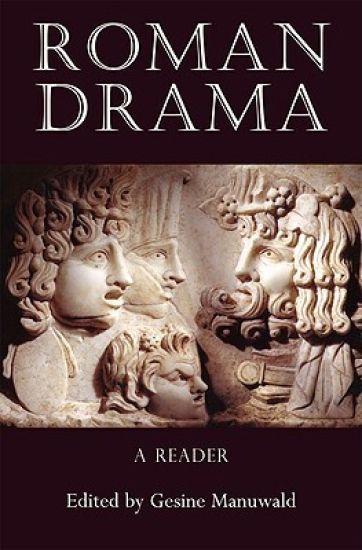
Roman drama is a genre of Latin literature that was influential both in the cultural life of the ancient Romans and in the European theatre tradition. Plays of Plautus, Terence and Seneca are still very well known today; yet there were numerous works by other poets besides, though they survive only in fragmentary form. On the basis of a selection of paradigmatic sample texts by a number of Roman dramatists, this anthology provides a stimulating overview of the entire literary genre, including its various subtypes (tragedy, praetexta, comedy, togata, mime) and its historical development. To make these texts accessible to a wide readership, new English translations (on facing pages) as well as introductions to the individual excerpts and to the general context have been included. A selection of relevant testimonia provides information about the cultural background to Roman drama and ancient views on this literary genre. Paradigmatic extracts from dramas written in England between the sixteenth and twentieth centuries illustrate the continuing influence of Roman plays. Thus this anthology conveniently documents the history of an interesting and exciting literary genre from its beginnings to the modern period.

Baking and decorating a cake can be a challenge, and when the end result doesn't taste as good as it looks, a big disappointment! Author and seasoned baker Gesine Bullock-Prado has perfected a method for creating eye-catching spectacular cakes that measure up. Her step-by-step instruction for baking, piping, and making decorations make each bit manageable, whether it's baking layers ahead of time and freezing, or taking the time to crank out a slew of gorgeous frosting flowers that hold beautifully in the freezer until you need them. Her aim is to present a 'system' for cake decorating that carries you through from baking to finishing, no step skipped or left unexplained. Just remember BaDASS: Bake ahead, Dam, Assemble, Smooth coat, and Spruce it up. The layers are as easy as box mixes, and the smoothing and decorating instructions work the first time (not a thousand passes later). From custom shapes to complement a party theme to ultra-gorgeous cakes for special occasions, it's all within reach.
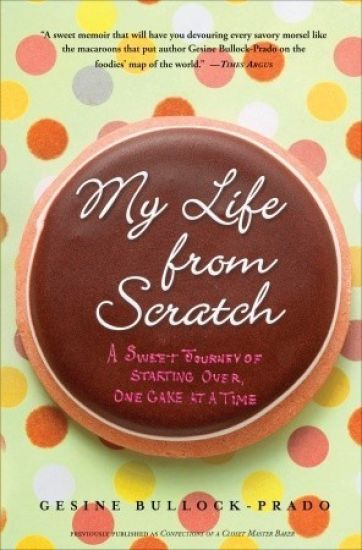
My Life from Scratch: A Sweet Journey of Starting Over, One Cake at a Time
Gesine Bullock-Prado
Crown Publishing Group (NY)
2010
nidottu
A former Hollywood insider trades the Hollywood Hills for Green Acres--and lives to tell about it in this hilarious, poignant treat of a memoir. As head of her celebrity sister's production company, Gesine Bullock-Prado had a closet full of designer clothes and the ear of all the influential studio heads, but she was miserable. The only solace she found was in her secret hobby: baking. With every sugary, buttery confection to emerge from her oven, Gesine took one step away from her glittery, empty existence--and one step closer to her true destiny. Before long, she and her husband left the trappings of their Hollywood lifestyle behind, ending up in Vermont, where they started the gem known as Gesine Confectionary. And they never looked back. Confections of a Closet Master Baker follows Gesine's journey from sugar-obsessed child to miserable, awkward Hollywood insider to reluctant master baker. Chock-full of eccentric characters, beautifully detailed descriptions of her baking process, ceaselessly funny renditions of Hollywood nonsense, and recipes, the ingredients of her story will appeal to anyone who has ever considered leaving the life they know and completely starting over.
Politics and Guilt sheds new light on our understanding of the pervasive psychological and cultural effects of Nazism by examining the power of guilt in modern Germany. Usually seen as a psychological and intensely personal phenomenon, the effect of guilt on the collective arena of politics has been downplayed or misunderstood by many political scientists. Taking issue with Hannah Arendt, Daniel Goldhagen, and Hermann Lübbe, Gesine Schwan argues that Germans must confront their Nazi past because the repression or lack of acknowledgment of guilt damages modern democracies. The Nazi perpetrators were not above the norms of good and evil, she asserts, but were conscious of their guilt and silent about it. The widespread psychological guilt in them and their descendents has adversely affected perceptions of political responsibility, marriage, and child rearing in modern Germany. At a moment when past crimes are being exposed, reparation demands are increasingly common, and world leaders are apologizing and making amends for past mistakes and injustices, Schwan's analysis is timely and thoughtful, standing as the most sophisticated consideration of guilt in politics to date.