Kirjahaku
Etsi kirjoja tekijän nimen, kirjan nimen tai ISBN:n perusteella.
32 tulosta hakusanalla Gevork Hartoonian
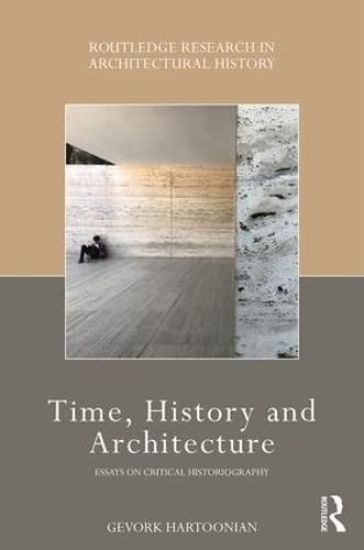
Time, History and Architecture presents a series of essays on critical historiography, each addressing a different topic, to elucidate the importance of two influential figures Walter Benjamin and Gottfried Semper for architectural history. In a work exploring themes such as time, autonomy and periodization, author Gevork Hartoonian unpacks the formation of architectural history; the problem of autonomy in criticism and the historiographic narrative. Considering the scope of criticism informing the contemporaneity of architecture, the book explores the concept of nonsimultaneity, and introduces retrospective criticism the agent of critical historiography. An engaging thematic dialogue for academics and upper-level graduate students interested in architectural history and theory, this book aims to deconstruct the certainties of historicism and to raise new questions and interpretations from established critical canons.
Towards a Critique of Architecture’s Contemporaneity
Gevork Hartoonian
TAYLOR FRANCIS LTD
2023
sidottu
Pursuing historical analogies between nineteenth-century theories and the current practices captivated by digital reproducibility, this book offers a critical take on architecture’s contemporaneity through four essays: tectonics, materiality, cladding, and labor.Fundamental to this proposition is the historicity of Gottfried Semper’s theorization of architecture amidst the outpouring of new materials and construction techniques during the 1850s. Starting with Semper’s differentiation between theatricalization and the tectonic of theatricality, this book examines thematic essential to architecture’s self-representation. Even though the title of this book recalls the Semperian Four Elements of Architecture, its argument encapsulates a unique historico-theoretical project probing the tectonic of theatricality beyond Semper. The invisible tie between technique and labor is the cord running through the four subjects covered in this book. In exploring these subjects from the theoretical standpoint of Marxian dialectics, this book’s contribution is focused on, but not limited to, the topicality of labor today when its relationship with capital has been further obscured by the prevailing digitalization of commodity exchange value, starting roughly in the 1990s. Each essay examines Semper’s theorization of architecture in contradistinction to the ways in which technology’s mediation has dominated architecture’s representation.Burrowing through the invisible tie between technique and work, asymptomatic of architecture’s predicament in global capitalism, Towards a Critique of Architecture’s Contemporaneity advances the scope of architectural criticism beyond the exhausted formalism and architecture’s turn to philosophy circa the 1980s and the present tendencies for presentism. It will therefore be of interest to researchers and students of architectural history and theory.
Towards a Critique of Architecture’s Contemporaneity
Gevork Hartoonian
TAYLOR FRANCIS LTD
2024
nidottu
Pursuing historical analogies between nineteenth-century theories and the current practices captivated by digital reproducibility, this book offers a critical take on architecture’s contemporaneity through four essays: tectonics, materiality, cladding, and labor.Fundamental to this proposition is the historicity of Gottfried Semper’s theorization of architecture amidst the outpouring of new materials and construction techniques during the 1850s. Starting with Semper’s differentiation between theatricalization and the tectonic of theatricality, this book examines thematic essential to architecture’s self-representation. Even though the title of this book recalls the Semperian Four Elements of Architecture, its argument encapsulates a unique historico-theoretical project probing the tectonic of theatricality beyond Semper. The invisible tie between technique and labor is the cord running through the four subjects covered in this book. In exploring these subjects from the theoretical standpoint of Marxian dialectics, this book’s contribution is focused on, but not limited to, the topicality of labor today when its relationship with capital has been further obscured by the prevailing digitalization of commodity exchange value, starting roughly in the 1990s. Each essay examines Semper’s theorization of architecture in contradistinction to the ways in which technology’s mediation has dominated architecture’s representation.Burrowing through the invisible tie between technique and work, asymptomatic of architecture’s predicament in global capitalism, Towards a Critique of Architecture’s Contemporaneity advances the scope of architectural criticism beyond the exhausted formalism and architecture’s turn to philosophy circa the 1980s and the present tendencies for presentism. It will therefore be of interest to researchers and students of architectural history and theory.
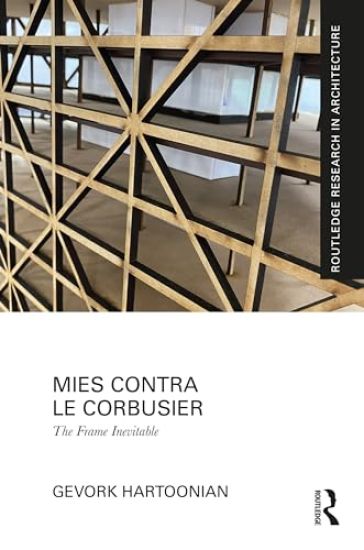
In Mies Contra Le Corbusier, Gevork Hartoonian embarks on a captivating exploration of the architectural ideologies embodied in the works of Mies van der Rohe and Le Corbusier.Focusing on the non-synchronicity inherent in their approaches to the tectonics of the column and wall, Hartoonian conducts a comparative analysis of carefully selected diachronic projects from each architect. This insightful journey unravels the architects' ideological stances within the ongoing dialogue between modernity and tradition. Hartoonian sheds light on the inclination of Mies and Le Corbusier toward a frameless architecture, a characteristic prominently displayed in their late works. Drawing inspiration from Marxian philosophy, the author contends that significant technological developments play a crucial role in shaping subjectivities across the cultural spectrum, creating an uneven dissemination. The frame, in Hartoonian’s lens, transcends the boundaries of a single building, becoming a lens through which to frame a nuanced understanding of the urban landscape and tectonics. Mies Contra Le Corbusier stands as a thought-provoking exploration that not only unveils the intricacies of architectural history but also offers profound insights into the cultural and technological forces shaping the built environment.This book will be of interest to researchers and students of architectural history and theory. Additionally, it offers a timely discussion of Mies and Le Corbusier’s contributions to architecture’s contemporaneity for the younger generation of architects.
Focusing on six leading contemporary architects: Peter Eisenman, Frank Gehry, Bernard Tschumi, Zaha Hadid, Rem Koolhaas and Steven Holl, this book puts forward a unique and insightful analysis of "neo-avant-garde" architecture. It discusses the spectacle and excess which permeates contemporary architecture in reference to the present aesthetic tendency for image making, but does so by applying the tectonic of theatricality discussed by the 19th-century German architect Gottfried Semper. In doing so, it breaks new ground by opening up a dialogue between the study of the past and the design of the present. The work of each discussed architect is seen as addressing a historiographical problem. To this end, and this is the second important aspect of this book, the chosen buildings are discussed in terms of the thematic of the culture of building (the tectonic of column and wall for example) rather the formal, and this through a discussion that is informed by the latest available theories. Having set the aesthetic implication of the processes of the digitalization of architecture, the book's conclusion highlights "strategies" by which architecture might postpone the full consequences of digitalization, and thus the becoming of architecture as ornament on its own right.
Time, History and Architecture presents a series of essays on critical historiography, each addressing a different topic, to elucidate the importance of two influential figures Walter Benjamin and Gottfried Semper for architectural history. In a work exploring themes such as time, autonomy and periodization, author Gevork Hartoonian unpacks the formation of architectural history; the problem of autonomy in criticism and the historiographic narrative. Considering the scope of criticism informing the contemporaneity of architecture, the book explores the concept of nonsimultaneity, and introduces retrospective criticism the agent of critical historiography. An engaging thematic dialogue for academics and upper-level graduate students interested in architectural history and theory, this book aims to deconstruct the certainties of historicism and to raise new questions and interpretations from established critical canons.
Judging from the debates taking place in both education and practice, it appears that architecture is deeply in crisis. New design and production techniques, together with the globalization of capital and even skilled-labour, have reduced architecture to a commodified object, its aesthetic qualities tapping into the current pervasive desire for the spectacular. These developments have changed the architect’s role in the design and production processes of architecture. Moreover, critical architectural theories, including those of Breton, Heidegger and Benjamin, which explored the concepts of technology, modernism, labour and capital and how technology informed the cultural, along with later theories from the 1960s, which focused more on the architect’s theorization of his/her own design strategies, seem increasingly irrelevant. In an age of digital reproduction and commodification, these theoretical approaches need to be reassessed. Bringing together essays and interviews from leading scholars such as Kenneth Frampton, Peggy Deamer, Bernard Tschumi, Donald Kunze and Marco Biraghi, this volume investigates and critically addresses various dimensions of the present crisis of architecture. It poses questions such as: Is architecture a conservative cultural product servicing a given producer/consumer system? Should architecture’s affiliative ties with capitalism be subjected to a measure of criticism that can be expanded to the entirety of the cultural realm? Is architecture’s infusion into the cultural the reason for the visibility of architecture today? What room does the city leave for architecture beyond the present delirium of spectacle? Should the thematic of various New Left criticisms of capitalism be taken as the premise of architectural criticism? Or alternatively, putting the notion of criticality aside is it enough to confine criticism to the production of insightful and pleasurable texts?
Focusing on six leading contemporary architects: Peter Eisenman, Frank Gehry, Bernard Tschumi, Zaha Hadid, Rem Koolhaas and Steven Holl, this book puts forward a unique and insightful analysis of "neo-avant-garde" architecture. It discusses the spectacle and excess which permeates contemporary architecture in reference to the present aesthetic tendency for image making, but does so by applying the tectonic of theatricality discussed by the 19th-century German architect Gottfried Semper. In doing so, it breaks new ground by opening up a dialogue between the study of the past and the design of the present. The work of each discussed architect is seen as addressing a historiographical problem. To this end, and this is the second important aspect of this book, the chosen buildings are discussed in terms of the thematic of the culture of building (the tectonic of column and wall for example) rather the formal, and this through a discussion that is informed by the latest available theories. Having set the aesthetic implication of the processes of the digitalization of architecture, the book's conclusion highlights "strategies" by which architecture might postpone the full consequences of digitalization, and thus the becoming of architecture as ornament on its own right.
Judging from the debates taking place in both education and practice, it appears that architecture is deeply in crisis. New design and production techniques, together with the globalization of capital and even skilled-labour, have reduced architecture to a commodified object, its aesthetic qualities tapping into the current pervasive desire for the spectacular. These developments have changed the architect’s role in the design and production processes of architecture. Moreover, critical architectural theories, including those of Breton, Heidegger and Benjamin, which explored the concepts of technology, modernism, labour and capital and how technology informed the cultural, along with later theories from the 1960s, which focused more on the architect’s theorization of his/her own design strategies, seem increasingly irrelevant. In an age of digital reproduction and commodification, these theoretical approaches need to be reassessed. Bringing together essays and interviews from leading scholars such as Kenneth Frampton, Peggy Deamer, Bernard Tschumi, Donald Kunze and Marco Biraghi, this volume investigates and critically addresses various dimensions of the present crisis of architecture. It poses questions such as: Is architecture a conservative cultural product servicing a given producer/consumer system? Should architecture’s affiliative ties with capitalism be subjected to a measure of criticism that can be expanded to the entirety of the cultural realm? Is architecture’s infusion into the cultural the reason for the visibility of architecture today? What room does the city leave for architecture beyond the present delirium of spectacle? Should the thematic of various New Left criticisms of capitalism be taken as the premise of architectural criticism? Or alternatively, putting the notion of criticality aside is it enough to confine criticism to the production of insightful and pleasurable texts?
This book focuses on the first edition of Kenneth Frampton’s Modern Architecture: A Critical History, published in 1980. It searches for clues and positions that will provide the reader with an unprecedented insight into the significance of Frampton’s historiography of modern architecture. It explores selected themes in line with Frampton’s many-faceted contribution, certain aspects of which can be noted between the lines of his ongoing criticism of the present-day architecture, which inevitably lead us to a critical understanding of the past, the modernity of architecture’s contemporaneity. The compiled chapters attempt to open a window onto the constellation of themes that allowed Frampton to hold on to his anteroom view of history even amidst the flow of time and flood of temporalities spanning 1980–2020. The book elucidates how Frampton’s critical presentation of the history of modern movement architecture and the book’s classificatory mode (periodization?) contribute to our understanding of the contemporaneity of architecture today.
Ontology of Construction
Gevork Hartoonian; Kenneth Frampton
Cambridge University Press
1997
pokkari
Ontology of Construction explores theories of construction in modern architecture, with a particular focus on the relationship between nihilism of technology and architecture. Providing an historical context to the concept of making, the essays collected in this volume articulate the implications of technology in works by such architects as Le Corbusier, Frank Lloyd Wright, Adolf Loos, and Mies van der Rohe. Also provided is an interpretation of Gottfried Semper’s discourse on the Tectonic and the relationship between architecture and other crafts. Emphasising ‘fabrication’ as a critical theme for contemporary architectural theory and practice, Ontology of Construction is a provocative contribution to the current debate in these areas.
Microgrids and Methods of Analysis
Gevork B. Gharehpetian; Hamid Reza Baghaee; Masoud M. Shabestary
Academic Press Inc
2021
nidottu
The increasing penetration of distributed energy resource (DER), distributed generation (DG) and energy storage system (ESS) units in distribution grids leads to the emergence of the concepts of active distribution networks (ADNs), microgrids, and virtual power plants. Nowadays, the use of electronically-coupled distributed energy resources is of great interest that can provide the power of demand side alone or in a small electricity grid. A microgrid is a small-scale power grid in low voltage network that must be able to locally solve energy issues and enhance the flexibility and can operate either in grid-connected or islanded/autonomous mode of operation. To study them, researchers need an appropriate set of methods, software tools, analogous to those exist for large interconnected power systems. The book Microgrids and Methods of Analysis addresses systematic analysis, control/protection systems design, and optimal operation of a distribution system under high penetration of DERs analogous to those that exist for large interconnected power systems.
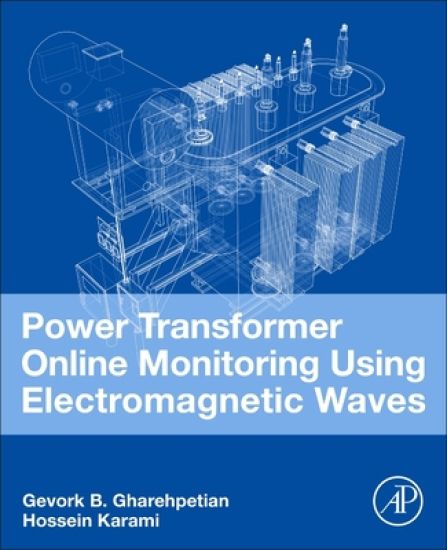
Power Transformer Online Monitoring Using Electromagnetic Waves
Gevork B. Gharehpetian; Hossein Karami
ELSEVIER SCIENCE PUBLISHING CO INC
2023
nidottu
Power Transformer Online Monitoring using Electromagnetic Waves explores how to use electromagnetic wave technology and remote monitoring systems to predict and localize costly mechanical defects and partial discharge challenges in high voltage transformer windings. This innovative approach brings several potential benefits compared with conventional techniques such as frequency response analysis, including impermeability to ambient noise, and online implementation capability. This book reviews both fundamental and state-of-the-art information about all key aspects of condition monitoring using electromagnetic waves. It addresses the simulation of power transformers in CST environment while also explaining the theoretical background of boundary conditions used. Chapters review how to achieve practical online implementation, reliable diagnosis, asset management and remnant life estimation. Partial discharge detection is also discussed.
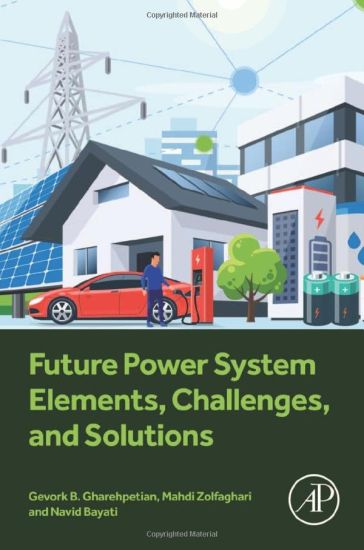
Future Power System Elements, Challenges, and Solutions
Gevork B. Gharehpetian; Mahdi Zolfaghari; Navid Bayati
ELSEVIER SCIENCE PUBLISHING CO INC
2024
nidottu
Future Power System Elements, Challenges, and Solutions synthesizes essential knowledge of power system challenges into a single volume. Ideal for researchers, engineers, and students in power systems, this book supports readers from initial understanding to design and implementation. This book begins with the fundamental history, policies, and long-term needs of a sustainable energy system. A detailed analysis helps evaluate the challenges specific to distribution, generation, and transmission systems, preparing readers to understand the criteria for strong solutions. The final chapters break down potential solutions for each area in turn, offering a chance to develop your own approach. Readers can build understanding of generation technologies from distributed generation to fuel cells, transmission systems including HVDC systems and FACTS devices, and distribution solutions from microgrids to Energy Storage Solutions (ESS). Providing in-depth analysis of the biggest challenges currently facing the industry, Future Power System Elements, Challenges, and Solutions enables researchers, industry engineers and students to generate solutions for the power systems of the future.
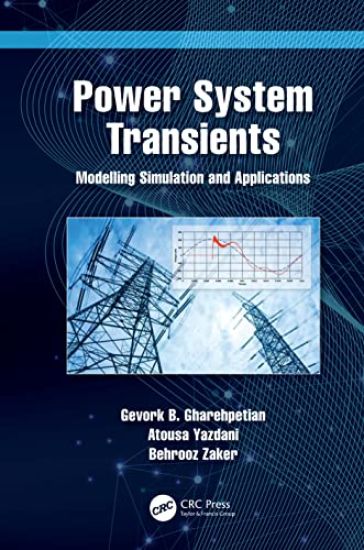
Power System Transients
Gevork Gharehpetian; Atousa Yazdani; Behrooz Zaker
TAYLOR FRANCIS LTD
2023
sidottu
In this textbook, a variety of transient cases that have occurred or are possible to occur in power systems are discussed and analyzed. It starts by categorizing transients’ phenomena and specifying unfavorable situations in power systems raised by transients. It then moves on to different protective measures that have been implemented in the system to prevent disasters caused by those transients. It also explains different methodologies used to analyze transients in power systems.This book discusses the modeling of components very extensively and provides analysis cases to assess a wide variety of transients, their possible effects on the system, and the types of protection commonly used for each case, along with methods fordesigning a sound protection system.FEATURES• Detailed models of system components along with power systems computer- aided design (PSCAD) implementation and analysis• Comprehensive reference of transient cases in power systems along with design considerations and protective solutions• The cases are not limited to classical transients such as lightning strikes and switching, but rather the book discusses transient cases that power system operators and engineers have to deal with, such as ferroresonance, in detail, accompanied by computer simulations• A chapter on original materials related to transformer windings with induced traveling wavesPower System Transients: Modelling Simulation and Applications provides a comprehensive resource to mainly educate graduate students in the area of power system transients. It also serves as a reference for industry engineers challenged by transient problems in the system..
Power System Transients
Gevork Gharehpetian; Atousa Yazdani; Behrooz Zaker
TAYLOR FRANCIS LTD
2024
nidottu
In this textbook, a variety of transient cases that have occurred or are possible to occur in power systems are discussed and analyzed. It starts by categorizing transients’ phenomena and specifying unfavorable situations in power systems raised by transients. It then moves on to different protective measures that have been implemented in the system to prevent disasters caused by those transients. It also explains different methodologies used to analyze transients in power systems.This book discusses the modeling of components very extensively and provides analysis cases to assess a wide variety of transients, their possible effects on the system, and the types of protection commonly used for each case, along with methods fordesigning a sound protection system.FEATURES• Detailed models of system components along with power systems computer- aided design (PSCAD) implementation and analysis• Comprehensive reference of transient cases in power systems along with design considerations and protective solutions• The cases are not limited to classical transients such as lightning strikes and switching, but rather the book discusses transient cases that power system operators and engineers have to deal with, such as ferroresonance, in detail, accompanied by computer simulations• A chapter on original materials related to transformer windings with induced traveling wavesPower System Transients: Modelling Simulation and Applications provides a comprehensive resource to mainly educate graduate students in the area of power system transients. It also serves as a reference for industry engineers challenged by transient problems in the system..
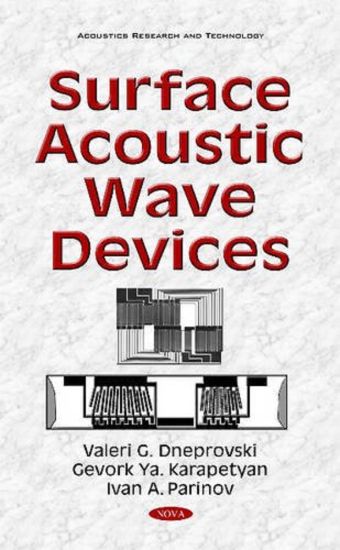
Surface Acoustic Wave Devices
Valeri G Dneprovski; Gevork Ya Karapetyan; Ivan A Parinov
Nova Science Publishers Inc
2016
sidottu
Grounding System Transients
Mehrdad Mokhtari; Gevork B. Gharehpetian
Lap Lambert Academic Publishing
2017
nidottu