Kirjojen hintavertailu. Mukana 11 244 527 kirjaa ja 12 kauppaa.

Kirjahaku

Etsi kirjoja tekijän nimen, kirjan nimen tai ISBN:n perusteella.

544 tulosta hakusanalla Gian-Marco Jenatsch

Zita Cotti

Zita Cotti

Gian-Marco Jenatsch

Quart Publishers
2014
pokkari
Zita Cotti became an important exponent in the debate on high-quality living space in the greater Zurich area through her Katzenbach housing association estate in Zurich-Seebach (2007). This volume presents Cotti's two built housing estates in Zurich and seven projects of which some have been implemented, focusing on the key fields of city homes, housing estates and hillside estates. Text in English and German.
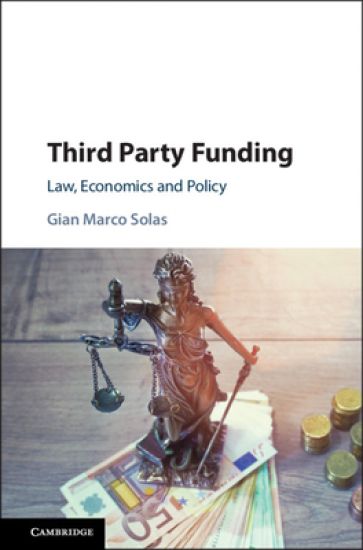
Third Party Funding

Third Party Funding

Gian Marco Solas

Cambridge University Press
2019
sidottu
In Third Party Funding, Gian Marco Solas, for the first time, describes third party funding (TPF) as stand-alone practice within the wider litigation and legal services' markets. The book reports on legal issues related to TPF in both common law and civil law jurisdictions, and in the international context. It then discusses the incentives and economics of TPF transactions in different legal contexts while explaining how the practice emerged and how it is likely to develop. In addition, the book offers practical insights into TPF transactions and analyzes a number of regulatory proposals that could affect its use and desirability. This work should be read by scholars, practitioners, policymakers, and anyone else interested in how TPF is changing the practice of law.
Third Party Funding

Third Party Funding

Gian Marco Solas

Cambridge University Press
2022
pokkari
In Third Party Funding, Gian Marco Solas, for the first time, describes third party funding (TPF) as stand-alone practice within the wider litigation and legal services' markets. The book reports on legal issues related to TPF in both common law and civil law jurisdictions, and in the international context. It then discusses the incentives and economics of TPF transactions in different legal contexts while explaining how the practice emerged and how it is likely to develop. In addition, the book offers practical insights into TPF transactions and analyzes a number of regulatory proposals that could affect its use and desirability. This work should be read by scholars, practitioners, policymakers, and anyone else interested in how TPF is changing the practice of law.
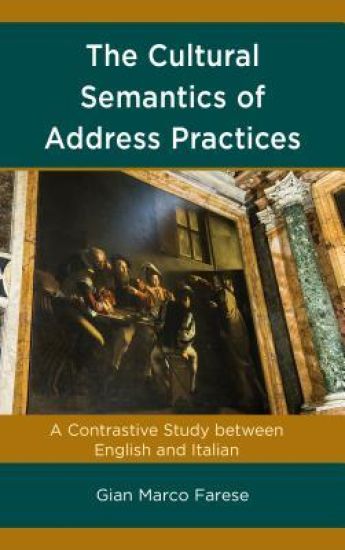
The Cultural Semantics of Address Practices

The Cultural Semantics of Address Practices

Gian Marco Farese

Lexington Books
2018
sidottu
This book presents a contrastive analysis of various forms of address used in English and Italian from the perspective of cultural semantics, the branch of linguistics which investigates the relationship between meaning and culture in discourse. The objects of the analysis are the interactional meanings expressed by different forms of address in these two languages, which are compared adopting the methodology of the Natural Semantic Metalanguage. The forms analyzed include greetings, titles and opening and closing salutations used in letters and e-mails in the two languages. Noticeably, the book presents the first complete categorization of Italian titles used as forms of address ever made on the basis of precise semantic criteria. The analysis also investigates the different cultural values and assumptions underlying address practices in English and Italian, and emphasizes the risks of miscommunication caused by different address practices in intercultural interactions. Every chapter presents numerous examples taken from language corpora, contemporary English and Italian literature and personal e-mails and letters. The book encourages a new, innovative approach to the analysis of forms of address: it proposes a new analytical method for the analysis of forms of address which can be applied to the study of other languages systematically. In addition, the book emphasizes the role of culture in address practices and takes meaning as the basis for understanding the differences in use across languages and the difficulties in translating forms of address of different languages. Combining semantics, ethnopragmatics, intercultural communication and translation theory, this book is aimed at a very broad readership which includes not only scholars in linguistics, second-language learners and students of cross-cultural communication, but virtually anyone interested in Italian and English linguistics as well as in cultural semantics. The approach taken is interdisciplinary and brings together various fields in the social sciences: linguistics, anthropology, cross-cultural studies and sociology.
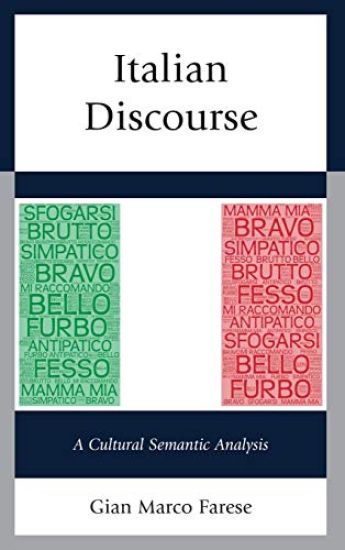
Italian Discourse

Italian Discourse

Gian Marco Farese

Lexington Books
2019
sidottu
Using the Natural Semantic Metalanguage methodology, Gian Marco Farese presents a comprehensive analysis of the most important Italian cultural keywords and cultural scripts which foreign learners and cultural outsiders need to know to become linguistically and culturally proficient in Italian. Farese focuses on the words and speech practices that are used most frequently in Italian discourse and that are uniquely Italian: both untranslatable into other languages and reflective of salient aspects of Italian culture and society. Italian Discourse: A Cultural Semantic Analysis sheds light on ways in which the Italian language is related to Italians’ character, values, and way of thinking, and it does so in contrastive perspective with English. Each chapter focuses on a cultural keyword, putting it into cultural context and tracing the term through a series of written texts including novels, plays, poems, and songs. Italian Discourse will be an important resource for anyone interested in Italian studies and Italian linguistics, as well as in semantics, cultural studies, sociology, linguistic anthropology, cognitive linguistics, intercultural communication, and translation.
TinyML Cookbook

TinyML Cookbook

Gian Marco Iodice; Ronan Naughton

PACKT PUBLISHING LIMITED
2022
nidottu
Work through over 50 recipes to develop smart applications on Arduino Nano 33 BLE Sense and Raspberry Pi Pico using the power of machine learning Key Features Train and deploy ML models on Arduino Nano 33 BLE Sense and Raspberry Pi Pico Work with different ML frameworks such as TensorFlow Lite for Microcontrollers and Edge Impulse Explore cutting-edge technologies such as microTVM and Arm Ethos-U55 microNPU Book DescriptionThis book explores TinyML, a fast-growing field at the unique intersection of machine learning and embedded systems to make AI ubiquitous with extremely low-powered devices such as microcontrollers. The TinyML Cookbook starts with a practical introduction to this multidisciplinary field to get you up to speed with some of the fundamentals for deploying intelligent applications on Arduino Nano 33 BLE Sense and Raspberry Pi Pico. As you progress, you’ll tackle various problems that you may encounter while prototyping microcontrollers, such as controlling the LED state with GPIO and a push-button, supplying power to microcontrollers with batteries, and more. Next, you’ll cover recipes relating to temperature, humidity, and the three “V” sensors (Voice, Vision, and Vibration) to gain the necessary skills to implement end-to-end smart applications in different scenarios. Later, you’ll learn best practices for building tiny models for memory-constrained microcontrollers. Finally, you’ll explore two of the most recent technologies, microTVM and microNPU that will help you step up your TinyML game. By the end of this book, you’ll be well-versed with best practices and machine learning frameworks to develop ML apps easily on microcontrollers and have a clear understanding of the key aspects to consider during the development phase.What you will learn Understand the relevant microcontroller programming fundamentals Work with real-world sensors such as the microphone, camera, and accelerometer Run on-device machine learning with TensorFlow Lite for Microcontrollers Implement an app that responds to human voice with Edge Impulse Leverage transfer learning to classify indoor rooms with Arduino Nano 33 BLE Sense Create a gesture-recognition app with Raspberry Pi Pico Design a CIFAR-10 model for memory-constrained microcontrollers Run an image classifier on a virtual Arm Ethos-U55 microNPU with microTVM Who this book is forThis book is for machine learning developers/engineers interested in developing machine learning applications on microcontrollers through practical examples quickly. Basic familiarity with C/C++, the Python programming language, and the command-line interface (CLI) is required. However, no prior knowledge of microcontrollers is necessary.
TinyML Cookbook

TinyML Cookbook

Gian Marco Iodice

PACKT PUBLISHING LIMITED
2023
nidottu
Over 70 recipes to help you develop smart applications on Arduino Nano 33 BLE Sense, Raspberry Pi Pico, and SparkFun RedBoard Artemis Nano using the power of machine learning Purchase of the print or Kindle book includes a free eBook in PDF format. Key Features Over 20+ new recipes, including recognizing music genres and detecting objects in a scene Create practical examples using TensorFlow Lite for Microcontrollers, Edge Impulse, and more Explore cutting-edge technologies, such as on-device training for updating models without data leaving the device Book DescriptionDiscover the incredible world of tiny Machine Learning (tinyML) and create smart projects using real-world data sensors with the Arduino Nano 33 BLE Sense, Raspberry Pi Pico, and SparkFun RedBoard Artemis Nano. TinyML Cookbook, Second Edition, will show you how to build unique end-to-end ML applications using temperature, humidity, vision, audio, and accelerometer sensors in different scenarios. These projects will equip you with the knowledge and skills to bring intelligence to microcontrollers. You'll train custom models from weather prediction to real-time speech recognition using TensorFlow and Edge Impulse.Expert tips will help you squeeze ML models into tight memory budgets and accelerate performance using CMSIS-DSP. This improved edition includes new recipes featuring an LSTM neural network to recognize music genres and the Faster-Objects-More-Objects (FOMO) algorithm for detecting objects in a scene. Furthermore, you’ll work on scikit-learn model deployment on microcontrollers, implement on-device training, and deploy a model using microTVM, including on a microNPU. This beginner-friendly and comprehensive book will help you stay up to date with the latest developments in the tinyML community and give you the knowledge to build unique projects with microcontrollers!What you will learn Understand the microcontroller programming fundamentals Work with real-world sensors, such as the microphone, camera, and accelerometer Implement an app that responds to human voice or recognizes music genres Leverage transfer learning with FOMO and Keras Learn best practices on how to use the CMSIS-DSP library Create a gesture-recognition app to build a remote control Design a CIFAR-10 model for memory-constrained microcontrollers Train a neural network on microcontrollers Who this book is forThis book is ideal for machine learning engineers or data scientists looking to build embedded/edge ML applications and IoT developers who want to add machine learning capabilities to their devices. If you’re an engineer, student, or hobbyist interested in exploring tinyML, then this book is your perfect companion. Basic familiarity with C/C++ and Python programming is a prerequisite; however, no prior knowledge of microcontrollers is necessary to get started with this book.
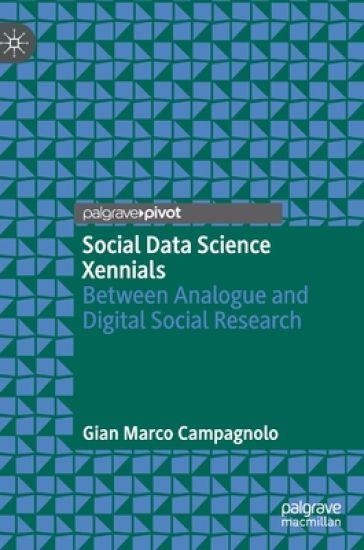
Social Data Science Xennials

Social Data Science Xennials

Gian Marco Campagnolo

Springer Nature Switzerland AG
2020
sidottu
This book explores the tension between analogue and digital as part of an evolving research programme and focuses on the sequencing of methods within it. The book will be an invaluable reference for scholars who routinely engage in critical sociological analysis of the digital workplace and find it easier to treat the digital as an object of study. It describes how the transformations taking place in the 10-year arc of a career spent doing fieldwork in the IT sector led the author to progressively embrace new forms of data and methods. In a time where sociological imagination takes the shape of whatever new phenomenon can be studied by transactional data and machine learning methods, it is a reminder that longstanding engagement with a particular field of practice is the basis of empirical social science expertise. ‘This short book by Gian Marco Campagnolo is remarkably wide-ranging. It draws on theoretical perspectives as varied as Harold Garfinkel’s ethnomethodologyand Andrew Abbott’s ‘linked ecologies’ to discuss topics as diverse as the adoption of packaged enterprise software in the public sector in Italy and the careers of often influential industry analysts. Campagnolo’s methods are primarily qualitative and ethnographic, but he shows a proper appreciation for quantitative methods such as text mining and sequence analysis. The book ends with a discussion of the famously difficult issue of achieving ‘explainability’ in machine learning. Campagnolo tantalisingly suggests the usefulness here of how ethnomethodologists view ‘accountability’: as a practical accomplishment that is hampered, rather than fostered, by efforts to give full explanations.’ —Donald MacKenzie, Professor of Sociology, Edinburgh University, Scotland‘The author adopts a ‘processual’ perspective on social data science as means of exploring and reflecting on the emergence of an academic career within this new domain of interdisciplinary inquiry. This is certainly a novel and interesting approach given the fact that ‘data science’ is work in progress and is characterized by a number of competing occupational groups that are struggling to define this emerging field.’—William Housley, Professor, University of Cardiff, UK‘Having myself written about the relationships between ethnography and computer science, I see this book as a timely contribution in that it extends the existing debate to data science. Data science is an emerging discipline that is gaining central stage in industry and in the public discourse. The aim of this book to indicate the importance of interdisciplinarity in this field is commendable.’—Giolo Fele, Professor, University of Trento, Italy'This book provides two entwined accounts: a reflective personal journey across different projects and methods and a grounded, genealogically sound analysis of the approaches and contributions of social science to understanding the digital society. These dual accounts are adroitly communicated. Their bold combination yields a unique and invaluable contribution to fundamental discussions in the social sciences, as well as an exemplar for how to combine ethnographic and data-driven analysis in a theoretically and epistemologically informed manner. With this book, Campagnolo brings us close to the methods and opens up an inspiring and challenging agenda for combining old and new forms of inquiry into sociological problems.' —Anne Beaulieu, Director Data Research Centre, University of Groningen, Netherlands
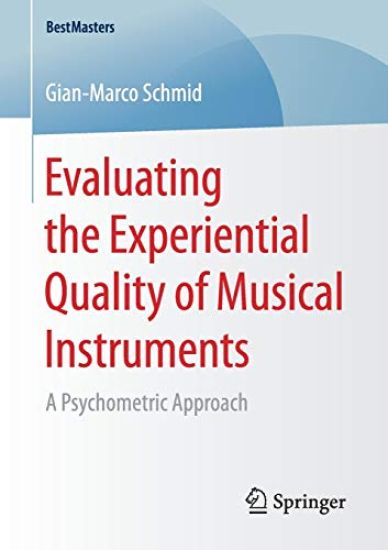
Evaluating the Experiential Quality of Musical Instruments
Gian-Marco Schmid investigates how musicians perceive the experiential quality of musical instruments using a bottom-up psychometric questionnaire development process and finds that there are three main factors on which musicians base their evaluation of musical instruments: (1) experienced freedom & possibilities, (2) perceived control & comfort and (3) perceived stability, sound quality & aesthetics. This structure is similar to research regarding the conceptualization of violin quality. It is therefore suggested that musicians who use different instruments tend to have an analogical concept of instrument quality.
The House Always Wins

The House Always Wins

Gian Marco Moise; Alena Ledeneva

ibidem-Verlag, Jessica Haunschild u Christian Schon
2024
nidottu
Every couple of years, a new corruption scandal of the oil industry draws the attention of worldwide media: The International Consortium of Investigative Journalists describes the complex schemes of shell companies, international transfers, and hidden tax havens that the political elites of resource-rich countries exploit to embezzle the wealth of the land they should be protecting; dozens of books discuss at length how kleptocrats and their informal circles spend millions of dollars virtually undisturbed in the general hypocrisy of world leaders. This is what we know, but how do the actors of the oil sector shape their relationships through informality? Using Kazakhstan as a case study, Gian Marco Moisé explores the various ways in which corruption and informal governance converged and were shaped by the everchanging power dynamics between the different actors participating in the industry. Complemented by discussions on other rentier economies, each practice of the taxonomy is presented as a specific strategy employed by the predatory elite to achieve different governance objectives. As these practices normalize, their effects trickle down into an increasing inequality that contributes to the generalized informality of the lowest ranks of the industry.
Forms of Education

Forms of Education

Gian Marco Chiri

ListLab
2019
nidottu
This book retraces the evolution of architectural spaces for education, focusing on the deep connections between the ideas behind the pedagogic approaches and their architectural materialisation. Schools, academies and their historical references, have usually been conceived as the space built upon the representation of a specific pedagogic model. With the historical rise of intangible ways of transmitting knowledge, it is extremely important today to reshape the architectural design of these space in order to meet contemporary needs.
Il senso delle cose: a volte la realta' e' quella che sembra

Il senso delle cose: a volte la realta' e' quella che sembra

Marco Castella; Gian Piero Taricco

Createspace Independent Publishing Platform
2013
nidottu
Fu durante l'ora di italiano, in un caldo mattino di inizio maggio, quando la libert giusto qualche metro oltre il vetro sporco dell'aula, che accadde la "cosa". Marco Quarantini, il protagonista, un ragazzo che frequenta la quinta superiore in un Istituto professionale in una piccola citt di provincia. Conduce una vita sociale attiva come allenatore di una squadra di basket, va bene a scuola ed cresciuto in una famiglia come tante. Marco ha per un "problema": un osservatore critico che non vuole piegarsi al conformismo. Questa sua lucidit e razionalit lo portano a vivere una profonda solitudine in una destinazione ostinata e contraria che lo invade e gli capovolge il senso delle cose. La scuola e la famiglia sono proprio gli spazi nei quali incontra il mostro, il demone. Tra incubi notturni e vita quotidiana piena di capovolgimenti Marco vive la sua lontananza comunicativa, emotiva dalla sua famiglia, dalla sua ragazza Carla, dall'amico di "aderenza" Luigi e dai professori. Chi il mostro? Dove si nasconde? Quale sar per Marco "il senso delle cose"?