

Kirjahaku
Etsi kirjoja tekijän nimen, kirjan nimen tai ISBN:n perusteella.
1000 tulosta hakusanalla Gilad Segev

Germany's changing historical memory of World War II and its aftermath, as reflected in the official and public remembrance of the German war dead, exposes an unresolved tension between a discourse of guilt and a discourse of national suffering and victimization. In Germany, under the auspices of the Allied occupation, remembrance honored the victims of the Nazis and those who had fought against the regime. After the partition of Germany, a new culture emerged, memorializing the civilian dead and fallen German soldiers. Despite the fierce ideological rivalry between East and West Germany, however, certain similarities existed. The political leaderships who shaped these cultures ceased to confront their citizens with the question of guilt and instead depicted the German people as victims. In Guilt, Suffering, and Memory—whose Israeli edition was awarded the Jacob Bahat Prize for best original book—Gilad Margalit discusses the official remembrance ceremonies for the German war dead, the memorials erected to commemorate them, the public discussions of these disparate cultures, and their treatment in postwar German literature and film.

This volume examines the plight of gypsies in Germany before, during and since the era of the Third Reich. The book reveals the painful record of the official treatment of the German Gypsies, a people whose future, in the shadow of Auschwitz, remains uncertain. Margalit follows the story from the heightened racism of the 19th century, to the National Socialist genocidal policies that resulted in the murder of most German Gypsies, from the shifting attitudes in the two Germanys in 1945, through reunification and up to the present day. Drawing upon a variety of sources, Margalit considers the pivotal historic events, legal arguments, debates and changing attitudes toward the status of the German Gypsies, aiming to throw light on the issue of ethnic groups and their victimization in society.
Straight Skin, Gay Masks and Pretending to Be Gay on Screen examines cinematic depictions of pretending-to-be-gay, assessing performances that not only reflect heteronormative and explicitly homophobic attitudes, but also offer depictions of gay selfhood with more nuanced multidirectional identifications.The case of straight protagonists pretending to be gay on screen is the ideal context in which to study unanticipated progressivity and dissidence in regard to cultural construction of human sexualities in the face of theatricalized epistemological collapse. Teasing apart the dynamics of depictions of both sexual stability and fluidity in cinematic images of men pretending to be gay offers new insights into such salient issues as sexual vulnerability and dynamics and long-term queer visibility in a politically complicated mass culture which is mostly produced in a heteronormative and even hostile cultural environment. Additionally, this book initially examines queer uses of sexuality masquerade in Alternate Gay World Cinema that allegorically features a world pretending to be gay, in which straights are harassed and persecuted, in order to expose the tragic consequences of sexual intolerance. Films and TV series examined as part of the analysis include The Gay Deceivers, Victor/Victoria, Happy Texas, William Friedkin’s Cruising and many other straight and gay screens.This is a fascinating and important study relevant to students and researchers in Film Studies, Media Studies, Gender Studies, Queer Studies, Sexuality Studies, Communication Studies and Cultural Studies.
The Fourth Geneva Convention, signed on 12th August 1949, defines necessary humanitarian protections for civilians during armed conflict and occupation. One-hundred-and-ninety-six countries are signatories to the Geneva Conventions, and this particular facet has laid the foundations for all subsequent humanitarian global law.How did the world – against seemingly insurmountable odds – draft and legislate this landmark in humanitarian international law? The Fourth Geneva Convention for Civilians draws on archival research across seven countries to bring together the Cold War interventions, founding motives and global idealisms that shaped its conception. Gilad Ben-Nun draws on the three key principles that the convention brought about to consider the recent events where its application has either been successfully applied or circumvented, from the 2009 Gaza War, the war crimes tribunal in the former Yugoslavia and Nicaragua vs. the United States to the contemporary conflict in Syria.Weaving historical archival research, a grounding in the concepts of international law, and insightful analysis of recent events, this book will appeal to a broad range of students, academics and legal practitioners.

In this original and modern book, the complexities of quantum phenomena and quantum resource theories are meticulously unravelled, from foundational entanglement and thermodynamics to the nuanced realms of asymmetry and beyond. Ideal for those aspiring to grasp the full scope of quantum resources, the text integrates advanced mathematical methods and physical principles within a comprehensive, accessible framework. Including over 760 exercises throughout, to develop and expand key concepts, readers will gain an unrivalled understanding of the topic. With its unique blend of pedagogical depth and cutting-edge research, it not only paves the way for a deep understanding of quantum resource theories but also illuminates the path toward innovative research directions. Providing the latest developments in the field as well as established knowledge within a unified framework, this book will be indispensable to students, educators, and researchers interested in quantum science's profound mysteries and applications.

Straight Skin, Gay Masks and Pretending to be Gay on Screen
Gilad Padva
TAYLOR FRANCIS LTD
2022
nidottu
Straight Skin, Gay Masks and Pretending to Be Gay on Screen examines cinematic depictions of pretending-to-be-gay, assessing performances that not only reflect heteronormative and explicitly homophobic attitudes, but also offer depictions of gay selfhood with more nuanced multidirectional identifications.The case of straight protagonists pretending to be gay on screen is the ideal context in which to study unanticipated progressivity and dissidence in regard to cultural construction of human sexualities in the face of theatricalized epistemological collapse. Teasing apart the dynamics of depictions of both sexual stability and fluidity in cinematic images of men pretending to be gay offers new insights into such salient issues as sexual vulnerability and dynamics and long-term queer visibility in a politically complicated mass culture which is mostly produced in a heteronormative and even hostile cultural environment. Additionally, this book initially examines queer uses of sexuality masquerade in Alternate Gay World Cinema that allegorically features a world pretending to be gay, in which straights are harassed and persecuted, in order to expose the tragic consequences of sexual intolerance. Films and TV series examined as part of the analysis include The Gay Deceivers, Victor/Victoria, Happy Texas, William Friedkin’s Cruising and many other straight and gay screens.This is a fascinating and important study relevant to students and researchers in Film Studies, Media Studies, Gender Studies, Queer Studies, Sexuality Studies, Communication Studies and Cultural Studies.

Queer Nostalgia in Cinema and Pop Culture is a fascinating study of queer nostalgia in films, animation and music videos as means of empowerment, re-evaluating and recreating lost gay youth, coming to terms with one's sexual otherness and homoerotic desires, and creatively challenging homophobia, chauvinism, ageism and racism.

HELP: A Dynamic Hospital Information System
Gilad J. Kuperman; Reed M. Gardner; T. Allan Pryor
Springer-Verlag New York Inc.
2011
nidottu
This monograph series is intended to provide medical information scien tists, health care administrators, health care providers, and computer sci ence professionals with successful examples and experiences of computer applications in health care settings. Through the exposition of these com puter applications, we attempt to show what is effective and efficient and hopefully provide some guidance on the acquisition or design of informa tion systems so that costly mistakes can be avoided. The health care industry is currently being pushed and pulled from all directions - from the clinical side to increase quality of care, from the busi ness side to improve financial stability, from the legal and regulatory sides to provide more detailed documentation, and, in a university environment, to provide more data for research and improved opportunities for educa tion. Medical information systems sit in the middle of all these demands. They are not only asked to provide more, better, and more timely informa tion but also to interact with and monitor the process of health care itself by providing clinical reminders, warnings about adverse drug interactions, alerts to questionable treatment, alarms for security breaches, mail mes sages, workload schedules, etc. Clearly, medical information systems are functionally very rich and demand quick response time and a high level of security. They can be classified as very complex systems and, from a devel oper's perspective, as 'risky' systems.
The kabbalistic tradition is a missing link to eye-opening connections between ancient texts and contemporary understandings of textuality. Not only is much of kabbalistic interpretation unavailable in English, but it also tends to be mislabeled as mysticism. Textual Rivalries demystifies kabbalistic thought, treats it as a consistent framework, makes it accessible to new audiences, and, most importantly, explores the theology of textuality inherent to kabbalistic interpretation. In Textual Rivalries, Gilad Elbom recovers innovative methods of Jewish biblical interpretation and traces the implications for a theology of textuality, important for both Jewish and Christian understandings of the Bible. Rather than a set of tried-and-true statements about an existing reality, the Bible, as Elbom shows, is a perpetually creative sign system that produces multiple meanings and generates new realities. In theological terms, the Bible is as perpetually creative as God--and just as imaginative. Biblical interpretation becomes an active participant in the gradual repair of an imperfect world and a major factor in the ongoing search for more profound definitions of God, language, history, and humanity. Textual Rivalries then probes the ways in which assigning surprising roles to signifiers is achieved through an intertextual reading of the Hebrew Bible, the New Testament, and midrash, including mainstream rabbinic hermeneutics and inventive kabbalistic texts. Some of the major characters that undergo transformations are Adam and Eve, Cain and Abel, Moses and Jethro, Nebuchadnezzar, Yohanan ben Zakkai, Jephthah's daughter and the concubine at Gibeah, King Saul and King David, Paul, God himself--and his beloved female counterpart, the Shekhinah. Rather than impose a semiotic theory on biblical, rabbinic, and kabbalistic literature, Elbom uses elements of Jewish interpretation as early semiotic frameworks that articulate, shape, and foreshadow modern modes of thinking, reading, and meaning-making.
HTML Awesomeness Book: Learn To Write HTML The Awesome Way
Gilad E. Tsur Mayer
Createspace Independent Publishing Platform
2016
nidottu
Css: CSS Awesomeness Book - Learn To Write CSS The Awesome Way!
Gilad E. Tsur-Mayer
Createspace Independent Publishing Platform
2016
nidottu

Dynamic Repetition – History and Messianism in Modern Jewish Thought
Gilad Sharvit
Brandeis University Press
2022
nidottu
A fine example of the best scholarship that lies at the intersection of philosophy, religion, and history. Dynamic Repetition proposes a new understanding of modern Jewish theories of messianism across the disciplines of history, theology, and philosophy. The book explores how ideals of repetition, return, and the cyclical occasioned a new messianic impulse across an important swath of late nineteenth- and early twentieth-century German Jewish thought. To grasp the complexities of Jewish messianism in modernity, the book focuses on diverse notions of “dynamic repetition” in the works of Franz Rosenzweig, Walter Benjamin, Franz Kafka, and Sigmund Freud, and their interrelations with basic trajectories of twentieth-century philosophy and critical thought.

The Fourth Geneva Convention, signed on 12th August 1949, defines necessary humanitarian protections for civilians during armed conflict and occupation. One-hundred-and-ninety-six countries are signatories to the Geneva Conventions, and this particular facet has laid the foundations for all subsequent humanitarian global law.How did the world – against seemingly insurmountable odds – draft and legislate this landmark in humanitarian international law? The Fourth Geneva Convention for Civilians draws on archival research across seven countries to bring together the Cold War interventions, founding motives and global idealisms that shaped its conception. Gilad Ben-Nun draws on the three key principles that the convention brought about to consider the recent events where its application has either been successfully applied or circumvented, from the 2009 Gaza War, the war crimes tribunal in the former Yugoslavia and Nicaragua vs. the United States to the contemporary conflict in Syria.Weaving historical archival research, a grounding in the concepts of international law, and insightful analysis of recent events, this book will appeal to a broad range of students, academics and legal practitioners.
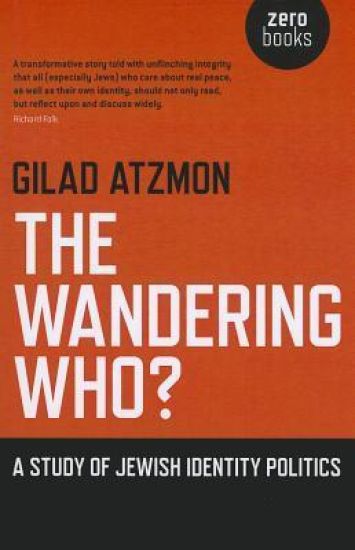
Wandering Who? The – A study of Jewish identity politics
Gilad Atzmon
John Hunt Publishing
2011
nidottu
An investigation of Jewish identity politics and contemporary Jewish ideology using both popular culture and scholarly texts. Jewish identity is tied up with some of the most difficult and contentious issues of today. The purpose in this book is to open up many of these issues for discussion. Since Israel defines itself as the Jewish State, we should ask what the notions of Judaism, Jewishness, Jewish culture and Jewish ideology stand for. Gilad examines the tribal aspects embedded in Jewish secular discourse, both Zionist and anti Zionist; the holocaust religion; the meaning of history and time within the Jewish political discourse; the anti-Gentile ideologies entangled within different forms of secular Jewish political discourse and even within the Jewish left. He questions what it is that leads Diaspora Jews to identify themselves with Israel and affiliate with its politics. The devastating state of our world affairs raises an immediate demand for a conceptual shift in our intellectual and philosophical attitude towards politics, identity politics and history.

A charming story book about the deep friendship between a little boy and a tree. It addresses issues of love, loss, loneliness and friendship.

Operational Excellence
Gilad Issar; Liat Ramati Navon
Springer International Publishing AG
2016
sidottu
As industrial companies are placing a higher focus on operations, this book comes at the right time with a compilation of basic concepts of Operational Excellence and their application. Operational excellence allows companies to recover from reductions in gross margins and low profitability, which largely occur due to a rise in agile competition and the short life span of new technologies. This book helps managers and consulting academicians as a ready reference for cross-industry implementation of operational excellence.