
Kirjahaku
Etsi kirjoja tekijän nimen, kirjan nimen tai ISBN:n perusteella.
1000 tulosta hakusanalla Gillian Green
Josie Price has given up much of her life for the sake of the wealthy Haddeley family. She works with them, lives with them and knows their secrets. So when a young man, Luke, appears and claims, shockingly, to be the son of Kit Haddeley's late wife Alice, Josie tries to help the Haddeleys come to terms with the family ghosts they hoped had been laid to rest. But Luke's arrival casts shadows on both the past and the future. Above all it is the ghost of Alice Haddeley which hangs most heavily over the family. Through Luke, she seems to demand to be both mourned and revenged. With her intimate knowledge of the family past, it is Josie who holds the key to the mystery of Alice, and it is Josie, beset by guilt, who must resolve the destructive inheritance which Luke brings in his wake.
Welcome to my feelings ... expressed in poetic inclinations. Presented in no chronological order whatsoever and spanning over 20 years of my life, these poems run the gamut from the fragmented thoughts of a 15-year-old schoolgirl to the heartbreaks of a 20-something young adult, moving through to the delusions of my 30s while gallantly about to navigate my early 40s. Welcome to my random, emotional and sometimes irrational scribblings of passion, loss, desperation, despair, hope and even happiness... Welcome ... to Me Enjoy
The color green is at the center of the spectrum. For earlier writers like Emily Dickinson or William Blake, the green world was a space of haunting, irreconcilable, opposites: life and death, human and vegetal, innocence and experience. In these essays, letters, repetitions, and experiments, poet and scholar Gillian Osborne adds a third, contemporary, term: the environment as both vital and ailing. This is nature writing outside of adventure or argument, ecological thinking as a space of shared homemaking: reading, writing, and living in vicinity with others.
It was the biggest funeral Chicago had seen since Lincoln's. On May 26, 1889, four thousand mourners proceeded down Michigan Avenue, followed by a crowd forty thousand strong, in a howl of protest at what commentators called one of the ghastliest and most curious crimes in civilized history. The dead man, Dr P H Cronin, was a respected Irish physician, but his brutal murder uncovered a web of intrigue, secrecy, and corruption that stretched across the United States and far beyond. Blood Runs Green tells the story of Cronin's murder from the police investigation to the trial. It is a story of hotheaded journalists in pursuit of sensational crimes, of a bungling police force riddled with informers and spies, and of a secret revolutionary society determined to free Ireland yet succeeding only in tearing itself apart. It is also the story of a booming immigrant population clamoring for power at a time of unprecedented change. From backrooms to courtrooms, historian Gillian O'Brien deftly navigates the complexities of Irish Chicago, bringing to life a rich cast of characters and tracing the spectacular rise and fall of the secret Irish American society Clan na Gael. She draws on real-life accounts and sources from the United States, Ireland, and Britain to cast new light on Clan na Gael and reveal how Irish republicanism swept across the United States. Destined to be a true crime classic, Blood Runs Green is an enthralling tale of a murder that captivated the world and rever-berated through society long after the coffin closed.
It was the biggest funeral Chicago had seen since Lincoln’s. On May 26, 1889, four thousand mourners proceeded down Michigan Avenue, followed by a crowd forty thousand strong, in a howl of protest at what commentators called one of the ghastliest and most curious crimes in civilized history. The dead man, Dr. P. H. Cronin, was a respected Irish physician, but his brutal murder uncovered a web of intrigue, secrecy, and corruption that stretched across the United States and far beyond.Blood Runs Green tells the story of Cronin’s murder from the police investigation to the trial. It is a story of hotheaded journalists in pursuit of sensational crimes, of a bungling police force riddled with informers and spies, and of a secret revolutionary society determined to free Ireland but succeeding only in tearing itself apart. It is also the story of a booming immigrant population clamoring for power at a time of unprecedented change. From backrooms to courtrooms, historian Gillian O’Brien deftly navigates the complexities of Irish Chicago, bringing to life a rich cast of characters and tracing the spectacular rise and fall of the secret Irish American society Clan na Gael. She draws on real-life accounts and sources from the United States, Ireland, and Britain to cast new light on Clan na Gael and reveal how Irish republicanism swept across the United States. Destined to be a true crime classic, Blood Runs Green is an enthralling tale of a murder that captivated the world and reverberated through society long after the coffin closed.
A little green envelope longs to go on a journey. Will it be chosen to deliver Olive’s letter to her far-away friend? Olive’s friend has moved away, and Olive wishes she could visit her. A little green envelope, lost in the bottom of the desk drawer, knows how Olive feels. It, too, wants so much to travel, and imagines zipping up and down conveyer belts and bouncing along in a mail bag, on its way to deliver an important letter. An old postcard reassures that for every occasion, there is an envelope … but it seems like it will never be the little green envelope’s turn. When Olive’s grandpa suggests writing her friend a letter, the little green envelope hopes and hopes that it will be chosen to carry the letter to its destination — but will it be a perfect fit? A diagram on the endpapers shows how readers can create their own little green envelopes! Key Text Features illustrations Correlates to the Common Core State Standards in English Language Arts: CCSS.ELA-LITERACY.RL.K.6 With prompting and support, name the author and illustrator of a story and define the role of each in telling the story. CCSS.ELA-LITERACY.RL.1.3 Describe characters, settings, and major events in a story, using key details.
Dr Jack Fallon is good at his job. He just wants to be left alone to do it. But that's not going to happen, not with people like Tristan Richards calling the shots. Now, Jack is in a race to uncover a global conspiracy, and prevent an unimaginable catastrophe.
Humankind has always been fascinated by the world in which it finds itself, and puzzled by its relations to it. Today that fascination is often expressed in what is now called ‘green’ terms, reflecting concerns about the non-human natural world, puzzlement about how we relate to it, and anxiety about what we, as humans, are doing to it. So called green or eco-criticism acknowledges this concern.Greenery reaches back and offers new readings of English texts, both known and unfamiliar, informed by eco-criticism. After considering general issues pertaining to green criticism, Greenery moves on to a series of individual chapters arranged by theme (earth, trees, wilds, sea, gardens and fields) which provide individual close readings of selections from such familiar texts as Malory’s Morte D’Arthur, Chaucer’s Knight’s and Franklin’s Tales, Sir Gawain and the Green Knight and Langland’s Piers Plowman. These discussions are contextualized by considering them alongside hitherto marginalized texts such as lyrics, Patience and the romance Sir Orfeo. The result is a study which reinvigorates our customary reading of late Middle English literary texts while also allows us to reflect upon the vibrant new school of eco-criticism itself.
Humankind has always been fascinated by the world in which it finds itself, and puzzled by its relations to it. Today that fascination is often expressed in what is now called ‘green’ terms, reflecting concerns about the non-human natural world, puzzlement about how we relate to it, and anxiety about what we, as humans, are doing to it. So called green or eco-criticism acknowledges this concern.Greenery reaches back and offers new readings of English texts, both known and unfamiliar, informed by eco-criticism. After considering general issues pertaining to green criticism, Greenery moves on to a series of individual chapters arranged by theme (earth, trees, wilds, sea, gardens and fields) which provide individual close readings of selections from such familiar texts as Malory’s Morte D’Arthur, Chaucer’s Knight’s and Franklin’s Tales, Sir Gawain and the Green Knight and Langland’s Piers Plowman. These discussions are contextualized by considering them alongside hitherto marginalized texts such as lyrics, Patience and the romance Sir Orfeo. The result is a study which reinvigorates our customary reading of late Middle English literary texts while also allows us to reflect upon the vibrant new school of eco-criticism itself.
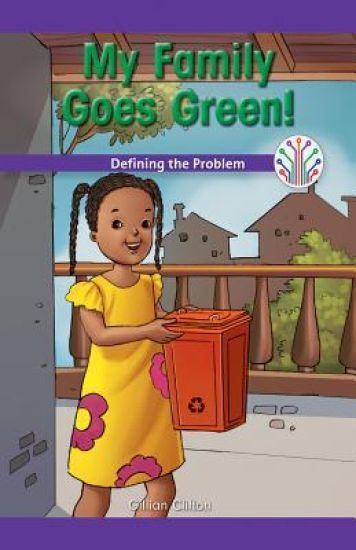
Anyone can learn computer science, even at the elementary school level. This book delves into the essential computer science skill of defining the problem using age-appropriate language and colorful illustrations. A meaningful storyline is paired with an accessible curricular topic to engage and excite readers. This book introduces readers to a relatable character and familiar situation, which demonstrates how they can define problems in everyday life. Readers will follow a family as they start to incorporate clean energy sources into their household. This fiction book is paired with the nonfiction book What Is Clean Energy? (ISBN: 9781508137894). The instructional guide on the inside front and back covers provides: Vocabulary, Background knowledge, Text-dependent questions, Whole class activities, and Independent activities.
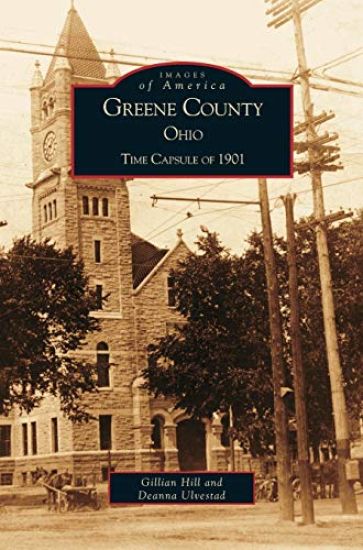
Greene County, Ohio
Greene County Bicentennial Committee; Gillian Hill; Deanna Ulvestad
Arcadia Publishing Library Editions
2002
sidottu

An illuminating look at the adaptive nature of our memories—and how their flexibility and fallibility help us survive and thriveWe tend to think of our memories as impressions of the past that remain fully intact, preserved somewhere inside our brains. In fact, we construct and reconstruct our memories every time we attempt to recall them. Memory Lane introduces readers to the cutting-edge science of human memory, revealing how our recollections of the past are constantly adapting and changing, and why a faulty memory isn’t always a bad thing.Shedding light on what memory is and what it evolved to do, Ciara Greene and Gillian Murphy discuss the many benefits of our flexible yet fallible memory system, including helping us to maintain a coherent identity, sustain social bonds, and vividly imagine possible futures. But these flexible and easily distorted memories can also result in significant harm, leading us to provide erroneous eyewitness testimony or fall victim to fake news. Greene and Murphy explain why our flawed memories are not a failure of evolution but rather a byproduct of the perfectly imperfect way our minds have evolved to solve problems. They also grapple with important ethical questions surrounding the study and manipulation of memory.Blending engaging storytelling with the latest science, the authors demonstrate how our continuous reconstruction of the past makes us who we are, helps us to interpret our experiences, and explains why no two trips down memory lane are ever quite the same.
An illuminating look at the adaptive nature of our memories—and how their flexibility and fallibility help us survive and thrive We tend to think of our memories as impressions of the past that remain fully intact, preserved somewhere inside our brains. In fact, we construct and reconstruct our memories every time we attempt to recall them. Memory Lane introduces readers to the cutting-edge science of human memory, revealing how our recollections of the past are constantly adapting and changing, and why a faulty memory isn’t always a bad thing. Shedding light on what memory is and what it evolved to do, Ciara Greene and Gillian Murphy discuss the many benefits of our flexible yet fallible memory system, including helping us to maintain a coherent identity, sustain social bonds, and vividly imagine possible futures. But these flexible and easily distorted memories can also result in significant harm, leading us to provide erroneous eyewitness testimony or fall victim to fake news. Greene and Murphy explain why our flawed memories are not a failure of evolution but rather a byproduct of the perfectly imperfect way our minds have evolved to solve problems. They also grapple with important ethical questions surrounding the study and manipulation of memory. Blending engaging storytelling with the latest science, the authors demonstrate how our continuous reconstruction of the past makes us who we are, helps us to interpret our experiences, and explains why no two trips down memory lane are ever quite the same.
Human Resource Management
Norma D'Annunzio-Green; Gillian Maxwell; Sandra Watson
Cengage Learning EMEA
2004
nidottu
Based on a major international survey of some of the world's biggest employers in the hospitality and tourism industries, this book provides a thorough examination of the problems and issues involved, and reveals that nearly all of the organizations are failing to address the complexities of HRM in the global marketplace. This edited collection features original contributions from some of the most important academics in this field, as well as case studies from North America, the UK, Australia, New Zealand, Russia and South Africa. The book includes sections on employee resourcing, employee development and employee relations, which cover topics such as selection, labour turnover, staff training, multi-site management, employee commitment and legislation. Human Resource Management contains the most up-to-date research into these complex problems and is an excellent and useful resource for researchers, postgraduates and senior managers within the industry.
Pink Petals / Green Leaves: The Story of One Family's Journey West
Denise W. Gilliat-Norgard
Createspace Independent Publishing Platform
2018
nidottu
Their journey began on the shores of the Atlantic in a new world. These were the families who brought civilization with them while building a new nation. They were settlers, the men, the women, and children in the first 100 years of a new nation. This is the story of one such family and the heritage they brought with them to the cities, towns, villages, and farms of 19th Century America. We are their legacy.


Two broken hearts collide on the path to redemption... After being given to a wealthy man in a faro game, Gillian Netty Stone flees Virginia for the safety of Independence Missouri. On the edge of civilization, the town borders a vast prairie, and the promise of freedom for so many-including Gillian. But trouble always has a way of intruding, and she is on the run again, sneaking aboard a stranger's wagon, as he prepares to join a group of settlers heading west on the Oregon Trail. Cole Clarkson is stunned to find a young woman in his wagon, hiding amongst crates of provisions. Being with Gillian reminds him of the past and all that he's lost-a family he will never see again. Opening his heart is far too great a risk, but the winsome brunette breaks through each of his defenses, weakening his resolve to never fall in love again.
