Kirjojen hintavertailu. Mukana 11 244 527 kirjaa ja 12 kauppaa.

Kirjahaku

Etsi kirjoja tekijän nimen, kirjan nimen tai ISBN:n perusteella.

1000 tulosta hakusanalla Giorgio Ferrari Moreni

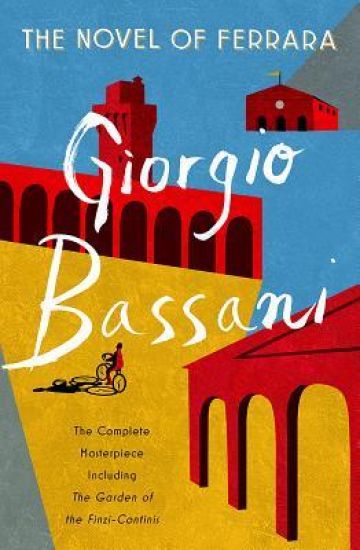
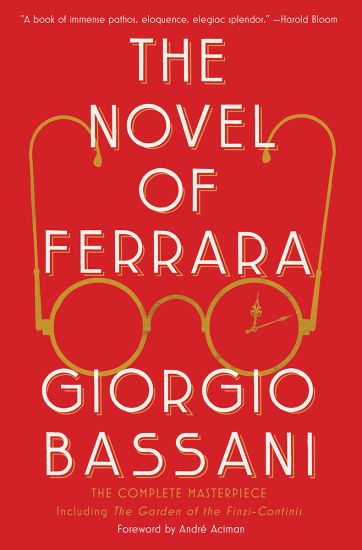
The Novel of Ferrara

The Novel of Ferrara

Giorgio Bassani

WW Norton Co
2018
sidottu
Among the masters of twentieth-century literature, Giorgio Bassani and his Northern Italian hometown of Ferrara "are as inseparable as James Joyce and Dublin or Italo Svevo and Trieste" (from the Introduction). Now published in English for the first time as the unified masterwork Bassani intended, The Novel of Ferrara brings together Bassani's six classics, fully revised by the author at the end of his life: Within the Walls, The Gold-Rimmed Spectacles, The Garden of the Finzi-Continis, Behind the Door, The Heron, and The Smell of Hay.Set in the northern Italian town of Ferrara before, during, and after the Second World War, these interlocking stories present a fully rounded world of unforgettable characters: the respected doctor whose homosexuality is tolerated until he is humiliatingly exposed by an exploitative youth; a survivor of the Nazi death camps whose neighbors' celebration of his return gradually turns to ostracism; a young man discovering the ugly, treacherous price that people will pay for a sense of belonging; the Jewish aristocrat whose social position has been erased; the indomitable schoolteacher, Celia Trotti, whose Communist idealism disturbs and challenges a postwar generation.The Novel of Ferrara memorializes not only the Ferrarese people, but the city itself, which assumes a character and a voice deeply inflected by the Jewish community to which the narrator belongs. Suffused with new life by acclaimed translator and poet Jamie McKendrick, this seminal work seals Bassani's reputation as "a quietly insistent chronicler of our age's various menaces to liberty" (Jonathan Keates).
The Novel of Ferrara

The Novel of Ferrara

Giorgio Bassani

W. W. Norton Company
2020
nidottu
Among the masters of twentieth-century literature, Giorgio Bassani and his northern Italian hometown of Ferrara "are as inseparable as James Joyce and Dublin or Italo Svevo and Trieste" (from the Introduction). The Novel of Ferrara brings together Bassani's six classics, including The Garden of the Finzi-Continis, The Gold-Rimmed Spectacles, and The Memorial Plaque on Via Mazzini, fully revised by the author at the end of his life.Set before, during, and after the Second World War, these interlocking stories present nuanced and unforgettable characters: the respected doctor whose homosexuality is exposed by an exploitative youth; the survivor of the Nazi death camps; the Jewish landowner, returned from exile, to find himself utterly displaced; the schoolteacher whose Communist idealism challenges a postwar generation.Suffused with new life by acclaimed translator and poet Jamie McKendrick, The Novel of Ferrara memorializes a city deeply informed by the Jewish community to which the narrator belongs. This seminal work seals Bassani's indomitable reputation.
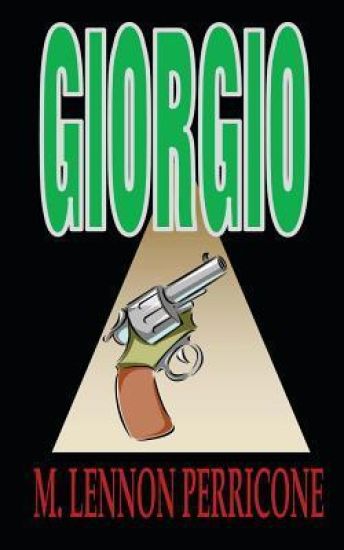
Giorgio

Giorgio

M Lennon Perricone

Createspace Independent Publishing Platform
2012
pokkari
Giorgio Danese is furious His mother has married his devious Uncle, the same uncle, who Giorgio suspects put a hit out on his father and took control of his family's crime empire. With threats from a rival mob family and the appearance of his father's ghost, Giorgio's seeks the one thing all true mob sons must...revenge Bullets flying and bodies disappearing aside, this modern retelling of Shakespeare's tragedy retains all the elements that made Hamlet the Classic drama for the ages.
Giorgio Griffa

Giorgio Griffa

YALE UNIVERSITY PRESS
2026
sidottu
A vividly illustrated catalogue accompanying legendary painter Giorgio Griffa’s first museum exhibition in the United States Giorgio Griffa (b. 1936) has been a vital figure in Italian art for more than half a century. In a signature palette of pastel colors, the artist records lines, letters, and numbers with acrylic paint on unstretched, unprimed canvas. At once methodical and lyrical, his painting tests the capacities of his materials and the limits of representation. In 2026, coinciding with the artist’s 90th birthday, the Clark Art Institute presents his first solo museum exhibition in the United States. Griffa’s references range from poetry and mathematics to music, but he has consistently turned to the natural world, and trees in particular, to articulate his interest in relationality, materiality, difference, and growth. As he explains of his various bodies of work: “There is no progress in my cycles. They are different paths in the same forest.” Giorgio Griffa: Paths in the Forest presents a selection from almost sixty years of the artist’s work, with some paintings published for the first time. Scholarly essays offer context on different aspects of Griffa’s career and are accompanied by an original text by the artist. Distributed for the Clark Art Institute Exhibition Schedule: Clark Art Institute, Williamstown, MA (June 13–October 12, 2026)
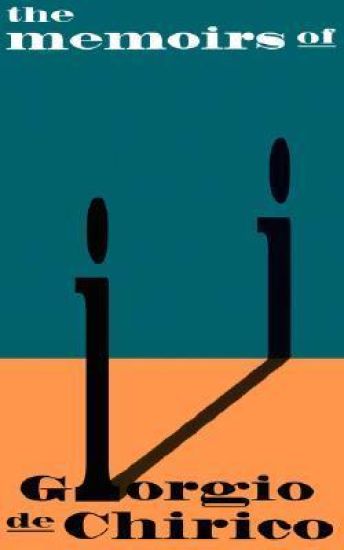
The Memoirs Of Giorgio De Chirico

The Memoirs Of Giorgio De Chirico

Giorgio De Chirico

Da Capo Press Inc
1994
pokkari
No Italian painter of this century has aroused so much comment, from eulogy to outright condemnation, as Giorgio de Chirico (1888-1978). One of the initiators of surrealism, he is a key figure in modern art; his influence on later painters, particularly during his metaphysical period, is second only to Picasso's. De Chirico relied on imagery from the unconscious to create art with mythological, philosophical, and historical overtones.
Giorgio Agamben

Giorgio Agamben

Thanos Zartaloudis

Routledge Cavendish
2010
sidottu
Giorgio Agamben: Power, Law and the Uses of Criticism is a thorough engagement with the thought of the influential Italian philosopher Giorgio Agamben. It explores Agamben’s work on language, ontology, power, law and criticism from the 1970s to his most recent publications. Introducing Agamben's work to a readership in legal theory, as well as in the humanities and social sciences more generally, Thanos Zartaloudis argues that an adequate understanding of Agamben's Homo Sacer project requires an attention to his earlier philosophical writings on language, ontology, power and time. It is through this attentive and creative analysis of Agamben's work that Zartaloudis here presents a rethinking of the ideas of justice and criticism.
Giorgio Agamben

Giorgio Agamben

Alex Murray

Routledge
2010
sidottu
Giorgio Agamben is one of the most important and controversial figures in contemporary continental philosophy and critical theory. His work covers a broad array of topics from biblical criticism to Guantanamo Bay and the ‘war on terror’. Alex Murray explains Agamben’s key ideas, including: an overview of his work from first publication to the present clear analysis of Agamben’s philosophy of language and life theories of ethics and ‘witnessing’the relationship between Agamben’s political writing and his work on aesthetics and poetics. Investigating the relationship between politics, language, literature, aesthetics and ethics, this guide is essential reading for anyone wishing to understand the complex nature of modern political and cultural formations.
Giorgio Agamben

Giorgio Agamben

Alex Murray

Routledge
2010
nidottu
Giorgio Agamben is one of the most important and controversial figures in contemporary continental philosophy and critical theory. His work covers a broad array of topics from biblical criticism to Guantanamo Bay and the ‘war on terror’. Alex Murray explains Agamben’s key ideas, including: an overview of his work from first publication to the present clear analysis of Agamben’s philosophy of language and life theories of ethics and ‘witnessing’the relationship between Agamben’s political writing and his work on aesthetics and poetics. Investigating the relationship between politics, language, literature, aesthetics and ethics, this guide is essential reading for anyone wishing to understand the complex nature of modern political and cultural formations.
Giorgio Agamben
This book collects new contributions from an international group of leading scholars – including many who have worked closely with Agamben – to consider the impact of Agamben’s thought on research in the humanities and social sciences. Giorgio Agamben: Legal, Political and Philosophical Perspectives addresses the potential of Agamben’s thought by re-focusing attention away from his critiques of Western politics and towards his scheme for a political future. Part I of the book draws upon a wide range of issues such as legal oaths, legal reasoning and Christian conceptions of love in order to examine the potential for Agamben’s work to impact upon future legal scholarship. Part II focuses on political perspectives that include references to Marx, Rousseau and Agamben’s conception of the ‘messianic’. Theology, biology, and the thought of Gilles Deleuze, Walter Benjamin and Antonin Artaud are all drawn upon in Part III to explore philosophical perspectives in Agamben’s thought. This book demonstrates the importance and originality of Giorgio Agamben, who has articulated a vision of politics that must be recognised as an influential contribution to modern philosophical and political thinking. It is a book that will be of considerable interest to many working across the humanities and social sciences.
Giorgio Agamben

Giorgio Agamben

Thanos Zartaloudis

Routledge Cavendish
2011
nidottu
Giorgio Agamben: Power, Law and the Uses of Criticism is a thorough engagement with the thought of the influential Italian philosopher Giorgio Agamben. It explores Agamben’s work on language, ontology, power, law and criticism from the 1970s to his most recent publications. Introducing Agamben's work to a readership in legal theory, as well as in the humanities and social sciences more generally, Thanos Zartaloudis argues that an adequate understanding of Agamben's Homo Sacer project requires an attention to his earlier philosophical writings on language, ontology, power and time. It is through this attentive and creative analysis of Agamben's work that Zartaloudis here presents a rethinking of the ideas of justice and criticism.
Giorgio Strehler

Giorgio Strehler

David Hirst

Cambridge University Press
1993
sidottu
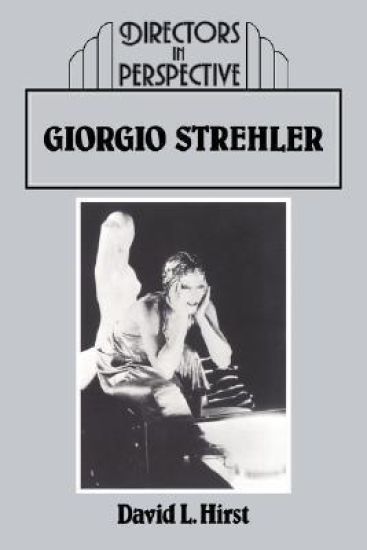
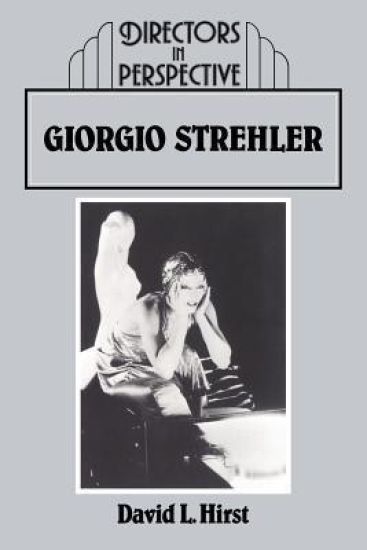
This is the first book in English on Italy’s leading director, Giorgio Strehler. For the last half century, Strehler has been an influential and integral part of European theatrical life; today he is most closely associated with the Teatro Piccolo in Milan, Italy’s foremost repertory theatre. Outside Italy, Strehler is best known through his directorship of the Paris-based Théâtre de l’Europe, his opera productions, and the plays in the Piccolo repertoire which have toured widely. In this detailed study, David Hirst evaluates the particular qualities which typify Strehler’s work: the lyrical realism which has become the hallmark of his mature style, the fusion of naturalism, epic theatre, commedia dell'arte and lyric opera, and the gift of interpretation and production.
Giorgio Strehler

Giorgio Strehler

David Hirst

Cambridge University Press
2006
pokkari
For at least the last half-century, Strehler has been an influential and integral part of European theatrical life; today he is most closely associated with the Teatro Piccolo in Milan, Italy's foremost repertory theatre. Outside Italy, Strehler is best known through his directorship of the Paris-based Théâtre de l'Europe, his opera productions, and the plays in the Piccolo repertoire which have toured widely. In this detailed study, David Hirst evaluates the particular qualities which typify Strehler's work: the lyrical realism which has become the hallmark of his mature style, the fusion of naturalism, epic theatre, commedia dell'arte and lyric opera, and the gift of interpretation and production. Hirst traces this unique style through Strehler's development from the foundation of the Piccolo to the present day and analyses his productions of Goldoni, Shakespeare, Brecht and Verdi among others.
Giorgio Vasari

Giorgio Vasari

Thomas Sherrer Ross Boase

PRINCETON UNIVERSITY PRESS
2023
pokkari
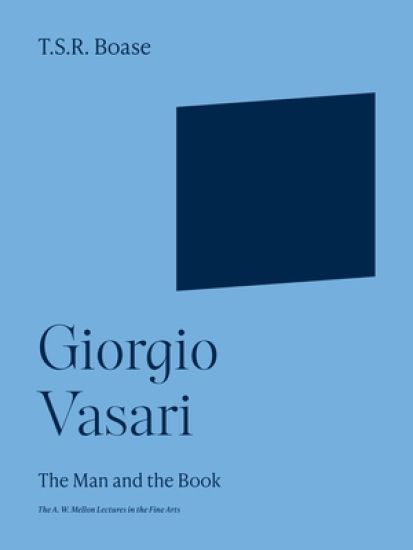
A striking account of Vasari’s career, friendships, and contribution to the art of the Italian RenaissanceVasari’s Lives of the Most Excellent Architects, Painters, and Sculptors, first published in 1550, fixed for three hundred years general European views about the art of the Renaissance, and its influence still lingers today. While much has been written about Vasari’s writings, comparatively few full-length studies have dealt with the man himself. In this book, T.S.R. Boase offers a compelling account of Vasari’s life and career. At the same time, Boase explores Vasari’s ideas about the art and artists he described in the two editions of his Lives, placing these reflections in their contemporary context and later developments in art history and criticism. The result is an important appraisal of Vasari’s achievement, which despite its imperfections is without parallel in the history of Western art.
Giorgio Strehler Directs Carlo Goldoni

Giorgio Strehler Directs Carlo Goldoni

Scott Malia

Lexington Books
2013
sidottu
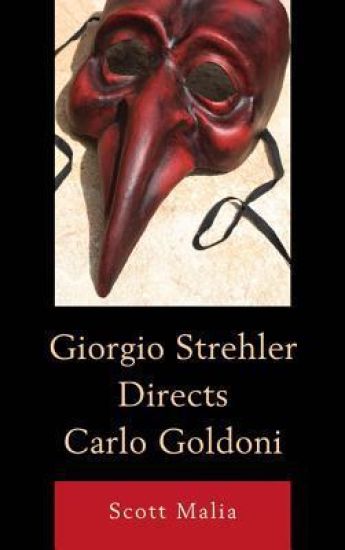
Giorgio Strehler Directs Carlo Goldoni uses Giorgio Strehler’s Goldoni productions (and Arlecchino servitore di due padroni in particular) as a means to defining his directorial aesthetic. The book provides a framework for examining the director’s career that is expansive rather than restrictive, using Goldoni and Arlecchino servitore di due padroni as a through-line for Strehler’s fifty-year career at the Piccolo Teatro di Milano. This research defines Strehler’s multifaceted style and brings to light interrelationships among his various works, creating a base from which a variety of subsequent critical inquiries can be made. It also establishes Strehler’s identity within the larger scope of the Italian theatre as a whole. Finally, it creates the critical challenge of finding more expansive notions of directorial style and concept that unite diverse ideologies without delimiting our understanding of the director. Crucial to understanding Strehler’s work with Arlecchino servitore di due padroni is his consistent reinterpretation of the play, which received no less than five distinct productions during Strehler’s lengthy career. His repeated reworking of existing productions provides a baseline for examining what elements were maintained and what elements changed or evolved. The four key influences that defined Strehler’s aesthetic in his work with Arlecchino were commedia dell’Arte, Bertolt Brecht, “refractive theatricality” and Jacques Copeau. Through these productions, Strehler created a dialogue with his audience and helped change the reputation of Carlo Goldoni both in his own country and abroad.