Kirjojen hintavertailu. Mukana 11 244 527 kirjaa ja 12 kauppaa.

Kirjahaku

Etsi kirjoja tekijän nimen, kirjan nimen tai ISBN:n perusteella.

1000 tulosta hakusanalla Giovanni Battista Ferrari

Giovanni Battista Rubini and the Bel Canto Tenors
Giovanni Battista Rubini (1794–1854) was a legendary tenor and the first 19th-century non-castrati male singer to become an international star of opera. The previous two centuries had been the era of the castrati, with tenors and basses relegated to character and supporting roles in the operas of their time. Rubini stood apart because he not only matched the castrati in coloratura and pathos, but he also had an extraordinarily high voice. With Rubini’s rise, and in his wake, several tenors came to sing roles written specifically for them by Rossini, Bellini, Donizetti, and many other lesser-known bel canto composers. Signaling the end of the dominance of castrati on stage, this period would last some forty years until the advent of grand opera, Wagner, and Verdi and the appearance of the first so-called High C from the chest by Gilbert-Louis Duprez in 1837. Since then, the accepted tenor sound has followed the tradition epitomized by Enrico Caruso and, in our own era, Luciano Pavarotti and Placido Domingo. Many composers, conductors, and performers would come to regard bel canto dramatic operas as decorative and vapid until Maria Callas and Tulio Serafin demonstrated the heights this genre of opera could reach. However, opera directors and opera performers of late who have expressed an interest in reviving selected masterpieces from the bel canto tradition have found themselves confronted with the problem of locating tenors versed in the vocal techniques necessary to carry the high tessituras. In Giovanni Battista Rubini and the Bel Canto Tenors: History and Technique, Dan H. Marek explores the extraordinary life of Rubini in order to frame this special period in the history of opera and connect the technique of the castrati who were among Rubini’s instructors. Drawing on the work of Berton Coffin, Marek offers long-sought answers to the challenges presented by high tessitura of bel canto operas for tenors. To further assist working singers, Giovanni Battista Rubini and the Bel Canto Tenors includes over sixty pages of exercises written by Rubini himself before 1840, which Marek, for the first time ever, has adapted to acoustical phonetics. Professional singers, teachers and their students, vocal coaches, and opera conductors will find this work indispensable as the only English-language work on high tessitura for tenor and soprano singing.
Giovanni Battista Piranesi

Giovanni Battista Piranesi

Benjamin Burges Moore

Literary Licensing, LLC
2012
sidottu
Giovanni Battista Piranesi is a book written by Benjamin Burges Moore, which provides a comprehensive account of the life and work of the famous Italian artist and architect, Giovanni Battista Piranesi. The book is divided into several chapters, each of which focuses on a different aspect of Piranesi's life and career.The first chapter of the book provides an overview of Piranesi's early life and education, while the second chapter delves into his early career as an architect and designer. The third chapter explores Piranesi's interest in archaeology and his passion for ancient Roman art and architecture, which heavily influenced his later work.The fourth chapter of the book focuses on Piranesi's most famous works, the Carceri d'Invenzione, a series of etchings depicting imaginary prisons and dungeons. The fifth chapter discusses Piranesi's later career as a printmaker and his contributions to the field of architectural theory.Throughout the book, Moore provides a detailed analysis of Piranesi's artistic style and techniques, as well as his influence on subsequent generations of artists and architects. The book also includes numerous illustrations of Piranesi's works, providing readers with a visual representation of his artistic legacy.Overall, Giovanni Battista Piranesi is a must-read for anyone interested in the life and work of this influential artist and architect, providing a comprehensive overview of his career and lasting impact on the world of art and architecture.This scarce antiquarian book is a facsimile reprint of the old original and may contain some imperfections such as library marks and notations. Because we believe this work is culturally important, we have made it available as part of our commitment for protecting, preserving, and promoting the world's literature in affordable, high quality, modern editions, that are true to their original work.
The Circe of Signior Giovanni Battista Gelli of the Academy of Florence. Consisting of ten Dialogues Between Ulysses and Several men Transform'd Into Beasts
The 18th century was a wealth of knowledge, exploration and rapidly growing technology and expanding record-keeping made possible by advances in the printing press. In its determination to preserve the century of revolution, Gale initiated a revolution of its own: digitization of epic proportions to preserve these invaluable works in the largest archive of its kind. Now for the first time these high-quality digital copies of original 18th century manuscripts are available in print, making them highly accessible to libraries, undergraduate students, and independent scholars.Western literary study flows out of eighteenth-century works by Alexander Pope, Daniel Defoe, Henry Fielding, Frances Burney, Denis Diderot, Johann Gottfried Herder, Johann Wolfgang von Goethe, and others. Experience the birth of the modern novel, or compare the development of language using dictionaries and grammar discourses. ++++The below data was compiled from various identification fields in the bibliographic record of this title. This data is provided as an additional tool in helping to insure edition identification: ++++British LibraryT127928The titlepage is a cancel. Some copies have the cancellandum titlepage, which incorrectly reads: "between men transform'd into beasts: giving a lively representation of the various."London: printed for John Nutt, 1702. 8],295, 1]p.; 8
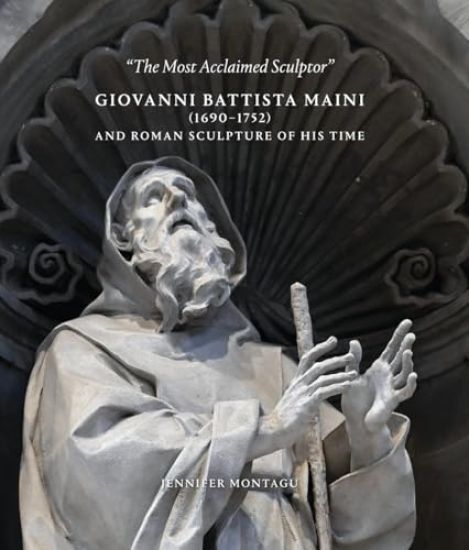
Giovanni Battista Maini (1690-1752) and Roman Sculpture of His Time
Maini is one of the most important and accomplished, although least known and appreciated of late Baroque sculptors. This new monograph will provide an authoritative, scholarly and beautifully illustrated survey of all his principal commissions. Maini was born in Lombardy and had moved to Rome by 1710. His prestigious projects in the city included the funerary monument for Pope Innocent X in Sant’Agnese in Agone and the two majestic tombs in the family chapel of Pope Clement XII in San Giovanni in Laterano. Maini also worked in Santa Maria Maggiore and was involved in the design for the iconic Fontana di Trevi. These works are set in the context of the Roman art scene: the struggle for commissions, payment and reputation.
Giovanni Battista Guccia

Giovanni Battista Guccia

Benedetto Bongiorno; Guillermo P. Curbera

Springer Nature Switzerland AG
2019
nidottu
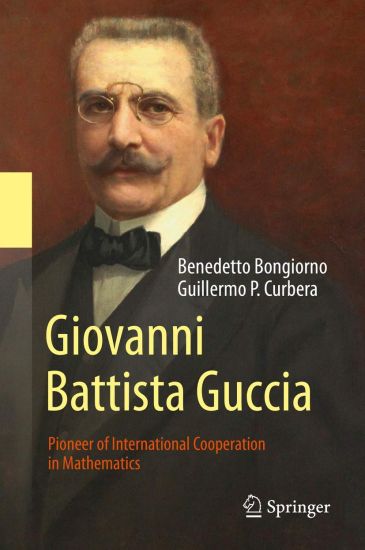
This book examines the life and work of mathematician Giovanni Battista Guccia, founder of the Circolo Matematico di Palermo and its renowned journal, the Rendiconti del Circolo matematico di Palermo. The authors describe how Guccia, an Italian geometer, was able to establish a mathematical society in Sicily in the late nineteenth century, which by 1914 would grow to become the largest and most international in the world, with one of the most influential journals of the time. The book highlights the challenges faced by Guccia in creating an international society in isolated Palermo, and places Guccia’s activities in the wider European context through comparisons with the formation of the London Mathematical Society and the creation of Mittag-Leffler’s Acta Mathematica in Stockholm. Based on extensive searches in European archives, this scholarly work follows both historical and scientific treads, and will appeal to those interested in the history of mathematics and science in general.
Giovanni Battista Guccia

Giovanni Battista Guccia

Benedetto Bongiorno; Guillermo P. Curbera

Springer International Publishing AG
2018
sidottu
This book examines the life and work of mathematician Giovanni Battista Guccia, founder of the Circolo Matematico di Palermo and its renowned journal, the Rendiconti del Circolo matematico di Palermo. The authors describe how Guccia, an Italian geometer, was able to establish a mathematical society in Sicily in the late nineteenth century, which by 1914 would grow to become the largest and most international in the world, with one of the most influential journals of the time. The book highlights the challenges faced by Guccia in creating an international society in isolated Palermo, and places Guccia’s activities in the wider European context through comparisons with the formation of the London Mathematical Society and the creation of Mittag-Leffler’s Acta Mathematica in Stockholm. Based on extensive searches in European archives, this scholarly work follows both historical and scientific treads, and will appeal to those interested in the history of mathematics and science in general.