Kirjahaku
Etsi kirjoja tekijän nimen, kirjan nimen tai ISBN:n perusteella.
1000 tulosta hakusanalla Glenn G. Tucker

People have dreamed of returning to their youth to correct their errors and naivet (c). Dr. Frank Dodd acquired that chance but for a different reason. He and his wife, Dr. Beverly Dodd, are retired professors from a small north Florida College. They had just started enjoying retirement when they found Beverly had inoperable cancer and would soon die. Frank bemoaned the fact he hadn't insisted on Beverly seeing a doctor a year earlier when she could have been cured. While in a chat room two fellow scientists heard Frank discuss his regrets at not getting his wife help in time and how he wished he could go back in time to court and marry her again, only this time get her to the doctors in time to be cured. The two scientists have been doing experiments in time travel and knowledge transfer between brains. Frank agreed to be used as a guinea pig to be sent back to the time of his youth and to implant his knowledge into himself as a boy. He arrives in 1941 with computers and other modern equipment to sell to the government and industry and invest the proceeds for the benefit of all three while living his life over, striving to have the same experiences and doing the same things from his former youth, but this time avoiding the mistakes of his former life. The dilemma occurs when he falls in love with a woman he meets in this new life. Should he remain single and wait for 15 years to meet and court his wife again or marry the one he falls in loves with during his present time.


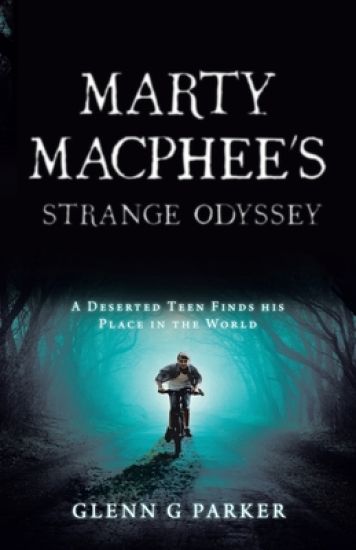
Marty Macphee is a fourteen-year-old who has been deserted by his parents and suddenly finds himself having to somehow survive without the help or encouragement of anyone. He is left with an empty house and sixty dollars.His only relative is his grandma who lives 200 miles away and he doesn't know whether she is alive or not. However, he heads out on his bicycle hoping to be able to locate his grandma whom he had a good relationship with eight years ago.He also has a female cousin but he only knows her first name and the town she lives in on his way to see his grandma. Being able to find her seems like a longshot.Marty is a resourceful young man and when he is met with several challenging situations, he manages to cope with them with the help of friends.His biggest challenge is dealing with Spud. After locating his cousin, Martin discovers that his cousin is being stalked by Spud to the point that her life is being constantly disrupted.Together, Martin and his cousin do everything they can to discourage Spud from stalking them but Spud is a very determined character and under the misapprehension that Martin's cousin is his soul mate.Spud is told that he is marching down a dangerous pathway but he ignores all advice to his ultimate detriment.

Common property economics defines and clarifies the theoretical distinction between open access and common property and empirically tests the adequacy of resource allocation under common property and empirically tests the property in comparison with private property. Group use of natural resources has often received the blame for overexploitation and mismanagement, whether of fisheries, grazing land, oil and gas pools, groundwater, or wildlife. In this book two types of group use are identified: open access and utilization without any controls on extraction rates, a situation in which resource overexploitation often occurs. In contrast, common property refers to the situation where the group controls the access to and extraction rates of the resource. The common property solutions differ from those associated with open access. The nonoptimality of open access is demonstrated with graphic, game theoretic, and mathematical models. The necessary and sufficient conditions for common property to overcome the difficulties of open access are examined. Stevenson discusses historical examples, the basis in legal concepts, the contrast with public goods, the formation, and the stability of common property. In a detailed, empirical study of alpine grazing in Switzerland, the author compares the performance of common property with that of private property. He also notes the similarity in structure between the Swiss grazing commons and the English open field system.

Common property economics defines and clarifies the theoretical distinction between open access and common property and empirically tests the adequacy of resource allocation under common property and empirically tests the property in comparison with private property. Group use of natural resources has often received the blame for overexploitation and mismanagement, whether of fisheries, grazing land, oil and gas pools, groundwater, or wildlife. In this book two types of group use are identified: open access and utilization without any controls on extraction rates, a situation in which resource overexploitation often occurs. In contrast, common property refers to the situation where the group controls the access to and extraction rates of the resource. The common property solutions differ from those associated with open access. The nonoptimality of open access is demonstrated with graphic, game theoretic, and mathematical models. The necessary and sufficient conditions for common property to overcome the difficulties of open access are examined. Stevenson discusses historical examples, the basis in legal concepts, the contrast with public goods, the formation, and the stability of common property. In a detailed, empirical study of alpine grazing in Switzerland, the author compares the performance of common property with that of private property. He also notes the similarity in structure between the Swiss grazing commons and the English open field system.
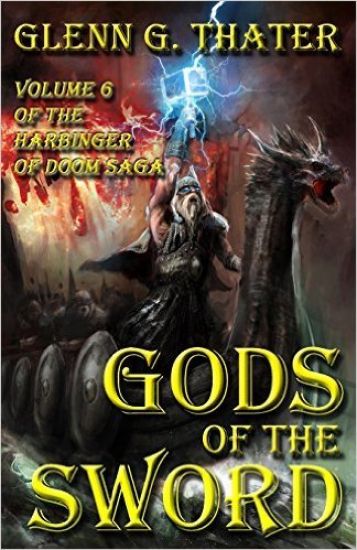

Dwellers of the Deep embraces the pulse-pounding action that the Harbinger of Doom Saga is known for, with battles so real, so immersive, you will find yourself reaching for your sword. Expansive in scope, Dwellers transforms the Saga into truly epic fantasy, and drops the reader into the Byzantine web of political intrigue that swirls about the Kingdom of Lomion.In Glenn G. Thater's world of Midgaard, some kill for love or honor; others die for blood and souls. In Dwellers of the Deep, the fourth volume of the saga unfolds across a vast ocean of bleak expanses and forbidden islands that harbor secrets best unspoken, ancient magics best left buried, voracious monsters of the gelid depths, and a god of the outer spheres whose wrath will shake the very foundations of Midgaard. Within these pages, heroes and villains abound. But are the heroes those that quest with Theta to keep shuttered the portal betwixt the worlds, or those that sail with Korrgonn for god and glory, to restore Azathoth's reign? Only you can decide. But in the end, Ob will tell you, evil is as evil does, and in Midgaard, only one thing thing is certain--nothing is as it seems.