Kirjojen hintavertailu. Mukana 11 244 527 kirjaa ja 12 kauppaa.

Kirjahaku

Etsi kirjoja tekijän nimen, kirjan nimen tai ISBN:n perusteella.

1000 tulosta hakusanalla Glenn Hoover

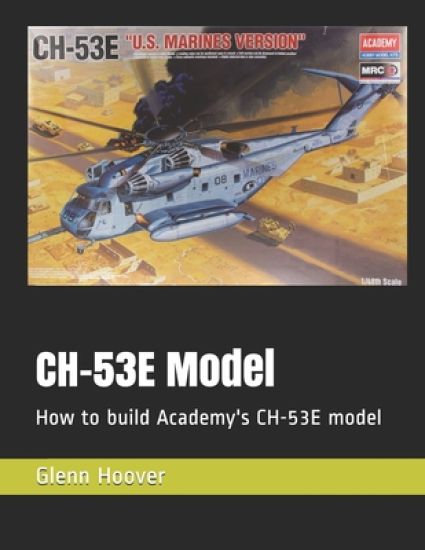
F-102A Delta Dagger Model: How to build Encore's F-102A Delta Dagger
This book contains detailed instructions on building the F-102A 1/48 scale model aircraft from Encore. A full color version is available as a PDF download on my website along with a grayscale spiral bound version. This kit is based on Revell's F-102A except some resin parts and photo-etch were added along with a set of color instructions. The photo etch is a partial Eduard set. I wrote my book to include instructions for the basic kit using Revell's instruction. To give the option to just use the kit part, I added separate steps for the resin and PE parts. I recommend comparing the resin parts with corresponding kit parts to see if you would rather stick with the kit part. I will list both Encore and Revell paint recommendations in each step. This book provides a little history of the Delta Dagger, a detailed list of tools that I used to build this model, along with a list of paints. The actual instruction section contains 516 steps and 77 plus figures over 98 pages that tell you what to dry fit, glue, and/or paint for each individual piece. Each step instruction shows the source (i.e., either Encore or Revell) along with a block to mark that you completed the step. The major instruction sequence for this model is1. Engine2. Fuselage3. Cockpit4. Nose Gear Wheel Well5. Seat & Controls6. Main Gear Wheel Well7. Flaps8. Engine Intakes9. Wing/Fuselage Assembly10. Nose Cone11. Canopy12. Pilot13. Bottom Antennas14. Paint & Decals15. Speed Brakes16. Tail Hook17. Nose Gear & Door18. Main Gear & Doors19. Fuel Tanks20. Weapons Bay21. NoseI provide an index of the individual sprue parts that show where in the book the part is mentioned. This index was a great way to make sure that no pieces were overlooked. Finally, there are several pages of in-process photos with assembly tips and the final photos of my build for reference. This book is a great checklist to make your build go smoothly. Of course, you can feel free to use different tools, paint, weathering, etc. or even add your own diorama. I hope you find this book useful. See a 16-page sample along with photos of finished models and other books at glennhoovermodels.com.
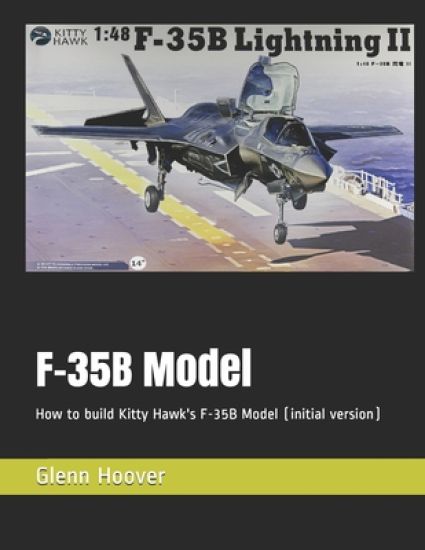
C-47A Skytrain Model: How to build Trumpeter's C-47A Skytrain Model
This book contains detailed instructions on building the C-47A 1/48 scale model aircraft from Trumpeter. A full color version is available as a PDF download on my website along with a grayscale spiral bound version. In addition to the kit's instructions, there are 4 aftermarket kits with Eduard's BIG4911 set - each with their own instruction. Can you imagine merging all of these instructions? Well, I've done that for you and more. I take the model kit instructions from Trumpeter along with the Eduard sets and break them up into individual steps. The aftermarket steps are colored gray or yellow making them easy to skip if you just have the basic model. This book provides a little history of the Skytrain, photos of the aftermarket kits, a detailed list of tools that I used to build this model, along with a list of paints. The actual instruction section contains 1,091 steps and 120 plus figures over 173 pages that tell you what to dry fit, glue, and/or paint for each individual piece. Each step instruction shows the source (i.e., either Trumpeter or Eduard) along with a block to mark that you completed the step. The major instruction sequence for this model is1. Cockpit2. Cargo Area3. Cargo Seat Belts4. Fuselage5. Doors 6. Landing Flaps7. Wings8. Engines9. Wheel Wells 10. Center Wing Assembly11. Stabilizers12. Paint & Decals13. Landing Gear 14. Exhaust15. Bottom Antennas16. Propellers17. Top Antennas18. Ladder19. Add WingsI provide an index of the individual sprue parts that show where in the book the part is mentioned. This index was a great way to make sure that no pieces were overlooked. Finally, there are several pages of in-process photos with assembly tips and the final photos of my build for reference. This book is a great checklist to make your build go smoothly. Of course, you can feel free to use different tools, paint, weathering, etc. or even add your own diorama. I hope you find this book useful. See a 16-page sample along with photos of finished models and other books at glennhoovermodels.com.
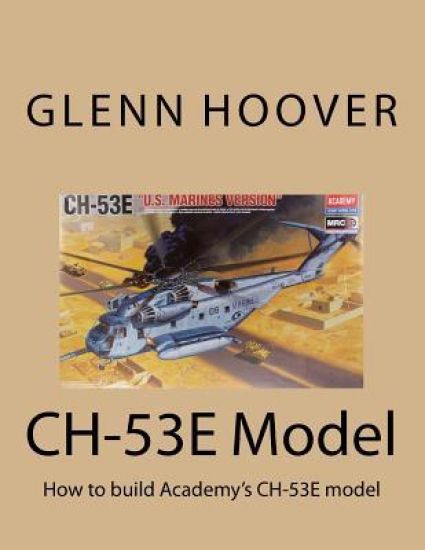
Ch-53e Model: How to Build Academy's Ch-53e Model

Ch-53e Model: How to Build Academy's Ch-53e Model

Glenn Hoover

Createspace Independent Publishing Platform
2016
nidottu
If you are a new modeler who jumps right into the build without any prep work or if you are an experienced modeler who hates prep work and keeping track of the pieces and progress, this book can be a big help. See a 16 page sample along with photos of finished models and other books at glennhoovermodels.com. This book contains detailed instructions on building the CH-53E Helicopter 1/48 scale model from Academy. I take the model kit instructions from Academy and break them up into individual steps. I reorder the steps so that the small pieces (antennas, etc.) are assembled last which reduces the risk of damage when building the model. The steps are organized to insert the paint and decal steps in the best spot. I also incorporate Eduard's Photo Etch BIG4875 in with Academy's instructions. As most modelers know, it can be tricky to go back and forth between the model kit instructions and the PE instructions. I took out the guess work and did that for you. The PE steps are colored in yellow making them easy to skip if you just have the basic model. This book provides a little history of the Marine Super Stallion, photos of the model kit contents including the photo etch frets, a detailed list of tools that I used to build this model, along with a list of paints. The actual instruction section contains 869 steps that tells you what to dry fit, glue, and/or paint for each individual piece. Each step instruction shows the source (i.e., either Academy's or Eduard's instruction) along with a block for you to mark that you completed the step. If the last column contains an X, that means there's a photo in the back with more details about the step. The major instruction sequence for this model is 1. Rotors 2. Interior Bulkheads 3. Cargo Area 4. Instrument Panel 5. Cockpit 6. Ramp 7. Exterior Fuselage 8. Cargo Area Floor and Ceiling 9. Wheel Wells 10. Engine Exhaust 11. Primer 12. Machine Gun 13. Pylons 14. Wheel Wells 15. Exterior Photo Etch 16. Main Engines 17. Paint 18. Decals 19. Wheel Assemblies 20. Bottom and Side Antennas 21. Winch, Open Doors 22. Top Antennas and Open Windows 23. Tail Section 24. Final Rotor Assembly I provide an index of the individual sprue parts that show where in the book the part is mentioned. This index was a great way to make sure that no pieces were overlooked. Finally, there are several pages of in-process photos with assembly tips and the final photos of my build. This book is a great checklist to make your build go smoothly. Of course, you can feel free to use different tools, paint, weathering, etc. or even add your own diorama. It took me over 3 months to write the first cut of this book then another 2 months to do the actual build to test my instructions. I make tweaks to improve the instructions and add the photos. I did a lot of research and didn't see anything this detailed about a model build. Most articles or videos concentrate on parts of their build or just give a summary review. I wanted to go down to the piece level and take you thru the whole build. Anyway, I hope you find this book useful.
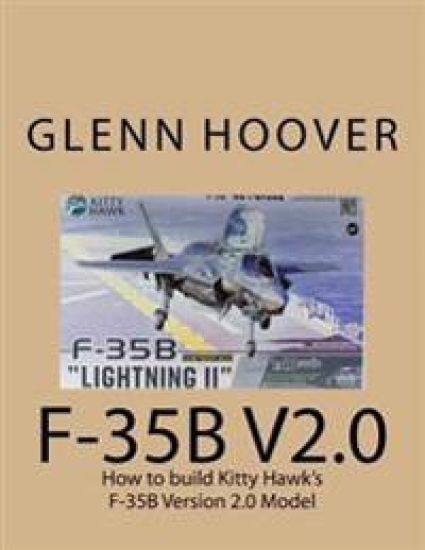
F-35b V2.0: How to Build Kitty Hawk's F-35b Version 2.0 Model

F-35b V2.0: How to Build Kitty Hawk's F-35b Version 2.0 Model

Glenn Hoover

Createspace Independent Publishing Platform
2017
nidottu
This book contains detailed instructions on building the F-35B Lightning II 1/48 scale model aircraft from Kitty Hawk. This book covers VERSION 2.0 of the model. If the box on your model kit does not say Version 2.0 then you need my other book for the initial version. A spiral bound version is also available on my website. (glennhoovermodels.com) The F-35 Fighter Aircraft has three versions. The F-35A is for the Air Force. The F-35C is for the Navy and has a longer wing span that can fold for carrier operations. The F-35B is for the Marines and can perform vertical takeoffs and landings. The F-35B Model is the most complex if you want to display its VSTOL capability that has many open access panels. I take the model kit instructions from Kitty Hawk and break them up into individual steps. I reorder the steps so that the small pieces (antennas, etc.) are assembled last which reduces the risk of damage when building the model. The steps are organized to insert the paint and decal steps in the best spot. This book provides a little history of the F-35B, photos of the model kit contents including the photo etch frets, a detailed list of tools that I used to build this model, along with a list of paints. The actual instruction section contains 649 steps that tells you what to dry fit, glue, and/or paint for each individual piece. Each step instruction shows the source (section) along with a block for you to mark that you completed the step. If the last column contains an X, that means there's a photo in the back with more details about the step. The major instruction sequence for this model is 1.Ejection Seat & Ladder (Build) 2.Instrument Panels 3.Nose Gear Wheel Well 4.Engine 5.Engine Exhaust Nozzle (Build) 6.Main Landing Gear Wheel Wells 7.Lower Lift Fan Intake 8.Fuselage and Wings Assembly, Paint, and Decals 9.Internal Weapons 10.Nose and Main Landing Gear 11.Engine Exhaust Nozzle (Install) 12.Doors (Flare/Chaff, Engine Exhaust, Weapons Bay) 13.Doors (Nose and Main Landing Gear) 14.External Missiles 15.Vent and Lift Fan Doors (Top) 16.Tails (Decals) 17.Speed Brake and Antenna 18.Cockpit Detail 19.Ejection Seat (Install) 20.Canopy, Pitot Tubes, & Ladder I provide an index of the individual sprue parts that show where in the book the part is mentioned. This index was a great way to make sure that no pieces were overlooked. Finally, there are several pages of in-process photos with assembly tips and the final photos of my build. This book is a great checklist to make your build go smoothly. Of course, you can feel free to use different tools, paint, weathering, etc. or even add your own diorama. It took me several weeks write the first cut of this book then another 2 months to do the actual build to test my instructions. I make tweaks to improve the instructions and add the photos. I did a lot of research and didn't see anything this detailed about a model build. Most articles or videos concentrate on parts of their build or just give a summary review. I wanted to go down to the piece level and take you thru the whole build. This is a nice tool. If you have this F-35B V2 model kit and get this book, you can dive right into the build with confidence. See a 16 page sample along with photos of finished models and other books at glennhoovermodels.com.
Ov-10d Model: How to Build Kitty Hawk's Ov-10d Bronco Model

Ov-10d Model: How to Build Kitty Hawk's Ov-10d Bronco Model

Glenn Hoover

Createspace Independent Publishing Platform
2018
nidottu
This book contains detailed instructions on building the OV-10D Bronco 1/32 scale model aircraft from Kitty Hawk. A spiral bound version is available on my website In addition to the kit's instructions, there are 4 aftermarket kits each with their own instruction. Can you imagine merging all of these instructions? Well, I've done that for you and more. I take the model kit instructions from Kitty Hawk and break them up into individual steps. I reorder the steps so that the small pieces (antennas, etc.) are assembled last which reduces the risk of damage when building the model. The steps are organized to insert the paint and decal steps in the best spot. I also incorporate Eduard's Photo Etch sets 32830, 32831, and 32368 along with Aerocraft Models Undercarriage Set in with Kitty Hawk's instructions. As most modelers know, it can be tricky to go back and forth between the model kit instructions and the aftermarket kit instructions. I took out the guess work and did that for you. The aftermarket steps are color coded making them easy to skip if you just have the basic model. This book provides a little history of the Bronco, photos of the model kit contents including the aftermarket kits, a detailed list of tools that I used to build this model, along with a list of paints. The actual instruction section contains 1404 steps and 180 plus figures over 212 pages that tell you what to dry fit, glue, and/or paint for each individual piece. Each step instruction shows the source (i.e., either Kitty Hawk or aftermarket instruction) along with a block to mark that you completed the step. The major instruction sequence for this model is 1. Cockpit 2. Center Fuselage 3. Center Wing 4. Gun Pods 5. Engines 6. Left Fuselage 7. Right Fuselage 8. Center, Left, and Right Wings 9. Wings and Horizontal Stabilizer Assembly 10. Paint 12. Decals 14. Landing Gear 15. Weapons 16. Canopy 17. Propellers 18. Antennas 19. Nose & FLIR I provide an index of the individual sprue parts that show where in the book the part is mentioned. This index was a great way to make sure that no pieces were overlooked. Finally, there are several pages of in-process photos with assembly tips and the final photos of my build for reference. This book is a great checklist to make your build go smoothly. Of course, you can feel free to use different tools, paint, weathering, etc. or even add your own diorama. I did a lot of research and didn't see anything this detailed about a model build. Most articles or videos concentrate on parts of their build or just give a summary review. I wanted to go down to the piece level and take you thru the whole build. Anyway, I hope you find this book useful. See a 16-page sample along with photos of finished models and other books at glennhoovermodels.com.
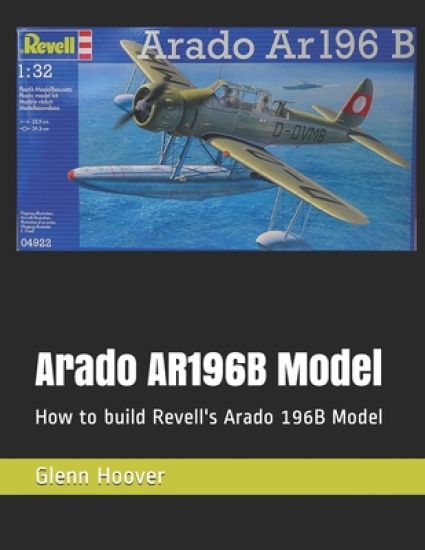
Arado AR196B Model: How to build Revell's Arado 196B Model
This book contains detailed instructions on building the Arado 196B 1/32 scale model aircraft from Revell. A full color version is available as a PDF download on my website along with a grayscale spiral bound version see glennhoovermodels.com. I take the model kit instructions from Revell and break them up into individual steps. I reorder the steps so that the small pieces (antennas, etc.) are assembled last which reduces the risk of damage when building the model. The steps are organized to insert the paint and decal steps in the best spot. I also incorporate an awesome base from ODG Studios, a dual float conversion and catapult from HpH in with Revell's instructions. The HpH steps are colored making them easy to skip if you just have the basic model. This book provides a little history of the Arado, photos of the model kit contents including the aftermarket items, a detailed list of tools that I used to build this model, along with a list of paints. The actual instruction section contains 633 steps and 105 figures that tell you what to dry fit, glue, and/or paint for each individual piece. Each step instruction shows the source (i.e., either Revell or HpH's instruction) along with a block to mark that you completed the step. The major instruction sequence for this model is1. Instrument Panels2. Pilot Area3. Interior Frame4. Gunner Area5. Fuselage6. Engine7. Tail Section8. Wings9. Paint and Decals10. Main Float11. Wing Floats12. Base Stand (Kit and ODG)13. Weapons14. Canopy15. Antenna16. Propeller17. Aftermarket Dual Float Kit18. Aftermarket CatapultI provide an index of the individual sprue parts that show where in the book the part is mentioned. This index was a great way to make sure that no pieces were overlooked. Finally, there are several pages of in-process photos with assembly tips and the final photos of my build for reference. This book is a great checklist to make your build go smoothly. Of course, you can feel free to use different tools, paint, weathering, etc. or even add your own diorama. I did a lot of research and didn't see anything this detailed about a model build. Most articles or videos concentrate on parts of their build or just give a summary review. I wanted to go down to the piece level and take you thru the whole build. Anyway, I hope you find this book useful.
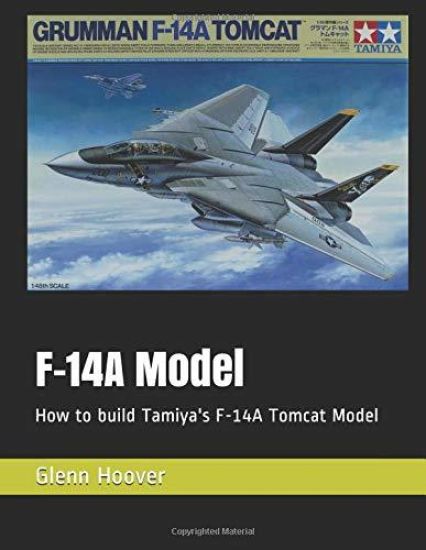
F-14A Model: How to build Tamiya's F-14A Tomcat Model

F-14A Model: How to build Tamiya's F-14A Tomcat Model

Glenn Hoover

Independently Published
2018
nidottu
This book contains detailed instructions on building the F-14A Tomcat 1/48 scale model aircraft from Tamiya. A full color version is available as a PDF download on my website. A gray scale spiral bound version is also available on my website. (glennhoovermodels.com). See a review at http: //www.detailandscale.com/scale_model_book_review_How_to_Build_Tamiya_F-14A_Model_by_Glenn_Hoover_2017.html I take the model kit instructions from Tamiya and break them up into individual steps. I reorder the steps so that the small pieces (antennas, etc.) are assembled last which reduces the risk of damage when building the model. The steps are organized to insert the paint and decal steps in the best spot. I also incorporate Eduard's Photo Etch sets 48909, 48910, 49805, and 49806 in with Tamiya's instructions. As most modelers know, it can be tricky to go back and forth between the model kit instructions and the aftermarket kit instructions. I took out the guesswork and did that for you. The PE steps are colored in gray making them easy to skip if you just have the basic model. This book provides a little history of the Tomcat, photos of the model kit contents including the photo etch frets, a detailed list of tools that I used to build this model, along with a list of paints. The actual instruction section contains 1105 steps and 136 figures that tell you what to dry fit, glue, and/or paint for each individual piece. Each step instruction shows the source (i.e., either Tamiya's or Eduard's instruction) along with a block to mark that you completed the step. The major instruction sequence for this model is1. Cockpit and Nose Gear Wheel Well2. Forward Fuselage3. Main Landing Gear Wheel Well4. Wings Mechanism5. Engine Intake6. AIM-54 Phoenix Pallets7. Paint Fuselage8. Engine Exhausts9. Wings10. Bottom Decals11. Landing Gear12. Tail Hook13. Weapons and Weapon's Racks14. External Fuel Tanks15. Top Decals16. Vertical and Horizontal Stabilizers17. Ejection Seats and Pilots18. Canopy and Ladder19. Antennas, Airbags, and Sealing PlatesI provide an index of the individual sprue parts that show where in the book the part is mentioned. This index was a great way to make sure that no pieces were overlooked. Finally, there are several pages of in-process photos with assembly tips and the final photos of my build for reference. This book is a great checklist to make your build go smoothly. Of course, you can feel free to use different tools, paint, weathering, etc. or even add your own diorama. I did a lot of research and didn't see anything this detailed about a model build. Most articles or videos concentrate on parts of their build or just give a summary review. I wanted to go down to the piece level and take you thru the whole build. Anyway, I hope you find this book useful. See a 16 page sample along with photos of finished models and other books at glennhoovermodels.com
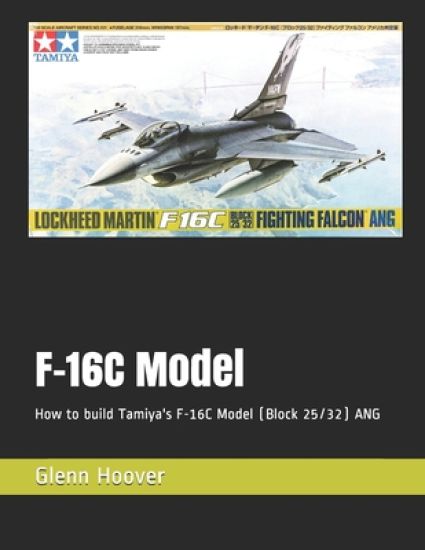
F-16C Model: How to build Tamiya's F-16C Model (Block 25/32) ANG
UPDATED to include BIG49242. If you are a new modeler who jumps right into the build without any prep work or if you are an experienced modeler who hates prep work and keeping track of the pieces and progress, this book can be a big help. Note: This book only has a standard binding. The full color version is available as a PDF download on my website. A gray-scale spiral bound version is also available on my website. (glennhoovermodels.com) See a review at www.detailandscale.com/scale_model_book_review_How_to_Build_Tamiya_F-16C_Model_by_Glenn_Hoover_2017.html. This book contains detailed instructions on building the F-16C Fighting Falcon (Block 25/32) ANG 1/48 scale model aircraft from Tamiya. I take the model kit instructions from Tamiya and break them up into individual steps. I reorder the steps so that the small pieces (antennas, etc.) are assembled last which reduces the risk of damage when building the model. The steps are organized to insert the paint and decal steps in the best spot. I also incorporate Eduard's Photo Etch set BIG4908 in with Tamiya's instructions. As most modelers know, it can be tricky to go back and forth between the model kit instructions and the PE instructions. I took out the guesswork and did that for you. The PE steps are colored in gray making them easy to skip if you just have the basic model. This book provides a little history of the F-16, photos of the model kit contents including the photo etch frets, a detailed list of tools that I used to build this model, along with a list of paints. The actual instruction section is huge and contains 1069 steps that tells you what to dry fit, glue, and/or paint for each individual piece. Each step instruction shows the source (i.e., either Tamiya's or Eduard's instruction) along with a block for you to mark that you completed the step. If the last column contains an X, that means there's a photo in the back with more details about the step. The major instruction sequence for this model is1. Cockpit2. Main Wheel Well3. Fuselage4. Wings5. Nose Gear Wheel Well6. Engine Intake7. Nose Cone8. Prime and Paint Fuselage and Wings9. Engine Exhaust10. Wheel Well Photo Etch11. Main Landing Gear12. Nose Landing Gear13. Bomb and Missile Racks14. Bombs and Missiles15. Decals (Underside)16. Attach Bomb and Missile Racks17. Decals (Top and Sides)18. Wings Flaps and Tail Assembly19. Instrument Panel, Seat, and Pilot20. Canopy and Antennas21. Remove Before Flight TagsI provide an index of the individual sprue parts that show where in the book the part is mentioned. This index was a great way to make sure that no pieces were overlooked. Finally, there are several pages of in-process photos with assembly tips and the final photos of my build. This book is a great checklist to make your build go smoothly. Of course, you can feel free to use different tools, paint, weathering, etc. or even add your own diorama. It took me over 4 months to write the first cut of this book then another 3.5 months to do the actual build to test my instructions. I make tweaks to improve the instructions and add the photos. I did a lot of research and didn't see anything this detailed about a model build. Most articles or videos concentrate on parts of their build or just give a summary review. I wanted to go down to the piece level and take you thru the whole build. Anyway, I hope you find this book useful. See a 16 page sample along with photos of finished models and other books at glennhoovermodels.com.
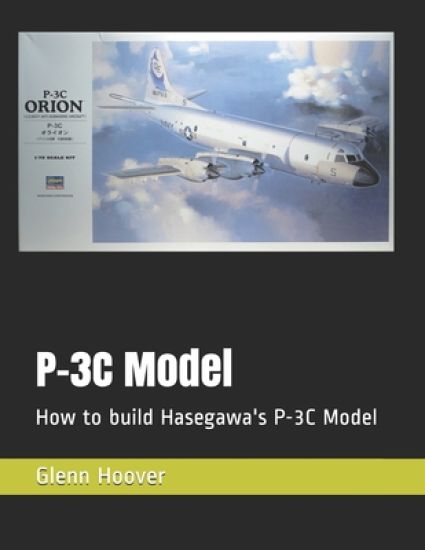
P-3C Model: How to build Hasegawa's P-3C Model

P-3C Model: How to build Hasegawa's P-3C Model

Glenn Hoover

Independently Published
2018
nidottu
If you are a new modeler who jumps right into the build without any prep work or if you are an experienced modeler who hates prep work and keeping track of the pieces and progress, this book can be a big help. A full color version is available as a PDF download on my website along with a grayscale spiral bound version. See a 16 page sample along with photos of finished models and other books at glennhoovermodels.com. This book contains detailed instructions on building the P-3C Orion anti-submarine 1/72 scale model aircraft from Hasegawa. I take the model kit instructions from Hasegawa and break them up into individual steps. I reorder the steps so that the small pieces (antennas, etc.) are assembled last which reduces the risk of damage when building the model. The steps are organized to insert the paint and decal steps in the best spot. I also incorporate Eduard's Photo Etch set BIG7239 in with Hasegawa's instructions. As most modelers know, it can be tricky to go back and forth between the model kit instructions and the PE instructions. I took out the guesswork and did that for you. The PE steps are colored in gray making them easy to skip if you just have the basic model. This book provides a little history of the Orion, photos of the model kit contents including the photo etch frets, a detailed list of tools that I used to build this model, along with a list of paints. The actual instruction section contains 497 steps that tells you what to dry fit, glue, and/or paint for each individual piece. Each step instruction shows the source (i.e., either Hasegawa's or Eduard's instruction) along with a block for you to mark that you completed the step. If the last column contains an X, that means there's a photo in the back with more details about the step. The major instruction sequence for this model is1. Cockpit2. Initial Fuselage3. Initial Wing Assembly4. Bomb Bay Opening5. Wing Pylons6. Prime and Paint7. Horizontal Stabilizer8. Bomb Bay9. Initial Wheel Wells10. Decals11. Windows12. Nose13. Wheel Struts, Tires, Wheel Well Covers14. Bomb Bay Doors15. Weapons and Bottom Antennas16. Engine Exhausts17. Top Antennas18. Tail Boom and Propellers19. Ladder20. Horizontal Stabilizer21. HF Antenna WireI provide an index of the individual sprue parts that show where in the book the part is mentioned. This index was a great way to make sure that no pieces were overlooked. Finally, there are several pages of in-process photos with assembly tips and the final photos of my build. This book is a great checklist to make your build go smoothly. Of course, you can feel free to use different tools, paint, weathering, etc. or even add your own diorama. It took me over 2 months to write the first cut of this book then another 1.5 months to do the actual build to test my instructions. I make tweaks to improve the instructions and add the photos. I did a lot of research and didn't see anything this detailed about a model build. Most articles or videos concentrate on parts of their build or just give a summary review. I wanted to go down to the piece level and take you thru the whole build. Anyway, I hope you find this book useful. Revision 1: Steve Sanchez (VP-40 Crewman) made some valuable comments that were added to this book. A note was added about the kit's cockpit layout versus his experience Step 207 was updated with his comment about black framed windows Step 470 as updated with his comment about the propeller paint stripe widths
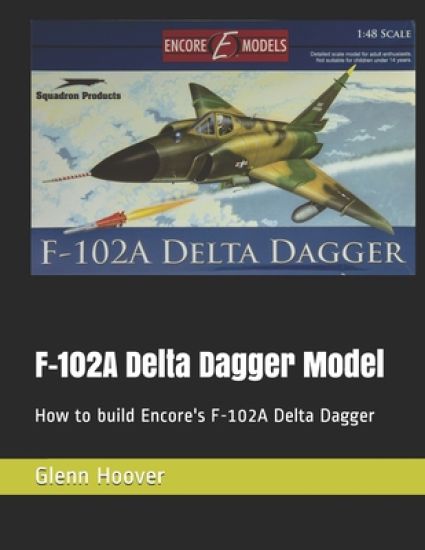
CH-53E Model: How to build Academy's CH-53E model

CH-53E Model: How to build Academy's CH-53E model

Glenn Hoover

Independently Published
2018
nidottu
If you are a new modeler who jumps right into the build without any prep work or if you are an experienced modeler who hates prep work and keeping track of the pieces and progress, this book can be a big help. See a 16 page sample along with photos of finished models and other books at glennhoovermodels.com. A full color version is available as a PDF download on my website along with a grayscale spiral bound version. This book contains detailed instructions on building the CH-53E Helicopter 1/48 scale model from Academy. I take the model kit instructions from Academy and break them up into individual steps. I reorder the steps so that the small pieces (antennas, etc.) are assembled last which reduces the risk of damage when building the model. The steps are organized to insert the paint and decal steps in the best spot. I also incorporate Eduard's Photo Etch BIG4875 in with Academy's instructions. As most modelers know, it can be tricky to go back and forth between the model kit instructions and the PE instructions. I took out the guesswork and did that for you. The PE steps are colored in gray making them easy to skip if you just have the basic model. This book provides a little history of the Marine Super Stallion, photos of the model kit contents including the photo etch frets, a detailed list of tools that I used to build this model, along with a list of paints. The actual instruction section contains 869 steps that tells you what to dry fit, glue, and/or paint for each individual piece. Each step instruction shows the source (i.e., either Academy's or Eduard's instruction) along with a block for you to mark that you completed the step. If the last column contains an X, that means there's a photo in the back with more details about the step. The major instruction sequence for this model is1. Rotors2. Interior Bulkheads3. Cargo Area4. Instrument Panel5. Cockpit6. Ramp7. Exterior Fuselage8. Cargo Area Floor and Ceiling9. Wheel Wells10. Engine Exhaust11. Primer12. Machine Gun13. Pylons14. Wheel Wells15. Exterior Photo Etch16. Main Engines17. Paint18. Decals19. Wheel Assemblies20. Bottom and Side Antennas21. Winch, Open Doors22. Top Antennas and Open Windows23. Tail Section24. Final Rotor AssemblyI provide an index of the individual sprue parts that show where in the book the part is mentioned. This index was a great way to make sure that no pieces were overlooked. Finally, there are several pages of in-process photos with assembly tips and the final photos of my build. This book is a great checklist to make your build go smoothly. Of course, you can feel free to use different tools, paint, weathering, etc. or even add your own diorama. It took me over 3 months to write the first cut of this book then another 2 months to do the actual build to test my instructions. I make tweaks to improve the instructions and add the photos. I did a lot of research and didn't see anything this detailed about a model build. Most articles or videos concentrate on parts of their build or just give a summary review. I wanted to go down to the piece level and take you thru the whole build. Anyway, I hope you find this book useful.
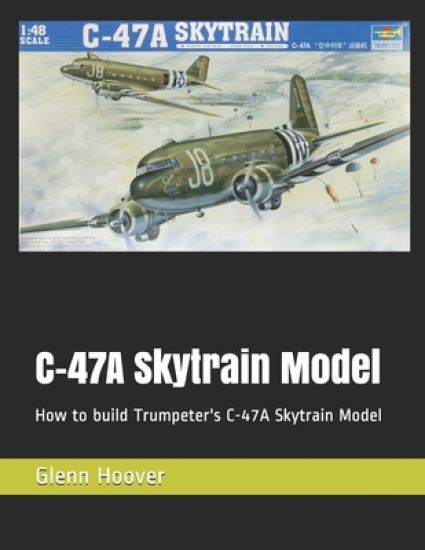
F-35B Model: How to build Kitty Hawk's F-35B Model (initial version)
If you are a new modeler who jumps right into the build without any prep work or if you are an experienced modeler who hates prep work and keeping track of the pieces and progress, this book can be a big help. See review http: //www.detailandscale.com/scale_model_book_review_How_to_Build_KH_F-35B_Model_by_Glenn_Hoover_2017.html This book contains detailed instructions on building the F-35B Lightning II 1/48 scale model aircraft from Kitty Hawk. This book covers the INITIAL VERSION of the model. If the box on your model kit says Version 2.0 then you need my other book. A full color version is available as a PDF download on my website along with a grayscale spiral bound version. (glennhoovermodels.com). There were several issues with Kitty Hawk's instructions on this initial model that I corrected in my book. So if you follow my book, you'll have no issues. I take the model kit instructions from Kitty Hawk and break them up into individual steps. I reorder the steps so that the small pieces (antennas, etc.) are assembled last which reduces the risk of damage when building the model. The steps are organized to insert the paint and decal steps in the best spot. I also incorporate Eduard's Photo Etch sets 49653 and 48792 in with Kitty Hawk's instructions. As most modelers know, it can be tricky to go back and forth between the model kit instructions and the PE instructions. I took out the guesswork and did that for you. The PE steps are colored in gray making them easy to skip if you just have the basic model. This book provides a little history of the F-35B, photos of the model kit contents including the photo etch frets, a detailed list of tools that I used to build this model, along with a list of paints. The actual instruction section contains 790 steps that tells you what to dry fit, glue, and/or paint for each individual piece. Each step instruction shows the source (i.e., either Kitty Hawk's or Eduard's instruction) along with a block for you to mark that you completed the step. If the last column contains an X, that means there's a photo in the back with more details about the step. The major instruction sequence for this model is1. Ejection Seat (Build)2. Instrument Panels3. Nose Gear Wheel Well4. Engine5. Engine Exhaust Nozzle (Build)6. Main Landing Gear Wheel Wells7. Lower Lift Fan Intake8. Fuselage and Wings Assembly, Paint, and Decals9. Internal Weapons10. Nose and Main Landing Gear11. Engine Exhaust Nozzle (Install)12. Doors (Flare/Chaff, Engine Exhaust, Weapons Bay)13. Doors (Nose and Main Landing Gear)14. External Missiles15. Vent and Lift Fan Doors (Top)16. Tails (Decals)17. Speed Brake and Antenna18. Cockpit Detail19. Ejection Seat (Install)20. Canopy and Pitot TubesI provide an index of the individual sprue parts that show where in the book the part is mentioned. This index was a great way to make sure that no pieces were overlooked. Finally, there are several pages of in-process photos with assembly tips and the final photos of my build. This book is a great checklist to make your build go smoothly. Of course, you can feel free to use different tools, paint, weathering, etc. or even add your own diorama. It took me over 3 months to write the first cut of this book then another 2.5 months to do the actual build to test my instructions. I make tweaks to improve the instructions and add the photos. I did a lot of research and didn't see anything this detailed about a model build. Most articles or videos concentrate on parts of their build or just give a summary review. I wanted to go down to the piece level and take you thru the whole build. Anyway, I hope you find this book useful. See a 16 page sample along with photos of finished models and other books at glennhoovermodels.com
F-105G Model: How to build the F-105G Thunderchief from Hobby Boss
This book contains detailed instructions on building the F-105G 1/48 scale model aircraft from Hobby Boss. In addition to the kit's instructions, there are 3 aftermarket kits with Eduard's BIG4920 set - each with their own instruction. Can you imagine merging all of these instructions? Well, I've done that for you and more. I take the model kit instructions from Hobby Boss along with the Eduard sets and break them up into individual steps. The aftermarket steps are colored gray making them easy to skip if you just have the basic model. This book provides a little history of the Thunderchief, photos of the aftermarket kits, a detailed list of tools that I used to build this model, along with a list of paints. The actual instruction section contains 1,179 steps and 130 plus figures over 148 pages that tell you what to dry fit, glue, and/or paint for each individual piece. Each step instruction shows the source (i.e., either Hobby Boss or Eduard) along with a block to mark that you completed the step. The major instruction sequence for this model is1. Cockpit2. Engine3. Fuel Probe Housing4. Gun5. Nose Landing Gear Wheel Well 6. Fuselage7. Canopy8. Intake9. Wings10. Main Landing Gear Wheel Well11. Tail12. Antennas13. Paint/Decals14. Exhaust15. Landing Gear16. Horizontal Stabilizers17. Fuel Tanks18. Missiles19. Radar20. Fuel probe21. LadderI provide an index of the individual sprue parts that show where in the book the part is mentioned. This index was a great way to make sure that no pieces were overlooked. Finally, there are several pages of in-process photos with assembly tips and the final photos of my build for reference. This book is a great checklist to make your build go smoothly. Of course, you can feel free to use different tools, paint, weathering, etc. or even add your own diorama. I hope you find this book useful. See a 16-page sample along with photos of finished models and other books at glennhoovermodels.com.
Perspectives on Travel Writing

Perspectives on Travel Writing

Glenn Hooper

Ashgate Publishing Limited
2004
sidottu
Ranging from the early modern to the postcolonial, and dealing mainly with encounters in Europe, the Americas and the Middle East, Perspectives on Travel Writing is a collection of new essays by international scholars that examines some of the various contexts of travel writing, as well as its generic characteristics. Contributions examine the similarities between autobiography and memoir, fiction, and travel writing, and attempt to define travel writing as a genre. Utilising a variety of approaches, the essays display a shared concern with what travel writing does and how it does it. The effects of encounter and border-crossing on gender, 'race', and national identity are considered throughout. The collection begins with a review of some of the problems and issues facing the scholar of travel writing and moves on to a detailed discussion of the qualities of travel writing and its related forms. It then presents in chronological order a number of case studies, before closing with a critical discussion of approaches to the subject. An essay collection with broad historical and geographical coverage, this volume should appeal to students and researchers of travel and travel-related literatures from across the Humanities.
Perspectives on Travel Writing

Perspectives on Travel Writing

Glenn Hooper

Routledge
2017
nidottu
Ranging from the early modern to the postcolonial, and dealing mainly with encounters in Europe, the Americas and the Middle East, Perspectives on Travel Writing is a collection of new essays by international scholars that examines some of the various contexts of travel writing, as well as its generic characteristics. Contributions examine the similarities between autobiography and memoir, fiction, and travel writing, and attempt to define travel writing as a genre. Utilising a variety of approaches, the essays display a shared concern with what travel writing does and how it does it. The effects of encounter and border-crossing on gender, 'race', and national identity are considered throughout. The collection begins with a review of some of the problems and issues facing the scholar of travel writing and moves on to a detailed discussion of the qualities of travel writing and its related forms. It then presents in chronological order a number of case studies, before closing with a critical discussion of approaches to the subject. An essay collection with broad historical and geographical coverage, this volume should appeal to students and researchers of travel and travel-related literatures from across the Humanities.
The Tourist's Gaze

The Tourist's Gaze

Glenn Hooper

Cork University Press
2001
nidottu
Travel literature has been described by Jonathan Raban as literature's red-light district. It defies peoples' beliefs, confuses expectations, crosses disciplinary boundaries and is linked to ethnography, journalism and biography. Yet for all that has managed to remain not only a visible but also an increasingly popular literary genre. This anthology makes an entertaining and insightful contribution to this engaging field. It includes extracts from well known writers, such as Thackeray, Boll and Chesterton, but also presents less familiar figures from the nineteenth and twentieth centuries.The seventy pieces collected here both offer sharp observations of the country and are equally revealing about the travelers themselves. Each extract, where possible, is prefaced by a brief biography of its author. For readers interested in the origins and historical role of travel writing in general, and how they relate to Ireland, the editor offers an illuminating introduction. This anthology presents illuminating snapshots of Ireland over two hundred years. It also provides insights into the varied perspectives of the travelers themselves, a perspective often influenced by contemporary political events such as the Great Famine, Home Rule, the Civil War and the Troubles. This anthology leaves the reader with an enduring image of Ireland's ability to fascinate and stimulate visitors through two centuries.
Herbert Hoover: A Life

Herbert Hoover: A Life

Glen Jeansonne

BERKLEY BOOKS
2016
sidottu
"At last, a biography of Herbert Hoover that captures the man in full... Jeansonne] has splendidly illuminated the arc of one of the most extraordinary lives of the twentieth century."--David M. Kennedy, Pulitzer Prize-winning Author of Freedom from Fear Prizewinning historian Glen Jeansonne delves into the life of our most misunderstood president, offering up a surprising new portrait of Herbert Hoover--dismissing previous assumptions and revealing a political Progressive in the mold of Theodore Roosevelt, and the most resourceful American since Benjamin Franklin. Orphaned at an early age and raised with strict Quaker values, Hoover earned his way through Stanford University. His hardworking ethic drove him to a successful career as an engineer and multinational businessman. After the Great War, he led a humanitarian effort that fed millions of Europeans left destitute, arguably saving more lives than any man in history. As commerce secretary under President Coolidge, Hoover helped modernize and galvanize American industry, and orchestrated the rehabilitation of the Mississippi Valley after the Great Flood of 1927. As president, Herbert Hoover became the first chief executive to harness federal power to combat a crippling global recession. Though Hoover is often remembered as a "do-nothing" president, Jeansonne convincingly portrays a steadfast leader who challenged congress on an array of legislation that laid the groundwork for the New Deal. In addition, Hoover reformed America's prisons, improved worker safety, and fought for better health and welfare for children. Unfairly attacked by Franklin D. Roosevelt and blamed for the Depression, Hoover was swept out of office in a landslide. Yet as FDR's government grew into a bureaucratic behemoth, Hoover became the moral voice of the GOP and a champion of Republican principles--a legacy re-ignited by Ronald Reagan and which still endures today. A compelling and rich examination of his character, accomplishments and failings, this is the magnificent biography of Herbert Hoover we have long waited for. INCLUDES PHOTOS
The Historical Jesus Goes to Church

The Historical Jesus Goes to Church

Arthur J. Dewey; Roy W. Hoover; Stephen J. Patterson; Lane C. McGaughy; Joe Bessler-Northcutt; Hal Taussig; Glenna S. Jackson; Charles W. Hedrick; Francis A. Macnab

Polebridge Press
2003
nidottu
What difference does scholarship on the historical Jesus make for the way we think about the meaning of Christian faith in the twenty-first century? In The Historical Jesus Goes To Church, biblical scholars--Fellows of the Jesus Seminar--speak directly to the ways in which new knowledge of the Jesus of history requires and enables us to think differently about the significance of Jesus and about the reliability and authority of the Bible. They also imagine what these new understandings imply for public worship, preaching, prayer and practice, and life in community. These articles evoke the spirit of Paul, Christianity's first theologian, who like us found himself standing at the intersection of two eras and knew that he had to let go of his past if he hoped to have a future.