Kirjojen hintavertailu. Mukana 11 234 096 kirjaa ja 12 kauppaa.

Kirjahaku

Etsi kirjoja tekijän nimen, kirjan nimen tai ISBN:n perusteella.

1000 tulosta hakusanalla Gordon C. Rhea

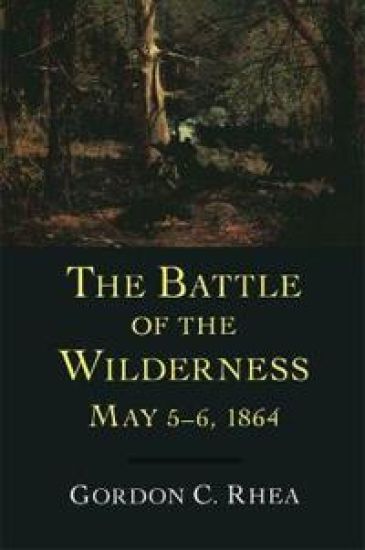
The Battle of the Wilderness, May 5-6, 1864

The Battle of the Wilderness, May 5-6, 1864

Gordon C. Rhea

Louisiana State University Press
1994
sidottu
Fought in a tangled forest fringing the south bank of the Rapidan River, the Battle of the Wilderness marked the initial engagement in the climactic months of the Civil War in Virginia, and the first encounter between Ulysses S. Grant and Robert E. Lee. In an exciting narrative, Gordon C. Rhea provides the consummate recounting of that conflict of May 5 and 6, 1864, which ended with high casualties on both sides but no clear victor. With its balanced analysis of events and people, command structures and strategies, The Battle of the Wilderness is operational history as it should be written.
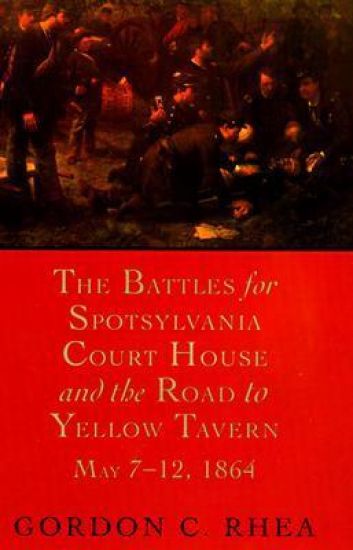
The Battles for Spotsylvania Court House and the Road to Yellow Tavern, May 7-12, 1864
The Battles for Spotsylvania Court House and the Road to Yellow Tavern, May 7-12, 1864 continues Gordon C. Rhea's peerless treatment of the Civil War's clash of titans: Grant's Army of the Potomac versus Lee's Army of Northern Virginia. Inlaid with detail, innovative analysis, riveting prose, and an abundance of supporting primary evidence, it is a worthy sequel to Rhea's first, acclaimed work, The Battle of the Wilderness, May 5-6, 1864.Here Rhea examines the maneuvers and battles from May 7, 1864, when Grant left the Wilderness, through May 12, when his attempt to break Lee's line by frontal assault reached a chilling climax at what is now called the Bloody Angle. After suffering severe casualties in the Wilderness, Lee had no choice but to curb his aggressive instincts and prepare for a defensive battle at Spotsylvania. Perfecting the art of fieldworks (which foreshadowed the trenches in France during World War I), he orchestrated his threadbare veterans in a defensive performance that ranks as a classic in military history. Grant, sworn to destroy Lee's army, had to solve the knotty problem of penetrating his adversary's confounding, well-appointed earth-works. He mounted a volley of assaults that proved slaughterous for both armies and led to a turning point in his strategic thinking. Contributing to the carnage were advances in weaponry that by 1864 had outstripped the Napoleonic warfare of the day. The result was massive casualties: on May 12 alone, Lee lost eight thousand men; Grant, nine thousand.Rhea draws exhaustively upon previously untapped materials, most notably contemporary newspaper accounts and diaries and letters only recently made available, to construct the definitive account of Grant and Lee at Spotsylvania. Here for the first time is a detailed description of the cavalry's role in the campaign, from the grim fighting at Todd's Tavern through Philip Sheridan's Richmond raid and Jeb Stuart's mortal wounding at Yellow Tavern. Here, too, are fresh and challenging interpretations that often contradict conventional wisdom.When May 13 dawned to an eerie silence, there was no clear victor of the previous days' battles. As Rhea states in his epilogue, the end was not yet in sight. The wily Lee and bulldog Grant would soon meet again.
To the North Anna River

To the North Anna River

Gordon C. Rhea

Louisiana State University Press
2000
sidottu
With his third book, To the North Anna River, Gordon Rhea resumes his spectacular narrative of the initial campaign between Ulysses S. Grant and Robert E. Lee in the spring of 1864. May 13 to 25, a phase oddly ignored by historians, was critical in the clash between the Army of the Potomac and the Army of Northern Virginia. During those thirteen days- an interlude bracketed by horrific battles that riveted the public's attention- a game of guile and endurance between Grant and Lee escalated to a suspenseful draw on Virginia's North Anna River. Rhea skillfully sets the stage at dawn May 13 and from there lends every imaginable perspective- from mental interiors to sweeping panoramas to scholarly retrospection- on the ensuing hours.From the bloodstained fields of the Mule Shoe to the North Anna River, with Meadow Bridge, Myers Hill, Harris Farm, Jericho Mills, Ox Ford, and Doswell Farm in between, grueling night marches, desperate attacks, and thundering cavalry charges became the norm for both Grant's and Lee's men. But the real story of May 13- 25 lay in the two generals' efforts to outfox each other, and Rhea charts their every step and misstep. Realizing that his bludgeoning tactics at the Bloody Angle were ineffective, Grant resorted to a fast-paced assault on Lee's vulnerable points. Lee, outnumbered two to one, abandoned the offensive and concentrated on anticipating Grant's maneuvers and shifting quickly enough to repel them. It was an amazingly equal match of wits that produced a gripping, high-stakes bout of warfare- a test, ultimately, of improvisation for Lee and of perseverance for Grant.From unprecedented research into more than 550 published and unpublished sources, Rhea produces an exciting new take on this overlooked passage in the Civil War. He discovers a surprising similarity in military temperament between Lee and Grant, whom historians traditionally contrast. He also presents the first detailed recounting of Philip Sheridan's dramatic battle to save his cavalry corps in front of Richmond; the story of the novice New York and New England heavy artillerists drawn down from Washington; the specifics of Grant's forlorn attack of May 18 at Spotsylvania Court House; and the full picture of Lee's ingenious inverted V formation on the North Anna. The most accurate, not to mention enthralling, account to date of this next phase in Lee and Grant's opening match, To the North Anna River is a worthy sequel to Rhea's earlier acclaimed works.
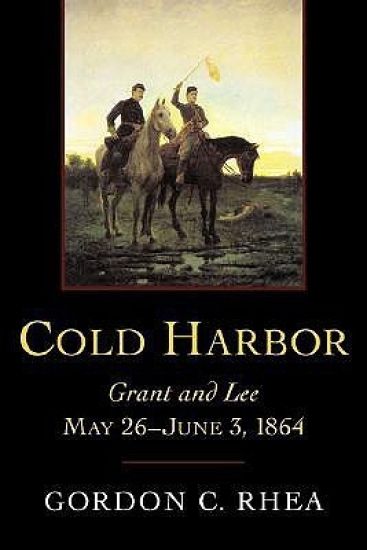
Cold Harbor

Cold Harbor

Gordon C. Rhea

Louisiana State University Press
2002
sidottu
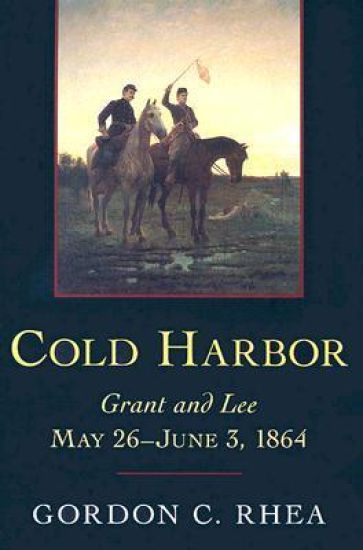
In his gripping fourth volume on the spring 1864 Overland campaign -- which pitted Ulysses S. Grant against Robert E. Lee for the first time in the Civil War -- Gordon Rhea vividly re-creates the battles and maneuvers from the North Anna stalemate through the Cold Harbor offensive. Once again Rhea's tenacious research elicits stunning new facts from the records of a phase oddly ignored or mythologized by historians. The Cold Harbor of these pages differs sharply from the Cold Harbor of popular lore. We see Grant, in one of his most brilliant moves, pull his army across the North Anna River and steal a march on Lee. In response, Lee sets up a strong defensive line along Totopotomoy Creek, and the battles spark across woods and fields northeast of Richmond. Their back to the Chickahominy River and on their last legs, the rebel troops defiantly face an army-wide assault ordered by Grant that extends over three days. Rhea gives a surprising new interpretation of the famous battle that left seven thousand Union casualties and only fifteen hundred Confederate dead or wounded. Here, Grant is not a callous butcher, and Lee does not wage a perfect fight. Every imaginable primary source has been exhausted to unravel the strategies, mistakes, gambles, and problems with subordinates that preoccupied two exquisitely matched minds. In Cold Harbor, Rhea separates fact from fiction in a charged, evocative narrative. He leaves readers under a moonless sky, Grant pondering the eastward course of the James River fifteen miles south of the encamped armies.
The Battle of the Wilderness, May 5-6, 1864

The Battle of the Wilderness, May 5-6, 1864

Gordon C. Rhea

Louisiana State University Press
2004
nidottu
Fought in a tangled forest fringing the south bank of the Rapidan River, the Battle of the Wilderness marked the initial engagement in the climactic months of the Civil War in Virginia, and the first encounter between Ulysses S. Grant and Robert E. Lee. In an exciting narrative, Gordon C. Rhea provides the consummate recounting of that conflict of May 5 and 6, 1864, which ended with high casualties on both sides but no clear victor. With its balanced analysis of events and people, command structures and strategies, The Battle of the Wilderness is operational history as it should be written.
The Battles for Spotsylvania Court House and the Road to Yellow Tavern, May 7-12, 1864
The second volume in Gordon C. Rhea's peerless five-book series on the Civil War's 1864 Overland Campaign abounds with Rhea's signature detail, innovative analysis, and riveting prose. Here Rhea examines the maneuvers and battles from May 7, 1864, when Grant left the Wilderness, through May 12, when his attempt to break Lee's line by frontal assault reached a chilling climax at what is now called the Bloody Angle. Drawing exhaustively upon previously untapped materials, Rhea challenges conventional wisdom about this violent clash of titans to construct the ultimate account of Grant and Lee at Spotsylvania.
To the North Anna River

To the North Anna River

Gordon C. Rhea

Louisiana State University Press
2005
nidottu
With To the North Anna River, the third book in his outstanding five-book series, Gordon C. Rhea continues his spectacular narrative of the initial campaign between Ulysses S. Grant and Robert E. Lee in the spring of 1864. May 13 through 25, a phase oddly ignored by historians, was critical in the clash between the Army of the Potomac and the Army of Northern Virginia. During those thirteen days -- an interlude bracketed by horrific battles that riveted the public's attention -- a game of guile and endurance between Grant and Lee escalated to a suspenseful draw on Virginia's North Anna River.From the bloodstained fields of the Mule Shoe to the North Anna River, with Meadow Bridge, Myers Hill, Harris Farm, Jericho Mills, Ox Ford, and Doswell Farm in between, grueling night marches, desperate attacks, and thundering cavalry charges became the norm for both Grant's and Lee's men. But the real story of May 13--25 lay in the two generals' efforts to outfox each other, and Rhea charts their every step and misstep. Realizing that his bludgeoning tactics at the Bloody Angle were ineffective, Grant resorted to a fast-paced assault on Lee's vulnerable points. Lee, outnumbered two to one, abandoned the offensive and concentrated on anticipating Grant's maneuvers and shifting quickly enough to repel them. It was an amazingly equal match of wits that produced a gripping, high-stakes bout of warfare -- a test, ultimately, of improvisation for Lee and of perseverance for Grant.
Cold Harbor

Cold Harbor

Gordon C. Rhea

Louisiana State University Press
2007
nidottu
Gordon Rhea's gripping fourth volume on the spring 1864 campaign- which pitted Ulysses S. Grant against Robert E. Lee for the first time in the Civil War- vividly re-creates the battles and maneuvers from the stalemate on the North Anna River through the Cold Harbor offensive. Cold Harbor: Grant and Lee, May 26- June 3, 1864 showcases Rhea's tenacious research which elicits stunning new facts from the records of a phase oddly ignored or mythologized by historians. In clear and profuse tactical detail, Rhea tracks the remarkable events of those nine days, giving a surprising new interpretation of the famous battle that left seven thousand Union casualties and only fifteen hundred Confederate dead or wounded. Here, Grant is not a callous butcher, and Lee does not wage a perfect fight. Within the pages of Cold Harbor, Rhea separates fact from fiction in a charged, evocative narrative. He leaves readers under a moonless sky, with Grant pondering the eastward course of the James River fifteen miles south of the encamped armies.
In the Footsteps of Grant and Lee

In the Footsteps of Grant and Lee

Gordon C. Rhea

Louisiana State University Press
2007
sidottu
In early May 1864, Lieutenant General Ulysses S. Grant initiated a drive through central Virginia to crush Robert E. Lee's Confederate Army of Northern Virginia. For forty days, the armies fought a grinding campaign from the Rapidan River to the James River that helped decide the course of the Civil War. Several of the war's bloodiest engagements occurred in this brief period: the Wilderness, Spotsylvania Court House, the North Anna River, Totopotomoy Creek, Bethesda Church, and Cold Harbor. Pitting Grant and Lee against one another for the first time in the war, the Overland Campaign, as this series of battles and maneuvers came to be called, represents military history at its most intense. In the Footsteps of Grant and Lee, a unique blend of narrative and photographic journalism from Gordon C. Rhea, the foremost authority on the Overland Campaign, and Chris E. Heisey, a leading photographer of Civil War battlefields, provides a stunning, stirring account of this deadly game of wits and will between the Civil War's foremost military commanders. Here Grant fought and maneuvered to flank Lee out of his heavily fortified earthworks. And here Lee demonstrated his genius as a defensive commander, countering Grant's every move. Adding to the melee were cavalry brawls among the likes of Philip H. Sheridan, George A. Custer, James Ewell Brown ""Jeb"" Stuart, and Wade Hampton. Forty days of combat produced horrific casualties, some 55,000 on the Union side and 35,000 on the Confederate. By the time Grant crossed the James and began the Siege of Petersburg, marking an end to this maneuver, both armies had sustained significant losses that dramatically reduced their numbers.Rhea provides a rich, fast-paced narrative, movingly illustrated by more than sixty powerful color images from Heisey, who captures the many moods of these hallowed battlegrounds as they appear today. Heisey made scores of visits to the areas where Grant and Lee clashed, giving special attention to lesser-known sites on byways and private property. He captures some of central Virginia's most stunning landscapes, reminding us that though battlefields conjure visions of violence, death, and sorrow, they can also be places of beauty and contemplation. Accompanying the modern pictures are more than twenty contemporary photographs taken during the campaign or shortly afterwards, some of them never before published. At once an engaging military history and a vivid pictorial journey, In the Footsteps of Grant and Lee offers a fresh vision of some of the country's most significant historic sites.
On to Petersburg

On to Petersburg

Gordon C. Rhea

Louisiana State University Press
2017
sidottu
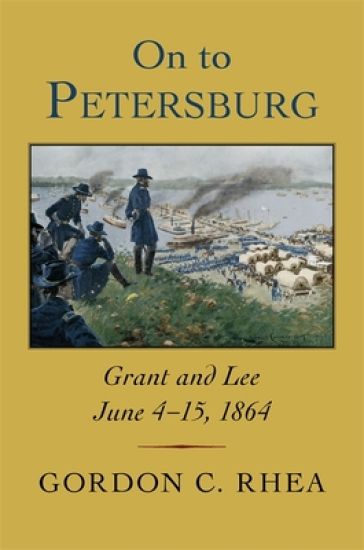
With On to Petersburg, Gordon C. Rhea completes his much-lauded history of the Overland Campaign, a series of Civil War battles fought between Generals Ulysses S. Grant and Robert E. Lee in southeastern Virginia in the spring of 1864. Having previously covered the campaign in his magisterial volumes on The Battle of the Wilderness, The Battles for Spotsylvania Court House and the Road to Yellow Tavern, To the North Anna River, and Cold Harbor, Rhea ends this series with a comprehensive account of the last twelve days of the campaign, which concluded with the beginning of the siege of Petersburg.On to Petersburg follows the Union army's movement to the James River, the military response from the Confederates, and the initial assault on Petersburg, which Rhea suggests marked the true end of the Overland Campaign. Beginning his account in the immediate aftermath of Grant's three-day attack on Confederate troops at Cold Harbor, Rhea argues that the Union general's primary goal was not- as often supposed- to take Richmond, but rather to destroy Lee's army by closing off its retreat routes and disrupting its supply chains. While Grant struggled at times to communicate strategic objectives to his subordinates and to adapt his army to a faster-paced, more flexible style of warfare, Rhea suggests that the general successfully shifted the military landscape in the Union's favor.On the rebel side, Lee and his staff predicted rightly that Grant would attempt to cross the James River and lay siege to the Army of Northern Virginia while simultaneously targeting Confederate supply lines. Rhea examines how Lee, facing a better-provisioned army whose troops outnumbered Lee's two to one, consistently fought the Union army to an impasse, employing risky, innovative field tactics to counter Grant's forces. Like the four volumes that preceded it, On to Petersburg represents decades of research and scholarship and will stand as the most authoritative history of the final battles in the campaign.
Stephen A. Swails

Stephen A. Swails

Gordon C. Rhea

Louisiana State University Press
2021
sidottu
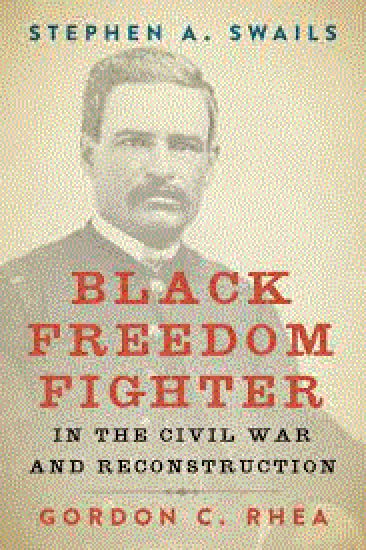
Stephen Atkins Swails is a forgotten American hero. A free Black in the North before the Civil War began, Swails exhibited such exemplary service in the 54th Massachusetts Infantry that he became the first African American commissioned as a combat officer in the United States military. After the war, Swails remained in South Carolina, where he held important positions in the Freedmen's Bureau, helped draft a progressive state constitution, served in the state senate, and secured legislation benefiting newly liberated Black citizens. Swails remained active in South Carolina politics after Reconstruction until violent Redeemers drove him from the state. After Swails died in 1900, state and local leaders erased him from the historical narrative. Gordon C. Rhea's biography, one of only a handful for any of the nearly 200,000 African Americans who fought in the Civil War or figured prominently in Reconstruction, restores Swails's remarkable legacy. Swails's life story is a saga of an indomitable human being who confronted deep-seated racial prejudice in various institutions but nevertheless reached significant milestones in the fight for racial equality, especially within the military. His is an inspiring story that is especially timely today.
On to Petersburg

On to Petersburg

Gordon C. Rhea

LOUISIANA STATE UNIVERSITY PRESS
2022
pokkari
With On to Petersburg, Gordon C. Rhea completes his much-lauded history of the Overland Campaign, a series of Civil War battles fought between Generals Ulysses S. Grant and Robert E. Lee in southeastern Virginia in the spring of 1864. Having previously covered the campaign in his magisterial volumes on The Battle of the Wilderness, The Battles for Spotsylvania Court House and the Road to Yellow Tavern, To the North Anna River, and Cold Harbor, Rhea ends this series with a comprehensive account of the last twelve days of the campaign, which concluded with the beginning of the siege of Petersburg.On to Petersburg follows the Union army's movement to the James River, the military response from the Confederates, and the initial assault on Petersburg, which Rhea suggests marked the true end of the Overland Campaign. Beginning his account in the immediate aftermath of Grant's three-day attack on Confederate troops at Cold Harbor, Rhea argues that the Union general's primary goal was not—as often supposed—to take Richmond, but rather to destroy Lee's army by closing off its retreat routes and disrupting its supply chains. While Grant struggled at times to communicate strategic objectives to his subordinates and to adapt his army to a faster-paced, more flexible style of warfare, Rhea suggests that the general successfully shifted the military landscape in the Union's favor.On the rebel side, Lee and his staff predicted rightly that Grant would attempt to cross the James River and lay siege to the Army of Northern Virginia while simultaneously targeting Confederate supply lines. Rhea examines how Lee, facing a better-provisioned army whose troops outnumbered Lee's two to one, consistently fought the Union army to an impasse, employing risky, innovative field tactics to counter Grant's forces. Like the four volumes that preceded it, On to Petersburg represents decades of research and scholarship and will stand as the most authoritative history of the final battles in the campaign.
Glory Enough for All

Glory Enough for All

Eric J. Wittenberg; Gordon C. Rhea

Bison Books
2007
pokkari
After the ferocious fighting at Cold Harbor, Virginia, in June 1864, Union Lt. Gen. Ulysses S. Grant ordered his cavalry, commanded by Maj. Gen. Philip H. Sheridan, to distract the Confederate forces opposing the Army of the Potomac. Glory Enough for All chronicles the battle that resulted when Confederate cavalry pursued and caught their Federal foes at Trevilian Station, Virginia, perhaps the only truly decisive cavalry battle of the American Civil War. Eric J. Wittenberg tells the stories of the men who fought there, including eight Medal of Honor winners and one Confederate whose death at Trevilian Station made him the third of three brothers to die in the service of Company A of the Fourth Virginia Cavalry. He also addresses the little-known but critical cavalry battle at Samaria (Saint Mary's) Church on June 24, 1864, where Union Brig. Gen. David N. Gregg's division was nearly destroyed. The only modern strategic analysis of the battle, Glory Enough for All challenges prevailing interpretations of General Sheridan and of the Union cavalry. Wittenberg shows that the outcome of Trevilian Station ultimately prolonged Grant's efforts to end the Civil War.
Lee's Army during the Overland Campaign

Lee's Army during the Overland Campaign

Alfred C. Young III; Gordon. C Rhea

Louisiana State University Press
2013
sidottu
The initial confrontation between Union general Ulysses S. Grant and Confederate general Robert E. Lee in Virginia during the Overland Campaign has not until recently received the same degree of scrutiny as other Civil War battles. The first round of combat between the two renowned generals spanned about six weeks in May and early June 1864. The major skirmishes- Wilderness, Spotsylvania, and Cold Harbor- rivaled any other key engagement in the war. While the strength and casualties in Grant's army remain uncontested, historians know much less about Lee's army. Nonetheless, the prevailing narrative depicts Confederates as outstripped nearly two to one, and portrays Grant suffering losses at a rate nearly double that of Lee. As a result, most Civil War scholars contend that the campaign proved a clear numerical victory for Lee but a tactical triumph for Grant. Questions about the power of Lee's army stem mainly from poor record keeping by the Confederates as well as an inordinate number of missing or lost battle reports. The complexity of the Overland Campaign, which consisted of several smaller engagements in addition to the three main clashes, led to considerable historic uncertainty regarding Lee's army. Significant doubts persist about the army's capability at the commencement of the drive, the amount of reinforcements received, and the total of casualties sustained during the entire campaign and at each of the major battles. In Lee's Army during the Overland Campaign, Alfred C. Young III addresses this deficiency by providing for the first time accurate information regarding the Confederate side throughout the conflict. The results challenge prevailing assumptions, showing clearly that Lee's army stood far larger in strength and size and suffered considerably higher casualties than previously believed.
The Help-Yourself City

The Help-Yourself City

Gordon C.C. Douglas

Oxford University Press Inc
2018
nidottu
When cash-strapped local governments fail to provide adequate services, and planning policies prioritize economic development over community needs, how do concerned citizens respond? In The Help-Yourself City, Gordon Douglas looks closely at the people who take urban planning into their own hands, dubbed "do-it-yourself urban design." Through in-depth interviews with do-it-yourselfers, professional planners, and community members, as well as participant observation, photography, media, and policy analysis, Douglas demonstrates that many do-it-yourselfers employ professional techniques and expertise to enable and inspire their actions. He argues that many unauthorized interventions are created from a position of privilege, where legal repercussions are unlikely, while people from disadvantaged communities where improvements may be most needed face disincentives to taking such actions themselves. Presenting a needed social analysis of this growing trend, while connecting it to debates on inequality, citizenship, and contemporary urban political economy, The Help-Yourself City tells a street-level story of people's relationships to their surroundings and the individualization of democratic responsibility.
The Help-Yourself City

The Help-Yourself City

Gordon C.C. Douglas

Oxford University Press Inc
2018
sidottu
When cash-strapped local governments fail to provide adequate services, and planning policies prioritize economic development over community needs, how do concerned citizens respond? In The Help-Yourself City, Gordon Douglas looks closely at the people who take urban planning into their own hands, dubbed "do-it-yourself urban design." Through in-depth interviews with do-it-yourselfers, professional planners, and community members, as well as participant observation, photography, media, and policy analysis, Douglas demonstrates that many do-it-yourselfers employ professional techniques and expertise to enable and inspire their actions. He argues that many unauthorized interventions are created from a position of privilege, where legal repercussions are unlikely, while people from disadvantaged communities where improvements may be most needed face disincentives to taking such actions themselves. Presenting a needed social analysis of this growing trend, while connecting it to debates on inequality, citizenship, and contemporary urban political economy, The Help-Yourself City tells a street-level story of people's relationships to their surroundings and the individualization of democratic responsibility.
Theory-Based Assessment, Treatment, and Prevention of Sexual Aggression

Theory-Based Assessment, Treatment, and Prevention of Sexual Aggression

Gordon C. Nagayama Hall

Oxford University Press Inc
1996
sidottu
Sexual aggression is a pervasive societal problem in that approximately one in four adults have been either victims or perpetrators of sexually aggressive behaviour. In this book, suggestions are offered for effective assessment and treatment of sexual aggressions based on state-of-the-science theory and research. Hall and Hirschman's Quadripartite Model Sexual Aggression, which suggests that physiological sexual arousal, cognitive distortions, and developmentally related personality problems as motivational variables for sexually aggressive behaviour, provides the unifying theoretical framework for the book. Clinical approaches relevant for sexually aggressive behaviour both against adults and against children are discussed. This book breaks new ground by proposing preventive interventions with potential perpetrators of sexual aggression.
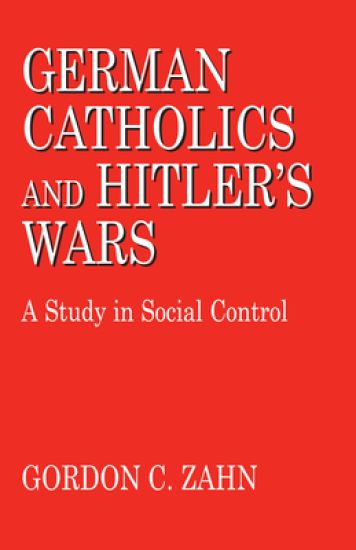
German Catholics and Hitler's Wars

German Catholics and Hitler's Wars

Gordon C. Zahn

University of Notre Dame Press
1988
nidottu
Prior to the outbreak of World War II, nearly forty thousand German Catholics were involved in the German Catholic Peace League, a movement that caused many people in various countries to seriously reconsider the dimension of pacifism in their faith. During the course of the War, however, many of these same German Catholics raised no serious objection to serving in Germany's armies or swearing allegiance to Adolph Hitler. First published in 1962, German Catholics and Hitler's Wars created a furor, ultimately causing a serious reevaluation of church-state relationships and, in particular, of the morality of war. This work began as an attempt to understand the demise of the German Catholic Peace League. But because of various factors, including the destruction of vital records, Gordon C. Zahn began to consider the behavior of German Catholics in general and the evidence of their almost total conformity to the war demands of the Nazi regime. Using sociological analysis, he argues convincingly for the existence of a super-effective system of social controls, and of a selection between the competing values of Catholicism and nationalism. Although Zahn never speculates, conclusions are inescapable, chief among them that the traditional Catholic doctrine of the "just war" has ceased to be operative for Catholics in the modern world.
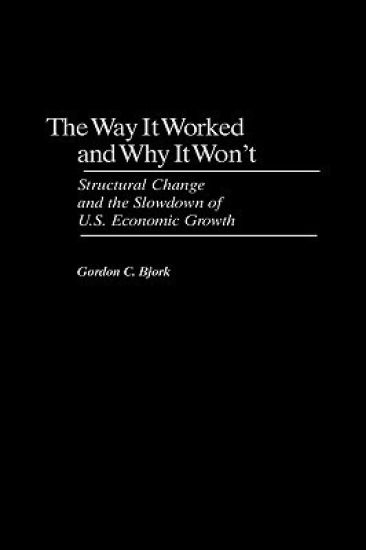
Way It Worked and Why It Won't, The

Way It Worked and Why It Won't, The

Gordon C. Bjork

Praeger Publishers Inc
1999
sidottu
While the decline of U.S. economic growth has been widely recognized and debated by professional economists, no one has until now offered a comprehensive description and explanation. Professor Bjork does so, and he explains the growth slowdown as a natural consequence of economic maturity.In addition, Bjork explains how productivity growth occurs within industries and the economy as a whole and how accounting conventions fail to account for growth in expanding sectors of the economy such as services and government. He quantifies the effects of structural change in slowing the rate of growth, and he demonstrates why taxes and transfer payments for the education of the young and the maintenance and health care of the retired population necessarily increase with economic growth and maturity. This is an important synthesis for professional economists and policy makers as well as students and the concerned public.
The Way It Worked and Why It Won't

The Way It Worked and Why It Won't

Gordon C. Bjork

Praeger Publishers Inc
1999
nidottu
While the decline of U.S. economic growth has been widely recognized and debated by professional economists, no one has until now offered a comprehensive description and explanation. Professor Bjork does so, and he explains the growth slowdown as a natural consequence of economic maturity.In addition, Bjork explains how productivity growth occurs within industries and the economy as a whole and how accounting conventions fail to account for growth in expanding sectors of the economy such as services and government. He quantifies the effects of structural change in slowing the rate of growth, and he demonstrates why taxes and transfer payments for the education of the young and the maintenance and health care of the retired population necessarily increase with economic growth and maturity. This is an important synthesis for professional economists and policy makers as well as students and the concerned public.