Kirjojen hintavertailu. Mukana 12 366 485 kirjaa ja 12 kauppaa.

Kirjahaku

Etsi kirjoja tekijän nimen, kirjan nimen tai ISBN:n perusteella.

1000 tulosta hakusanalla Gordon E. Willmot; X. Sheldon Lin

Lundberg Approximations for Compound Distributions with Insurance Applications

Lundberg Approximations for Compound Distributions with Insurance Applications

Gordon E. Willmot; X. Sheldon Lin

Springer-Verlag New York Inc.
2000
nidottu
These notes represent our summary of much of the recent research that has been done in recent years on approximations and bounds that have been developed for compound distributions and related quantities which are of interest in insurance and other areas of application in applied probability. The basic technique employed in the derivation of many bounds is induc­ tive, an approach that is motivated by arguments used by Sparre-Andersen (1957) in connection with a renewal risk model in insurance. This technique is both simple and powerful, and yields quite general results. The bounds themselves are motivated by the classical Lundberg exponential bounds which apply to ruin probabilities, and the connection to compound dis­ tributions is through the interpretation of the ruin probability as the tail probability of a compound geometric distribution. The initial exponential bounds were given in Willmot and Lin (1994), followed by the nonexpo­ nential generalization in Willmot (1994). Other related work on approximations for compound distributions and applications to various problems in insurance in particular and applied probability in general is also discussed in subsequent chapters. The results obtained or the arguments employed in these situations are similar to those for the compound distributions, and thus we felt it useful to include them in the notes. In many cases we have included exact results, since these are useful in conjunction with the bounds and approximations developed.
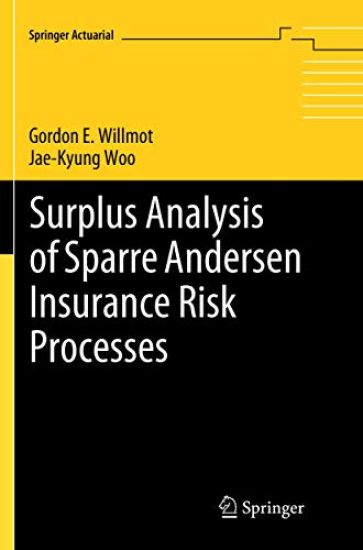
Surplus Analysis of Sparre Andersen Insurance Risk Processes

Surplus Analysis of Sparre Andersen Insurance Risk Processes

Gordon E. Willmot; Jae-Kyung Woo

Springer International Publishing AG
2018
sidottu
This carefully written monograph covers the Sparre Andersen process in an actuarial context using the renewal process as the model for claim counts. A unified reference on Sparre Andersen (renewal risk) processes is included, often missing from existing literature. The authors explore recent results and analyse various risk theoretic quantities associated with the event of ruin, including the time of ruin and the deficit of ruin. Particular attention is given to the explicit identification of defective renewal equation components, which are needed to analyse various risk theoretic quantities and are also relevant in other subject areas of applied probability such as dams and storage processes, as well as queuing theory. Aimed at researchers interested in risk/ruin theory and related areas, this work will also appeal to graduate students in classical and modern risk theory and Gerber-Shiu analysis.
Surplus Analysis of Sparre Andersen Insurance Risk Processes

Surplus Analysis of Sparre Andersen Insurance Risk Processes

Gordon E. Willmot; Jae-Kyung Woo

Springer International Publishing AG
2019
nidottu
This carefully written monograph covers the Sparre Andersen process in an actuarial context using the renewal process as the model for claim counts. A unified reference on Sparre Andersen (renewal risk) processes is included, often missing from existing literature. The authors explore recent results and analyse various risk theoretic quantities associated with the event of ruin, including the time of ruin and the deficit of ruin. Particular attention is given to the explicit identification of defective renewal equation components, which are needed to analyse various risk theoretic quantities and are also relevant in other subject areas of applied probability such as dams and storage processes, as well as queuing theory. Aimed at researchers interested in risk/ruin theory and related areas, this work will also appeal to graduate students in classical and modern risk theory and Gerber-Shiu analysis.
Loss Models: From Data to Decisions (+ ExamPrep Set), 3rd Edition

Loss Models: From Data to Decisions (+ ExamPrep Set), 3rd Edition

Stuart A. Klugman; Harry H. Panjer; Gordon E. Willmot

John Wiley Sons
2009
sidottu
This set includes the textbook, "Loss Models: From Data to Decisions, Third Edition, " ISBN 978-0-470-18781-4 and the "ExamPrep for Loss Models: From Data to Decisions, Online, 3rd Edition" ISBN 978-0-470-30857-8. To explore our additional offerings in actuarial exam preparation, visit www.wiley.com/go/actuarialexamprep
Loss Models: From Data to Decisions (Book, Solutions Manual, and ExamPrep),

Loss Models: From Data to Decisions (Book, Solutions Manual, and ExamPrep),

Stuart A. Klugman; Harry H. Panjer; Gordon E. Willmot

John Wiley Sons
2009
sidottu
This set includes the textbook, Loss Models: From Data to Decisions, Third Edition, the solutions manual, Loss Models: From Data to Decisions, Solutions Manual, Third Edition and the ExamPrep for Loss Models: From Data to Decisions, Online, 3rd Edition. To explore our additional offerings in actuarial exam preparation visit www. wiley.
ExamPrep for Loss Models: From Data to Decisions, ExamPrep and Solutions Ma

ExamPrep for Loss Models: From Data to Decisions, ExamPrep and Solutions Ma

Stuart A. Klugman; Harry H. Panjer; Gordon E. Willmot

John Wiley Sons
2009
nidottu
An update of one of the most trusted books on constructing and analyzing actuarial models for the C/4 actuarial exam This new, abridged edition has been thoroughly revised and updated to include the essential material related to Exam C of the Society of Actuaries' and Casualty Actuarial Society's accreditation programs. The book maintains an approach to modeling and forecasting that utilizes tools related to risk theory, loss distributions, and survival models. Random variables, basic distributional quantities, the recursive method, and techniques for classifying and creating distributions are also discussed. Both parametric and non-parametric estimation methods are thoroughly covered along with advice for choosing an appropriate model. The book continues to distinguish itself by providing over 400 exercises that have appeared on previous examinations.The emphasis throughout is now placed on calculations and spreadsheet implementation.Additional features of the Fourth Edition include: extended discussions of risk management and risk measures, including Tail-Value-at-Risk; expanded coverage of copula models and their estimation; new sections on extreme value distributions and their estimations, compound frequency class of distributions, and estimation for the compound class; and motivating examples from fields of insurance and business. All data sets are available on an FTP site. An assortment of supplements (both print and electronic) is available. Loss Models, Fourth Edition is an essential resource for students and aspiring actuaries who are preparing to take the SOA and CAS preliminary examinations C/4. It is also a must-have reference for professional actuaries, graduate students in the actuarial field, and anyone who works with loss and risk models in their everyday work. To explore our additional offerings in actuarial exam preparationvisit www.wiley.com/go/c4actuarial .
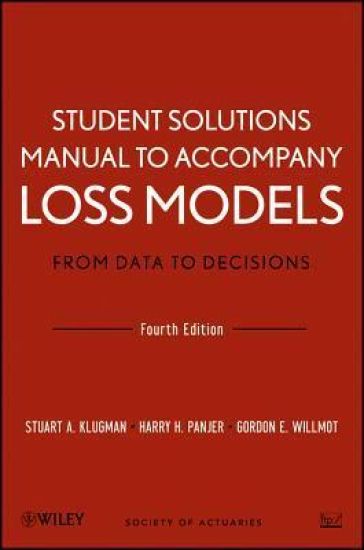
Loss Models: From Data to Decisions, 4e Student Solutions Manual

Loss Models: From Data to Decisions, 4e Student Solutions Manual

Stuart A. Klugman; Harry H. Panjer; Gordon E. Willmot

John Wiley Sons Inc
2012
nidottu
Student Solutions Manual to Accompany Loss Models: From Data to Decisions, Fourth Edition. This volume is organised around the principle that much of actuarial science consists of the construction and analysis of mathematical models which describe the process by which funds flow into and out of an insurance system.
Loss Models

Loss Models

Stuart A. Klugman; Harry H. Panjer; Gordon E. Willmot

John Wiley Sons Inc
2013
sidottu
An essential resource for constructing and analyzing advanced actuarial models Loss Models: Further Topics presents extended coverage of modeling through the use of tools related to risk theory, loss distributions, and survival models. The book uses these methods to construct and evaluate actuarial models in the fields of insurance and business. Providing an advanced study of actuarial methods, the book features extended discussions of risk modeling and risk measures, including Tail-Value-at-Risk. Loss Models: Further Topics contains additional material to accompany the Fourth Edition of Loss Models: From Data to Decisions, such as: Extreme value distributionsCoxian and related distributionsMixed Erlang distributionsComputational and analytical methods for aggregate claim modelsCounting processesCompound distributions with time-dependent claim amountsCopula modelsContinuous time ruin modelsInterpolation and smoothing The book is an essential reference for practicing actuaries and actuarial researchers who want to go beyond the material required for actuarial qualification. Loss Models: Further Topics is also an excellent resource for graduate students in the actuarial field.
Loss Models

Loss Models

Stuart A. Klugman; Harry H. Panjer; Gordon E. Willmot

Wiley-Blackwell
2019
sidottu
A guide that provides in-depth coverage of modeling techniques used throughout many branches of actuarial science, revised and updated Now in its fifth edition, Loss Models: From Data to Decisions puts the focus on material tested in the Society of Actuaries (SOA) newly revised Exams STAM (Short-Term Actuarial Mathematics) and LTAM (Long-Term Actuarial Mathematics). Updated to reflect these exam changes, this vital resource offers actuaries, and those aspiring to the profession, a practical approach to the concepts and techniques needed to succeed in the profession. The techniques are also valuable for anyone who uses loss data to build models for assessing risks of any kind. Loss Models contains a wealth of examples that highlight the real-world applications of the concepts presented, and puts the emphasis on calculations and spreadsheet implementation. With a focus on the loss process, the book reviews the essential quantitative techniques such as random variables, basic distributional quantities, and the recursive method, and discusses techniques for classifying and creating distributions. Parametric, non-parametric, and Bayesian estimation methods are thoroughly covered. In addition, the authors offer practical advice for choosing an appropriate model. This important text: • Presents a revised and updated edition of the classic guide for actuaries that aligns with newly introduced Exams STAM and LTAM • Contains a wealth of exercises taken from previous exams • Includes fresh and additional content related to the material required by the Society of Actuaries (SOA) and the Canadian Institute of Actuaries (CIA) • Offers a solutions manual available for further insight, and all the data sets and supplemental material are posted on a companion site Written for students and aspiring actuaries who are preparing to take the SOA examinations, Loss Models offers an essential guide to the concepts and techniques of actuarial science.
Loss Models: From Data to Decisions, 5e Student Solutions Manual

Loss Models: From Data to Decisions, 5e Student Solutions Manual

Stuart A. Klugman; Harry H. Panjer; Gordon E. Willmot

Wiley-Blackwell
2019
nidottu
Loss Models: From Data to Decisions, Fifth Edition continues to supply actuaries with a practical approach to the key concepts and techniques needed on the job. With updated material and extensive examples, the book successfully provides the essential methods for using available data to construct models for the frequency and severity of future adverse outcomes. The book continues to equip readers with the tools needed for the construction and analysis of mathematical models that describe the process by which funds flow into and out of an insurance system. Focusing on the loss process, the authors explore key quantitative techniques including random variables, basic distributional quantities, and the recursive method, and discuss techniques for classifying and creating distributions. Parametric, non-parametric, and Bayesian estimation methods are thoroughly covered along with advice for choosing an appropriate model. Throughout the book, numerous examples showcase the real-world applications of the presented concepts, with an emphasis on calculations and spreadsheet implementation. Loss Models: From Data to Decisions, Fifth Edition is an indispensable resource for students and aspiring actuaries who are preparing to take the SOA and CAS examinations. The book is also a valuable reference for professional actuaries, actuarial students, and anyone who works with loss and risk models.
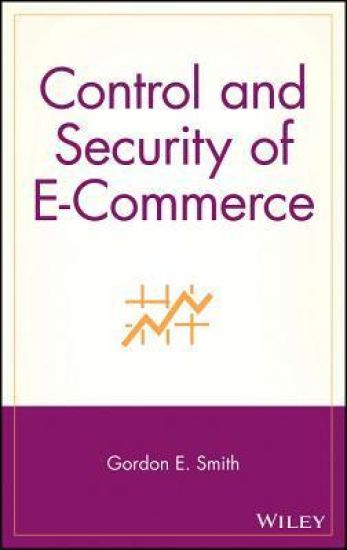
Control and Security of E-Commerce

Control and Security of E-Commerce

Gordon E. Smith

John Wiley Sons Inc
2003
sidottu
Praise for Control and Security of E-Commerce "The essence of information security is all about people, processes, and controls. The heart of successful security is not pure technology. The key is a team of well-trained employees who are prepared to use technology as a tool to implement and manage effective IT controls. Gordon Smith’s important book is a quality follow-up to his first book dealing with a control assessment approach to network auditing. It is an outstanding presentation of what is important in implementing and managing IT controls. It simply belongs in the library of every IT manager, internal auditor, and security specialist." –Dr. James B. Hansen Vice President of Security Services DynTek, Inc. "Gordon Smith’s latest book leads the field again. Based upon understandable theory and loads of real-world audit experience, Control and Security of E-Commerce will help you identify, isolate, and inoculate your company from today’s ever-present e-commerce perils. Don’t just ‘trust’ that your security is OK–use this book to make sure!" –Professor Michael Davis Graziadio School of Business and Management Pepperdine University "Control and Security of E-Commerce is an invaluable book for practicing information systems professionals. Its unique informal and conversational style of writing is a pleasure to read. The war stories make the reading exciting for an area that is technical and often considered rather dry. The end-of-chapter guidelines for action are a treasure-trove of information. I highly recommend this book for anyone interested in e-commerce security." –Dr. Jagdish S. Gangolly Associate Professor and Director of the Graduate Accounting Programs University at Albany, State University of New York
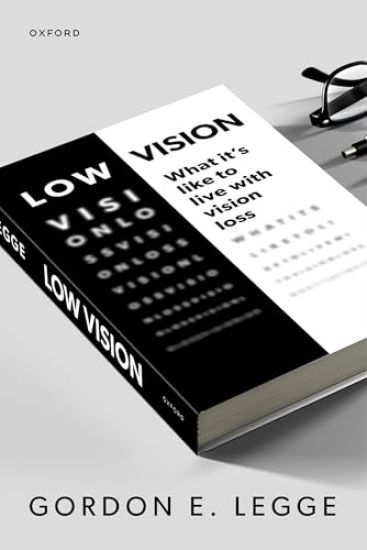
Low Vision

Low Vision

Gordon E. Legge

Oxford University Press
2026
sidottu
Do you have low vision? Do you know someone with low vision? One out of every five people who live into their eighties will encounter vision loss. Some may grow up with healthy vision and then experience vision loss from macular degeneration, glaucoma, or some other eye disease later in life. Others may be born with an inherited or congenital condition that results in low vision such as albinism or retinopathy of prematurity. Most people with vision loss have useful remaining vision; we call it low vision. But what can they see? What is the impact of low vision on their daily lives? Put it simply, what's it like to live with low vision? Low vision is any form of vision impairment, not correctable by glasses or contacts, resulting from eye disease or injury. Low vision is a broad spectrum lying between total blindness and normal vision. The number of people with low vision is rising rapidly as our population ages, with conservative estimates ranging upward from seven million in the United States to hundreds of millions worldwide. Despite its high prevalence, there is little understanding of low vision among the general public and even in the medical community. Gordon Legge is a leading vision scientist who has devoted more than forty years to research on low vision. He has low vision himself, providing him with a unique perspective on the science and its implications. In the book, he describes the diverse nature of low vision, how it is measured and characterized, and its impact on daily experience. By understanding the science behind these experiences, we will all better understand the challenges and possibilities of life with low vision.
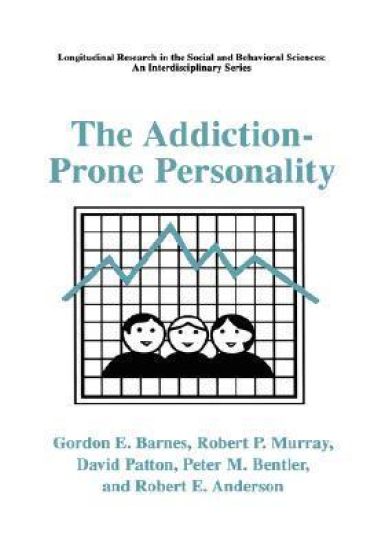
The Addiction-Prone Personality

The Addiction-Prone Personality

Gordon E. Barnes; Robert P. Murray; David Patton; Peter M. Bentler; Robert E. Anderson

Kluwer Academic/Plenum Publishers
2000
sidottu
The production of this book represents a culmination for me of some 25 years of interest in the field of personality and substance use and abuse. In choosing the field of substanceuse and abuse for the focus of our research, all of the investi- tors collaborating in this research have been sustained by the awareness that the work we are doing has an important purpose. Substance abuse continues to have enormous impacts on individuals and families,and prevention and treatment - proaches developed to date have not always been as successful as we would hope to see. New advances in our fundamental understanding of the causal mec- nisms involved in the development ofaddiction may be necessary to advance our success in developing new forms of prevention and treatment for alcohol and drug abuse. The work in this book builds on the work of numerous previous investi- tors who have been drawn to investigate this topic. As you will notice in the extensive reference list, there have been hundreds of articles published on this topic. Although each of these references has added a small piece to our und- standing of the relationship between personality and alcohol abuse, the majority of these studies have been done on clinical samples and often involved no control groups or poorly matched control groups. Several important previous longitu- nal investigations have been conducted,but these investigations have usually not included general population samples or comprehensivepersonality test batteries.
Robert Benchley

Robert Benchley

Gordon E. Ernst

Greenwood Press
1995
sidottu
This book is the first full-length annotated bibliography of the works of humorist Robert Benchley. It contains chapters on his books, essays, newspaper writings, dramatic criticism, plus a filmography and a discography. Also included is a chapter on secondary sources about his life. When humorist Robert Benchley died in 1945 at the age of 56, he left behind a large body of little-known material. Some of this material was collected into book form during and after Benchley's lifetime, but much of it remains uncollected. This annotated bibliography brings together in one volume citations to most of Benchley's collected and uncollected works. The volume contains chapters on Benchley's books, essays, newspaper writings, dramatic criticism, secondary sources about him, a filmography, and a discography. The books chapter contains all of Benchley's major books and lists the contents of each. The chapters on his essays and newspaper writings detail his work for such publications as the New Yorker, Life, Liberty, Vanity Fair, the New York Tribune, New York World, and the Chicago Tribune. The dramatic criticism chapter contains all his theater reviews, for Life and the New Yorker, with the titles of the reviewed plays and the authors for each. Entries are numbered, cross-referenced, and indexed to assist the reader.
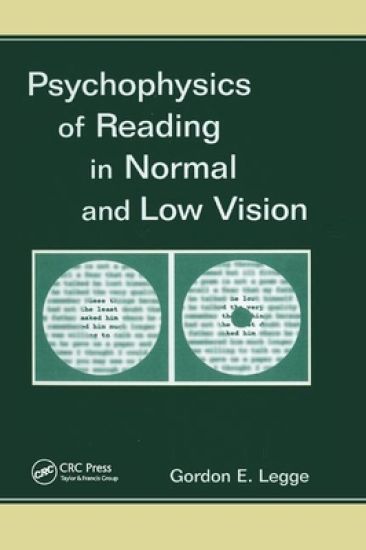
Psychophysics of Reading in Normal and Low Vision
Written by a leader in the field of low vision research, this book discusses the role of vision in reading, focusing on the reading performance of people with normal, healthy vision and people with impaired vision. The author describes the influence of physical properties of text on reading performance and the implications for information processing in the visual pathways. Providing an overview of seminal research, this book explores: different forms of low vision that affect reading, text characteristics that optimize reading for those with low vision, and principles underlying the legibility of text and guidelines for displaying text. Special topics include the role of the magnocellular pathway in reading and dyslexia, Braille reading, and fonts for highway signs. An accompanying CD contains reprints of the seminal series of articles by Gordon E. Legge and colleagues on the psychophysics of reading in normal and low vision, published between 1985 and 2001. This volume will be of interest to researchers and professionals in the area of low vision, including graphics engineers, HCI scientists, human factors specialists, low-vision rehabilitation specialists, opthamologists, occupational therapists, special education teachers, as well as cognitive scientists and perceptual psychologists. It is also suitable for advanced students with a background in the topic.
Introduction to Hamiltonian Fluid Dynamics and Stability Theory
Hamiltonian fluid dynamics and stability theory work hand-in-hand in a variety of engineering, physics, and physical science fields. Until now, however, no single reference addressed and provided background in both of these closely linked subjects. Introduction to Hamiltonian Fluid Dynamics and Stability Theory does just that-offers a comprehensive introduction to Hamiltonian fluid dynamics and describes aspects of hydrodynamic stability theory within the context of the Hamiltonian formalism. The author uses the example of the nonlinear pendulum-giving a thorough linear and nonlinear stability analysis of its equilibrium solutions-to introduce many of the ideas associated with the mathematical argument required in infinite dimensional Hamiltonian theory needed for fluid mechanics. He examines Andrews' Theorem, derives and develops the Charney-Hasegawa-Mima (CMH) equation, presents an account of the Hamiltonian structure of the Korteweg-de Vries (KdV) equation, and discusses the stability theory associated with the KdV soliton. The book's tutorial approach and plentiful exercises combine with its thorough presentations of both subjects to make Introduction to Hamiltonian Fluid Dynamics and Stability Theory an ideal reference, self-study text, and upper level course book.