Kirjojen hintavertailu. Mukana 11 244 527 kirjaa ja 12 kauppaa.

Kirjahaku

Etsi kirjoja tekijän nimen, kirjan nimen tai ISBN:n perusteella.

1000 tulosta hakusanalla Gordon Shepherd; Gary Shepherd

Talking with the Children of God

Talking with the Children of God

Gordon Shepherd; Gary Shepherd

University of Illinois Press
2010
nidottu
Grounded in direct, systematic observation by neutral observers, Talking with the Children of God is a unique study of the radical religious movement now known as The Family International. The book draws on extraordinarily candid interviews with the group's leaders and administrative staff. In revealing new information about the organization's history, beliefs, and use of prophecy, Gordon Shepherd and Gary Shepherd offer a highly detailed case study that is both an antidote to sensationalized coverage of the group and a means for understanding the transformational practices of new religious movements in general. One of the most controversial groups emerging from the Jesus People movement of the 1960s, the Family originally was known as The Children of God. Under leader David Berg, members proclaimed an apocalyptic "Endtime," shunned secular occupations, lived communally, and adopted unusual sexual practices that led to abuse scandals in the 1970s and 1980s. Following Berg's death in 1994, the organization began to dramatically alter its evangelization efforts and decision-making processes. Talking with the Children of God builds a picture of a complex organization with ten thousand core members worldwide, including details on the lives, careers, and responsibilities of the second generation and their efforts to defend their faith. The authors summarize the Family's history and beliefs as well as its controversial past. In particular, they analyze the organization's use of prophecy--or channeled revelations from Jesus and other spiritual beings--for making decisions and setting policy, revealing how this essentially democratic process works and how it shapes Family life and culture. These remarkable insights are the result of sixteen years of surveys and field observations conducted in Family member homes in sixteen countries, plus four days of face-to-face interviews with Family leaders and organizational staff. The volume also includes condensed transcripts of the interviews with analysis by Shepherd and Shepherd.
Jan Shipps

Jan Shipps

Gordon Shepherd; Gary Shepherd

Greg Kofford Books, Inc.
2019
sidottu
Tells the story of how Jan Shipps not only became an important and trusted authority in a field that was at the time predominantly made up of Mormon men, but also the crucial role she played in legitimizing Mormon Studies as a credible academic field of study.
Binding Earth and Heaven

Binding Earth and Heaven

Gary Shepherd; Gordon Shepherd

Pennsylvania State University Press
2012
sidottu
In Binding Earth and Heaven, Gary Shepherd and Gordon Shepherd use early nineteenth-century Mormonism as a case study to examine questions about how new religious movements may, as rare exceptions, survive and even eventually become successful in spite of intense opposition. Initial scorn and contempt for Mormonism—the fledgling creation of the young Joseph Smith—quickly elevated to mob violence as both Smith’s innovative teachings and converted followers proliferated, resulting in the widely held perception that the Mormons constituted a social menace. This book examines how Mormonism attracted and maintained the loyalty of increasing numbers of people despite mounting hostilities and severe hardships. The book focuses on the unique Mormon ritual (and accompanying doctrinal underpinnings) of “patriarchal blessings.” Patriarchal blessings were an innovative adaptation of the Old Testament practice of fathers making quasi-legal pronouncements over the heads of their sons—a way of verbally conferring rights, promises, admonition, and guidance to heirs. Binding Earth and Heaven shows how the organizational complexities of this practice contributed to strengthening and sustaining member faith and fealty, thereby bolstering the continuity and development of Mormonism.
Binding Earth and Heaven

Binding Earth and Heaven

Gary Shepherd; Gordon Shepherd

Pennsylvania State University Press
2016
pokkari
In Binding Earth and Heaven, Gary Shepherd and Gordon Shepherd use early nineteenth-century Mormonism as a case study to examine questions about how new religious movements may, as rare exceptions, survive and even eventually become successful in spite of intense opposition. Initial scorn and contempt for Mormonism—the fledgling creation of the young Joseph Smith—quickly elevated to mob violence as both Smith’s innovative teachings and converted followers proliferated, resulting in the widely held perception that the Mormons constituted a social menace. This book examines how Mormonism attracted and maintained the loyalty of increasing numbers of people despite mounting hostilities and severe hardships. The book focuses on the unique Mormon ritual (and accompanying doctrinal underpinnings) of “patriarchal blessings.” Patriarchal blessings were an innovative adaptation of the Old Testament practice of fathers making quasi-legal pronouncements over the heads of their sons—a way of verbally conferring rights, promises, admonition, and guidance to heirs. Binding Earth and Heaven shows how the organizational complexities of this practice contributed to strengthening and sustaining member faith and fealty, thereby bolstering the continuity and development of Mormonism.
A Kingdom Transformed

A Kingdom Transformed

Gordon Shepherd; Gary Shepard

University of Utah Press,U.S.
2015
nidottu
To survive in an often disapproving society, the LDS Church has made adaptive changes in belief, practice, and organization over time. Gordon and Gary Shepherd elucidate these changes through statistical analyses of the rhetoric found in proceedings of the church’s semiannual General Conference. The first edition of A Kingdom Transformed covered the years 1830 to 1979. This new edition revises that work and adds to it by examining the subsequent thirty years of conference talks, revealing what new trends have emerged. Every chapter has been rewritten and updated with theoretical and empirical support from contemporary sources and a new conceptual framework for interpreting findings. Early twentieth-century LDS leaders mainstreamed church doctrines, but by the mid-twentieth century, church authorities began emphasizing a more conservative theology that coincided with an increasingly conservative political orientation. This new edition adds such current issues as the roles of women in the church and of international growth versus member retention.
Neuroenology

Neuroenology

Gordon Shepherd

Columbia University Press
2016
sidottu
In his new book, Gordon M. Shepherd expands on the startling discovery that the brain creates the taste of wine. This approach to understanding wine's sensory experience draws on findings in neuroscience, biomechanics, human physiology, and traditional enology. Shepherd shows, just as he did in Neurogastronomy: How the Brain Creates Flavor and Why It Matters, that creating the taste of wine engages more of the brain than does any other human behavior. He clearly illustrates the scientific underpinnings of this process, along the way enhancing our enjoyment of wine. Neuroenology is the first book on wine tasting by a neuroscientist. It begins with the movements of wine through the mouth and then consults recent research to explain the function of retronasal smell and its extraordinary power in creating wine taste. Shepherd comprehensively explains how the specific sensory pathways in the cerebral cortex create the memory of wine and how language is used to identify and imprint wine characteristics. Intended for a broad audience of readers-from amateur wine drinkers to sommeliers, from casual foodies to seasoned chefs-Neuroenology shows how the emotion of pleasure is the final judge of the wine experience. It includes practical tips for a scientifically informed wine tasting and closes with a delightful account of Shepherd's experience tasting classic Bordeaux vintages with French winemaker Jean-Claude Berrouet of the Chateau Petrus and Dominus Estate.
The Austrians

The Austrians

Gordon Brook-Shepherd

Carroll Graf Publishers Inc
2003
pokkari
This is a masterful survey of Austria's controversial place at the heart of European history. From the Reformation through the Napoleonic and Cold Wars to European Union, a superb history of Austria's central role in uniting Western civilization is covered. 24 pages of photographs and maps are included. "Connoisseurs of Austria and its delightful and infuriating inhabitants will agree that Mr. Brook-Shepherd has got it just about right.',The Wall Street Journal "Engrossing, elegantly written history.',Publishers Weekly
Prelude to Infamy: The Story of Chancellor Dollfuss of Austria

Prelude to Infamy: The Story of Chancellor Dollfuss of Austria

Gordon Brook-Shepherd

Literary Licensing, LLC
2012
sidottu
""Prelude to Infamy: The Story of Chancellor Dollfuss of Austria"" is a biographical account of the life and political career of Austrian statesman Engelbert Dollfuss. Written by Gordon Brook-Shepherd, the book explores Dollfuss's rise to power as the leader of the Christian Social Party and his efforts to maintain Austria's independence from Nazi Germany. The book also delves into Dollfuss's controversial decision to suspend democracy and establish an authoritarian regime in Austria, which ultimately led to his assassination by Nazi agents in 1934. Through extensive research and interviews with surviving family members and political associates, Brook-Shepherd provides a detailed and nuanced portrait of this complex and controversial figure in Austrian history. The book offers insights into the political, social, and economic forces that shaped Austria in the interwar period and sheds light on the broader historical context of the rise of fascism in Europe. Overall, ""Prelude to Infamy"" is a compelling and informative read for anyone interested in the history of Austria and the tumultuous events leading up to World War II.This scarce antiquarian book is a facsimile reprint of the old original and may contain some imperfections such as library marks and notations. Because we believe this work is culturally important, we have made it available as part of our commitment for protecting, preserving, and promoting the world's literature in affordable, high quality, modern editions, that are true to their original work.
Uncrowned Emperor

Uncrowned Emperor

Gordon Brook-Shepherd

Hambledon Continuum
2007
nidottu
The Austro-Hungarian Empire dominated central Europe until 1918, when the last Habsburg Emperor, Karl, fled into exile. Karl's death in 1921 made his nine-year-old son Otto head of the Hapsburg family, a position he has now held for over eighty years. Born heir presumptive to an empire that stretched from the Tyrol to Transylvania, and from Poland to Sarajevo, Otto von Habsburg's life has both affected and been reflected in some of the most dramatic and historic events of the twentieth century. As a four year old in 1916, he walked in the funeral procession of the Emperor Franz Josef. Otto von Habsburg later became the focus of royalist loyalty, a Habsburg restoration attracting considerable political support until the Second World War. Refusing any contact with Hitler (whose code name for the Anschluss was Operation Otto), he fled first to France then America, where he formed a friendship with F.D. Roosevelt. Never living in the past, he later became a highly respected Member of the European Parliament.
Spectral Imaging of the Atmosphere

Spectral Imaging of the Atmosphere

Gordon G. Shepherd

Academic Press Inc
2002
sidottu
Optical instruments are routinely employed to obtain a wealth of information about the atmosphere, including its composition, temperature, and winds. A bewildering variety of optical instruments have been proposed over the years, making it difficult to decide which instrument should be chosen to make a specific measurement. Spectral Imaging of the Atmosphere traces the historical development of both spectral and imaging methods and places them in a unified framework relevant to observations of the troposphere, stratosphere, mesosphere and thermosphere. The underlying concepts of various measurement methodologies are presented and paired with appropriate applications. A selection of specific spectral imaging instruments, appropriate to illustrate each conceptual type, is described in detail.Shepherd's work provides both scientists and engineers with an in-depth understanding of the fundamental concepts they need to know in order to plan a program of atmospheric measurements. Expected future methods and developments are also presented. Problems designed to test and enhance the reader's understanding of the material are included in each chapter.
Foundations of the Neuron Doctrine

Foundations of the Neuron Doctrine

Gordon M. Shepherd

Oxford University Press Inc
2015
sidottu
The neuron doctrine, first formulated in 1891, states that the brain is constructed of individual neurons, organized into functioning circuits that mediate behavior. Above all else, this is the main concept that underlies all of modern neuroscience. This 25th Aniversary Edition of The Foundations of the Neuron Doctrine explains how this theory was the product of an explosion of histological studies and vigorous debates near the end of the nineteenth century by an extraordinary group of scientists, most importantly the leading figure of the time, Santiago Ramon y Cajal of Spain, and includes the foremost nervous system investigators of many countries, such as Albrecht Kolliker, Sigmund Freud, Wilhelm His, August Forel, Fritdjof Nansen and Gustav Retzius. The neuron doctrine explains how these eminent scientists used a selective nerve cell stain invented by Camillo Golgi of Italy and followed him in describing the fabulous branching patterns of nerve cells, providing strong evidence that the cells interact as individual units to form circuits. This work also describes how this view was opposed by Golgi, who maintained that the nerve cells form syncytial networks. Studies in the 1950s appeared resoundingly to confirm the nerve cell as an individual unit, as embodied in the neuron doctrine, which became the basis for the rise of concepts of normal and disordered neural function in the remaining 20th century. This 25th Anniversary Edition concludes by discussing how recent studies are showing a much greater degree of complexity in neuronal organization, so that the debate of neuron versus network is again coming to the fore of neuroscience research. Unique to this anniversary edition is the inclusion of commentaries by distinguished leaders in the neurosciences on the continuing relevance of the neuron doctrine for modern studies of the brain at all levels, from genes and molecules to microcircuits, neural networks, and behavior.
Foundations of the Neuron Doctrine

Foundations of the Neuron Doctrine

Gordon M. Shepherd

Oxford University Press Inc
1992
sidottu
For a century, the neuron doctrine has been the basis for our concepts of nervous organization and brain function, stating that the cell theory applies to the nervous system. Santiago Ramon y Cajal, Spain's greatest scientist, was its main architect; his main tool being a capricious nerve cell stain discovered by Camillo Golgi. This book reviews the original papers on which the neuron doctrine was based, showing that the evidence came from such contributors as Albrecht Kolliker, Sigmund Freud, Wilhelm His, August Forel, Fritdjof Nansen and Gustav Retzius. Many questions were raised which remain relevant today. Electron microscopical studies in the 1950s appeared to confirm the classical doctrine but subsequent studies revealed unsuspected complexities. This book reviews the new studies against the classical work and suggests new directions for revising our concept of the neuron as a basis for the functional organization of the nervous system.
Neurobiology

Neurobiology

Gordon M. Shepherd

Oxford University Press Inc
1994
nidottu
This widely used and highly praised textbook has been extensively revised to reflect the most exciting research across the entire range of neuroscience. A new feature is an introductory discussion of the mechanisms of gene regulation, while the superfamily of molecules responsible for membrane signalling is given new emphasis as a unifying theme throughout molecular and cellular neurobiology. The roles of these molecules in impulse conduction and synaptic transmission are fully explained, and illustrated by computer models. For the first time in a neurobiology text, these mechanisms can be explored by using a state-of-the-art interactive computer program provided with an accompanying tutorial handbook. In the sections dealing with neural systems, the comparative approach continues to be used to illustrate general principles. Students learn about the progress being made toward a molecular basis for sensory perception and new methods for revealing the neural activity underlying sensory and motor functions are described. There is an emphasis on the plasticity of both sensory and the motor circuits in mediating functions that reflect the effects of activity or recovery from injury. Central systems continue to be featured as the culmination of neural evolution. These include the systems vital for all animals, such as sleeping, feeding and reproduction, as well as the systems for language, emotion and higher cognitive functions that reach their peak in humans. There is special emphasis on recent work on memory, contrasting the mechanisms for short-term working memory and long-term memory and summarizing the present understanding of the mechanisms of long-term potential. The twin themes of organizational levels and comparative systems help bring together the vast range of studies and provides a conceptual framework that unifies the field of neurobiology. As in previous editions, the text contnues to draw on the advantages of having a single author. In addition, leaders in a number of specialties have assisted the author, so that the text represents the most up-to-date views of current research on the nervous system.
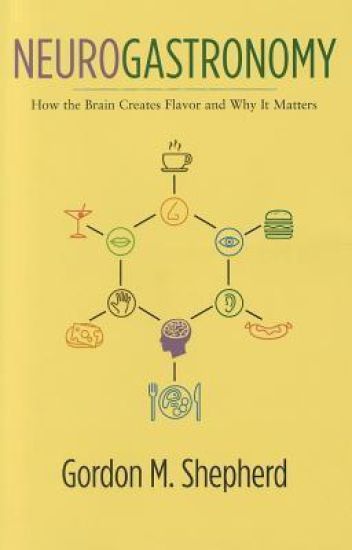
Neurogastronomy

Neurogastronomy

Gordon M. Shepherd

Columbia University Press
2011
sidottu
Leading neuroscientist Gordon M. Shepherd embarks on a paradigm-shifting trip through the "human brain flavor system," laying the foundations for a new scientific field: neurogastronomy. Challenging the belief that the sense of smell diminished during human evolution, Shepherd argues that this sense, which constitutes the main component of flavor, is far more powerful and essential than previously believed. Shepherd begins Neurogastronomy with the mechanics of smell, particularly the way it stimulates the nose from the back of the mouth. As we eat, the brain conceptualizes smells as spatial patterns, and from these and the other senses it constructs the perception of flavor. Shepherd then considers the impact of the flavor system on contemporary social, behavioral, and medical issues. He analyzes flavor's engagement with the brain regions that control emotion, food preferences, and cravings, and he even devotes a section to food's role in drug addiction and, building on Marcel Proust's iconic tale of the madeleine, its ability to evoke deep memories. Shepherd connects his research to trends in nutrition, dieting, and obesity, especially the challenges that many face in eating healthily. He concludes with human perceptions of smell and flavor and their relationship to the neural basis of consciousness. Everyone from casual diners and ardent foodies to wine critics, chefs, scholars, and researchers will delight in Shepherd's fascinating, scientific-gastronomic adventures.