Zwei literarische Debüts, beide mit dem Konnotat des Skandals versehen, stehen im Zentrum dieser Untersuchung. Dabei werden zunächst die medialen und systematischen Funktionen und Prozesse beobachtet, in denen sich die Konstituierung der Autorschaften Gottfried Benns und Rainald Goetz' sowie ihrer Werke insbesondere als kommunikative und mediale Ereignisse vollziehen. Ferner begründet die vergleichende Betrachtung medialer Implementierungen in die Texte die Analyse der intertextuellen Beziehungen. Diese Analyse erweist sich vor dem Hintergrund des psychopathologischen Fachdiskurses im ausgehenden 19. und im 20. Jahrhundert als sehr ergiebig, auch für eine Konturierung der poetologischen Programme, die Benn und Goetz in ihren frühen Texten zugleich entwerfen und vollziehen.
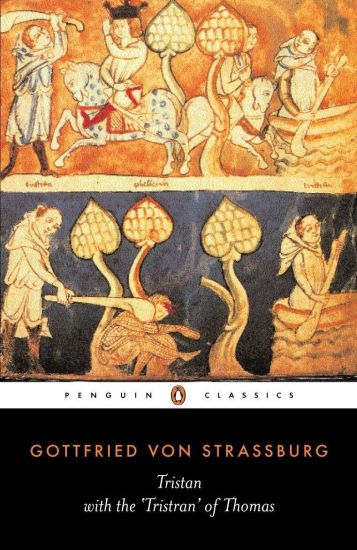
One of the great romances of the Middle Ages, Tristan, written in the early thirteenth century, is based on a medieval love story of grand passion and deceit. By slaying a dragon, the young prince Tristan wins the beautiful Isolde's hand in marriage for his uncle, King Mark. On their journey back to Mark's court, however, the pair mistakenly drink a love-potion intended for the king and his young bride, and are instantly possessed with an all-consuming love for each another - a love they are compelled to conceal by a series of subterfuges that culminates in tragedy. Von Strassburg's work is acknowledged as the greatest rendering of this legend of medieval lovers, and went on to influence generations of writers and artists and inspire Richard Wagner's Tristan and Isolde.
George Henry Radcliffe Parkinson stellt zurecht fest, dass die Behandlung der Freiheitsproblematik bei G. W. Leibniz in der Regel von dem Problem der Rechtfertigung Gottes (Theodizee) uberschattet ist. Leibniz erfasst diese Welt als die bestmoegliche aller Welten, Luther hingegen als die allerschlechteste. Die Theodizeeproblematik verscharft sich fur Luther durch die Alleinwirksamkeit Gottes derart, dass sich fur ihn jegliches Nachdenken daruber verbietet. Leibniz hingegen betont immer wieder die Freiheit des Menschen, die jedoch nicht auf der Alternativitat individueller Handlungsmoeglichkeiten, sondern nur auf der Alternativitat moeglicher Welten beruht. De facto ist damit das Freiheitsverstandnis von Leibniz nicht wesentlich verschieden von der lutherischen Konzeption menschlicher Freiheit, die nur in Christus gegeben ist. In diesem Buch soll schliesslich auch ein Weg aus der Antinomie des Freiheitsbegriffs gewiesen werden.
Im Mittelpunkt des Buches steht eine Konstruktion mit Hilfe von Geradenkonfigurationen in der komplex-projektiven Ebene, die überraschende Beziehungen zur elementaren Geometrie aufzeigt: Aus der berühmten Miyaoka-Yau-Ungleichung für die Chernschen Zahlen einer algebraischen Fläche folgen Aussagen über Geraden- und Punktkonfigurationen, für die kein direkter Beweis bekannt ist. Der Grenzfall der Ungleichung ist eine Proportionalitätsbeziehung, die genau die Flächen charakterisiert, deren universelle Überlagerung die Vollkugel im komplex-zweidimensionalen Raum ist. Die Methoden gestatten die Konstruktion von Flächen aus dieser besonders interessanten Klasse, für die bislang wenig explizite Beispiele bekannt waren.
Thomas Boehler - Otto Neumaier - Gottfried Schweiger - Clemens Sedmak Das vorliegende Werk ist das Ergebnis einer Zusammenarbeit, die anlasslich der vom Zentrum fur Ethik und Armutsforschung der Universitat Salzburg und der Sa- burg Ethik Initiative veranstalteten Konferenz Perspectives on Work im Mai begonnen wurde. Es stellt den Versuch dar, sich aus unterschiedlichen themati schen aber auch disziplinaren Perspektiven dem Phanomen der Arbeit zu nahern und damit auch einen Beitrag zur Entwicklung von Loesungsvorschlagen zu leis ten. Auch wenn sich spatestens seit dem Ende des Vollbeschaftigungstraums in den er Jah ren eine weitreichende Debatte um den Begri und die Zukunft der Ar beit, um neue und alternative Arbeitsformen, um die Aufgaben des Staates und der OEko nomie sowie um den Umgang mit Arbeitslosigkeit entwickelt hat, sind namlich die damit verbundenen Probleme noch lange nicht geloest. Der herausragende Status von (Erwerbs-)Arbeit in den Arbeitsgesellschaften des . Jahrhunderts, seien sie nun fordistisch oder po- fordistisch, Wissens- oder Informationsgesellschaften genannt, stellt vielmehr noch immer eine Herausforderung dar, der sich der Einzelne, die Gesell schaft, die Politik und auch die Wissenschaft nicht entziehen kann. Dabei stellen sich die Fragen und Probleme auf unterschiedlicher E bene, weshalb wir uns auch entschlos sen haben, uns ei ner gewissen Systematik folgend aber in Einzelbeitragen dem Thema zu nahern. Arbeit, so lasst sich sagen, ist Teil der conditio humana, gerade auch uber die Umbruche ihr es Verstandnisses und ihrer Organisation hinweg.
After a brief introduction to the topic of business process modeling, the book offers a quick-start into model-based business process engineering. After that, the foundations of the modeling languages used are conveyed. Meaningful examples are in the foreground - each of the underlying formalisms is treated only as far as needed. Next the Horus Method is described in detail. The book defines a sequence of activities which finally leads to the creation of a complete business process model. The Horus Method, incidentally, is not bound to the use of the Horus software tools. It can be used with other tools or, if necessary, be used even without tool support. Important application fields of business process engineering are described, where the spectrum ranges from business process reengineering to the development and implementation of information systems. The book concludes with an outlook on the future of business process engineering and highlights current research activities in the area.
After a brief introduction to the topic of business process modeling, the book offers a quick-start into model-based business process engineering. After that, the foundations of the modeling languages used are conveyed. Meaningful examples are in the foreground - each of the underlying formalisms is treated only as far as needed. Next the Horus Method is described in detail. The book defines a sequence of activities which finally leads to the creation of a complete business process model. The Horus Method, incidentally, is not bound to the use of the Horus software tools. It can be used with other tools or, if necessary, be used even without tool support. Important application fields of business process engineering are described, where the spectrum ranges from business process reengineering to the development and implementation of information systems. The book concludes with an outlook on the future of business process engineering and highlights current research activities in the area.
"Your good nature will bring you much happiness." -Peking Noodle Co. We began this book with the belief that there are individual differences in tempera ment that impact the trajectory of the course of development. At a particular point in time, the impact may be small, but over time the effect of these small tweaks may come to be associated with significant and meaningful differences in our indi vidual destinations. In this book, we examined the relations between temperament and various domains of development as well as the home and family environ ment to document the short- and long-term sequelae of various temperamental characteristics to test this belief. It takes a certain temperamental profile to complete a collaborative longitu dinal research project spanning two decades. Especially during the project's early years, when we were directly assessing the development of over 100 children twice yearly and visiting their homes, high activity level was required. Our biological rhythms were constantly disrupted as we worked to complete data coding (we used punch cards then!) and checking before the next wave of assessments began. We learned to approach new problems and tasks with intensity, to be adaptable when appointments had to be rescheduled, to be sensitive to changes in our study families' situations, and that a positive mood is essential. We were not easily distracted from our goal of following the study participants through high school completion, and our persistence has made all the difference.
"Your good nature will bring you much happiness." -Peking Noodle Co. We began this book with the belief that there are individual differences in tempera ment that impact the trajectory of the course of development. At a particular point in time, the impact may be small, but over time the effect of these small tweaks may come to be associated with significant and meaningful differences in our indi vidual destinations. In this book, we examined the relations between temperament and various domains of development as well as the home and family environ ment to document the short- and long-term sequelae of various temperamental characteristics to test this belief. It takes a certain temperamental profile to complete a collaborative longitu dinal research project spanning two decades. Especially during the project's early years, when we were directly assessing the development of over 100 children twice yearly and visiting their homes, high activity level was required. Our biological rhythms were constantly disrupted as we worked to complete data coding (we used punch cards then!) and checking before the next wave of assessments began. We learned to approach new problems and tasks with intensity, to be adaptable when appointments had to be rescheduled, to be sensitive to changes in our study families' situations, and that a positive mood is essential. We were not easily distracted from our goal of following the study participants through high school completion, and our persistence has made all the difference.
DOES DISCOURSE HAVE A 'STRUCTURE'? HARRIS'S REVOLUTION IN LINGUISTICS As a freshman back in 1947 I discovered that within the various academic divisions and subdivisions of the University of Pennsylvania there existed a something (it was not a Department, but a piece of the Anthropology Department) called 'Linguistic Analysis'. I was an untalented but enthusiastic student of Greek and a slightly more talented student of German, as well as the son of a translator, so the idea of 'Linguistic Analysis' attracted me, sight unseen, and I signed up for a course. It turned out that 'Linguistic Analysis' was essentially a graduate program - I and another undergraduate called Noam Chomsky were the only two undergraduates who took courses in Linguistic Analysis - and also that it was essentially a one-man show: a professor named Zellig Harris taught all the courses with the aid of graduate Teaching Fellows (and possibly - I am not sure - one Assistant Professor). The technicalities of Linguistic Analysis were formidable, and I never did master them all. But the powerful intellect and personality of Zellig Harris drew me like a lodestone, and, although I majored in Philosophy, I took every course there was to take in Linguistic Analysis from then until my gradua tion. What 'Linguistics' was like before Zellig Harris is something not many people care to remember today.
DOES DISCOURSE HAVE A 'STRUCTURE'? HARRIS'S REVOLUTION IN LINGUISTICS As a freshman back in 1947 I discovered that within the various academic divisions and subdivisions of the University of Pennsylvania there existed a something (it was not a Department, but a piece of the Anthropology Department) called 'Linguistic Analysis'. I was an untalented but enthusiastic student of Greek and a slightly more talented student of German, as well as the son of a translator, so the idea of 'Linguistic Analysis' attracted me, sight unseen, and I signed up for a course. It turned out that 'Linguistic Analysis' was essentially a graduate program - I and another undergraduate called Noam Chomsky were the only two undergraduates who took courses in Linguistic Analysis - and also that it was essentially a one-man show: a professor named Zellig Harris taught all the courses with the aid of graduate Teaching Fellows (and possibly - I am not sure - one Assistant Professor). The technicalities of Linguistic Analysis were formidable, and I never did master them all. But the powerful intellect and personality of Zellig Harris drew me like a lodestone, and, although I majored in Philosophy, I took every course there was to take in Linguistic Analysis from then until my gradua tion. What 'Linguistics' was like before Zellig Harris is something not many people care to remember today.